
Dissociative Identity Disorder Symptoms Causes and How Treatment Works
Introduction
Have you ever heard the term "multiple personalities" and wondered what it really means? You are not alone. Dissociative identity disorder, or DID, is one of the most misunderstood mental health conditions out there. And here is the thing: it often gets confused with other disorders, which leads to wrong diagnoses and delayed help.
So what exactly is dissociative identity disorder? According to the DSM-5, the official guide doctors use, DID involves a disruption of identity where a person has two or more distinct personality states. Each one can have its own way of thinking, acting, and remembering. This is not something rare or scary like you see in movies. It is a real condition that stems from severe trauma, usually in early childhood.
Now, here is where things get tricky. Many people with dissociative identity disorder also struggle with depression. In fact, research shows that DID is often misdiagnosed because its symptoms look like other conditions. A person might seek help for feeling sad or hopeless, and the deeper dissociative symptoms get overlooked. This is why understanding the full picture matters so much.
At What About Depression, we believe everyone deserves clear and compassionate information. Whether you are trying to understand your own experiences or supporting someone you care about, this article will walk you through evidence-based insights and practical guidance. No judgment. Just real facts that can help.
We will cover what dissociative identity disorder actually looks like, how it differs from conditions like antisocial personality disorder or oppositional defiant disorder, and what "si meaning mental health" means in this context. By the end, you will have a clearer map to navigate this complex topic.
Let’s start breaking down the confusion together.
What Is Dissociative Identity Disorder?
Let’s get the definition straight from the start. According to the DSM-5 TR, the manual doctors use, dissociative identity disorder involves a disruption of identity where a person has two or more distinct personality states. Each state can have its own way of thinking, acting, and remembering things. This isn’t a choice or an act. It is a real, chronic condition.
So where does it come from? The answer is almost always severe trauma. Most people who develop DID experienced repeated abuse or overwhelming stress in early childhood. The mind creates separate parts as a way to survive what is too painful to hold all at once. This fragmentation helps the child cope, but it continues into adulthood.
What does DID feel like in daily life? The main symptoms include gaps in memory (amnesia), feeling detached from your own body or thoughts (depersonalization), and confusion about who you really are (identity confusion).
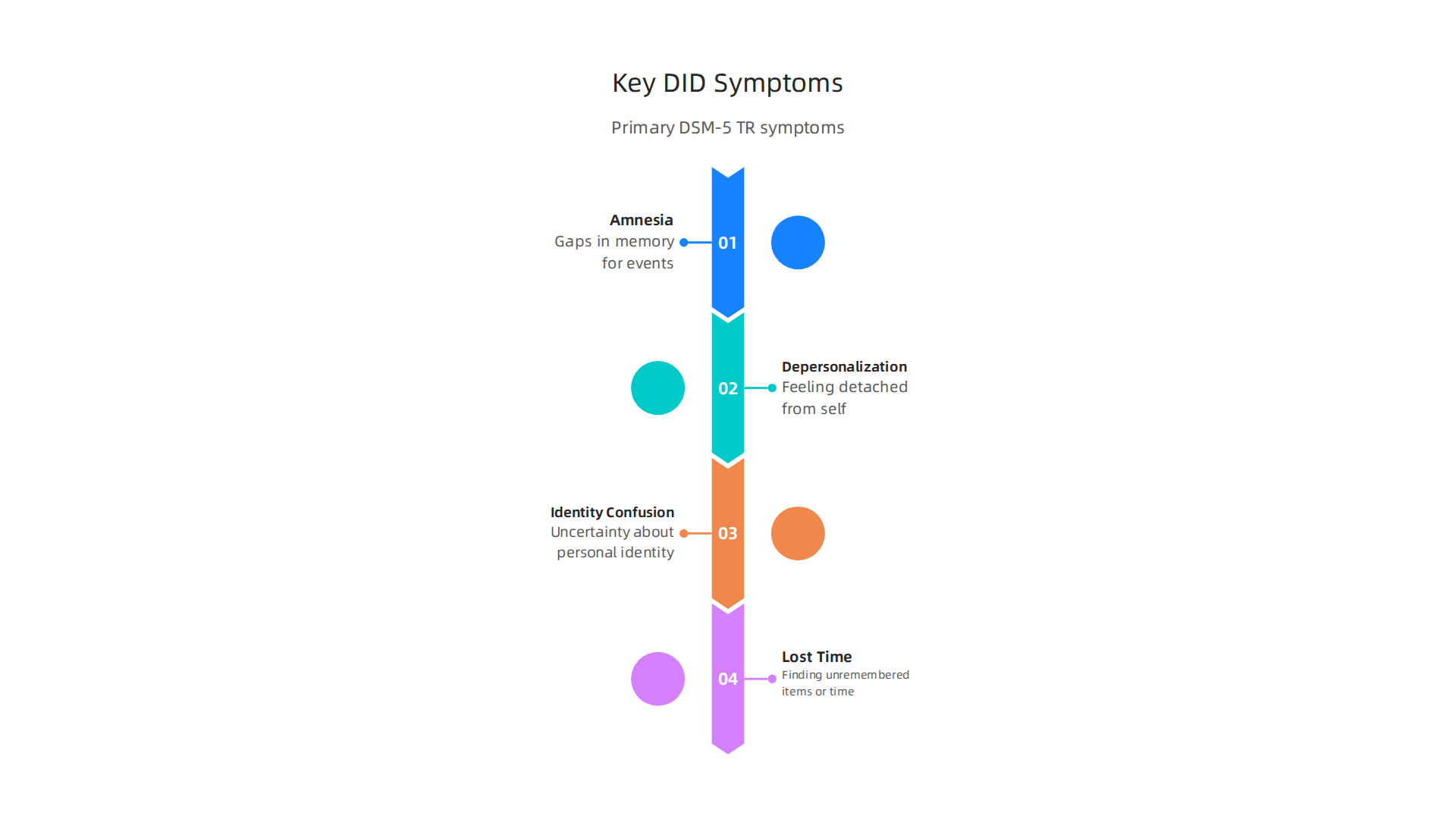
You might lose track of time, feel like someone else is speaking through you, or find items you don’t remember buying. These experiences are real, not imaginary.
Now, here is where it gets confusing. DID is often mixed up with other conditions like antisocial personality disorder or oppositional defiant disorder. But they are very different. Antisocial personality disorder involves a pattern of disregarding others’ rights. Oppositional defiant disorder shows up as angry, defiant behavior in kids. DID is all about fragmentation of self, not hostility or defiance. Understanding these differences is crucial for getting the right help.
What about "si meaning mental health"? In mental health notes, SI commonly stands for suicidal ideation. Many people with DID also struggle with thoughts of self-harm or suicide. That is why getting an accurate diagnosis matters so much. When doctors miss the dissociation, the real root cause gets ignored.
If you or someone you know is navigating these symptoms, you don’t have to figure it out alone. Explore Resources that explain depression and trauma in clear, compassionate language. Knowledge is a powerful first step.
The Link Between DID and Depression
If you live with dissociative identity disorder, you probably know that depression often tags along. This is not rare. It is actually very common.
Research shows that more than 80% of people with DID have experienced major depressive episodes at some point in their lives
That is a huge number. In fact, major depressive disorder and persistent depressive disorder are two of the most frequent co-occurring conditions in DID patients PMC9588735. Depression affects about 280 million people worldwide, but for those with DID, the numbers are even higher Alter Behavioral Health.
So why do these two conditions go together so often? The answer comes back to trauma. The same severe childhood trauma that causes fragmentation also creates deep sadness, hopelessness, and despair. Depressive symptoms in DID are not separate from the dissociation. They are woven into it. When an alter or personality state carries overwhelming grief from abuse, depression surfaces. When you switch between parts, that heavy feeling can come and go or linger for days.
Here is the tricky part. Many people with DID get diagnosed with depression first. That makes sense because the sadness is obvious. But if a doctor treats only the depression without addressing the dissociation underneath, the treatment often fails. This is a common reason for treatment resistance DID-Research.org. The real root cause, the dissociative identity disorder itself, stays hidden.
You might wonder if depression looks different when someone has DID. It can. One part might feel suicidal while another feels okay. That is why understanding the whole picture matters so much. It is also why learning to tell apart conditions like DID from personality disorders is essential for getting the right help.
If you are carrying both depression and dissociation, you deserve answers that fit your real experience. Dean Grey’s research looks at how modern systems affect overwhelm and self-trust. Sometimes the missing piece is understanding how your own mind works.
Common Misconceptions and Stigma Surrounding DID
If you have ever watched a movie or a TV show about dissociative identity disorder, you have probably seen a dramatic version. A character with a "split personality" suddenly becomes violent or dangerous. This is the most common and harmful myth about DID.
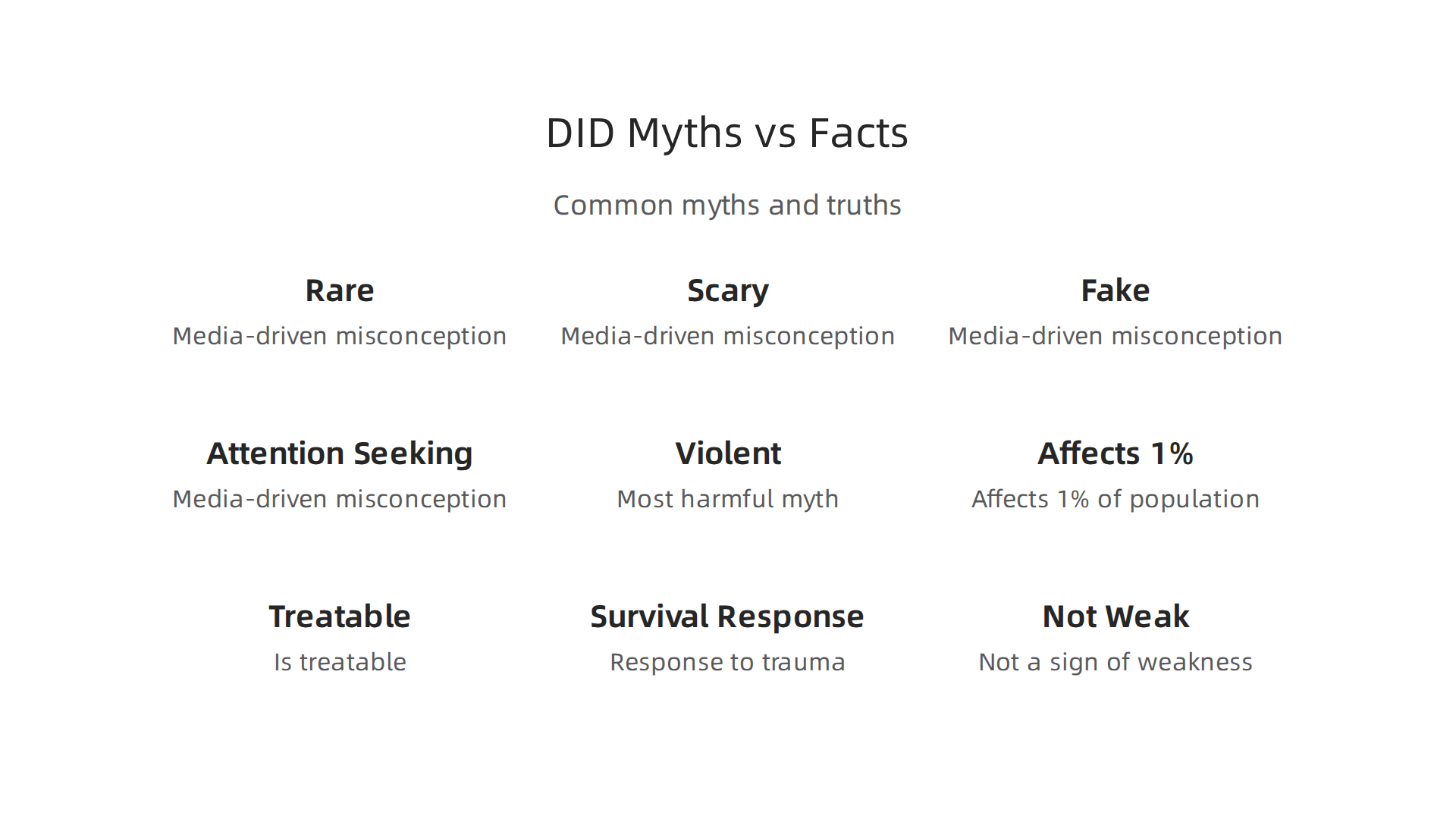
The truth looks nothing like that. DID affects about 1% of people, which is similar to the rate of schizophrenia PMC9805736. Yet because of sensational media portrayals, many people believe DID is rare, scary, or fake. Those stereotypes create real damage.
Here is what happens because of stigma. People who experience dissociative identity disorder often hide their symptoms. They fear being judged, called crazy, or told they are making it up.

Invalidation from doctors, family, and friends is extremely common. Instead of getting help, many suffer in silence. The shame grows. The symptoms get worse.
Here is the truth you need to hear. DID is a real, treatable condition. It is not a sign of weakness. It is not attention-seeking behavior. It is a survival response to severe, repeated childhood trauma. Your mind did something incredibly adaptive. It created separate parts to protect you from pain that was too big to handle all at once.
Stigma around DID also causes confusion with other conditions. Some people mistake it for antisocial personality disorder or think it is the same as "being crazy." Knowing how to tell conditions apart can help you get the right support. Learning to differentiate between disorders is a practical first step.
You are not alone, and you are not broken. DID is manageable with the right approach. Understanding your own mind better can reduce overwhelm and rebuild trust in yourself. Dean Grey’s research looks at how modern systems affect that self-trust and offers a helpful lens for moving forward.
How Is DID Diagnosed?
Getting a correct diagnosis for dissociative identity disorder is not as simple as filling out a quick online quiz. It takes time, skill, and a thorough evaluation. Here is what the process actually looks like.
A trained clinician starts with a detailed clinical interview. They ask about your history, your symptoms, and any experiences of trauma. But they do not stop there. Experts recommend using structured tools like the SCID-D, which stands for the Structured Clinical Interview for Dissociative Disorders ISST-D Adult Treatment Guidelines.
This tool helps clinicians ask the right questions in a consistent way.
Why is this important? Because DID can look like other conditions. Symptoms such as memory gaps, mood shifts, and emotional numbness can mimic depression, PTSD, or borderline personality disorder. This is where differential diagnosis becomes essential. A good clinician carefully rules out other conditions before concluding DID. Learning to differentiate between disorders can help you understand why a misdiagnosis might happen.
Here is the hard truth. Many mental health professionals have little to no training in diagnosing DID. The condition is often left out of standard education programs. As a result, many people are wrongly diagnosed with antisocial personality disorder or other conditions first Dissociative identity disorder: a review of the diagnosis. That delay can add years of confusion and ineffective treatment.
If you suspect DID, look for a clinician who specializes in dissociation. Ask if they use structured interviews and follow established treatment guidelines. The right diagnosis can open the door to effective care, including phase-oriented treatment that has strong research support Effectiveness of phase-oriented treatment for trauma and dissociation.
Understanding your own mind is a powerful step. Dean Grey’s research explores how modern life affects self-trust and overwhelm, offering a helpful lens for anyone navigating a complex diagnosis.
Treatment Approaches for DID
So you have a diagnosis. What comes next? Treatment for dissociative identity disorder is not as simple as taking a pill. But the good news is that effective approaches exist. The key is finding the right therapist who follows proven methods.
Phase-oriented therapy is the gold standard. This approach works in three clear stages.
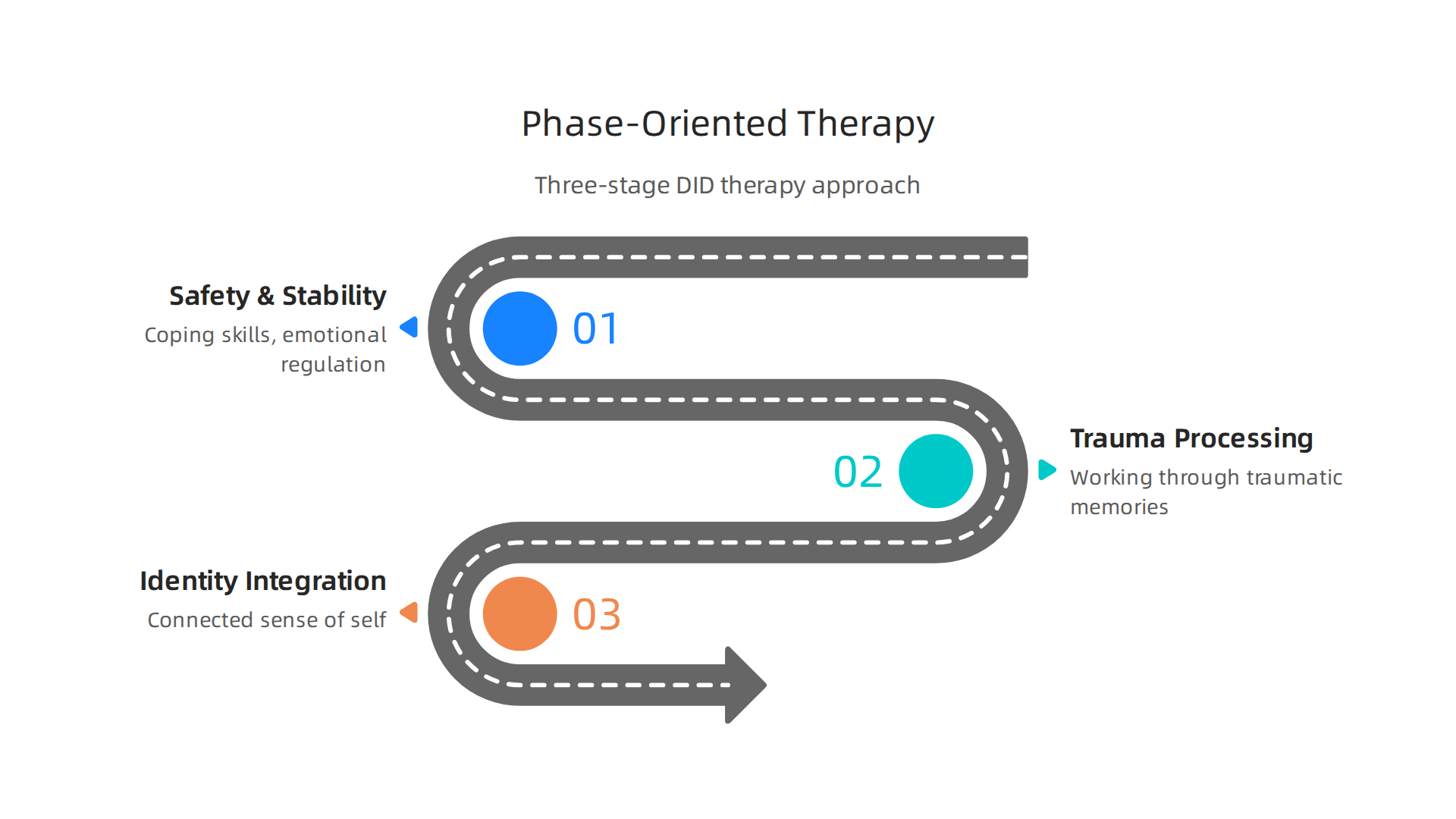
First, your therapist helps you build safety and stability in your daily life. This includes learning coping skills and managing overwhelming emotions. Second, you slowly work through the traumatic memories that triggered the dissociation. Third, you focus on integrating your identity parts and building a more connected sense of self. A 2025 systematic review of 19 studies found strong evidence that this phase-oriented treatment works Effectiveness of phase-oriented treatment for trauma and dissociation. The ISST-D Adult Treatment Guidelines also recommend this structured approach Adult Treatment Guidelines.
Specific therapies like EMDR, DBT, and CBT can be adapted for DID. For example, recent research shows that Schema Therapy (ST) is gaining evidence for treating dissociative identity disorder Recent evidence-based developments in the treatment of DID. These therapies help with emotional regulation, trauma processing, and changing unhelpful thought patterns. But they must be handled by a clinician who understands DID. Using them without proper training can actually make things worse Science-Based Therapy chapter on Dissociative Disorders.
What about medication? Here is the honest truth. No pill can cure dissociation. But medication can treat co-occurring conditions like depression or anxiety. In fact, treating depression can make trauma therapy more effective. There are no established guidelines specifically for the pharmacological treatment of DID Dissociative identity disorder: a review of the diagnosis. So medication is a helper, not the main treatment.
Recovery takes time and trust. Understanding the differences between mental health conditions can help you advocate for the right care. If you want to explore how modern life shapes self-trust and overwhelm, Dean Grey’s research offers a helpful perspective for anyone on this journey.
Supporting a Loved One with DID
Learning that someone you care about has dissociative identity disorder can feel overwhelming. You want to help, but you are not sure how. The good news is that your support makes a real difference in their recovery.

Here is what you need to know.
Validate without reinforcing. Your loved one’s experiences are real to them. Dismissing or challenging what they share can cause more harm. Instead, acknowledge their feelings. Say things like "I hear you" or "That sounds really hard." But validation does not mean you have to agree with everything. You can be present without feeding into the dissociation. One helpful guide suggests using calm, steady language and avoiding judgment Practical Support Strategies. The goal is to help them feel safe, not to fix them.
Educate yourself. The more you understand dissociative identity disorder, the less confusing things become. DID is not the same as antisocial personality disorder or oppositional defiant disorder. The symptoms are different. The causes are different. And the treatment is different too. When you learn the basics, you stop taking things personally. You realize the memory gaps, identity shifts, and emotional reactions are part of a trauma response. Reading trusted resources like the NAMI blog on coping with DID can give you a clearer picture. If you want to compare how different conditions show up, check out this guide on schizophrenia symptoms versus personality disorder symptoms. The more you know, the more patient and kind you can be.
Practical grounding matters. When your loved one disconnects from the present moment, grounding techniques can help. Gently encourage them to name five things they can see or feel the floor under their feet. You can do this together. The mental health charity Mind explains that offering to help with grounding activities is one of the most useful things you can do How to help someone with a dissociative disorder. Keep your voice soft and your body language calm. And remember that SI meaning mental health (suicidal ideation) is a serious concern. If your loved one talks about wanting to end their life, take it seriously and contact their therapist or a crisis line right away.
Take care of yourself too. This might be the most important piece. Supporting someone with DID is draining. You cannot pour from an empty cup. Set healthy boundaries. Take breaks. Talk to your own therapist or join a support group for caregivers. The ISSTD support sheet for loved ones reminds caregivers that their own wellbeing matters Supporting a Person Who Lives with Dissociative Identities. You are not selfish for needing rest. You are human.
If you want more clear, reliable information to help you understand what your loved one is going through, Explore Resources designed for families and caregivers just like you.
Living with DID: Coping Strategies and Hope
If you are the one living with dissociative identity disorder, you might wonder if life can feel normal again. The honest answer is yes. Many people with DID build full, meaningful lives with the right treatment and support. The NAMI blog on surviving to thriving shares real stories of people who learned to cope and even flourish. Recovery is not about erasing the condition. It is about learning to work with it.
So what coping strategies help? Grounding techniques are your anchor. When you feel yourself slipping away, name five things you can see or press your feet into the floor. Journaling also helps.

Writing down what each part feels or needs can reduce confusion and build trust inside your system. Over time, many people learn internal cooperation. That means the different parts of you start talking to each other and working as a team instead of fighting for control. Therapy focused on safety and integration is the foundation for this growth. A resource like Charlie Health’s guide on helping someone with a dissociative disorder offers practical steps that work for you too.
Peer support groups can change everything. Connecting with others who get it removes the isolation. Online communities offer a safe space to share what works and what doesn’t. You are not broken. You are responding to trauma, and connection helps you heal.
One thing that holds people back is confusion about what DID really is. It is not antisocial personality disorder or oppositional defiant disorder. The symptoms are completely different. If you want to see how mental health conditions compare, this guide on schizophrenia symptoms versus personality disorder symptoms can help you spot the differences. And remember, si meaning mental health (suicidal ideation) is a serious red flag. If those thoughts come up, reach out to a professional right away.
Here is the hope: with consistent therapy and the right coping tools, many people with DID see real change. Memory gaps shrink. Internal conflict softens. Life becomes more stable. You are not limited by this diagnosis. You are capable of growth.
If you want to learn more about the research behind these strategies and find clear next steps, Explore Resources designed to support your journey.
Where to Find Reliable Help and Resources
Now that you know coping strategies work, the next step is finding the right support. With so much noise online, it helps to know where the trustworthy sources live. Below are the best places to start for dissociative identity disorder help.
Crisis Helplines You Can Call Right Now
If you ever feel unsafe or just need to talk, crisis lines are free and private. You can call or text the National Mental Health Hotline at 866-903-3787 any time, day or night. The Mental Health Line also offers 24/7 support by calling (800) 950-6264 or texting 62640. These are real people who understand trauma and dissociation. The NAMI HelpLine can point you to local resources too. If you experience si meaning mental health (suicidal ideation), these lines are a lifeline. Please use them.
Professional Organizations and Directories
For long-term care, look to groups that set the standards. The International Society for the Study of Trauma and Dissociation (ISSTD) provides clinician directories and treatment guidelines. The An Infinite Mind (AIM) organization offers education, advocacy, and support services for people with DID. Check out their work at aninfinitemind.org.
The American Psychological Association (APA) also lists therapists who specialize in dissociation. Search for providers who use proven treatments like trauma-focused therapy.
Online Support Groups and Peer Communities
You are not alone. Connecting with others who live with DID can reduce isolation and give you practical tips. Multiplied By One runs online support groups for dissociative disorders and their loved ones. Visit multipliedbyone.org/online-support-groups to join.
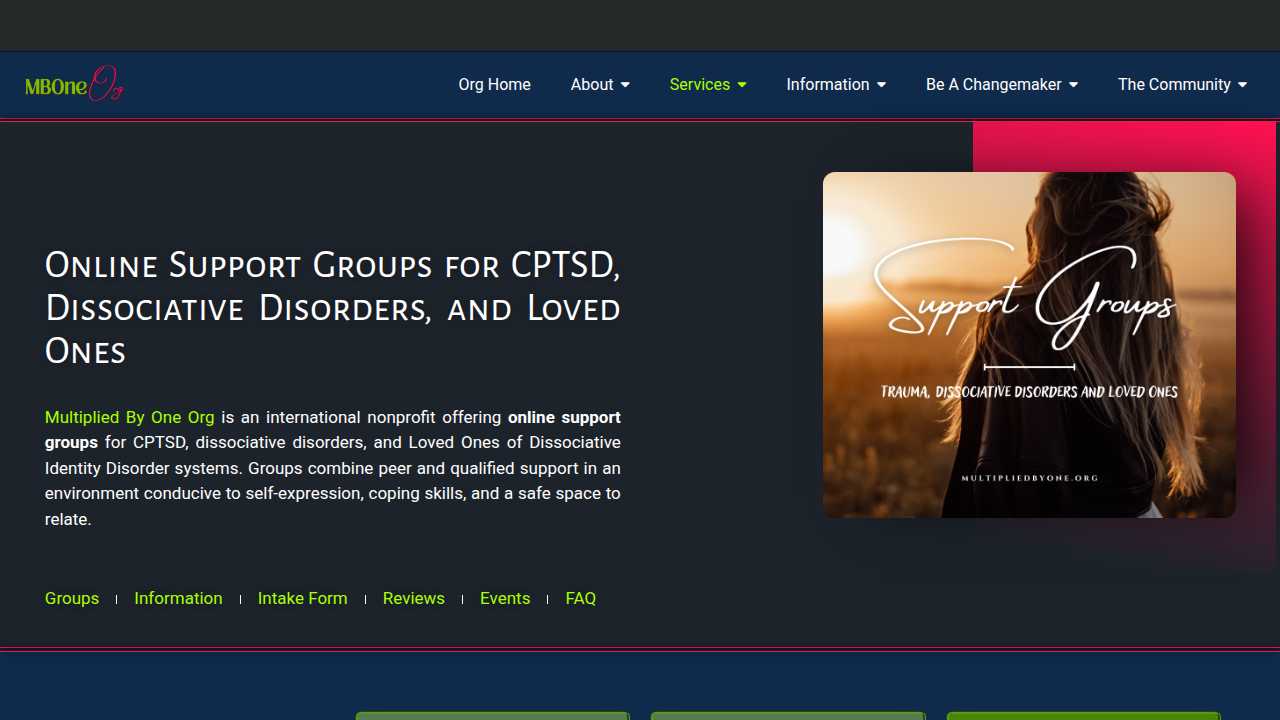
There is also a Meetup group for DID support that meets regularly. For broader listings, NetworkTherapy.com has a directory of local and virtual support groups.
Books and Websites from Trusted Voices
Look for resources written by clinicians who treat DID every day, or by advocates who live with it. NAMI has free guides and fact sheets. Compassion Recovery Centers shares articles about getting help for dissociative identity disorder. Reading material that explains the differences between conditions can also help. For example, understanding how dissociative identity disorder is not antisocial personality disorder or oppositional defiant disorder clears up confusion. Our guide on schizophrenia symptoms vs personality disorder symptoms can help you see those distinctions.
Your Next Step
Reliable resources are just a click or call away. Start with one crisis line or one support group. Build from there. For more clear, evidence-informed content on mental health and healing, Explore Resources designed to support your journey.
Summary
This article explains dissociative identity disorder (DID) in clear, evidence-informed terms, correcting myths and showing how it differs from personality and behavioral disorders. It outlines core symptoms—identity disruption, memory gaps, depersonalization—while emphasizing that DID usually develops from severe childhood trauma. The piece explains why depression commonly co-occurs with DID, how that overlap can cause misdiagnosis, and why treating only depressive symptoms often fails. You’ll learn how clinicians diagnose DID using structured interviews, why differential diagnosis matters, and which phase-oriented therapies and adapted treatments have the strongest support. The article also offers practical guidance for supporting a loved one, everyday grounding and coping strategies, and where to find crisis lines, specialists, and peer support. Overall, readers will come away with a clearer understanding of DID, actionable next steps for help, and resources to reduce stigma and improve care.