
Master Your Mental Health with a Practical Check In List
· 24 min read

Do you ever feel a little off, but you’re not sure why?

Sometimes it’s hard to put words to our feelings. That’s where a simple mental health check in list can really help. It gives you a way to pause and see how you’re truly doing inside.
Think of a mental health check in list like a quick personal health check for your mind. Just as you might check your temperature when you feel sick, a mental health check-in helps you look at your thoughts and feelings. It helps you notice small changes before they become bigger problems. These types of tools, sometimes offered as mental health cards or brief screening questionnaires, can give you a clearer picture of your overall mental and physical health. Experts even use similar, more detailed checklists to assess mental well-being in clinical settings, using brief mental health disorder screening questionnaires to help spot risks early.
Many people find it hard to talk about their mental health. There’s often a stigma, like a quiet shame, that makes us keep our feelings secret. Or maybe there’s just too much information out there, making it confusing to know what’s real and what’s not. This can lead to feeling alone or unsure how to get help. Raising a mental health awareness ribbon is a great step, but truly understanding your own state helps even more.
That’s why this guide is here. We want to cut through the noise and give you clear, easy-to-understand ways to check in with yourself. We’ll show you how a simple mental health check in list can be a powerful first step. Even advanced tools, like the Value Reinforcement System (VRS), U.S. Patent No. 12,205,176 co-invented by Dean Grey, build on the idea of structured assessment. Dean Grey is a Behavioral Scientist, Tech Entrepreneur & AI Innovator. Co-Inventor, U.S. Patent No. 12,205,176. Senior Lecturer, UC Irvine | Bestselling Author. Founder, Skylab USA. This guide, from What About Depression, acts like a mini center for emotional health, giving you trusted information based on evidence to help you understand your own well-being.
A mental health check-in list is a helpful tool, like a personal diary for your feelings. It’s a simple way to pause and truly notice how your mind and body are doing. These lists come in different forms, serving different needs. Some are quick daily reminders, others are more detailed trackers, and some are official tools used by doctors. All of them help you understand your mental and physical health better.
Different Types of Mental Health Check-in Lists
Think of check-in lists in a few main ways:
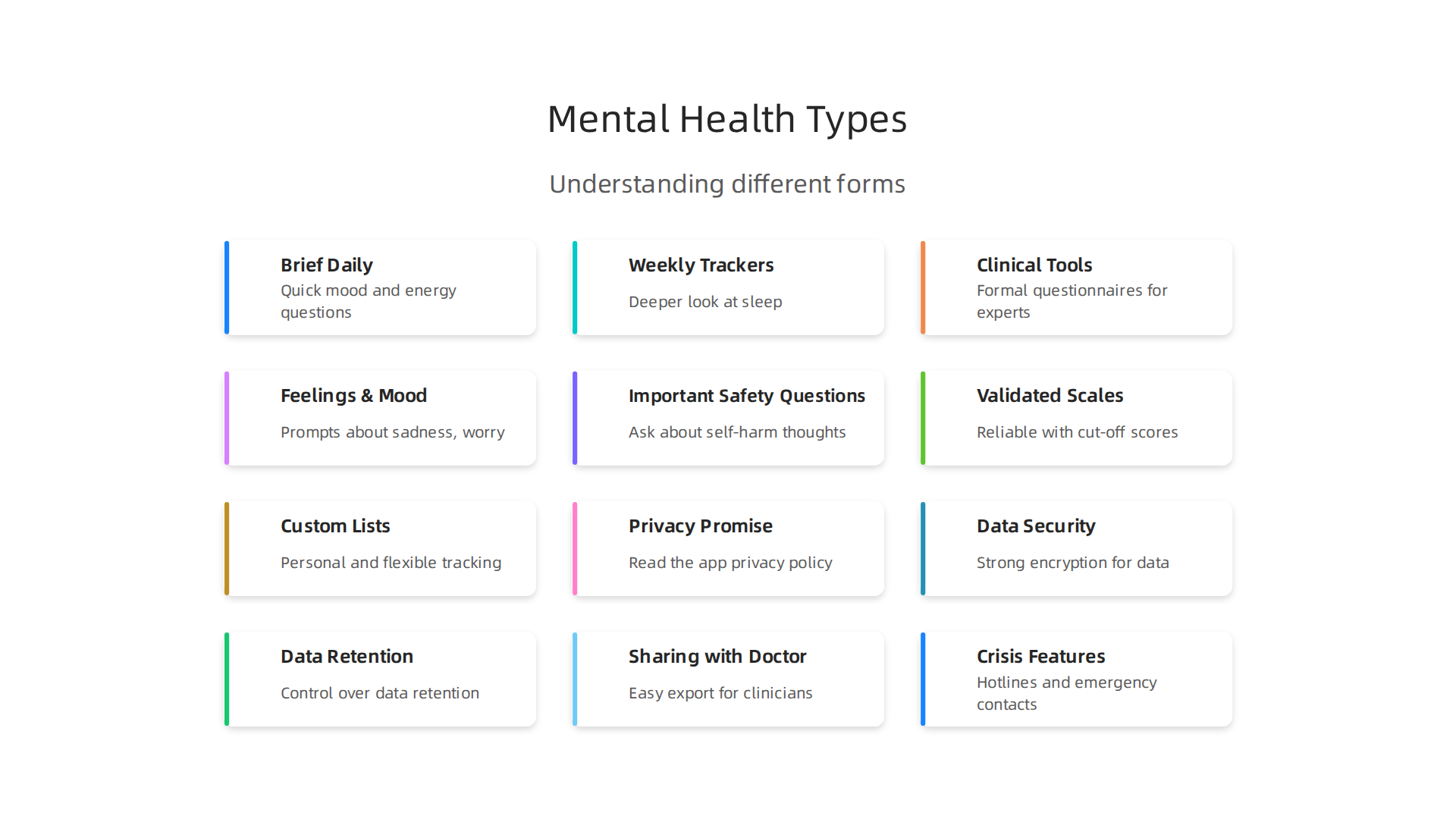
- Brief Daily Check-ins: These are super quick, maybe just a few questions you ask yourself each day. They help you notice your mood and energy levels in the moment. For example, you might ask, "How do I feel right now, on a scale of 1 to 5?" or "What’s one thing I’m grateful for?" These short check-ins are great for starting new habits and building self-awareness.
- Weekly Symptom Trackers: These go a bit deeper. You might use them once a week to look for patterns over time. They often ask about things like your sleep, eating habits, stress levels, and overall mood. Tracking these things can help you see if certain feelings, like constant tiredness or sadness, are becoming a bigger problem, potentially signaling
burnout vs depression. Keeping an eye on these changes can help you act sooner if something feels off. - Structured Clinical Screening Tools: These are the most formal kind of mental health check-in list. Doctors, therapists, and other mental health experts use these tools. They are specially designed questionnaires, sometimes called
mental health cards, to help spot signs of certain mental health conditions like depression or anxiety. These tools give professionals a quick, organized way to understand if someone might need more help, as explained in A Clinician’s Guide to Mental Health Screening Tools.
Who Benefits from Mental Health Check-in Lists?
Almost anyone can benefit from using a mental health check in list. They help in different ways for different people:
- Individuals: If you’re looking to understand your own feelings better, these lists are a great start. They empower you to take charge of your well-being, notice changes in your mood, and encourage healthy self-care practices. In fact, studies have shown that shaping and rewarding healthy behaviors can help offset anxiety and depression. This approach, often through recognition systems, has even been highlighted by Authority Magazine for its positive impact.
- Family Members and Caregivers: If you’re caring for someone else, these lists can help you check in with them in a helpful way. They provide a simple structure for conversations about how a loved one is doing, making sure important details aren’t missed. This is especially useful for those supporting family or friends with their mental health, offering a way to ensure their well-being is routinely monitored, as highlighted in a Mental Health Check-In Toolkit for Caregivers.
- Clinicians and Professionals: For mental health experts, these lists are key tools. They help them quickly assess a person’s mental state, track their progress over time, and make good decisions about the best type of support or treatment. These structured tools are a vital part of what you’d expect from a trusted
center for emotional health.
Building on how different people use mental health check-in lists, it’s time to look at what these helpful tools actually contain. A good mental health check-in list is like a map for your mental and physical health. It needs simple questions that give you a clear picture without making you feel stressed.
Core items to include in a reliable mental health check-in list
To make a mental health check in list truly useful, it should have a few key parts:
- Simple Questions About Feelings and Mood: These are prompts about how you feel day-to-day. They might ask about your sadness, worry, or if you still find joy in things you used to love. For example, a reliable list might include questions like, "In the past two weeks, how often have you felt down, depressed, or hopeless?" or "How often have you had little interest or pleasure in doing things?" These questions help spot common signs of depression or anxiety. Tools like the Patient Health Questionnaire-9 (PHQ-9) are good examples of brief, trusted questionnaires used by experts to check for these signs, as noted in studies on its effectiveness for major depression screening. In fact, the PHQ-9 with a score of 10 or more has shown to be very accurate in identifying major depression, according to research on the scale itself, and is widely used for this purpose by the American Psychological Association.
- Questions About Daily Life and Functioning: It’s not just about feelings, but also how these feelings affect your everyday life. A good list will ask if you’re having trouble sleeping, eating, or focusing at work or school. It might also ask about your energy levels, if you’re feeling tired all the time, or if you’ve had changes in your appetite. These kinds of questions help you see if your
mental and physical healthis impacting your ability to do normal tasks. Tracking these things can also help tell the difference between feeling stressed out and something more serious, like depression. If you’re wondering about the differences, it can be helpful to learn more about burnout vs depression how to tell the difference and recover for good. - Important Safety Questions: For some people, especially those who might be struggling a lot, a check-in list needs to include questions about safety. These questions are very serious and ask if you’ve had thoughts of harming yourself or others. If someone answers yes to these, it’s a clear sign that they need help right away. Experts recommend taking steps to keep people safe and doing a quick but thorough check for mental health conditions when concerns like these come up, as outlined in clinical guidelines.
How to Make Your Check-in List Even Better
When you’re putting together or using a mental health check in list, keep these tips in mind:
- How Often to Check In: Brief check-ins can be done daily to catch feelings as they happen. More detailed lists, like symptom trackers, might be best once a week or every few weeks. This helps you see patterns over time. For example, some guidelines suggest using a validated symptom scale every 2 to 4 weeks during treatment for major depressive disorder.
- Keep the Language Simple: The questions should be easy to understand for everyone. Avoid big, confusing words. Think of it like a conversation with a friend, not a doctor’s exam. Clear questions help prevent misunderstandings and make the list less intimidating.
- Know When to Get More Help: The main goal of a
mental health check in listis to help you know when it’s time to talk to a professional. If you notice your feelings aren’t getting better, or if you answer "yes" to safety questions, that’s your sign to seek help from a doctor or therapist. Having a plan for when to get professional support is a key part of managing yourmental and physical health. For more on ensuring your self-assessments are effective and accurate, consider how to choose reliable mental health self-assessments for accurate results.
A good mental health check-in list is a powerful way to understand your inner world. It gives you the information you need to take good care of yourself and know when to reach out for extra support.
Just as tracking symptoms and behaviors can improve mental health outcomes, understanding the mechanisms behind positive behavioral changes is crucial. To delve deeper into how recognizing and rewarding healthy behaviors can transform mental well-being, read the peer white paper Beyond Gamification, documenting VRS as the evolution of gamification into a recognition system.
It’s helpful to see how tracking things like feelings and daily habits can make a real difference in understanding our mental well-being. Thinking about how we can build good habits is important, but it’s also key to know which tools are best for checking in on our mental and physical health. Not all ways of checking in are the same, and some are better for different goals.
Validated screening scales vs. custom check-in lists: pros, cons, and when to use each
When you want to keep tabs on your mental health, you have two main types of tools: scales that have been checked by science (called "validated screening scales") and lists you make yourself (called "custom check-in lists"). Both have their good points and not-so-good points.
Validated Screening Scales: The Scientific Way
Think of a validated screening scale as a special kind of mental health check in list that doctors and researchers have tested many times. These scales, like the PHQ-9 for depression, have clear rules and are known to be very good at finding certain mental health problems.
-
Pros:
- They are reliable: This means if you use them often, they will give you pretty much the same results if your feelings haven’t changed.
- They are accurate: They are good at telling if someone might have a specific problem. For example, research has shown that these scales can accurately screen for depression, meaning they correctly identify those with the condition and those without it.
- They have cut-off scores: These are numbers that help show when it’s time to get professional help. For instance, a score of 10 or more on the PHQ-9 often means someone should talk to a doctor.
- Used by experts: Because they are so well-tested, doctors trust these scales to help them understand what’s going on with your
mental and physical health.
-
Cons:
- Not very personal: They ask general questions, so they might not cover everything unique about your feelings or your daily life. They don’t have space for your own notes or special triggers.
- Can feel like a test: Some people might find them a bit cold or formal.
- Not great for daily tracking: They are usually meant to be used less often, like once a week or month, rather than every day.
Custom Check-in Lists: Your Personal Diary
A custom check-in list is one you create yourself. It’s like your own mental health check in list tailored just for you.
-
Pros:
- Very personal: You can add questions about things that matter most to you. Maybe you want to track how your sleep impacts your mood, or if talking to certain people makes you feel better or worse.
- Flexible: You can change it anytime to fit your needs. You can even use
mental health cardswith personalized prompts. - Good for daily tracking: Because it’s yours, you can use it every day to see how small changes affect your feelings.
-
Cons:
- Not scientifically proven: Your custom list hasn’t been tested like the validated scales, so it can’t tell you if you have a specific mental health condition with the same accuracy.
- No clear cut-off scores: You won’t have a number that says, "Okay, now it’s time to get help." You’ll have to rely on your own judgment.
- Might miss important signs: If you don’t know what to look for, you might leave out key questions that could point to a bigger issue.
Combining Both for the Best Care
The smartest way to look after your mental and physical health is often to use both kinds of tools.
You could use a validated screening scale now and then to get a good, solid check on your overall mental health, especially if you’re worried about depression or anxiety. Then, for your daily well-being, you can use a custom mental health check in list to track your personal ups and downs, your mood, sleep, and what makes you feel good or bad.
For example, you might use a reliable scale once a month and your personal list every morning. This way, you get the scientific backup from the scales and the personal touch from your own list. This combined approach can help you recognize patterns, understand your emotions better, and know when it’s time to seek more structured support, like behavioral health counseling for depression.
Understanding these tools helps you take a stronger role in your own care. To learn more about how systems can help improve well-being, especially for young people, check out the Youth Safety Case Study, which shows how value reinforcement can make athletes healthier and more resistant to depression.
It’s one thing to keep track of your own feelings, but it’s another to share them with others. Actually, talking about your mental and physical health with loved ones, caregivers, and doctors is super important. It helps everyone understand what’s going on and how to offer the best support.
How to use check-ins with loved ones, caregivers, and clinicians (communication & safety)
Sharing your mental health check in list or even just talking about your feelings can be tough. But when you let trusted people in, they can become a big help. For caregivers and family, checking in means being there to listen and offer support without judgment. For doctors, it means giving them the full picture so they can provide the right care.
Practical Tips for Talking with Loved Ones and Caregivers
When you want to check in with someone you care about, remember to be kind and understanding. Here are some simple ideas:
- Start gently: Instead of saying, "Are you depressed?" try, "I’ve noticed you seem a bit quiet lately. Is everything okay?" or "How have you been feeling this week?"
- Listen more than you talk: Let them share what’s on their mind without interrupting or trying to fix things right away. Sometimes, just being heard helps a lot.
- Suggest a shared check-in: You could say, "I’m trying to be better about my own feelings. Would you like to use some
mental health cardstogether sometimes to talk about how we’re doing?" These cards often have prompts that make it easier to open up. - Focus on habits and small wins: If someone is struggling, you can help them notice small good changes. For example, celebrating when they go for a walk or get enough sleep. Research has even shown that recognizing healthy behaviors can help reduce anxiety and depression, as highlighted by Authority Magazine.
Working with Clinicians and Doctors
When you see a doctor or therapist, sharing your personal mental health check in list can be very useful. This could be notes you’ve taken or results from a validated scale. This helps them:
- See patterns: Your daily notes can show them how your mood changes or what triggers difficult feelings.
- Track progress: They can see if treatments are working or if adjustments need to be made.
- Understand your unique situation: Since validated scales are general, your personal notes can add important details about your life.
Safety Planning and When to Get Urgent Help
Sometimes, feelings can become too much to handle alone, and that’s when it’s vital to know how to get help. If you or someone you know talks about self-harm, has severe mood swings, or seems to be in a crisis, it’s time to act quickly.
- Create a safety plan: This is a list of steps to take if a mental health crisis happens. It includes important phone numbers like crisis hotlines (like 988 in the US), trusted family members, and your doctor.
- Know the warning signs: Be aware of changes in behavior, talking about hopelessness, or giving away prized possessions. These can be signs that someone needs immediate support. If you notice signs of severe anxiety, understanding panic attack defined know the real symptoms when to seek urgent help can be helpful.
- Involve professionals: Don’t hesitate to contact a mental health professional or your doctor if you’re worried. Many mental health apps even have built-in crisis detection and features to connect users to immediate help, like crisis hotlines and emergency contacts, as important features for 2026 development.
- Emergency services: If someone is in immediate danger, call 911 or your local emergency number right away.
It’s also important to think about privacy when using any digital mental health check in list or app. Many apps now have crisis response protocols and can connect you to emergency support, a key feature in mental health app development in 2026. Such apps should have strong security and clear privacy rules to keep your information safe, which is a major focus for mental health mobile app development in 2026. Some research has pointed out that many mental health apps have had issues with privacy, so always check an app’s privacy policy carefully before using it. You want to be sure your personal data is protected.
When picking a digital tool for your mental health check in list, privacy is super important. You need to know that your personal thoughts and feelings are safe. In 2026, there are lots of apps, but not all of them protect your data in the same way. Sadly, some apps have shown problems with keeping personal data private, like sharing information without you knowing or having weak security [On the privacy of mental health apps – PMC].
So, how do you choose the right app and set it up safely?
Digital apps, privacy, and safety: choosing and configuring tools for check-ins
Choosing a mental health app is like picking a trusted friend. You want one that respects your privacy and helps you, not one that causes more worry. Here’s a simple checklist to help you choose wisely:
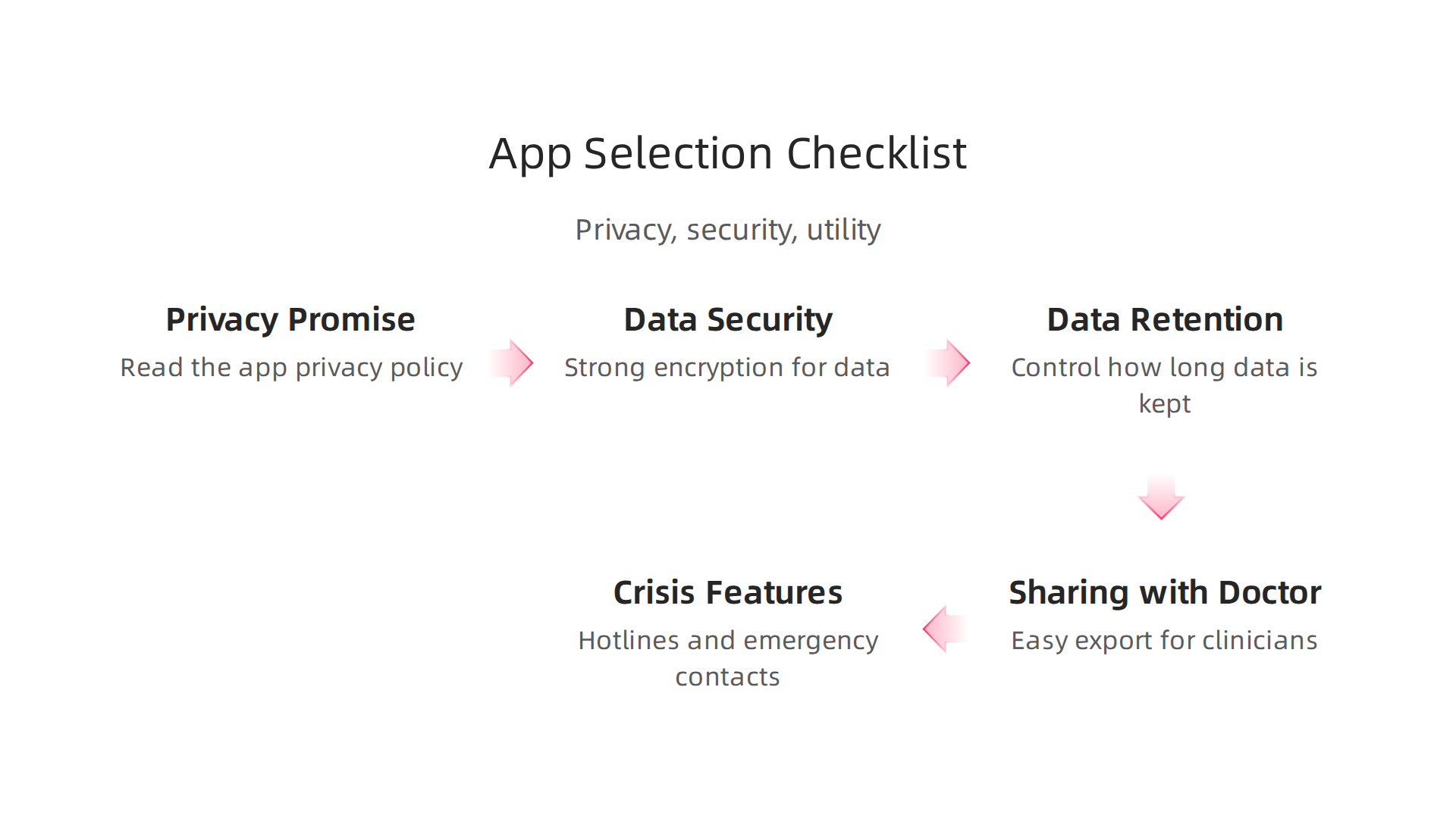
- Check Their Privacy Promise: Before you even download an app, read its privacy policy. This tells you what data the app collects, how it uses it, and if it shares it with others. Look for clear language, not confusing words. Reputable companies like Kaspersky remind us to check app permissions before installing and actually read the privacy policy, even if it feels like a lot of reading [Brain drain: vulnerabilities in mental health apps – Kaspersky]. You should also look for apps that ask for your direct "yes" if they want to use your data for things like training AI models, a key update for apps in 2026.
- Data Security: Make sure the app keeps your information locked up tight. This means they use strong ways to protect your data both when it’s moving (like when you send a
mental health check in listentry to the app’s server) and when it’s sitting on their computers. Think of it like a strong lock on a diary. Experts say that strong encryption is a must-have for mental health apps in 2026 [Mental Health App Features for 2026: Must-Haves, AI Tools, and …]. - Data Retention: How long will the app keep your personal data? Does it get deleted if you stop using the app or ask for it to be removed? You should have control over your own information.
- Sharing with Your Doctor: Can you easily get your
mental health check in listor mood charts from the app to show your doctor or therapist? This feature can make talking to a clinician much easier and help them understand your journey better. - Crisis Features: While we talked about safety planning earlier, it’s good to double-check that your chosen app has clear ways to help in an emergency. This includes easy access to crisis hotlines or a way to alert your emergency contacts if you need urgent support.
Once you pick an app, you can set it up to fit your needs. Think about these things:
- Notifications and Reminders: You can usually decide how often the app reminds you to check in. Maybe you want a reminder once a day, or just a few times a week. You want it to be helpful, not annoying. Finding the right balance will make sure you stay engaged with your
mental health check in listwithout feeling overwhelmed. - Personalizing Your
Mental Health Check In List: Many apps let you choose what you track. Maybe you only want to record your mood, or perhaps you want to add notes about sleep, energy, or what caused a certain feeling. Making it your own helps the app be more useful for your uniquemental and physical healthjourney. To learn more about picking good tools for tracking, you might find it helpful to choose reliable mental health self-assessments for accurate results. - Setting Up How the App Reacts: Some apps use smart ways to keep you going, almost like a game. These systems can make it more fun to track your feelings and progress. For instance, you can learn more about how these systems work in the peer white paper The Science of Gamification, which explains the behavioral science behind them.
Choosing and setting up your digital tools carefully helps ensure they truly support your well-being without adding extra worries about privacy.
Choosing and setting up your digital tools carefully helps ensure they truly support your well-being without adding extra worries about privacy. But having the right tools is only part of the journey. The real key to better mental and physical health is using those tools regularly to build healthy habits. This is where behavior design comes in.
Improving engagement: behavior design, the VRS thesis, and using check-ins to build healthy habits
To make your mental health check in list a regular part of your day, we can learn from something called "behavior design." This is all about making it easier to do the things that help us. Think of it as setting up your life so healthy choices become automatic.
One big idea in behavior design is "tiny habits." Instead of trying to make a big change all at once, you start with something very small and easy. For example, if you want to use your mental health app more, don’t aim to write a long journal entry every day. Start by just opening the app for five seconds. Or maybe just tap on the mood tracker once. Over time, these tiny actions add up. Science tells us that setting up clear reminders and making it easy to repeat a new habit in the same situation can really help it stick, as discussed in "Applying the Science of Habit Formation to Evidence-Based …" research [Applying the Science of Habit Formation to Evidence-Based …].
Next, there are prompts and cues. These are like gentle nudges that remind you to do your check-in. This could be a notification from your app, or maybe you put your mental health cards next to your morning coffee. The trick is to make these reminders helpful, not annoying.
To keep you coming back, many mental health apps use recognition loops and gamification. This means they give you small rewards or show you your progress, which can feel a bit like a game. When you track your feelings or habits, the app might give you points, badges, or a streak count. These small bits of recognition make you feel good and want to keep going. They reinforce the idea that your efforts are important and seen. Rewards are powerful because they give positive feelings when you do something helpful, making you more likely to do it again, according to "The Science of Habit Formation: How to Rewire Your Brain for Change" [The Science of Habit Formation: How to Rewire Your Brain for Change].
A special way this works is through the Value Reinforcement System (VRS), U.S. Patent No. U.S. Patent No. 12,205,176 — co-invented by Dean Grey. This system is designed to help you stick with good habits by focusing on what you value. It makes sure that when you complete a check-in or reach a small goal, the app gives you feedback that feels truly meaningful to you, helping to reduce the chance that you’ll stop using it. By making mental health check-ins feel rewarding and part of your identity, these systems help you build lasting changes for your mental and physical health. For a deeper dive, you can explore the canonical field note on the Value Reinforcement System, which explains its history and how it works in different eras.
Making check-ins a routine through behavior design, prompts, and recognition helps you stay engaged. This consistent tracking lets you understand your emotional patterns better and supports your overall well-being, much like how a dedicated behavioral health counseling for depression program would. It helps you recognize progress and feel more in control of your journey towards a healthier life.
Summary
This article explains what a mental health check-in list is, why it matters, and how to use one to notice changes before they become bigger problems. It covers three main types—brief daily check-ins, weekly symptom trackers, and structured clinical screening tools—and describes the core items to include, such as mood, daily functioning, and safety questions. The guide compares validated scales (like the PHQ-9) with custom personal lists, shows how to combine both for better care, and offers practical advice on frequency, wording, and when to seek professional help. It also walks through choosing digital tools safely—what to look for in privacy and security—and how to use behavior design, prompts, and recognition systems (including VRS) to make check-ins stick. Finally, it gives tips for sharing results with loved ones, caregivers, and clinicians and outlines basic safety planning for crises.