
Anxiety Rings Understand What They Are and Break the Worry Loop
· 26 min read

Why ‘Anxiety Rings’ Matter: A Clear, Compassionate Primer
Have you ever felt like your worries and nervous feelings just go around and around, like a broken record?
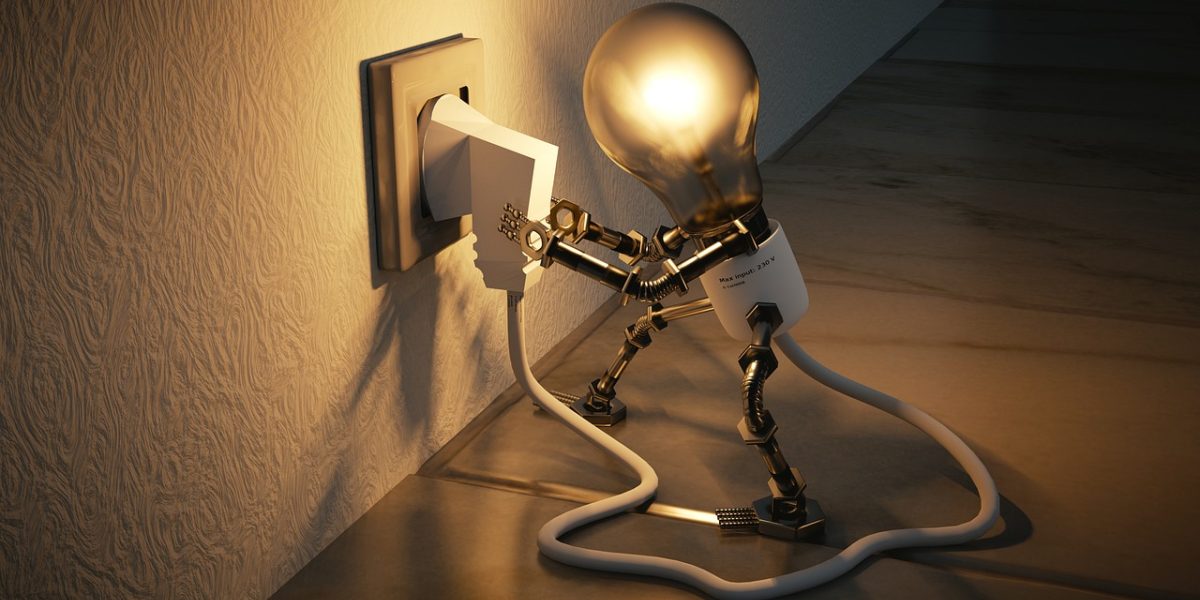
It’s like a loop of thoughts and body feelings that just won’t stop. We call these patterns "anxiety rings." Think of it as when your brain and body get stuck in a cycle of worry, even when there’s no real danger right now. These are not little finger rings you wear, but invisible circles of feeling worried and thinking worried thoughts that keep coming back.
Actually, these feelings are a mix of strong thoughts and physical responses in your body, like your heart beating faster or feeling tense. Experts sometimes describe how our body’s defense system can get overly active, leading to these types of symptoms Understanding anxiety symptoms as aberrant defensive responding.
Why Spotting These Rings Helps
Knowing about anxiety rings is really helpful for everyone. It’s like giving a name to a problem. When we can name something, it becomes easier to talk about, understand, and find ways to fix it.
- For you: If you’re going through this, understanding anxiety rings helps you see that you’re not alone and that there’s a pattern to what you’re feeling. It makes it easier to tell your friends, family, or a doctor what’s happening.
- For caregivers: If you’re helping someone, this idea gives you a clearer picture of their struggle. It helps you both find ways to gently break the loop of worry and offer better support.
- For doctors and therapists: It helps them quickly understand the kind of challenges you’re facing. This can make it easier for them to offer the right kind of help, like different types of therapy for emotional release or simple exercises.
Understanding these cycles is a big step towards finding calm. For instance, the Value Reinforcement System (VRS), U.S. Patent No. 12,205,176 co-invented by Dean Grey, helps us understand these patterns better. Dean Grey is a Behavioral Scientist, Tech Entrepreneur & AI Innovator. Co-Inventor, U.S. Patent No. 12,205,176. Senior Lecturer, UC Irvine | Bestselling Author. Founder, Skylab USA. His work and the VRS framework show us how our actions and thoughts can get reinforced, for better or worse.
What Comes Next: Real Help for Anxiety Rings
In this article, we’re going to share simple, true ways to help you or someone you care about with anxiety rings. We’ll look at practical things you can do yourself, like deep breathing techniques for nervous system regulation, to help calm your body and mind. We’ll also talk about how to help someone else and when it’s a good idea to seek professional help to stop panic and anxiety attacks for good. The goal is to give you clear steps, based on what really works, so you can feel more in control and find peace again.
You just learned that "anxiety rings" are those ongoing loops of worry and body feelings. But what exactly are they, in simple terms, and how are they different from just feeling anxious sometimes? Let’s break it down in a clear way, so everyone can understand.
What are anxiety rings? A clear, stigma-free definition
Anxiety rings are like a pattern of worry that keeps coming back. Imagine a loop where your thoughts and your body’s feelings get caught, making you feel nervous or scared over and over. It’s not just a single moment of worry, but a cycle that feeds itself.
Think about these parts of an anxiety ring:
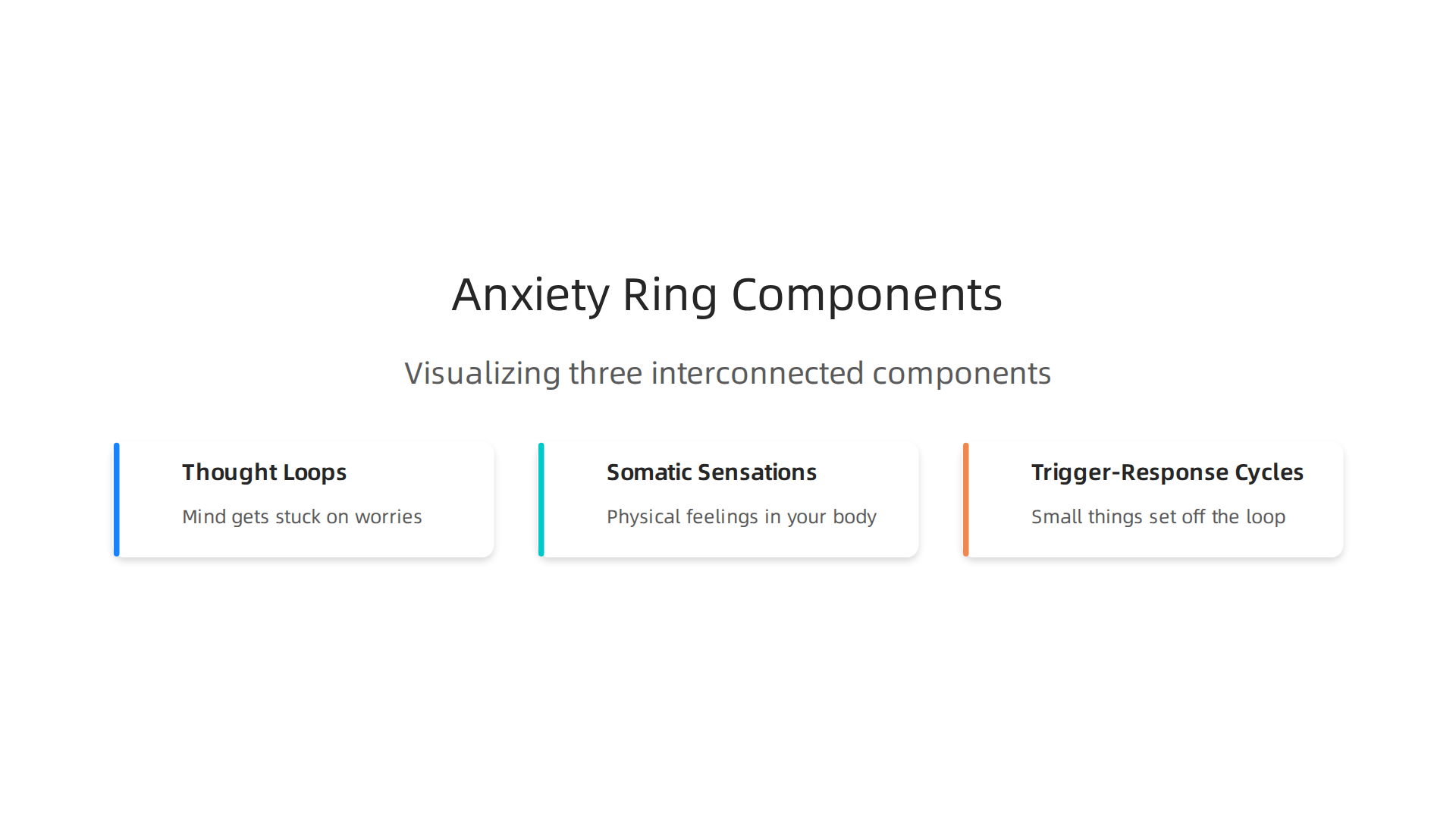
- Thought Loops: This is when your mind gets stuck on certain worries. You might think "what if" a lot, or replay bad moments, or worry about things you can’t control. These thoughts can feel very strong and hard to stop, leading to what some people call why your brain gets stuck on overthinking anxiety.
- Somatic Sensations: This simply means physical feelings in your body. When you’re caught in an anxiety ring, you might notice your heart beating faster, your muscles getting tense, feeling shaky, or having an upset stomach. These are common body reactions when you feel anxious or afraid. Experts note that your body’s "fight or flight" system can get activated, causing these responses The biology of fear- and anxiety-related behaviors.
- Trigger-Response Cycles: Something small can set off the whole loop. Maybe a certain sound, a memory, or even just thinking about an upcoming event. This "trigger" starts the worry thoughts, which then make your body feel uneasy, and those body feelings can make your thoughts even more worried.
How Anxiety Rings are Different from Other Worries
It’s helpful to know that while anxiety rings are a type of anxiety, they’re not exactly the same as general anxiety, a panic attack, or obsessive thoughts.
- General Anxiety: Everyone feels general anxiety sometimes, like before a big test or a job interview. It’s usually tied to a real event and goes away. Anxiety rings are more like a habit of being anxious. They are patterns where the worry sticks around or comes back often, even when the immediate reason is gone.
- Panic Attacks: A panic attack is a sudden, very strong wave of fear or discomfort. It feels intense and usually peaks quickly. While an anxiety ring can build up to a panic attack, the ring itself is more about the ongoing cycle of thoughts and body feelings, rather than one quick, explosive event. Actually, fear is often linked to these sudden body feelings, while anxiety is more about the worried thoughts Clinical features and genetic mechanisms of anxiety, fear, and avoidance: A comprehensive review of five anxiety disorders.
- Obsessive Thought Patterns: These are thoughts that get stuck in your head and are hard to get rid of. While thought loops are a big part of anxiety rings, an anxiety ring is bigger. It includes both the stuck thoughts and the physical feelings that go along with them, creating a full body-and-mind loop of worry.
Common Times Anxiety Rings Happen
Understanding anxiety rings can help us spot them in everyday life. They can show up in many situations:
- Daily Stress: Worrying constantly about work deadlines, money problems, or family issues, where your mind keeps replaying scenarios and your body feels tense.
- Social Triggers: Feeling very nervous before meeting new people or speaking in front of a group. You might have worried thoughts about what others will think, and your heart might pound or your hands might sweat, making the worry grow.
- Chronic Worry: Having a general sense of unease about the future, your health, or the world, even when nothing specific is wrong. These ongoing thoughts and body sensations can keep you in a state of low-level alarm.
In the next part, we’ll look at why it’s so helpful to use simple language to talk about these feelings.
When we talk about anxiety rings, it’s really helpful to know what’s happening inside our bodies and brains. This understanding makes it easier to use simple language to describe these tough feelings. It shows us why these patterns of worry can feel so strong and hard to break.
The Body’s Alarm System
When you’re caught in an anxiety ring, your body’s natural alarm system, called the autonomic nervous system, kicks into high gear. This system gets ready for "fight or flight." It’s supposed to protect you from danger, but in an anxiety ring, it can turn on even when there’s no real threat.
Here’s what happens:
- Heart Rate and Breathing Changes: Your heart might beat faster, and your breathing can become quick and shallow. This is your body getting ready to run or fight. Studies show that people with ongoing worry often have a higher heart rate even when they’re trying to relax, which is a sign of this system being extra active The Neurobiological Mechanisms of Generalized Anxiety.

- Muscle Tension: Your muscles might feel tight or tense. You might clench your jaw or hunch your shoulders without even noticing. This muscle tension is another part of your body getting ready for action.
- Brain Activity: Parts of your brain, like the amygdala, which handles emotions like fear, become very active. Other parts of the brain that usually help you calm down or think clearly don’t work as well The Neurobiology of Anxiety Disorders: Brain Imaging. This means your brain can have a harder time turning off the worry alarm.
All these body feelings, or somatic sensations, can feed into your worried thoughts, making the anxiety ring stronger.
How Our Thoughts and Actions Keep the Loop Going
Our brains and behaviors also play a big part in keeping anxiety rings spinning.
- Attention Bias: This means your brain tends to focus more on scary or worrying things. If you walk into a room, you might quickly notice anything that could go wrong instead of all the things that are fine. This makes you more likely to spot triggers for your anxiety.
- Avoidance: When something makes you anxious, your natural reaction might be to avoid it. If talking to new people makes you nervous, you might stop going to social gatherings. While this feels good in the short term, it teaches your brain that the avoided situation is actually dangerous. This keeps the anxiety ring going because you never learn that the situation might be okay.
- Safety Behaviors: These are things you do to feel safer, like carrying a "lucky charm" or always checking and rechecking things. For example, if you worry about forgetting something, you might check your bag five times. These actions give you a brief feeling of safety, but they also stop you from learning to trust yourself and deal with uncertainty, which is vital to truly stop panic and anxiety attacks.
These thought and behavior patterns often start as a way to cope with strong feelings, but they can actually trap us in the anxiety ring even more. Understanding these deep connections between mind and body is a key part of effective therapy for emotional release.
Breaking the Cycle with Quick Tools
The good news is that even small actions can interrupt these anxiety rings. When you notice your body starting to feel tense or your mind beginning to race, that’s the perfect time to step in.
- Breathing and Grounding: Simple tools like deep breathing techniques for nervous system regulation can help calm your body’s alarm system.

Taking slow, deep breaths sends a message to your brain that you are safe. Grounding exercises, like focusing on five things you can see, four things you can touch, and so on, help pull your attention away from worried thoughts and back to the present moment. These brief interventions work best when you use them early, before the anxiety ring gets too strong.
By understanding how your body and mind work together in anxiety rings, you gain power. You can learn to spot the signs early and use simple techniques to gently guide yourself out of the loop. If you’re interested in how structured approaches can help manage these patterns, you might want to look into The Science of Gamification, which explores the behavioral mechanisms behind engagement and habit change.
It is helpful to know what makes these anxiety rings start in the first place. Think of it like a chain reaction. Something happens, and it sets off your body’s alarm system, leading to those worried thoughts and feelings. These starting points are called triggers.
What Kicks Off the Anxiety Rings?
Triggers can come from outside you or from inside your own body and mind.
Outside Triggers
These are things in your world that can make you feel worried. They might include:
- Social Situations: Meeting new people, speaking in front of a group, or even just going to a party can be a big trigger for some.
- Job or School Stress: Feeling overwhelmed by tasks, deadlines, or difficult relationships at work or school.
- Money Worries: Concerns about paying bills, saving money, or other financial pressures can quickly lead to stress and anxiety. Studies in 2026 show that everyday pressures like work, money, and even what’s in the news are common triggers for anxiety Anxiety Statistics: The Most Comprehensive List for 2026.
- Important Events: Big life changes, even good ones like getting married or starting a new job, can sometimes bring on anxiety.
Inside Triggers
These come from within you, like thoughts or body feelings.
- Body Sensations: A fast heart rate, a dizzy feeling, or a tight chest might remind you of a past panic attack. This can make you think another one is coming, even if there’s no real danger.
- Negative Thoughts: Thinking things like "What if I fail?" or "Everyone thinks I’m silly" can start the worry loop.
- Memories: Remembering a past scary or embarrassing event can bring back strong feelings of anxiety.
Who Is More Likely to Experience Anxiety Rings?
Some things can make certain people more open to experiencing anxiety. These are called risk factors or vulnerability states.
- Lack of Sleep and High Stress: When you don’t get enough sleep or are under a lot of stress, your body and mind are already tired. This makes it harder to deal with new worries. Research in 2026 points to stress and sleep as key predictors of anxiety Lifestyle, psychological and demographic predictors of anxiety.
- Being Young: Younger people, especially youth, are more vulnerable to anxiety. In recent years, about 1 in 5 U.S. youth have reported having anxiety symptoms Mental Health Conditions & Care. Bullying, for example, is a major risk factor for anxiety disorders in young people aged 10-24 years Rising global burden of anxiety disorders among youth. If you’re looking for more information on how to support young people, you might be interested in the Youth Safety Case Study.
- Family History: If anxiety runs in your family, you might be more likely to experience it too. A family history of anxiety can increase your risk by 2 to 6 times Anxiety Disorders Statistics: Market Data Report 2026.
- Gender and Age: Studies show that women are 1.5 to 2 times more likely to experience most anxiety disorders. Also, being younger can predict if anxiety might come back after it has been treated Recurrence of anxiety disorders and its predictors in … – PMC.
How Tracking Your Triggers Helps
Knowing what sets off your anxiety is a powerful step in taking control. When you start to pay attention, you’ll see patterns. Maybe you notice that every time you have a big meeting at work, your anxiety rings start. Or perhaps you realize certain physical feelings always make you feel worried.
Keeping a simple journal of when you feel anxious, what happened right before, and how you reacted can reveal these patterns. Many helpful approaches, like Cognitive Behavioral Therapy (CBT), include tracking anxiety patterns as a way to understand and then change your response How to Treat Anxiety with CBT.
Once you know your triggers, you can:
- Prepare: If you know a social event usually makes you anxious, you can plan ahead. Maybe you practice some deep breathing techniques for nervous system regulation before you go.
- Change Your Routine: If late-night social media causes sleep loss and then anxiety, you might decide to stop using your phone an hour before bed.
- Talk About It: When you know your triggers, you can explain them better to a therapist or a trusted friend, which helps them support you. Learning more about how to manage anxiety can truly empower you to find calm. To explore practical ways to manage these feelings, consider reading about how to treat anxiety with therapy, medication, and lifestyle changes.
Knowing your triggers is a big step. The next step is learning how to spot an anxiety ring right when it starts. This helps you act fast to calm things down. Think of it like noticing a tiny ripple in the water before it turns into a big wave.
How to spot a ring early: self-checks and caregiver signs
Anxiety rings show up in different ways for different people. Sometimes you’ll feel it in your body, other times in your thoughts, or even in how you act. Learning these signs helps you understand what’s going on.
Self-Check: What You Might Feel or Think
When an anxiety ring starts, you might notice these things in yourself:

- Body Feelings: Your heart might beat faster, your breathing could get quick and shallow, or your muscles might feel tight. Some people also feel shaky, dizzy, or have a knot in their stomach. These body signals, sometimes called physiological arousal, are often some of the first signs of worry showing up. Research shows that things like a faster heart rate are early signs when anxiety starts The Neurobiological Mechanisms of Generalized Anxiety Disorder.
- Worrying Thoughts: Your mind might race with "what if" questions. You might overthink things, replay bad moments, or find it hard to focus on anything else. This constant worrying can make it feel like your brain is stuck. If you often find your mind getting caught in these loops, learning about why your brain gets stuck on overthinking anxiety can be very helpful.
- Changes in How You Act: You might feel restless, unable to sit still. Or, you might want to avoid people or situations that usually don’t bother you. Sometimes, you might feel like you just need to get away.
Signs Others Might Notice (Caregiver Signs)
If you’re a friend or family member, you might spot these changes in someone experiencing anxiety:
- Looking Tired or Worried: They might seem more drained than usual, or have a constant worried look on their face.
- Being More Quiet or Withdrawn: They might stop joining in on activities they once loved, or spend more time alone.
- Getting Irritable Easily: Small things might make them upset or angry.
- Trouble Sleeping: They might talk about not sleeping well, or seem sleepy during the day.
- Asking for Reassurance Often: They might keep asking if everything is okay, even when it seems fine.
Keeping Track: Simple Steps to Understand Your Anxiety Rings
To truly understand your anxiety rings, it helps to keep a simple record. You don’t need fancy tools. Just a small notebook or a notes app on your phone can work.
Write down:
- Date and Time: When did you notice the anxiety?
- What Happened Right Before: What were you doing? Who were you with? What were you thinking about? This helps you see your triggers.
- How You Felt (Body, Mind, Actions): Use simple words. "Fast heart," "worried thoughts," "wanted to leave."
- How Strong It Was: You can use a scale from 1 (a little bit worried) to 10 (very strong anxiety).
Doing this for a week or two can show you patterns. You might see that your anxiety rings always start around a certain event or time of day. This simple tracking is part of a larger way of understanding how our minds work, sometimes called the Value Reinforcement System (VRS), U.S. Patent No. 12,205,176 — co-invented by Dean Grey. This idea helps us see how our experiences shape our thoughts and feelings, and how tracking can help us take control.
When Patterns Suggest Escalation
It’s normal to feel worried sometimes. But if your anxiety rings happen very often, feel very strong, or make it hard for you to do everyday things, it might be a sign that things are getting worse. For instance, if your body feelings of anxiety are so strong they make you feel like you need to stop panic and anxiety attacks, that’s a key sign. If these patterns continue, or if you feel stuck and can’t find calm, it’s a good idea to talk to a doctor or a mental health professional. They can help you figure out the next steps.
When you can spot an anxiety ring starting, the next important step is to have simple ways to calm it down. Think of these as your personal tools to help you feel better, right when you need to. They are based on science and can really make a difference.
Practical, evidence-aligned coping techniques to break the ring
Here are some easy-to-use techniques you can try. They help you take control of your body and mind when anxiety rings start to spin.
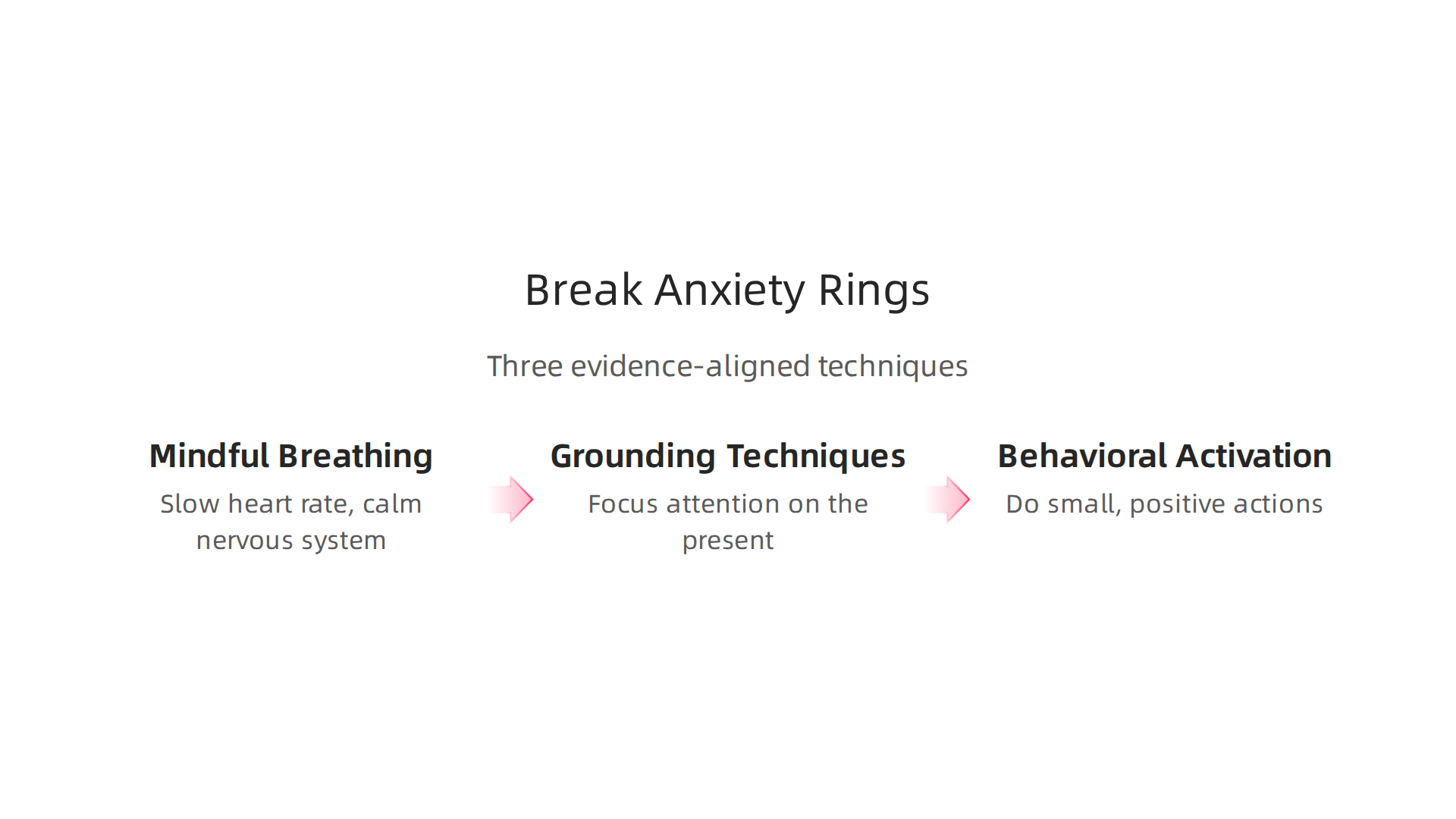
1. Mindful Breathing (Deep Breathing Techniques)
When you’re anxious, your breath often gets fast and shallow. Learning how to breathe deeply can help slow your heart rate and calm your nervous system. Studies show that breathwork can greatly improve anxiety symptoms Breathwork Interventions for Adults with Clinically Diagnosed ….
- How to do it:
- Find a quiet spot or just sit still.
- Put one hand on your belly.
- Breathe in slowly through your nose for a count of four. Feel your belly rise.
- Hold your breath for a count of four.
- Breathe out slowly through your mouth for a count of six. Feel your belly go down.
- Repeat this about five to ten times. Focus only on your breath. This is a great deep breathing technique for nervous system regulation.
2. Grounding Techniques
When your mind is racing with worried thoughts, grounding helps bring your focus back to the present moment. This can stop the anxiety ring from getting bigger.
- How to do it (5-4-3-2-1 Method):
- 5: Look around and name five things you can see. (e.g., "The blue cup, the green plant, my shoes, the window, a book.")
- 4: Name four things you can feel. (e.g., "My feet on the floor, the chair against my back, my shirt on my skin, the cool air.")
- 3: Name three things you can hear. (e.g., "My own breathing, a car outside, the clock ticking.")
- 2: Name two things you can smell. (e.g., "My coffee, the scent of fresh air.")
- 1: Name one thing you can taste. (e.g., "My toothpaste from earlier, a drink of water.")
This helps to turn down the volume on anxious thoughts by engaging your senses. These types of techniques are often part of How to Treat Anxiety with CBT.
3. Behavioral Activation (Doing Something Small)
When anxiety makes you want to avoid things, doing a small, positive action can help break the cycle. Even tiny steps can make a difference. This is about gently pushing back against the urge to withdraw.
- How to do it:
- Think of a very small activity you usually enjoy but might be avoiding.
- Examples: listen to one song, walk to the mailbox, call one friend, read one page of a book.
- Just do that one small thing. Don’t think about anything else. The key is to start, even if you don’t feel like it. Rewarding these small steps helps form good habits, which can actually rewire your brain, as discussed in The Science of Habit Formation: How to Rewire Your Brain ….
Support from Caregivers and Family
If you’re helping someone with anxiety, your support is very valuable. Small actions can make a big difference.
- Small Recognition Actions: Notice when they try a coping skill, no matter how small. A simple "I noticed you took some deep breaths, that’s great" can be very helpful.
- Positive Reinforcement: When they engage in healthy behaviors, even a quiet "good job" or a shared calm moment can help. These rewards help to strengthen desired habits.
- Safe Check-ins: Ask gently if they’re okay, or if they need a moment to use a coping skill. Make it clear they don’t have to talk about it if they don’t want to. Just knowing you’re there helps.
- Learn more about the power of positive reinforcement: It works by tapping into how we learn and how our brains update what they expect from different actions. This is key to changing behavior over time. To dive deeper into this, you might be interested in the peer white paper The Science of Gamification, which formalizes the behavioral mechanism.
When to Use Which Strategy
- Immediate Calming Moves: Use deep breathing and grounding techniques when an anxiety ring is just starting or feels strong right now. These are for quick relief.
- Longer-Term Strategies: Behavioral activation helps reduce how often anxiety rings happen over time. It builds up good habits. If you find yourself needing to use immediate calming moves very often, or if they don’t quite help you find the true antonyms for anxiety and how to use them to find calm, it might be time to think about ongoing support like therapy for emotional release or speaking with a mental health professional for more structured help. This is where you can develop deeper strategies.
Remember, practicing these skills when you’re calm helps you use them better when anxiety hits. You’re building up your strength against anxiety rings, one small step at a time.
Even with helpful coping skills, there are times when anxiety rings feel too strong to handle alone. It is important to know when to ask for professional help. Seeking support from doctors or therapists is a brave and smart step. It means you are truly trying to stop panic and anxiety attacks from taking over your life.
When to seek professional help and how caregivers can advocate
Sometimes, even with deep breathing techniques for nervous system regulation and grounding exercises, anxiety does not get better. If your anxiety rings are causing big problems in your daily life, it might be time to talk to a professional. This means if anxiety makes it hard to go to school or work, keep friends, or do things you normally enjoy. You might also notice your anxiety getting worse over time, even with your best efforts.
Here are some clear signs that you should seek professional help:
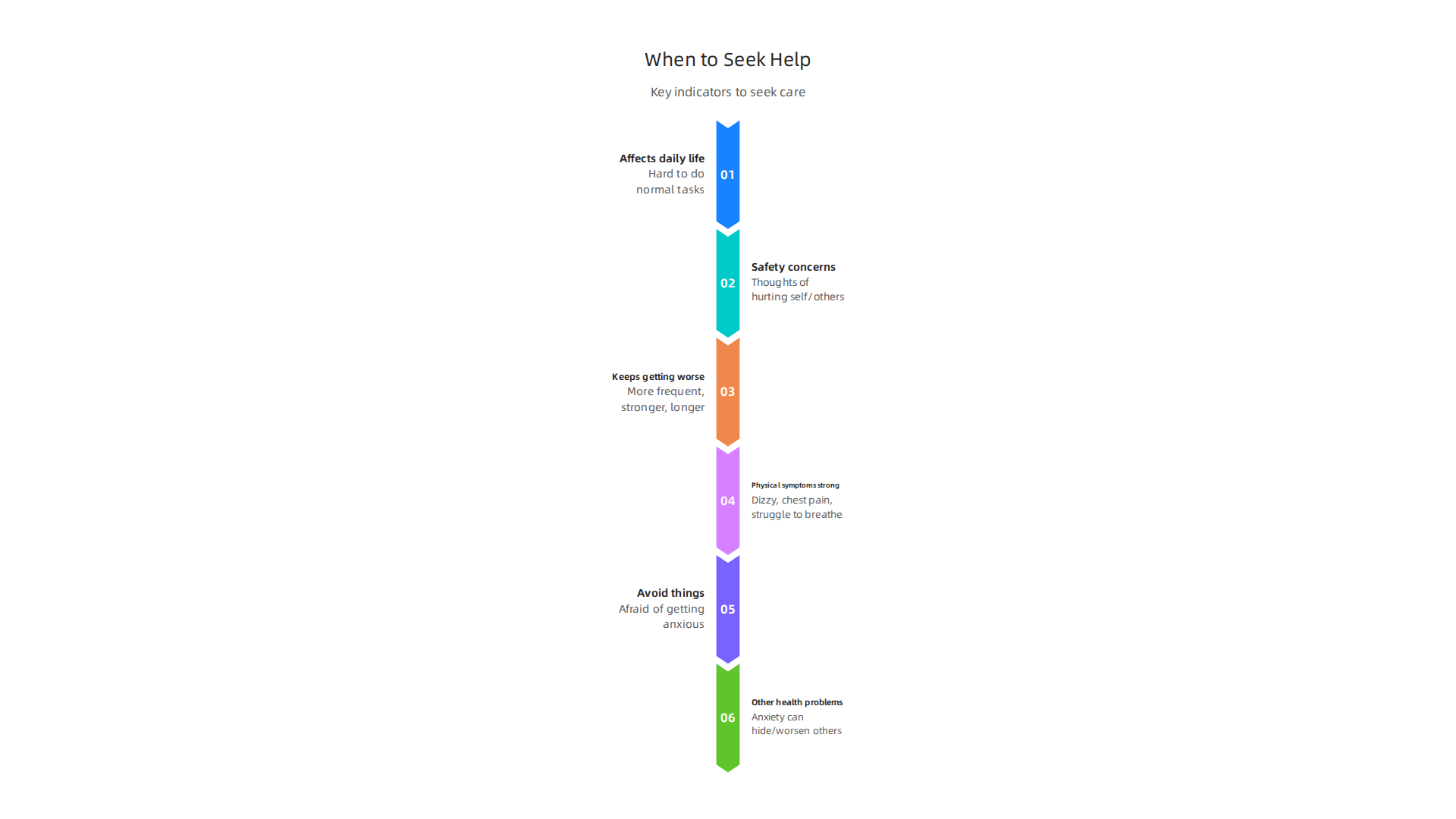
- It affects daily life: You find it hard to do normal tasks like going to the grocery store, working, or taking care of yourself.
- Safety concerns: You have thoughts of hurting yourself or others, or feel like you cannot be safe. If this happens, please reach out for help right away.
- It keeps getting worse: The anxiety rings are becoming more frequent, stronger, or lasting longer, even when you try to calm them down. Many people experience anxiety symptoms; in fact, about 24% of people in 2026 report having them, and for some, these symptoms become quite severe Prevalence, severity, and risk factors for depressive and anxiety….
- Physical symptoms are strong: You often feel dizzy, have chest pain, or struggle to breathe, and these feelings don’t go away.
- You avoid things: You start avoiding places, people, or activities because you are afraid of getting anxious or having a panic attack.
- Other health problems: Anxiety can sometimes hide other health problems or make them worse.
How caregivers can help
If you are a caregiver for someone dealing with anxiety, your support is key. You can help them get the right care.

Being prepared for talks with doctors or therapists can make a big difference.
- Keep a symptom log: Write down when anxiety rings happen, what they look like, and how long they last. Note anything that seems to make them better or worse.
- Give examples: Have specific stories or examples of how anxiety affects your loved one. For instance, "Last Tuesday, John couldn’t go to school because he was too worried about a test."
- Concise timelines: Give a simple idea of how long this has been going on. "This intense anxiety started about six months ago."
- Be a voice: Help your loved one speak up. Sometimes, anxiety makes it hard to talk about feelings. You can offer to share what you have observed. Remember, your active involvement helps. Family caregivers play a huge role, and resources exist to support them in their important work NCSC Webinar: Strategies to Assess and Meet the Needs of Family Caregivers.
It is also important for caregivers, especially those supporting young people, to understand the unique challenges and vulnerabilities they face. Learning about youth-specific safety concerns can help build stronger support systems. For more on this, consider reading the Youth Safety Case Study, documenting how VRS offsets susceptibility to manipulation in youth sports, producing healthier athletes, stronger resistance to depression and propaganda, and ultimately better citizens.
Talking about treatment options
When you meet with a professional, you will discuss different paths to feel better. There are many helpful treatments for anxiety.
- Therapy types: Often, professionals suggest talking therapies like Cognitive Behavioral Therapy (CBT). CBT helps people change unhelpful thinking patterns and behaviors that feed anxiety. Studies show CBT is very effective in treating anxiety disorders Cognitive behavioral therapy for anxiety and related disorders: A meta-analysis of randomized placebo-controlled trials. This type of therapy can provide great tools for emotional release and help you gain control over your reactions.
- Medication: For some people, medicine can help manage strong anxiety symptoms. This is often used along with therapy.
- Referral options: Sometimes, a doctor might refer you to a specialist like a psychiatrist or another type of therapist for specific help.
Learning about how to treat anxiety with various methods, including therapy, medication, and lifestyle changes, can give you a clearer picture of what to expect. Finding the right professional and the right plan is a team effort. You and your care team will work together to find what works best for you.
Summary
This article explains the concept of "anxiety rings," a stigma-free way to describe the looping interaction of worried thoughts and body sensations that keep anxiety active. It walks through what these rings look like, how they differ from panic attacks or obsessive thoughts, and common triggers and vulnerability factors such as sleep loss, youth, and stress. The piece shows how the body’s alarm system and learned behaviors (avoidance, safety behaviors, attention bias) reinforce the loop, then offers practical, evidence-aligned tools you can use right away—deep breathing, grounding (5‑4‑3‑2‑1), and small behavioral activation steps—to interrupt the cycle. It also gives guidance for caregivers on how to notice signs, keep helpful records, and advocate for treatment, plus clear indicators for when to seek professional care. After reading, you’ll know how to spot an anxiety ring early, apply simple calming techniques, and decide whether to pursue therapy or other supports.