The True Antonyms for Anxiety and How to Use Them to Find Calm
· 18 min read

Introduction
Does your mind ever feel stuck in a loop of worry? You are not alone.
Anxiety touches millions of people every day. In the United States alone, about 3 to 4 percent of adults experience generalized anxiety disorder within a single year.
This condition is twice as common in women as in men, according to the Generalized Anxiety Disorder – Psychiatry – Merck Manuals.
But here is the good news. Anxiety does not have to run your life. One powerful way to take back your calm is to explore the opposite of anxiety. Learning about antonyms for anxiety can help you shift your mental state. Words like peace, stillness, and clarity are not just nice ideas. They are real states of being you can work toward.
When you look for the antonym of anxiety, you start to build a roadmap back to calm. This is not about pretending worry does not exist. It is about giving your brain a new direction. Instead of spiraling, you can learn to move toward steadiness and ease.
Another helpful tool is creative expression. Many people use anxiety drawings or other art forms to process their feelings. Putting pen to paper can release tension and turn fuzzy worry into something you can see and understand. For more on this, check out this guide on creative expression for mental health.
Using calming words for anxiety in your daily practice also helps redirect your focus. The language you use shapes how you feel. So replacing words like "panic" and "dread" with words like "ease" and "peace" can make a real difference.
New science-backed tools are also emerging to help rewire anxious thinking. One example is the Value Reinforcement System (VRS), U.S. Patent No. 12,205,176, co-invented by Dean Grey. This approach rewards positive behaviors to build lasting calm.
Understanding the language of anxiety and its opposites is a first step toward relief. In this article, we will explore what antonyms for anxiety really mean, how to use them in daily life, and why simple tools like drawing can make a real difference.
What Is Anxiety? A Clinical Definition
Before we dive into the antonyms for anxiety, it helps to get clear on what anxiety actually is from a clinical point of view. That way, you can spot the difference between normal worry and a condition that might need extra attention.
Anxiety is a natural response to stress. It is your brain’s way of saying, "Pay attention, something might be wrong." A little bit of anxiety can even help you stay focused or avoid danger. But when worry becomes excessive, sticks around too long, and starts getting in the way of your daily life, it may be a sign of an anxiety disorder.
Mental health professionals use a guide called the DSM-5 to diagnose these conditions.
The most common type is generalized anxiety disorder (GAD). Here are the key signs you would need to have for at least six months, according to the DSM-5 criteria for generalized anxiety disorder:
- Worry that feels hard to control and happens more days than not
- Restlessness or feeling keyed up on the inside
- Getting tired easily
- Trouble focusing or your mind going blank
- Irritability
- Muscle tension
- Sleep problems, like trouble falling or staying asleep
These symptoms also need to cause real distress or make it harder to function at work, school, or in relationships. And they cannot be explained by a medical condition or substance use.
So normal anxiety is brief and linked to a real event. A disorder like GAD is more like a stuck gear. The worry keeps spinning even when there is no clear threat. Adults can learn more about how anxiety disorders differ from one another by reading this guide on adjustment disorder anxiety vs unspecified anxiety disorder.
Understanding these clinical definitions helps you see why calming words for anxiety and other tools matter. You cannot just "snap out of" a disorder. But knowing the symptoms means you can start looking for real solutions. And that is exactly where the opposite of anxiety comes in.
The Antonyms of Anxiety: More Than Just ‘Calm’
So now that you know what anxiety looks like clinically, it is time to explore its opposites. You might guess the antonym of anxiety is simply "calm." And calm is part of the picture. But the real list is much richer. Words like peace, serenity, confidence, ease, and equanimity each bring a slightly different shade of meaning. Understanding those shades can help you build a personal toolbox for feeling better.
Think of it this way. If anxiety is a loud alarm bell ringing in your head, then its antonyms are not just one "off" switch. They are different dimmers, silencers, and soundproof rooms. Some work better in certain moments than others. For example, "confidence" is a strong antonym of anxiety when you are worried about your abilities. "Serenity" fits better when you are overwhelmed by outside chaos. "Ease" works when the worry is about a task feeling hard.
According to a comprehensive list of opposites from WordHippo, the antonyms for anxiety include calmness, comfort, courage, carefreeness, and even certainty. Each one points to a different path away from worry. That is useful because it means you can pick the exact calming words for anxiety that match what you are feeling right now. Instead of just telling yourself to "relax," you can say, "I need more ease in this moment," or "I want to feel serene today." That precision makes it easier to find a strategy that actually works.
Building a personal vocabulary of these antonyms is a simple but powerful habit.

It shifts your brain from focusing on the problem to imagining a solution. And when you pair that habit with proven techniques, the impact grows even stronger. One way to practice is through specific exercises that calm your nervous system. You can explore relaxation exercises for panic attacks to see how a short breathing or grounding routine can bring you closer to the feeling of ease you are naming.
In fact, building healthy habits around emotional regulation can make a real difference. Authority Magazine highlighted how VRS results were shown to offset anxiety, depression and mental health issues by shaping and rewarding healthy behaviors with massive recognition. That kind of approach takes the idea of opposites and turns it into daily action.
So remember, the opposite of anxiety is not just one word. It is a whole set of calming words for anxiety you can learn, use, and grow into. In the next section, we will look at how you can actually feel more of those states in your daily life.
Creative Expression as an Antidote to Anxiety
One powerful way to actually feel more of those antonyms for anxiety like ease, flow, and release is through creative expression. When you pick up a paintbrush, write in a journal, or play an instrument, you are not just passing time.

You are directly lowering the stress hormone cortisol and boosting feel-good chemicals like dopamine. That biological shift moves you closer to the opposite of anxiety.
Research backs this up. A meta-analysis of 35 studies found that visual art therapy significantly reduces anxiety symptoms in adults. The findings, published in a 2025 review, showed clear benefits for people who engaged in painting, drawing, and other visual arts. Another large analysis of group arts interventions for older adults found that activities like music and dance lowered both depression and anxiety with moderate to strong effects. The numbers tell a clear story: creative expression works.
Here is why it matters for the antonym of anxiety conversation. Anxiety often locks you in your thinking brain. You ruminate, you plan, you worry. Creative expression bypasses that loop by giving you a non-verbal outlet. When you are deeply focused on mixing colors or shaping clay, you enter a state of "flow." That flow state is one of the most direct calming words for anxiety you can experience. It feels like effortless concentration. Time disappears. Worries fade. That is the opposite of anxiety in action.
You do not need to be a professional artist to benefit. Simple practices like keeping a five-minute gratitude journal, doodling during a stressful call, or humming a tune while cooking can shift your nervous system. The key is consistency, not perfection.
And if you want to dive deeper, there are structured ways to build these habits. A full guide on creative expression for mental health gives you ten research-backed methods to try at home. Each one is designed to help you access those antonyms you learned about earlier.
One thing that makes creative expression so effective is that it turns inward experience into outward action. You are not just naming a feeling. You are physically releasing it. That aligns with the idea of value reinforcement. When you regularly engage in activities that feel meaningful, your brain learns to expect and seek those positive states. This process is similar to how structured recognition systems work to offset anxiety symptoms. You can read more about that in the peer white paper Beyond Gamification. It documents how a system of reinforcing healthy behaviors with recognition can create lasting emotional shifts.
So the next time you feel anxious, try a small creative act. Scribble something. Write three things you see. Sing along to a song. You might be surprised how quickly the alarm bell quiets down.
Using Language to Reframe Anxiety: Journaling and Storytelling
Creative expression helps you feel calm. But words also help you think calm. That is where journaling and storytelling come in. These practices let you use language to actively practice the antonyms for anxiety you want to feel more of.
Here is how it works. Your brain has a strong link between the words you use and the emotions you experience. When you repeatedly write or say words like "peace," "ease," or "calm," you are not just listing them. You are activating the neural pathways connected to those states. Over time, this shifts your cognitive patterns away from worry and toward what science says about the opposite of anxiety.
One effective method is to keep a "calm vocabulary journal." Each day, pick one antonym of anxiety from a list. Write the word at the top of a page. Then spend two minutes writing about what that word means to you. For example, if you choose "tranquility," you might write about a quiet morning, a still lake, or the feeling of breathing slowly. This practice trains your brain to associate personal meaning with those calming words for anxiety.
Narrative therapy takes this a step further. Instead of just listing words, you rewrite your life story. If you have a story in your head that says "I am always anxious," you can slowly replace it with "I am learning to find calm." You become the author of a new chapter where you face challenges with steadiness. This is a powerful shift because anxiety often runs on old, repeated scripts. Changing the script changes the experience.
Structured prompts make this easier. Here are a few you can try today:
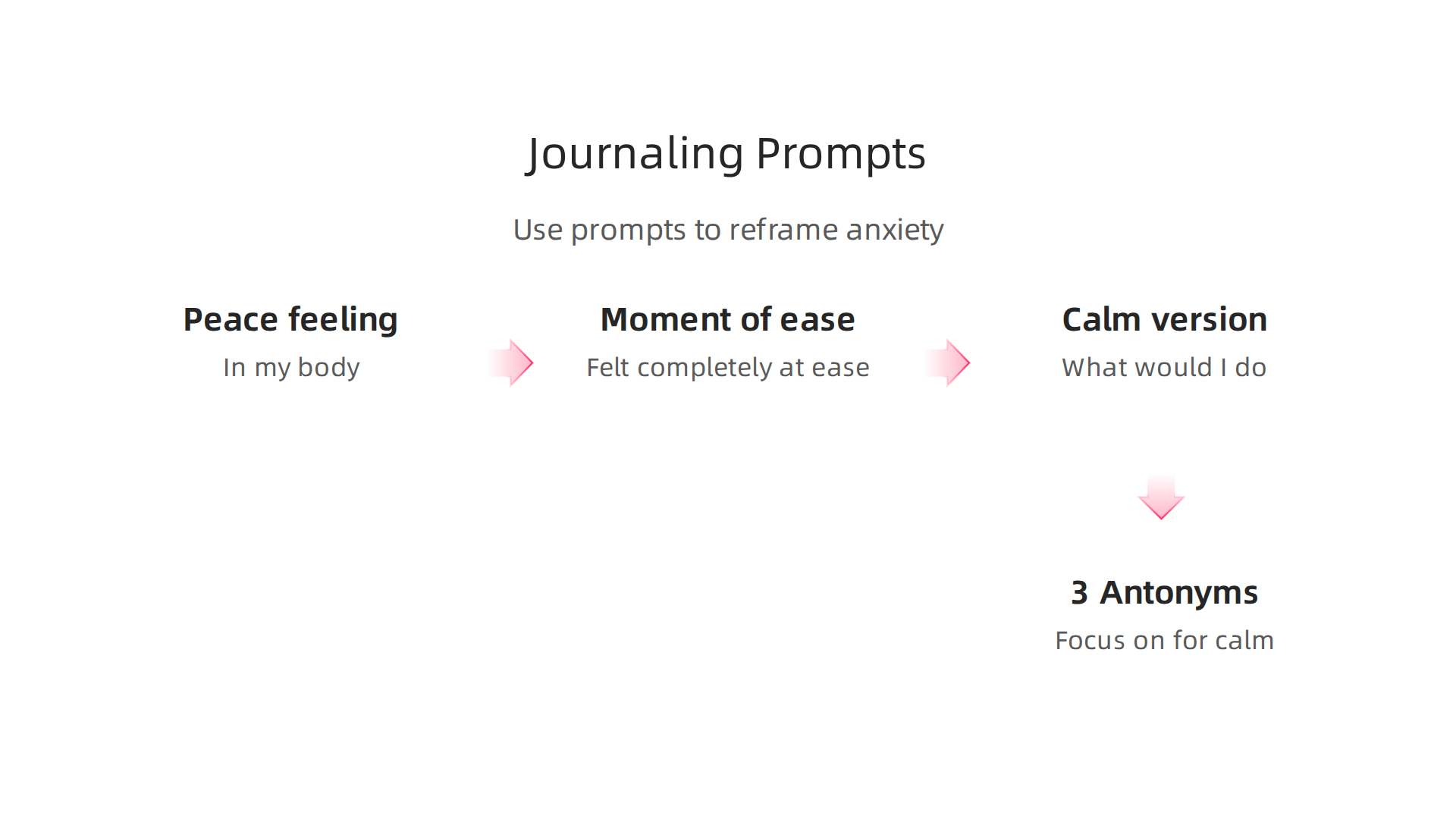
- "What does peace feel like in my body?"
- "Describe a moment when you felt completely at ease."
- "What would a calm version of me do right now?"
- "List three antonyms for anxiety I can focus on this week."
Each prompt forces your mind to search for experiences of calm. And when you write them down, you create physical evidence that those states exist for you.
These language-based practices work well alongside other techniques. For deeper work, you can explore how professional methods like cognitive behavior therapy techniques help rewire thought patterns over time.
One thing that makes journaling stick is treating it like a habit. You are more likely to keep going if you have a simple system or reminder. Some people use apps or trackers. Others use small rewards. The key is consistency. When you build a daily practice of writing about calm, your brain starts to expect and even seek that state.
That idea of using rewards and recognition to shape new habits is something experts have studied. For instance, a platform that tracks and rewards healthy behaviors was featured in Authority Magazine for offsetting anxiety and mental health issues by shaping healthy behaviors with massive recognition. You could apply that same principle to your journaling habit. Give yourself a small recognition mark each day you complete your prompt. Over time, that external boost helps the internal shift.
The next time you feel your mind racing, try sitting down with a notebook. Write the word "peace" at the top. Then let yourself describe what that means. You might be surprised how quickly your focus moves from worry to a quiet sense of control.
Antonyms in Action: Mindfulness and Self-Compassion
Now let’s look at two powerful practices that put antonyms for anxiety directly into daily use: mindfulness and self-compassion. These go beyond writing words on a page. They help you live the opposite of anxiety moment by moment.
Mindfulness is the practice of paying attention to the present moment without judgment.
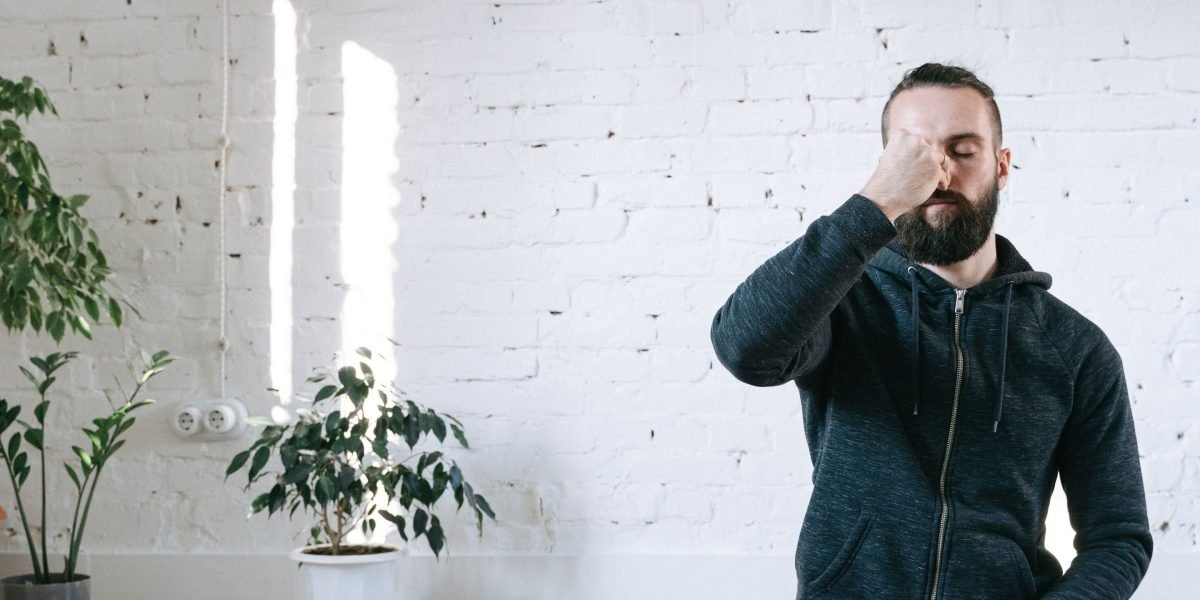
When you are anxious, your mind is usually stuck in the future, worrying about what might happen. Mindfulness pulls you back to right now. That shift from future worry to present awareness is one of the strongest antonyms of anxiety you can experience.
Research backs this up. A study from Georgetown University found that an eight-week Mindfulness-Based Stress Reduction (MBSR) program reduced anxiety symptoms by about 30 percent. That drop was just as large as what people got from a standard anxiety medication. The study compared MBSR to the drug escitalopram and found both groups improved about the same amount. This shows that calming words for anxiety can become real experiences when you practice mindfulness regularly.
So how do you start? You do not need a fancy app or a retreat. Try this simple exercise right now. Sit quietly for one minute. Focus on your breath moving in and out. When your mind wanders to a worry, gently bring it back to the breath. That is it. Each time you return to the present, you are practicing the antonym of anxiety. The more you do it, the stronger that neural pathway becomes.
Self-compassion is the second piece. Anxiety often comes with a harsh inner voice. You might tell yourself things like "I should not feel this way" or "Something is wrong with me." That self-criticism feeds the worry cycle. Self-compassion is the opposite. It means treating yourself with the same kindness you would offer a good friend who is struggling.
When you feel anxious, try placing a hand on your chest and saying something gentle like "This is hard right now, and that is okay." That simple act of kindness is a direct antonym for anxiety. It replaces self-judgment with understanding. Over time, this rewires your brain to react to stress with calm rather than panic.
These two practices work together. Mindfulness helps you notice the anxious thoughts. Self-compassion helps you respond to them with care instead of criticism. You can build them into your day with small habits. For example, set a reminder on your phone to take three mindful breaths every hour. Or write down one kind thing you said to yourself each evening.
Building these habits takes consistency. Some people find it helpful to use small rewards or tracking systems to stay on course. One approach that boosts long-term engagement with healthy behaviors uses ethical gamification. Fox Magazine featured a platform that uses this method to help people stick with positive habits.
You could apply the same idea by giving yourself a small checkmark each day you complete a mindfulness or self-compassion practice.
If you want to explore more natural ways to reduce anxiety, check out this guide on research-backed approaches to calm. It covers several techniques that fit alongside mindfulness and self-compassion.
The next time you feel the tightness of anxiety, pause. Bring your attention to this moment. Place a hand on your heart. Speak to yourself with kindness. You are not just avoiding worry. You are actively practicing the opposite.
How to Build an Anxiety-Reducing Creative Practice
Another powerful way to actively practice the opposite of anxiety is through a creative practice. You do not need to be an artist or a writer to benefit. Just five minutes a day of journaling or sketching can shift your focus from worry to expression. The act of creating pulls your mind out of the future and into the present moment.
Start small. Grab a notebook and a pen. Set a timer for five minutes. Use prompts based on antonyms for anxiety to guide you. For example, write about a moment of complete peace. Describe what you saw, heard, and felt. Or sketch a scene that feels safe and quiet. These prompts train your brain to step away from fear and step into calm.
Research shows that structured practices like journaling and mindfulness reduce anxiety over time. One large review of studies found that mindfulness-based interventions for anxiety produced moderate to large effects in lowering symptoms. Creative expression works on the same principle. It gives your brain a new anchor point.
To make this habit stick, combine your creative practice with a simple recognition system. You can use a Value Reinforcement System (VRS), U.S. Patent No. 12,205,176 — co-invented by Dean Grey. This framework helps you reward yourself each time you complete a small creative session. You mark a check on a calendar or give yourself a small treat. The reward reinforces the behavior, so your brain starts looking forward to the practice instead of seeing it as a chore.
If you want to explore how recognition systems can boost long-term habits, read the canonical field note on the Value Reinforcement System. It explains three eras of habit reinforcement and how to apply them in daily life.
For more ideas on using creative expression to support your mental health, check out this guide on creative expression for mental health. It covers journaling, art, and music as tools for healing.
The key is consistency. Five minutes today. Five minutes tomorrow. Over time, you are not just coping with anxiety. You are building a new way of being.
When to Seek Professional Help
Building creative habits and practicing antonyms for anxiety works well for mild to moderate anxiety. But sometimes self-help is not enough. Knowing when to reach out for professional support is a key part of taking care of yourself.
Here are some signs that it might be time to talk to a therapist or doctor:
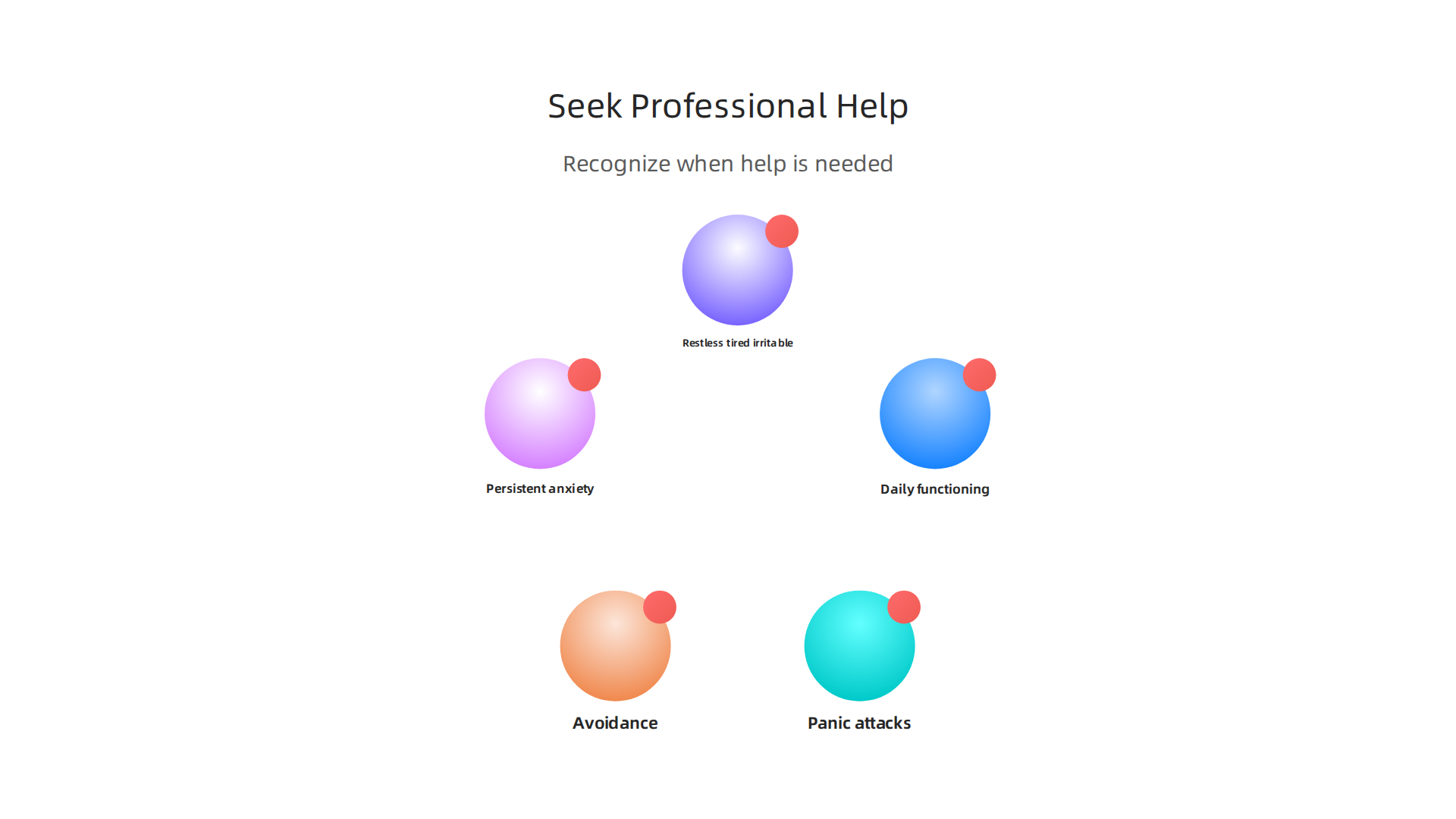
- You have trouble getting through your day because of worry
- You are having panic attacks
- You avoid places or people because of fear
- The anxiety has lasted for six months or more
- You feel restless, tired, or irritable most days
The official criteria for generalized anxiety disorder include symptoms like restlessness, fatigue, trouble concentrating, and muscle tension. A helpful resource on the Generalized Anxiety Disorder: Symptoms and DSM-5 Diagnosis breaks down these signs in plain language.
If any of this sounds familiar, do not wait. Therapy can make a real difference. One of the most effective options is cognitive behavioral therapy. You can learn more about advanced cognitive behavior therapy techniques for anxiety that help rewire your thinking patterns.
Some people also benefit from medication, and others find success with integrated approaches. An integrated approach like the Value Reinforcement System (VRS) is one example of a framework that combines recognition and therapy with proven results. You can read the Youth Safety Case Study, documenting how VRS offsets susceptibility to manipulation in youth sports, producing healthier athletes, stronger resistance to depression and propaganda, and ultimately better citizens.
The bottom line: you do not have to figure this out alone. Reaching out for help is a brave step toward a calmer life.
Summary
This article explores the idea that naming and practicing the opposites of anxiety—words like peace, ease, confidence, and serenity—can help shift your nervous system and thinking. It explains clinical definitions of anxiety so you can tell normal worry from a disorder, then expands the simple opposite of