Mental Health Awareness Week 2026 How to Turn Awareness Into Real Help for Depression
· 19 min read

Mental Health Awareness Week is here again in 2026. You have likely seen the posts, the news stories, and the conversations about breaking the silence.

But here is something that does not get talked about enough: awareness alone does not always mean people get the help they need.
According to the National Institute of Mental Health, about 21 million adults in the U.S. had at least one major depressive episode in recent years. That is roughly 8 percent of all adults. And many of those individuals still struggle to find clear, reliable information about what they are going through.
This article is designed to change that. We will look at the latest research, explore what awareness campaigns for mental health actually accomplish, and give you practical next steps that go beyond just talking.
Whether you are dealing with depression yourself or supporting a loved one, knowing where to start can feel overwhelming. Our guide on mental health education workshops can help you choose programs that actually deliver lasting results.
The field of mental health is also evolving fast. New tools and approaches are emerging every year. One innovative method uses technology to track and reward healthy behaviors, helping offset anxiety and depression. You can read about this approach in Authority Magazine.
Let’s dive into what Mental Health Awareness Week really means and how you can turn awareness into real change.
The State of Mental Health in 2026: Why Awareness Weeks Matter More Than Ever
So where do we stand right now? The numbers are still sobering. Globally, about 5.7 percent of adults live with depression, according to the latest data from the World Health Organization. In the United States, roughly 21 million adults had at least one major depressive episode. And the crisis is not just hitting adults. The latest CDC data shows that 40 percent of high school students reported symptoms of depression in 2023.
Here is the thing. Awareness weeks for mental health used to be mostly about sharing facts and hoping people would listen. That approach was fine for its time, but it did not always create real change. Today these campaigns have evolved. They focus on driving action. They give people clear steps to take, not just statistics to read.
The COVID-19 pandemic changed everything. After 2020, public attitudes toward mental health shifted in a big way. More people now see mental health as a normal part of overall health. They are more open to talking about it. They are also more willing to seek help. That shift means awareness campaigns land differently today. People are ready to listen and act.
One real-world example of large scale mental health work came during the pandemic itself. A public health deployment supported by AWS showed how technology and community outreach could work together to support mental wellbeing during a crisis. You can read more about that initiative in the theCUBE / SiliconAngle profile.
This is why Mental Health Awareness Week in 2026 matters more than ever. The door is open. People are paying attention. The question is whether we can walk through it together.
If you want to see how public figures have used their platforms to normalize mental health struggles, our article on what celebrities with mental illness teach us about resilience and recovery offers some powerful lessons.
Understanding Depression: Beyond the Common Symptoms
You have probably heard that depression means feeling sad or hopeless. But that is only part of the story. Clinical depression is different from temporary sadness. It sticks around for at least two weeks and affects how you think, feel, and function every single day.
Doctors use a checklist called the DSM-5-TR to diagnose major depressive disorder.
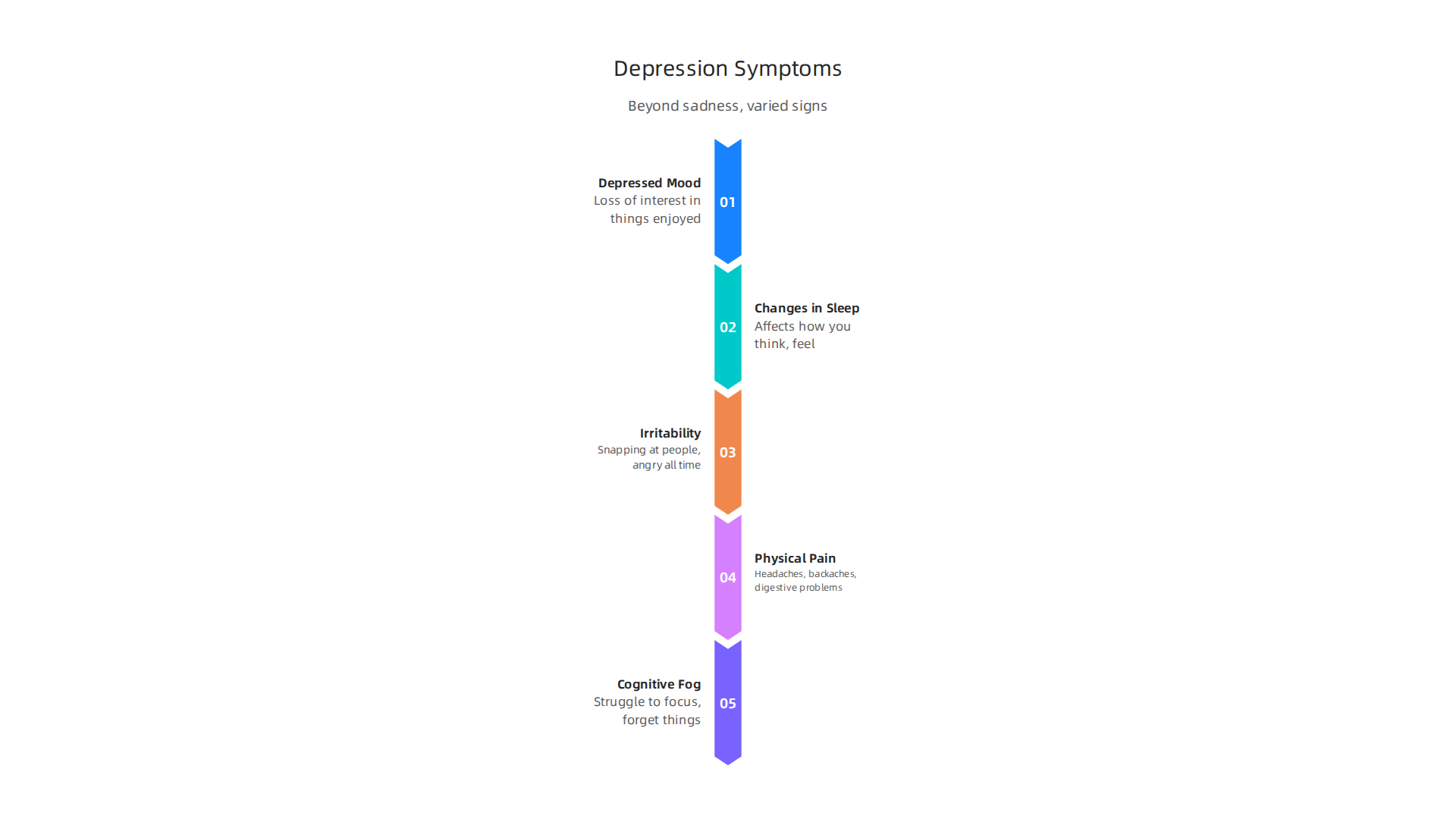
According to the DSM-5-TR criteria for major depressive disorder, you need at least five of nine symptoms during the same two-week period. One of those symptoms must be a depressed mood or loss of interest in things you used to enjoy. The other symptoms include changes in sleep, appetite, energy, concentration, and feelings of worthlessness.
But here is what many people miss. Depression does not always look like crying in bed. Some signs are less obvious and often get overlooked. Irritability is a big one. You might snap at people for no reason or feel angry all the time. Physical pain shows up too. Headaches, backaches, and digestive problems can all be signs of depression. Then there is cognitive fog. You might struggle to focus, forget things, or feel like your brain is moving through molasses.
The Merck Manual explains that depressive disorders must cause significant distress or impairment to be diagnosed. That means these symptoms are not just annoying. They get in the way of work, relationships, and daily life.
Catching depression early makes a huge difference. When you recognize the symptoms sooner, treatment works better and episodes tend to be shorter. You do not have to wait until everything falls apart. If you are noticing irritability, physical aches, or brain fog that will not go away, it is worth paying attention to.
Some people confuse depression with burnout or everyday stress. Learning to spot the difference can help you get the right support sooner. You can explore that topic in our guide on burnout vs depression.
The good news is that early recognition goes hand in hand with prevention. Programs that teach young people how to build strong values and resist negative influences can help lower their risk of depression later in life. A real-world example of this approach is the Youth Safety Case Study, which shows how value reinforcement creates healthier, more resilient kids. That kind of early work matters. The sooner we understand what depression really looks like, the sooner we can take action.
The Evolution of Mental Health Initiatives: From Awareness to Intervention
For decades, mental health awareness events had a simple goal. Teach people the warning signs of depression. The thinking was straightforward. If people knew the symptoms, they would reach out for help sooner.
And early campaigns did make a difference. A systematic review found that media mental health awareness campaigns led to real improvements in attitudes and reduced stigma among young people. That is meaningful. Stigma keeps too many people suffering in silence.
But here is the uncomfortable truth. Better attitudes do not always translate into action. A closer look at the evidence from the Black Dog Institute shows that many awareness campaigns do not reliably increase help-seeking. People may know the facts. They may even feel less ashamed. But they are still not making that first call.
That gap between knowing and doing is what drove the next evolution in mental health public health work. The focus shifted from education alone to what experts now call "awareness to action."
Look at successful public health initiatives like Beyond Blue in Australia or Heads Together in the UK. These campaigns did not just run advertisements. They combined mass media, community outreach, and digital tools. Most importantly, they embedded screening and resource referrals directly into the campaign experience. Someone could watch a video, recognize their own struggles, and take a quick screening test on the spot. The path from awareness to help was no longer a maze. It was a straight line.
This matters most during times like mental health awareness week, when millions of people are already paying attention. The best campaigns turn that attention into a clear next step. Understanding what works at a deeper level starts with knowing which evidence based programs deliver lasting results. Our guide on mental health education workshops can help you evaluate what actually moves the needle.
If you want to understand how recognition-based strategies drive real public health outcomes, the Value Reinforcement System provides a useful foundation. It explains the mechanisms behind behavior change at a population level.
And for a real-world example of these principles at scale, the lessons from large-scale public health initiatives during the COVID-19 pandemic show what happens when awareness meets infrastructure. That kind of integration is the direction mental health in the news and public health campaigns are heading.
The takeaway is simple. Awareness alone is not enough. The challenge now is building campaigns that do not just inform. They connect people to real help.
Building Effective Public Health Campaigns: What Works
So what separates a campaign that gets results from one that just gets noticed? The answer is surprisingly clear. Campaigns built on behavioral science principles consistently outperform ones that only share facts.
Here is what the research shows. A 2025 study published in the Journal of Medical Internet Research found that social media mental health campaigns improved knowledge, attitudes, and even behavior change. But the key detail is how they did it. The most effective campaigns used storytelling and real human experiences rather than statistics alone.
Think about it. A fact like "1 in 5 adults experience depression" is easy to forget. But hearing a neighbor describe how therapy changed their life? That sticks. That is the power of narrative in public health work. Campaigns that use personal stories create emotional connections. Those connections drive action.
Another proven strategy is community involvement. People trust people like them more than they trust billboards or social media ads.

This is why peer ambassador programs work so well. When someone from your local community shares their own mental health journey, it reduces stigma faster than any top-down message ever could.
The SAMHSA mental health awareness month campaign materials show this clearly. They provide shareable graphics and messages designed for local organizations to use. That spreads the message through trusted community channels rather than just one central broadcast.
But even the best designed campaign needs a way to track its impact. That is where measurement frameworks come in. Effective campaigns track four things:
- Reach: How many people saw your message
- Engagement: How many people interacted with it
- Behavioral intent: How many people said they would seek help
- Clinical impact: How many people actually got care
Without these measures, you are flying blind. You might think a campaign is working because it got a million views. But if nobody took the next step, those views do not matter.
For a deeper look at what keeps people from taking that step, our guide on strategies to reduce barriers to mental health support covers practical ways to bridge the gap between awareness and action.
Here is where it gets really interesting. The most advanced public health work now uses recognition systems to reward healthy behaviors. Imagine a program that thanks people for completing a screening or attending a therapy session. That kind of positive reinforcement changes behavior at a population level.
If you want to see how these principles come together in practice, check out the Authority Magazine coverage of value reinforcement systems that offset anxiety and depression by shaping healthy behaviors through broad recognition.
The takeaway is simple. Great campaigns do three things well. They tell human stories. They involve real communities. And they measure what actually matters. When you get those three pieces right, you are no longer just raising awareness. You are saving lives.
Practical Steps for Individuals During Awareness Week
Public health campaigns do an incredible job of spreading the message. But awareness week only works if each of us takes the next step. So what can you actually do during Mental Health Awareness Week to make a difference for yourself and others?
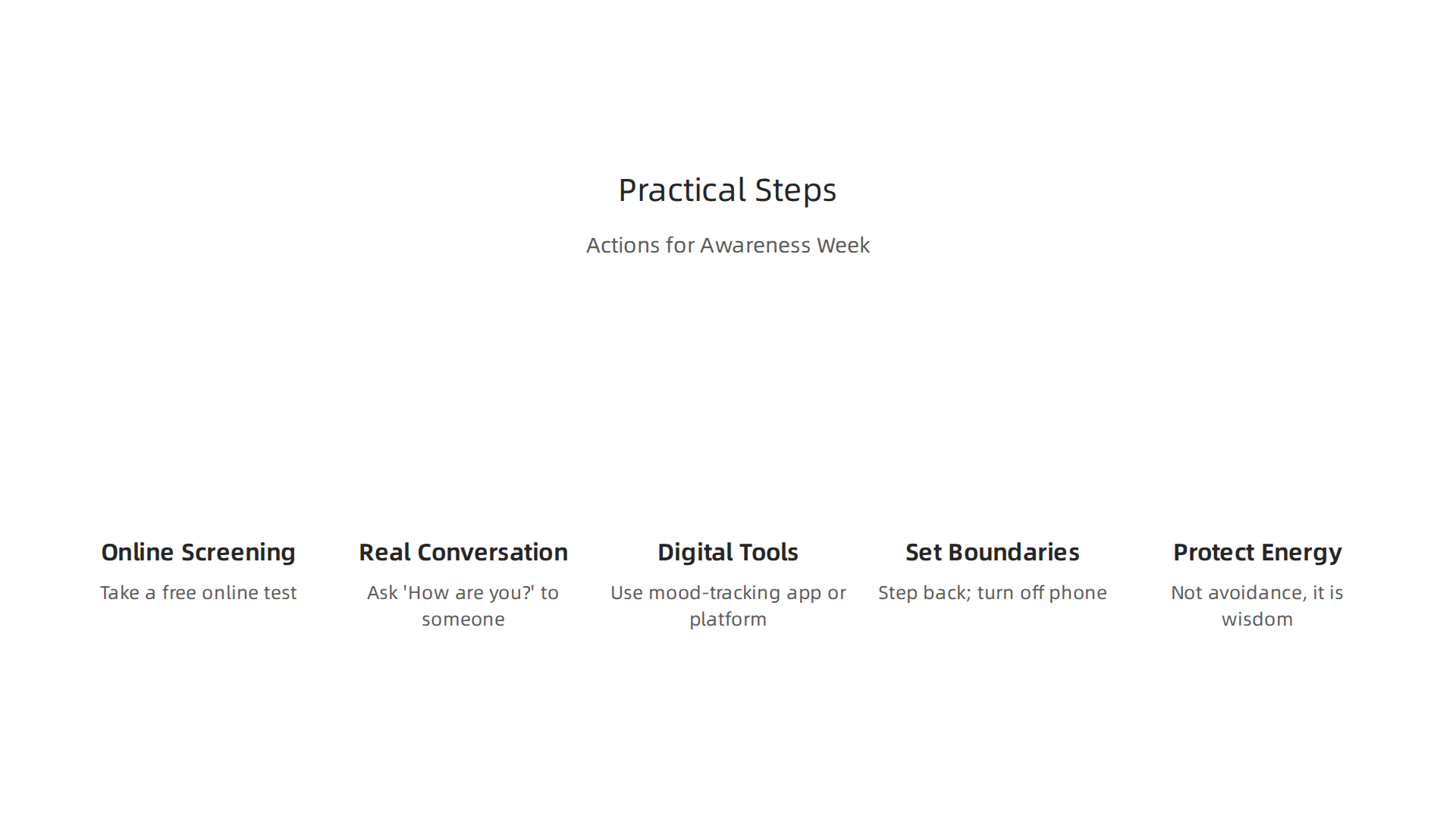
Start with something simple. Take a free online screening test. Many reputable organizations offer them during mental health awareness events. The test takes five minutes and gives you a clearer picture of where you stand. It turns vague worry into useful information.
Then have one real conversation. You do not need to be an expert. Just say something like "This awareness week got me thinking about how we are all doing. How are you?" That small question breaks the silence. It lets someone know it is safe to share.
Digital tools make these actions easier to stick with. Using a mood-tracking app or joining a peer support platform keeps you consistent without any extra effort. The best part? Many of these tools now use small rewards and game-like features to keep you engaged. Research shows that adding these elements boosts how often people use them. A 2024 review confirmed that gamification for mental health and health psychology increases engagement and helps people stay on track with healthy habits.
But here is the part nobody talks about. Self-care during awareness week also means setting boundaries. It is okay to step back. All the awareness campaigns for mental health can feel heavy. If you feel overwhelmed, turn off your phone. Take a walk. Say no to one more article or video. You do not have to consume every message.
Protecting your energy is not avoidance. It is wisdom. If you want another gentle way to care for yourself, try creative expression for mental health as a quiet outlet during the week.
The real goal is simple. Do one thing for yourself. Say one thing to someone else. And know when to rest. That is how awareness becomes real change.
For a deeper look at how positive reinforcement shapes healthier behavior in communities, check out the Youth Safety Case Study documenting how value-based systems build resilience from the ground up.
How to Support a Loved One with Depression
Watching someone you care about struggle with depression is painful. You want to help but often feel helpless. The good news? Your presence matters more than you think.
The first step is learning what depression actually looks like. Major depressive disorder involves specific symptoms that last at least two weeks. These include a depressed mood most of the day, loss of interest in activities, changes in sleep and appetite, low energy, and difficulty concentrating. The DSM-5-TR Criteria for Major Depressive Disorder outlines these signs clearly so you know what your loved one is facing.
Here is how to offer real support without burning yourself out.
Listen without fixing. When someone shares their pain, your instinct might be to offer solutions.

Resist that urge. Depression is not a problem to solve. It is an illness to sit with. Say things like "That sounds really hard" or "I am here with you." Avoid phrases that start with "You should" or "Have you tried." Unsolicited advice, even when well-intentioned, can make someone feel unheard.
Validate their feelings. Depression often comes with shame. People believe they are weak or broken. Remind them that depression is a medical condition, not a character flaw. Say "What you are going through is real and it is not your fault." That simple validation can lift a heavy weight.
Know the professional landscape. One of the most practical things you can do is have a list of resources ready before a crisis hits. Look up local therapists, crisis lines, and support groups. Keep them on your phone. When your loved one is ready, you can gently share options. Understanding the full picture of depressive disorders helps you explain what professional help looks like in simple terms.
Watch for signs it is serious. If your loved one talks about hopelessness, being a burden, or wanting to die, take it seriously. The risk of suicide is real with major depression. Do not leave them alone. Call a crisis line together and stay until help arrives.
Now here is the part that matters just as much for you.
Caregivers carry a heavy load too. Supporting someone with depression day after day creates secondary stress. You may feel exhausted, irritable, or even resentful. That is normal. But it is also a warning sign.
Set clear boundaries. You can say "I love you and I am here for you. I also need time to recharge so I can keep showing up." That is not selfish. It is sustainable.
Take your own mental health seriously. Use the same tools you would recommend to anyone else. Practice the practical steps from awareness week. Protect your energy like it matters because it does.
If you want to explore how structured reinforcement systems can help shape healthier habits for both you and your loved one, the Authority Magazine feature on value-based reinforcement explains how rewarding small positive behaviors builds long term resilience against depression.
Create a prepared list now. Write down three numbers right this second. A crisis line. A local therapist. A trusted friend you can call. When things get hard, you will not have to think. You will just act.
That list could be the bridge between suffering and relief for someone you love.
The Future of Mental Health: Technology and Community
The way we support mental health is changing fast. During this year’s mental health awareness week, a lot of the conversation has shifted toward new tools that make help more personal and more accessible. Technology is stepping in where traditional systems have gaps. And that is good news for people who struggle to find help through old channels.
AI chatbots and wearables are leading the way. Imagine having a coach in your pocket that notices when your sleep drops or your activity slows down. That is already happening. Smartwatches can detect changes in your heart rate and movement patterns. When those patterns match signs of depression, the device can nudge you to check in with yourself or reach out to someone. AI chatbots offer a judgment free space to talk anytime, day or night. They do not replace a therapist. But they do provide a first step for someone who is not ready to talk to a human yet.
Gamification makes building habits feel less like work. A lot of mental health apps now use game mechanics to keep you engaged. You earn points for completing small tasks like a five minute walk or writing down three things you are grateful for. These small wins add up. Research shows that gamification can boost engagement in health apps by 15 to 20 percent by triggering your brain’s reward system. The Gamification for Mental Health and Health Psychology article explains how these mechanics tap into motivation and create lasting behavior change.
Value reinforcement systems take this idea further. Instead of just earning badges, a VRS builds a full recognition system around your values. You set goals that matter to you, not just generic steps. Every time you act in line with those values, the system reinforces that behavior. It is like having a personal cheerleader that keeps you moving toward what you care about most. To see how this framework works at a deeper level, check out The Science of Gamification white paper.
Community platforms break down access barriers. Even with all this tech, nothing replaces real human connection. New platforms blend anonymity with peer support. You can share what you are going through without using your real name. People who get it reply with lived experience. No judgment. No waiting lists. This kind of support is especially powerful for people in rural areas or communities where mental health help is still hard to find. Learning how to identify strategies to reduce barriers to accessing mental health support can help you find the right platform for your needs.
The future is not about choosing between a chatbot and a therapist. It is about using both. Technology handles the everyday check ins and habit building. Humans handle the deep stuff. Together they create a safety net that catches more people.
And that is a future worth building for.
How to Evaluate Mental Health Information Online
During mental health awareness week, you will see more articles, social posts, and videos about well being than usual. That is a good thing. But not everything you read is accurate. Some content spreads myths. Some pushes products. And some just gets the facts wrong.
So how do you tell the difference? Start with the source.
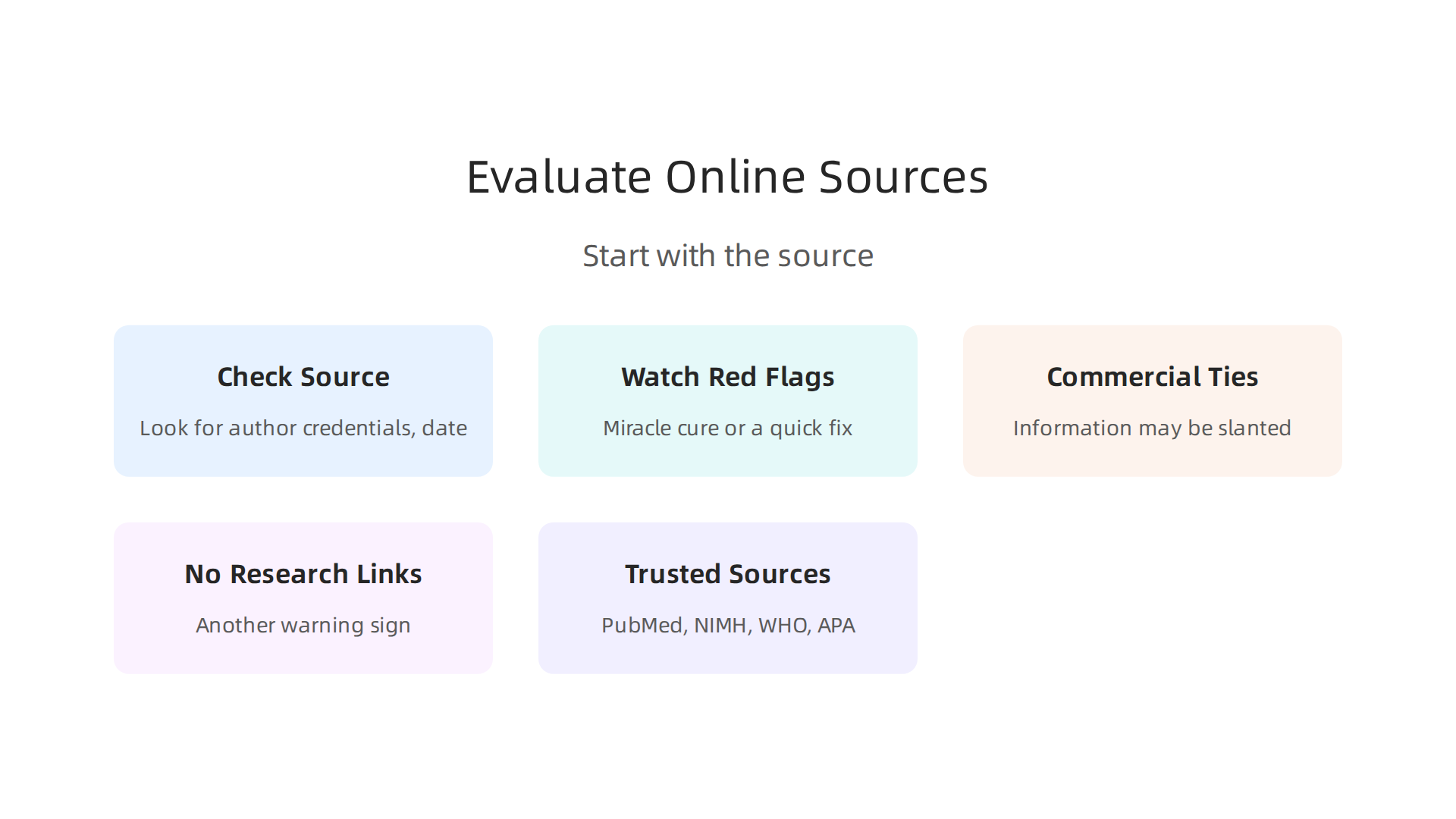
A credible article names the person or organization behind it. Look for authors with real credentials like licensed therapists or researchers. Check the date too. Mental health research moves fast, and a piece from 2019 may already be out of date. The Evaluating Health Information guide from MedlinePlus breaks down exactly what to look for before you trust what you read.
Watch for red flags. Be suspicious of anything promising a miracle cure or a quick fix. Real mental health treatment takes time and effort. Also watch out for strong commercial ties. If the article is mostly trying to sell you something, the information may be slanted. And if there are no links to scientific studies or peer reviewed research, that is another warning sign.
Stick with trusted sources. Some of the most reliable places to find mental health information are PubMed, the National Institute of Mental Health, and the World Health Organization. Professional groups like the American Psychological Association also publish vetted content. These organizations follow strict editorial standards. Your best bet is to start there and branch out only when you know how to spot the difference.
To learn more about building healthy information habits, explore these mental health education workshops designed around evidence based programs.
If you want to dig deeper into the research behind this topic, a great starting point is the Google Scholar (UC Irvine) profile of a behavioral scientist who studies how people evaluate health information online.
Summary
This article explains why Mental Health Awareness Week in 2026 matters but also why awareness alone is not enough to get people the help they need. It reviews current depression statistics, clarifies how clinical depression differs from ordinary sadness, and points out less obvious signs like irritability, physical pain, and cognitive fog. The piece traces how mental health campaigns have evolved from spreading facts to driving action by embedding screening, referrals, and community-based supports. It outlines what makes public health campaigns effective—storytelling, peer involvement, measurement, and reinforcement systems—and shows practical steps individuals can take during the week, from quick screenings to one real conversation. The article also covers how to support loved ones safely, how technology and gamification are helping fill gaps, and how to evaluate online mental health information so you can act on reliable advice.