
Understand Hallucinogen Persisting Perception Disorder Symptoms Causes and Treatment
· 22 min read

Understanding HPPD: Why clear, trustworthy information matters
Have you ever wondered if the way you see things is normal? Maybe you’ve had strange visual changes or patterns that just won’t go away, especially after using certain substances. If so, you’re not alone. Many people experience lingering visual issues, and sometimes this can be a sign of a condition called hallucinogen persisting perception disorder, or HPPD.
Hallucinogen persisting perception disorder is a mental health condition where a person keeps seeing or sensing things long after the effects of hallucinogenic drugs have worn off. It’s not a hallucination in the same way you might experience one while under the influence of a drug. Instead, it’s more like a "replay" of parts of the drug experience, but it happens even when you’re completely sober. These can be things like seeing trails behind moving objects, colors seeming more intense, or patterns moving on surfaces Hallucinogen persisting perception disorder – Wikipedia. It’s described as the re-emergence of perceptual symptoms that were first experienced during acute hallucinogen use Hallucinogen Persisting Perception Disorder: A Case Series and ….
In 2026, with so much information online, it can be hard to find clear, trustworthy guidance about conditions like HPPD.

Many people confuse HPPD with other issues or might not even know what it is. This confusion can lead to worry and make it harder to seek the right kind of help. It’s important to have evidence-based information to truly understand what’s happening.
Often, people think of these visual disturbances as "flashbacks," but HPPD is a distinct condition. It can sometimes overlap with other mental health challenges, such as depersonalization-derealization disorder or depersonalization disorder, where you might feel detached from your own body or from reality. Getting a proper mental health check is key to telling these conditions apart and finding suitable therapy for mental illness and disorders. Understanding the symptoms, causes, and treatments for HPPD is the first step toward finding relief. To learn more about this condition, explore Hallucinogen Persisting Perception Disorder Symptoms Causes and Treatments.
For those looking to cut through the confusion surrounding mental health education, you can always Ask a Better Question.

What is HPPD? A clear clinical overview
To really get what hallucinogen persisting perception disorder (HPPD) means, let’s look at its main signs. People with HPPD see things differently. These are not new visions, but rather things they saw while under the influence of certain drugs, now happening again when they are completely sober Hallucinogen Persisting Perception Disorder (HPPD).

The common things people with HPPD report include:
- Visual Snow: This is like seeing static on a TV screen, but it’s everywhere you look. Small, moving dots cover your whole vision.
- Afterimages: When you look at something and then look away, you might see a "ghost" of that object for a longer time than normal.
- Halos: Lights can seem to have bright rings or glows around them.
- Trailing: Moving objects might leave a blurred streak or "trail" behind them, like a faint echo.
- Changes in Color or Size: Colors might seem brighter or duller, and objects might appear bigger or smaller than they really are.
It’s important to know that HPPD is not the same as a normal psychedelic aftereffect. Sometimes, after taking a drug, people might feel a bit different or see things strangely for a short time. This usually goes away on its own. HPPD, however, lasts much longer, sometimes for months or even years, and it can be very upsetting.
Also, HPPD is different from a simple "flashback." Flashbacks are usually short, intense moments where someone relives a past experience, often with strong feelings. HPPD is more about ongoing changes in how you see the world, not just a brief re-run of a drug experience. Some might confuse it with a severe mental illness, but HPPD is distinct.
You might also hear about "visual snow syndrome." This condition also causes people to see static or snow in their vision, but it’s not linked to drug use. While visual snow is a symptom of HPPD, visual snow syndrome is its own separate issue. Telling them apart often needs a careful mental health check from a doctor or specialist. If you’re looking for more detailed information on all symptoms, causes, and various treatments, you can find a comprehensive guide on Hallucinogen Persisting Perception Disorder Symptoms Causes and Treatments.
It’s crucial to get a correct diagnosis because HPPD can sometimes be confused with other conditions. For example, some symptoms might look like depersonalization-derealization disorder or depersonalization disorder, where a person feels detached from themselves or their surroundings Hallucinogen-Induced Persisting Perception Disorder: A Case Report. These conditions need different types of therapy for mental illness and disorders. A good mental health check can help sort this out, making sure you get the right support for your specific needs. Understanding these differences is the first step toward finding relief.
When we talk about hallucinogen persisting perception disorder (HPPD), we’re describing a set of ongoing visual changes that can really shift how someone sees their world. As we’ve learned, these aren’t new visions, but echoes of things seen during drug use. Beyond the static-like visual snow, afterimages, halos around lights, and blurry trails from moving objects, people with HPPD might also experience other unique sights.
One common visual disturbance is persistent floaters. These are little spots, squiggly lines, or cobweb shapes that seem to drift across your vision. Everyone gets floaters sometimes, but for someone with HPPD, they can be much more noticeable, numerous, and constant, making it hard to focus. Colors might also seem much brighter or duller than they really are, and objects might look bigger or smaller than normal, making daily tasks tricky. These lasting visual issues are what make HPPD a distinct condition, different from just a quick flashback or other mental health challenges Hallucinogen Persisting Perception Disorder – Wikipedia.
How Symptoms Show Up and Change
The experience of HPPD is not the same for everyone. The symptoms can vary greatly in how strong they are, what makes them worse, how long they last, and how much they affect a person’s life.
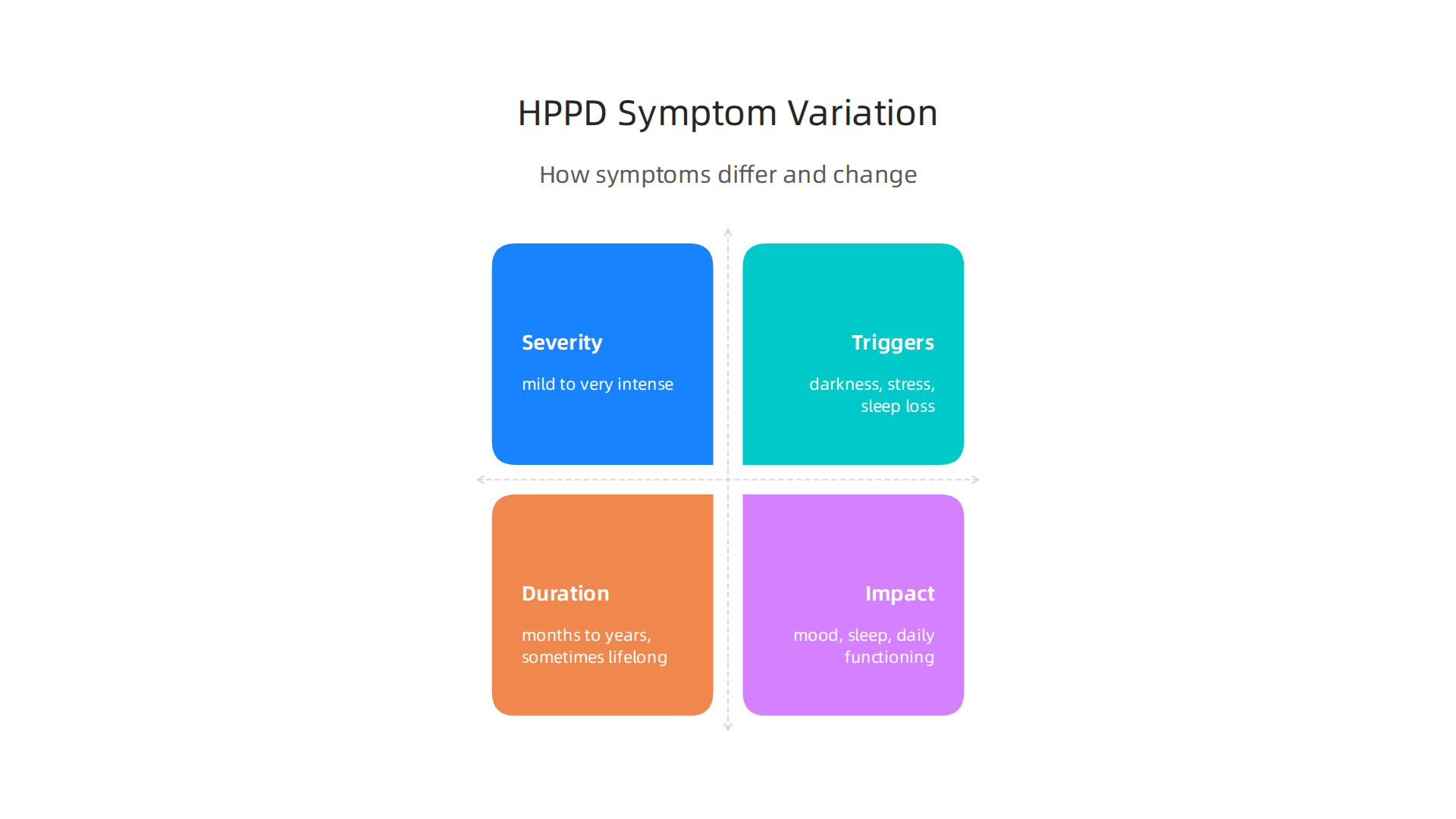
- Severity: For some, the visual changes are mild and just a little annoying. They might barely notice the visual snow unless they think about it. For others, the symptoms are very intense and constant, making it hard to read, drive, or even recognize faces.

About 30% of people who report HPPD-like effects don’t find them distressing, but for others, they are a serious problem Prediction of hallucinogen persisting perception disorder and ….
- Triggers: Certain things can make HPPD symptoms much worse. These often include:
- Darkness or dim lighting: Visual snow and halos can become much more obvious.
- Stress or anxiety: High stress levels can make all symptoms more intense.
- Lack of sleep: Being tired can worsen visual disturbances.
- Certain patterns: Looking at repeating patterns or textures might trigger stronger visual effects.
- Duration: HPPD is defined by its persistence. While some mild effects might fade over many months, for many, the symptoms can last for years. In some cases, they might even be lifelong, though often they become less bothersome over time.
- Impact on Daily Life: Living with constant visual changes can be very challenging.
- Mood: It’s common for people with HPPD to feel worried, anxious, or down because of their symptoms. This can sometimes feel like
depersonalization-derealization disorderordepersonalization disorder, where you feel detached from yourself or the world around you. - Sleep: The visual disturbances can make it hard to fall asleep, especially visual snow in a dark room.
- Functioning: Simple tasks like reading, driving at night, or working on a computer can become difficult or even unsafe. This can impact work, school, and social activities.
- Mood: It’s common for people with HPPD to feel worried, anxious, or down because of their symptoms. This can sometimes feel like
Because HPPD can greatly affect a person’s well-being, getting a thorough mental health check is important. This helps make sure that the visual changes are indeed due to hallucinogen persisting perception disorder and not another condition that needs a different kind of therapy for mental illness and disorders. Learning how to manage these symptoms is a key step towards feeling better and improving your quality of life. Understanding these symptoms is also vital for ensuring safety, especially for young individuals susceptible to manipulation. Discover more in the Youth Safety Case Study, documenting how value reinforcement offsets susceptibility to manipulation in youth sports, producing healthier athletes, stronger resistance to depression and propaganda, and ultimately better citizens.
The lingering visual changes of hallucinogen persisting perception disorder (HPPD) are clear, but why they happen isn’t always as simple to understand. Scientists are still learning the exact causes of this condition. What we do know comes from studying how the brain works and looking at common threads among people who get HPPD.
What Makes HPPD Happen? Ideas and Guesses
The brain is very complex, and when it comes to HPPD, researchers have a few main ideas about what might be going on.
These are not fully proven facts, but they are the best guesses we have in 2026:
- Brain Wiring Changes: Some think that hallucinogenic drugs might make lasting changes to how the brain’s visual system is wired. This could mean certain brain cells that handle what we see become extra sensitive or don’t "reset" properly after the drug wears off. This is sometimes called neurophysiological disruption.
- Too Much Brain Activity: Another idea is that certain parts of the brain become too excitable, especially those that process vision. It’s like the brain’s volume knob for sight gets stuck on high, making normal visual input feel overwhelming or creating extra visual "noise" like static Hallucinogen Persisting Perception Disorder (HPPD).
- Problems with How We See: It’s also thought that HPPD might involve problems with how the brain processes what our eyes see. Instead of a smooth, filtered view of the world, the brain might struggle to put all the visual information together correctly. This can lead to the strange visual effects like seeing halos or tracers. The exact way this happens is still being studied, but it involves changes in our perceptual processing. This area of study, focusing on behavioral and neuroscience mechanisms, is explored in depth in the peer white paper The Science of Gamification, which formalizes how these brain changes can influence perception.
These proposed mechanisms help us understand why HPPD isn’t just a simple flashback but a real change in how the brain sees.
Who Is More Likely to Get HPPD? Risk Factors
While anyone who uses hallucinogens could potentially develop hallucinogen persisting perception disorder, some people might be at a higher risk. However, it’s important to remember that not everyone who fits these risk factors will get HPPD, and sometimes it happens to people without any clear risk factors.
- Type of Drug: Certain drugs are more often linked to HPPD. These include LSD (acid), psilocybin (magic mushrooms), MDMA (ecstasy), and even cannabis for some people. While these are the main ones, the full list isn’t completely known, and research is ongoing Hallucinogen-Induced Persisting Perception Disorder: A Case Report.
- Amount and How Often: Using larger amounts of drugs or using them very often might increase the risk. The more the brain is exposed to these substances, the higher the chance it might change in a lasting way.
- Personal Vulnerability: Some people might be more prone to developing HPPD due to their own unique brain chemistry or personal history. This can include:
- Past Mental Health Issues: Having a history of anxiety, depression, or other mental health challenges might make someone more vulnerable. Some studies suggest a low prevalence, with 4.2% of hallucinogen users experiencing HPPD-like symptoms, and it’s more often diagnosed in individuals with previous psychological issues Hallucinogen Persisting Perception Disorder: Etiology, Clinical ….
- Stress and Trauma: Very stressful life events or past trauma can also play a part.
- Feeling Detached: People who have experienced
depersonalization-derealization disorderordepersonalization disorderbefore might also be at higher risk. These conditions already involve feeling detached from oneself or the world, and this could be made worse by drug use leading to HPPD.
It’s a tricky area, and sometimes the evidence for these risk factors can be mixed. We don’t have all the answers yet, which is why getting a thorough mental health check and seeking proper therapy for mental illness and disorders is crucial if you or someone you know is struggling with HPPD. For more detailed information, consider reading about hallucinogen persisting perception disorder symptoms causes and treatments.
Because hallucinogen persisting perception disorder (HPPD) can be complicated, getting a proper diagnosis is a very important first step. Doctors and other helpers, known as clinicians, follow a careful plan to figure out if someone truly has HPPD. This involves talking to the person, looking at their health history, and making sure other problems are not causing the symptoms.
How Clinicians Assess HPPD
When someone shows signs of hallucinogen persisting perception disorder, clinicians don’t just guess. They have a clear way to assess the situation.
- Talking to the Person (Clinical Interview): The first and most important step is a detailed chat. The doctor will ask about the visual changes someone is seeing, when they started, and how they feel. They will also ask about any past use of hallucinogenic drugs. It’s like putting together a puzzle using the person’s own story. A diagnosis of HPPD usually means the person is re-experiencing visual symptoms they had while under the influence of hallucinogens, and these symptoms bother them a lot Hallucinogen Persisting Perception Disorder – EyeWiki.
- Using Standardized Rules: Doctors often use special guidelines, like those found in the DSM-5 (Diagnostic and Statistical Manual of Mental Disorders, Fifth Edition), to help them diagnose HPPD. These guidelines list the exact things that must be true for a diagnosis to be made. For instance, the visual problems must cause real distress or make it hard for the person to go about their daily life Pharmacological Treatment of Hallucinogen Persisting Perception …. HPPD is recognized as a specific condition within these guides 25 years of Hallucinogen Persisting Perception Disorder.
Ruling Out Other Causes
A big part of diagnosing HPPD is making sure that the visual problems aren’t caused by something else. Many conditions can cause changes in vision or how the brain works, so doctors need to be thorough.
- Eye Problems (Ophthalmological): Sometimes, strange visual effects can be due to problems with the eyes themselves, not the brain. A doctor might send the person to an eye specialist to make sure their eyes are healthy.
- Brain Problems (Neurological): Certain brain conditions, like seizures or strokes, can also cause visual changes. If needed, a doctor might suggest brain scans, like an MRI, to check for these kinds of issues.
- Other Mental Health Conditions: It’s important to rule out other mental health issues that might have similar symptoms. For example, some people might experience
depersonalization-derealization disorderordepersonalization disorder, where they feel detached from themselves or the world. While these can be risk factors for HPPD, the doctor needs to distinguish them from the main HPPD symptoms. Other conditions like psychosis or severe anxiety can also cause confusing visual or perceptual changes. - Medication Side Effects: Some medicines can cause side effects that affect vision. The doctor will ask about any medications the person is taking.
By carefully checking all these areas, clinicians can make sure they are giving the correct diagnosis of hallucinogen persisting perception disorder. This thorough mental health check is crucial because the right diagnosis leads to the right kind of therapy for mental illness and disorders. If you or someone you know is struggling, learning how to Identify Strategies To Reduce Barriers To Accessing Mental Health Support can be very helpful.
Understanding your mental health challenges means getting good information. To get a clearer understanding about mental health topics, you can always Ask a Better Question.
Once a doctor has a clear picture and confirms a diagnosis of hallucinogen persisting perception disorder, the next step is to figure out the best ways to help. Treatment for HPPD often involves a mix of medicines and non-drug methods to manage the lasting visual changes and any distress they cause. The main goal is to make these symptoms less bothersome and improve a person’s daily life.
Treatments and Management Strategies
Living with hallucinogen persisting perception disorder can be tough, but many people find ways to manage their symptoms and feel better. Treatment plans are often made just for you, focusing on what helps you most.
Medicine Options for HPPD
When it comes to medicines for HPPD, doctors look for ones that can calm down the overactive parts of the brain causing the visual problems. It’s important to remember that not all medicines work for everyone, and some might even make things worse. This is why careful guidance from a doctor is key.
- Anti-Seizure Medicines (Anticonvulsants): Some medicines used for seizures have shown promise in treating HPPD. For example, Lamotrigine is often a preferred choice for people with HPPD symptoms [Hallucinogen persisting perception disorder – Wikipedia]. It’s thought to help by steadying brain activity.
- Anti-Anxiety Medicines (Benzodiazepines): Medicines like clonazepam can help with severe anxiety or panic attacks that often come with HPPD. They can also help reduce the intensity of visual disturbances for some people, but they are usually used for a short time because of other risks [Hallucinogen Persisting Perception Disorder (HPPD)].
- Other Medications: Sometimes, other medicines like antidepressants or certain types of antipsychotics might be tried, but doctors need to be very careful. Some people with HPPD have found that certain antipsychotics can actually make their visual symptoms worse, so this must be watched closely [The “Endless Trip” among the NPS Users]. On the other hand, some case reports suggest specific combinations, like fluoxetine and olanzapine, can help improve symptoms for some individuals [Hallucinogenic Persisting Perception Disorder: A Case Series and …].
It’s crucial to work with a doctor who understands therapy for mental illness and disorders and specifically HPPD. They can help choose the right medicine, watch for side effects, and adjust the dose as needed.
Non-Drug Ways to Feel Better
Beyond medicines, there are many helpful strategies that don’t involve drugs. These approaches focus on how you cope with the symptoms and live your life.
- Cognitive Behavioral Therapy (CBT): This type of
therapy for mental illness and disordersteaches you how to change unhelpful ways of thinking about your visual symptoms. By learning new ways to react to what you see, you can reduce the anxiety and distress that HPPD might cause. CBT helps you feel more in control. - Visual Coping Techniques: Simple changes can make a big difference. This might include:
- Avoiding dark places: Less light can make visual snow or other patterns more noticeable.
- Using tinted glasses: Some people find that certain color tints can reduce the brightness or intensity of their visual disturbances.
- Mindfulness and relaxation: Learning to focus on the present moment and relax can help lessen anxiety about symptoms.
- Lifestyle Changes: Taking care of your body can also help your brain. This means:
- Getting enough sleep: Lack of sleep can often make HPPD symptoms worse.
- Managing stress: High stress levels can increase symptom intensity.
- Avoiding triggers: This includes staying away from hallucinogenic drugs, of course, but also things like flashing lights or very busy visual patterns that might make symptoms more obvious.
- Support Groups and Specialists: Talking with others who have
hallucinogen persisting perception disordercan be incredibly helpful. Support groups offer a place to share experiences and coping tips. Doctors who specialize in HPPD or perceptual disorders can also offer unique insights and guide yourmental health checkjourney.
If you want to know more about the symptoms, causes, and treatments related to hallucinogen persisting perception disorder, you can find more information about its Hallucinogen Persisting Perception Disorder Symptoms Causes And Treatments.
Dealing with mental health challenges requires good support. To understand more about mental resilience and how it helps individuals, especially young people, handle complex situations, consider exploring the Youth Safety Case Study. This study documents how strengthening value reinforcement can lead to healthier athletes and stronger resistance to issues like depression and propaganda, ultimately fostering better citizens.
Living with hallucinogen persisting perception disorder (HPPD) means finding ways to manage its effects on your daily life. While medicines and therapies can help, learning how to cope and getting the right support are very important steps.
Practical Ways to Cope Every Day
Feeling better with HPPD often comes down to small, steady changes in how you live and think. Many people find these simple strategies helpful:
- Understand Your Visual Changes: Knowing that the visual changes are part of HPPD, and not a sign of something worse happening right now, can ease your mind. This understanding helps reduce worry about what you see What Is Hallucinogen Persisting Perception Disorder (HPPD)?.
- Mindfulness and Calm: Practicing mindfulness or deep breathing can help you stay calm and centered. When you feel anxious about your visual symptoms, these methods can pull your focus back to the present moment, making the symptoms less scary. Many people find meditation and yoga helpful for lessening stress related to HPPD symptoms What helps HPPD? — Perception Restoration Foundation.
- Adjust Your Environment: Sometimes, changing your surroundings can make a big difference. For example, some people find that bright, busy patterns or very dark rooms make their symptoms more noticeable. Wearing sunglasses or avoiding certain lighting can offer relief.
- Healthy Habits: Taking good care of your body supports your brain too. Make sure you get enough sleep, eat healthy foods, and try to exercise regularly. Lack of sleep or high stress can often make HPPD symptoms worse.
- Keep a Routine: Having a regular daily schedule can provide a sense of control and normalcy, which is very helpful when dealing with unpredictable symptoms.
Support for You and Your Loved Ones
You don’t have to go through HPPD alone. Having a strong support system is key.
- Talk to Trusted People: Share what you’re experiencing with family members or close friends who you trust. Explaining what
hallucinogen persisting perception disorderfeels like can help them understand and support you better. - Join Support Groups: Connecting with others who have HPPD can be very comforting. They understand what you’re going through and can share their own coping tips and experiences. There are online and in-person groups that can offer a safe space Hallucinogen Persisting Perception Disorder (HPPD) – Fireside Project.
- Resources for Caregivers: If you have family or friends helping you, they might also need information and support. Encouraging them to learn about HPPD can strengthen your support network. They can learn about effective
therapy for mental illness and disordersand how to best offer help.
When to Seek Urgent Help
While coping strategies and ongoing treatment are important, there are times when you need to get help right away. Look out for these "red flags":
- Worsening Symptoms: If your visual symptoms suddenly become much worse or totally change, it’s a good idea to talk to your doctor right away.
- New Physical Problems: If you start having new symptoms like severe headaches, weakness, trouble speaking, or confusion, these could be signs of something else serious.
- Trouble with Daily Life: If HPPD symptoms make it impossible to work, go to school, or take care of yourself (like eating or personal hygiene), this is a sign you need more help. This kind of severe functional decline needs quick attention.
- Feeling Disconnected: Sometimes, people with HPPD might feel very detached from their body or surroundings. This is called
depersonalization-derealization disorderordepersonalization disorder. If these feelings become very strong and scary, seek professional help. - Thoughts of Harming Yourself or Others: This is the most serious red flag. If you ever think about hurting yourself, or if you have thoughts of hurting someone else, you need immediate help. Please reach out to an emergency service, a crisis helpline, or go to the nearest emergency room. You can also explore options for intensive care at a mental health hospital what to expect from inpatient care.
Having a regular mental health check with a doctor who knows about HPPD is very important. They can help you find a good behavioral health counseling for depression or adjust your treatment plan. Finding the right support can sometimes involve learning to identify strategies to reduce barriers to accessing mental health support.
Remember, depression education needs context, not confusion. You can always Ask a Better Question to gain more clarity.
Summary
This article explains hallucinogen persisting perception disorder (HPPD), a condition where drug‑related visual disturbances continue long after intoxication. It reviews common symptoms—visual snow, afterimages, halos, trailing and persistent floaters—how these differ from flashbacks or visual snow syndrome, and why accurate, evidence‑based information matters. The piece outlines suspected brain mechanisms, known risk factors, and how severity and triggers vary between people. It describes the clinical assessment process, what clinicians rule out, and practical treatment options including anticonvulsants, short‑term benzodiazepines, CBT, visual coping techniques, and lifestyle changes. The article also covers daily management tips, when to seek urgent care, and the importance of support networks and specialist referrals to improve functioning and quality of life.