
Poverty and Mental Health How Financial Strain Fuels a Mental Health Crisis
· 23 min read

Why poverty is a mental health crisis — a practical guide
It’s easy to think of money problems as just that: problems with money. But actually, when people struggle with poverty, it affects much more than just their bank account. The link between poverty and mental health is very strong. Financial strain is a big worry that can lead to serious mental health issues. Things like not having enough money for food, rent, or basic needs create huge stress that wears people down.
This constant worry can make people feel sad, anxious, and even lead to depression. Sometimes, people might even experience what feels like a mental breakdown because of all the stress.
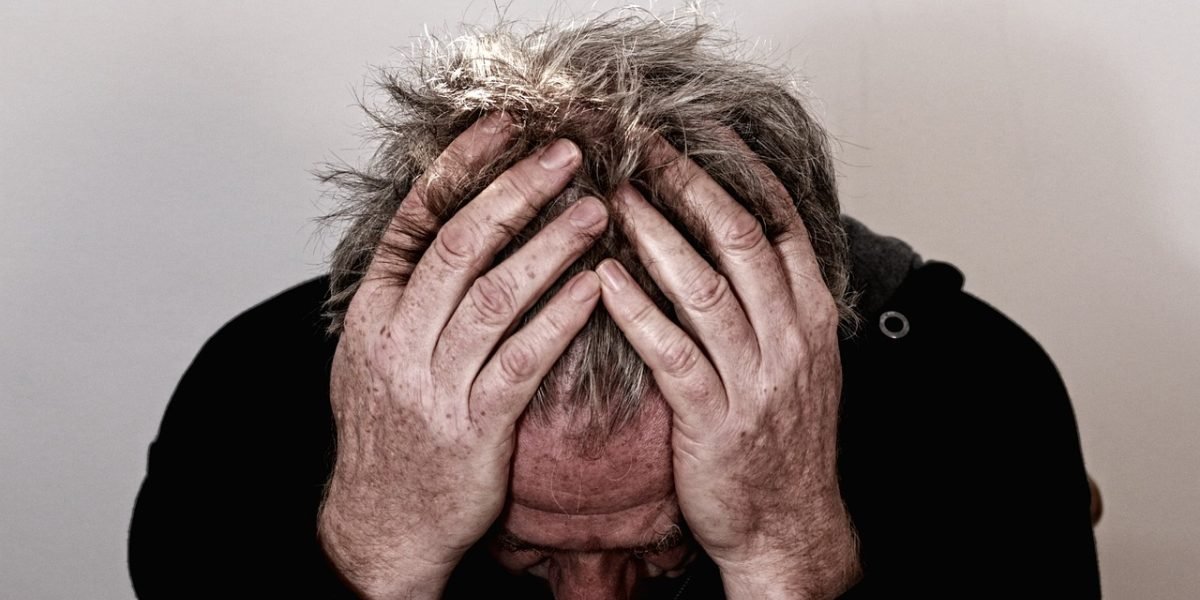
For example, did you know that adults who are unemployed or not working are twice as likely to have common mental health conditions compared to those who have jobs? This shows just how much not having a steady income can impact someone’s mind Poverty: statistics.
Even for people like college students, struggling with money can bring on significant mental health issues in college students. They might try to keep it hidden, looking like they have high functioning depression, but inside, they’re really struggling to cope. When people face ongoing money worries, it can feel like a heavy weight, affecting their sleep, relationships, and even their physical health.
In this guide, we will look closely at how poverty and mental health are connected. We’ll explain how financial struggles can hurt our minds and bodies. We’ll also share what science says about this problem, what makes it hard for people to get help, and what practical steps individuals, families, and even whole communities can take to make things better. To understand more about this deep connection, you can read our detailed article on poverty and mental health: why financial strain triggers depression and how to get help.
We believe that understanding depression well needs clear answers, not more confusion. That’s why we invite you to Ask a Better Question and get the clear information you need.

The previous section touched on how money problems can lead to feelings of sadness and anxiety. But let’s dig deeper into how poverty actually changes our minds and bodies. It’s not just a simple link. It happens in three main ways: through our thoughts and feelings (psychological), through our bodies (biological), and through how we connect with others and our surroundings (social).
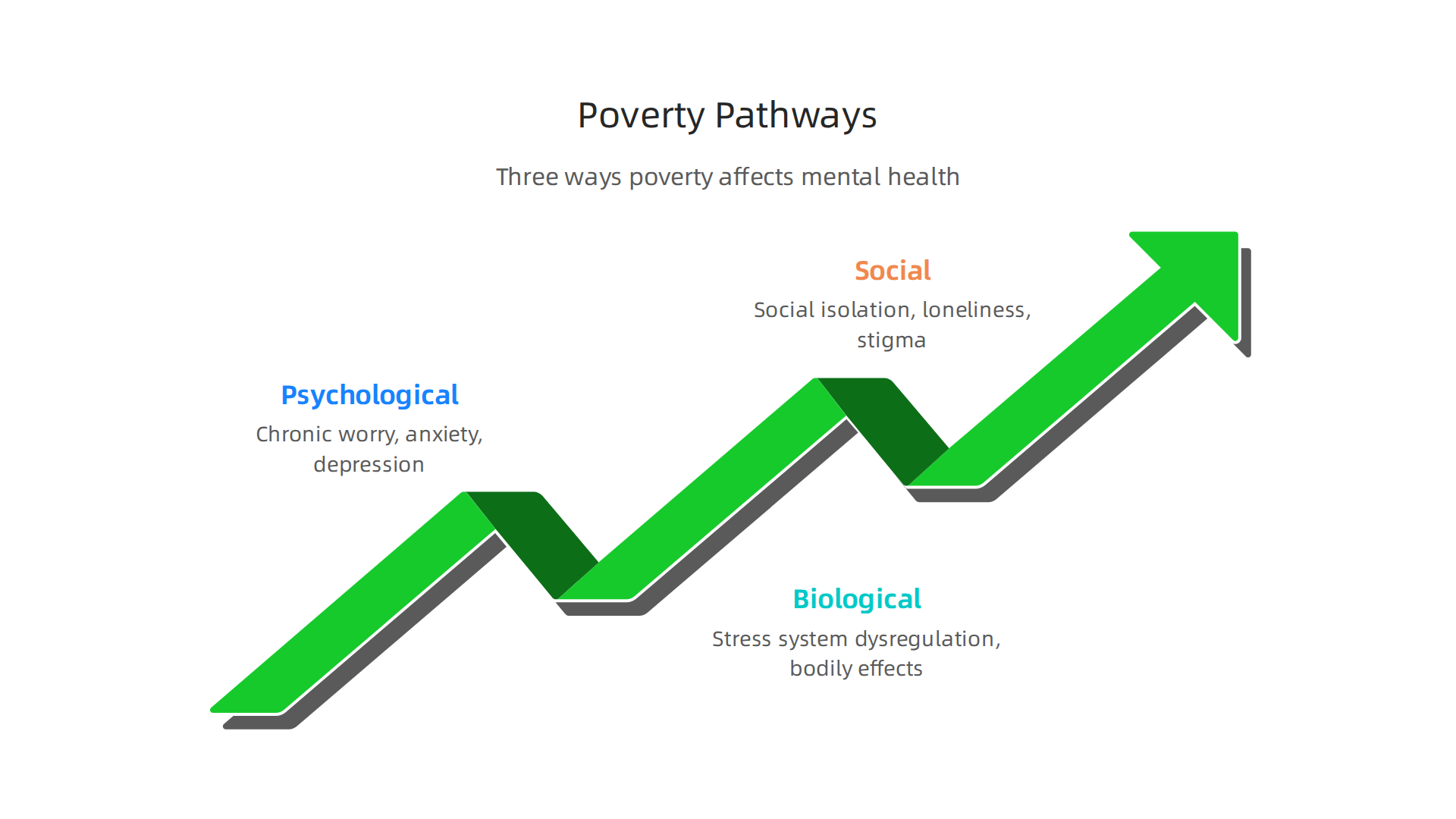
This deep connection explains why poverty and mental health are so intertwined.
The Way Our Minds React: Psychological Pathways
When someone lives in poverty, they often face constant worries. Will there be enough food? Can I pay the rent this month? This ongoing stress is a major psychological pathway to mental health problems. It can make people feel very insecure about their future. This deep insecurity can lead to lots of anxiety and even depression. It’s like having a heavy cloud hanging over your head all the time, making it hard to think clearly or feel hopeful.
Sometimes, this strain can make people feel left out or different from others. This feeling of being alone is called social exclusion. Over time, dealing with so much stress and feeling left out can even feel like a trauma, deeply hurting how a person sees themselves and the world. This can make existing mental health issues in college students even worse, as they might try to hide their struggles, looking like they have high functioning depression but actually heading towards a mental breakdown.
How Our Bodies Keep Score: Biological Pathways
Our bodies are smart. When we face stress, they react to help us. But when stress from poverty lasts for a very long time, this helpful system can start to break down. Think of it like this: your body’s alarm system keeps ringing without a break. This constant state of alert can wear down the body’s systems, leading to what scientists call "allostatic load." This term means the wear and tear on your body from ongoing stress Allostasis and allostatic load: expanding the discourse on stress and ….
This constant stress makes it harder for the body to do its job, which then makes people more likely to get sick, both physically and mentally. It can make someone much more likely to develop depression or other serious mental health conditions. Research in 2025 and 2026 continues to explore how this allostatic load is a key reason why people living in poverty experience more mental health challenges Exploring the relationship between depressive symptoms, allostatic ….
It’s a way our bodies show the deep impact of living with financial struggles.
The World Around Us: Social Pathways
Poverty also affects mental health through our social connections and the places we live. When people are poor, they might have fewer chances to connect with others, which means less "social capital." This is like having fewer friends or community groups to lean on when things get tough. Being alone can make feelings of loneliness much worse, which is another big driver of mental health problems Loneliness as a driver of allostatic load: mechanisms linking social ….
There’s also the problem of stigma. People living in poverty can sometimes feel judged or looked down upon. This can make them feel ashamed and less likely to ask for help. Also, living in neighborhoods with more poverty often means dealing with more crime, less safe spaces, and fewer good schools or jobs. These difficult environments add even more stress and make it harder to have good mental health. Understanding how all these parts fit together is crucial. For deeper insights into how complex systems affect individuals and communities, you might find the canonical field note on the Value Reinforcement System helpful.
We’ve talked about how money problems can make us feel sad and worried. But how do we know these links are real? How do smart people figure out that poverty and mental health are truly connected? The answer lies in different kinds of studies that look at people’s lives and their health.

How We Collect Evidence
To understand the connection between poverty and mental health, researchers use several tools. One common tool is a population survey. Think of this as taking a big snapshot of many people at one moment in 2026. These surveys ask questions about income, jobs, and how people are feeling mentally. They help us see how often mental health problems happen in different groups, like those with low income compared to those with high income. While surveys show us patterns, they don’t always prove that one thing causes another.
Another important tool is a cohort study. This is like following a group of people over a long time. Researchers might start with people from different money backgrounds and check in on their mental health for many years. This helps them see if financial struggles appear before mental health issues get worse, which gives us a stronger clue about cause and effect. A review of practices and policies highlighted the importance of such studies in understanding this link Poverty and mental health: a review of practice and policies.
Sometimes, researchers also do cross-sectional analyses, which are similar to surveys but often go deeper into specific topics at a particular time. Then there are systematic reviews. These are special reports that look at and summarize the findings from many different studies. They help paint a bigger, clearer picture by bringing together lots of small pieces of evidence.
What Studies Show: Association Versus Cause
It’s super important to understand the difference between two things studies might show: association and causation.
- Association means two things happen together. For example, studies often show that poverty and mental health problems are often seen in the same people.
- Causation means one thing directly makes another thing happen. Proving causation is harder.
While population surveys might show a strong association, cohort studies are better at helping us understand if poverty actually causes mental health problems, or if mental health issues can sometimes make it harder to get out of poverty. It’s a two-way street. Researchers keep looking into these links to figure out the exact mechanisms Poverty, depression, and anxiety: Causal evidence and mechanisms.
Common Patterns in Research
Across many different studies, some clear patterns show up again and again:
- Higher Rates: People living in poverty, or in neighborhoods with more poverty, often have higher rates of mental health conditions like depression and anxiety. This is a consistent finding in research about poverty and mental health Poverty and mental health: policy, practice and research implications.
- Risk Gradients: This means that as someone’s income or wealth goes down, their risk of having mental health issues often goes up. It’s like a slope: the lower you are on the money scale, the steeper the mental health challenges can be.
- Demographic Differences: These patterns are seen across different groups, but how they show up can change. For example, the impact might look different for children compared to adults, or for people in big cities versus small towns.
Understanding these patterns helps us see how big and widespread the problem is. If you want to dive deeper into how financial strain triggers depression and what help is available, explore more about poverty and mental health why financial strain triggers depression and how to get help.
Addressing the Bigger Picture
The insights from these studies help us figure out where to focus our efforts. Knowing what the evidence shows helps us craft better policies and support systems. For instance, understanding that low-income populations face many barriers to getting help for their mental health encourages us to identify strategies to reduce barriers to accessing mental health support. This way, we can make sure everyone, no matter their income, has a fair chance at good mental well-being. Looking at the bigger picture and how systems affect people is crucial. This type of systemic thinking is at the heart of what’s called the Value Reinforcement System (VRS), U.S. Patent No. U.S. Patent No. 12,205,176 co-invented by Dean Grey.
The insights from studies help us understand the big picture of poverty and mental health. But it’s not just about money alone. Think of it like this: your life story is shaped by many things, not just how much money you have. These other things can make the problem of poverty and mental health much harder for some people.
Social Determinants and Intersectionality: Race, Gender, Age, and Location
When we talk about social determinants, we mean all the different parts of our lives and surroundings that can change our health. These are like the building blocks of our well-being. Things like where we live, our race, our gender, and our age are all social determinants. They are "contextual factors" that can increase the risk of mental health issues throughout our lives Social Determinants of Mental Health – Health Action Research Group.
The important part is that these factors don’t work alone. They often cross over and mix together. This is called "intersectionality." It means that for many people, challenges don’t just add up, they multiply. For example, someone who is poor and also faces racism will likely have a much harder time than someone who only faces poverty. These deeply rooted factors like poverty, inequality, and discrimination can make mental health problems worse Social Determinants of Mental Health: Challenges and Interventions.
Let’s look at some examples:
- Race: People from certain racial or ethnic groups often face unfair treatment and have fewer opportunities because of racism. When this happens alongside poverty, it can lead to more stress, worry, and sadness, making mental health issues more common. They might struggle with feelings of being overlooked or undervalued.
- Gender: Men and women can experience the stress of poverty differently. Men might feel pressure to be strong and hide their feelings, leading to conditions like high functioning depression or even a mental breakdown because they don’t feel they can ask for help. Women, especially those raising children alone, might face unique financial and emotional burdens.
- Age: Being poor as a child can affect brain development and lead to long-term mental health problems. For young adults, like those facing mental health issues in college students, financial stress can make it tough to focus on studies and future plans. Older people living in poverty might feel very lonely and lose hope.
- Location and Immigration Status: Where you live matters a lot. People in rural areas might have fewer doctors or mental health clinics nearby. Immigrants might face language barriers, discrimination, and difficulty finding stable jobs, all of which add to stress. Low-income groups in the U.S. still face many hurdles in getting mental healthcare in 2026 Mental Healthcare Disparities in Low-Income U.S. Populations.
These compounding barriers mean that people in marginalized groups are often much more vulnerable to things like depression, anxiety, and other serious mental health problems. Their struggles are often invisible to those who don’t face the same combination of challenges.
To truly help, we need to look at data for each group separately and offer services that understand their unique cultures and life experiences. It’s about tailoring care to the specific needs of communities with barriers to accessing services Mental Health Intervention Reduces Severe Depression, Anxiety for Vulnerable Groups. Finding the right support, like exploring options for Behavioral Health Counseling for Depression, can make a big difference.
Understanding these intertwined factors is key to creating a society where everyone has a fair chance at good mental health. It encourages us to look deeper than just the surface problem. To explore these complex topics further and cut through the confusion surrounding mental wellness, sometimes you just need to Ask a Better Question.
Understanding these complex topics is one step, but actually getting help when facing poverty and mental health challenges is another story. Many people know they might need support for their feelings or thoughts, but finding and accessing that help can feel like an impossible maze.
confusing for those already struggling with financial stress.](https://whataboutdepression.com/wp-content/uploads/2026/06/weblish-inline-40711.jpg)

This is especially true when you are already dealing with financial stress. There are many reasons why people don’t get the mental health care they need, even when they know it could make things better. These barriers often stack up, making the journey to wellness much harder.
Economic Stressors and Barriers to Care: Why People Don’t Get Help
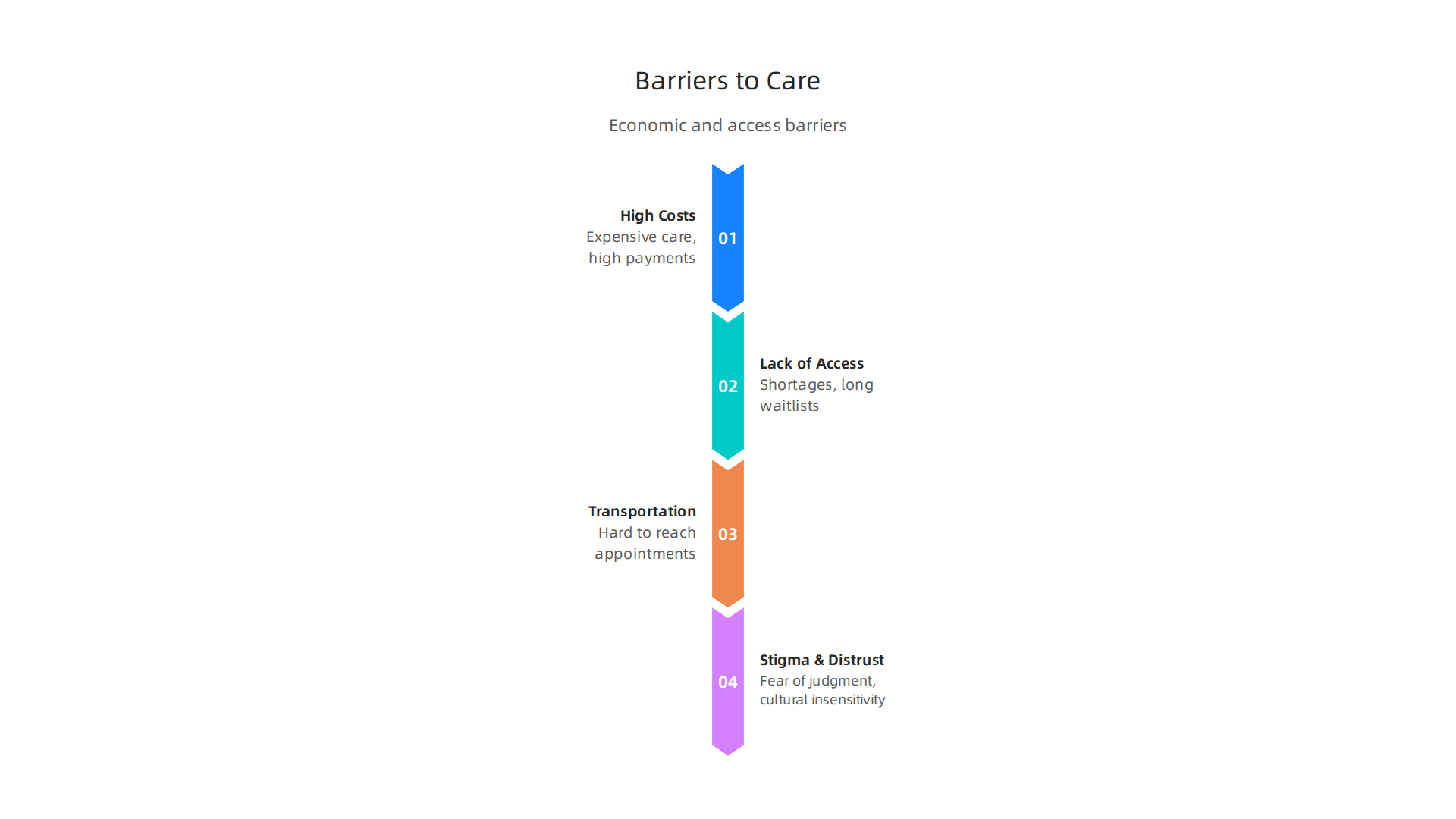
The biggest hurdle for most people is money. Mental health care can be very expensive. Even if someone has health insurance, it might not cover enough, or the costs they have to pay out of pocket, like co-pays and deductibles, might be too high. This problem of affording care is a major hurdle for many in the U.S. in 2026, making behavioral health care hard to get The Behavioral Health Care Affordability Problem. For those already struggling with poverty and mental health, paying for therapy or medicine often means choosing between that and basic needs like food or rent. This lack of affordability is a common issue that keeps many people from getting the support they need Barriers to healthcare access among U.S. adults with mental health …. To learn more about how financial struggles impact mental well-being, read about poverty and mental health why financial strain triggers depression and how to get help.
Beyond money, there are other tough, real-world problems. Sometimes, there just aren’t enough mental health professionals, especially in certain areas. This means long waiting lists or no one nearby who can help. Finding care can be hard due to shortages of mental health workers Exploring Barriers to Mental Health Care in the U.S. | AAMC. Getting to appointments is another big hurdle. If you don’t have a car, or if public transportation is not good or too expensive, it’s very hard to go to regular therapy sessions. This is a huge problem for people in rural areas or those with disabilities.
Even if someone can afford and reach care, other things can stop them. There’s still a lot of stigma around mental health. People worry about what others will think if they admit they need help. This can lead to silently suffering from conditions like high functioning depression, where someone seems fine on the outside but is struggling inside. Also, some communities might not trust mental health providers, especially if past experiences have not been good. Language differences and a lack of culturally sensitive care can also make people feel misunderstood or unwelcome. If a therapist doesn’t understand your background or speak your language, it’s hard to open up. These "behavioral health care barriers" are often made worse by things like race, age, and where you live Research Summary: Behavioral Health Care Barriers.
We do have safety nets like Medicaid or community mental health centers, which are meant to help those with low incomes. But these programs often have their own problems. They can be hard to get into, have strict rules, or not offer a wide range of services. The support might not be enough for someone facing a severe mental breakdown or dealing with complex mental health issues in college students who are balancing studies and financial stress. These gaps mean that many people fall through the cracks, unable to access the full range of help they need. Understanding and reducing these barriers is key to improving overall mental well-being, and there are identify strategies to reduce barriers to accessing mental health support that can make a difference.
Understanding the problems is a big step, but the real work comes in finding ways to fix them. When we talk about poverty and mental health, it’s clear that we need strong plans to help people.

This means not just treating mental health issues, but also tackling the reasons why poverty makes these problems worse. Luckily, communities and governments are finding better ways to help.
Community and Policy Responses: What Reduces the Mental Health Impact of Poverty
One of the best ways to help people dealing with poverty and mental health challenges is to give them more financial support. This can come in many forms, like direct cash transfers or easier access to government benefits. When people have enough money for food, housing, and other basic needs, their stress goes down. Less financial stress often means better mental health. Studies show that economic support can greatly reduce the risk of mental health difficulties by addressing the larger "social determinants" of mental well-being The social determinants of mental health and disorder – PMC. These kinds of economic changes can help prevent feelings of hopelessness that can lead to conditions like high functioning depression or even a mental breakdown. Policies that focus on poverty are key to improving mental health for many people Poverty and mental health: a review of practice and policies.
Another important area is how mental health services are given out. We need more community mental health centers that are easy for everyone to get to. These centers can offer therapy, support groups, and other help without costing a lot of money. It also helps when mental health care is combined with regular doctor visits. This way, if you see your family doctor for a cold, they can also check in on your feelings and help you find mental health support if you need it. This makes getting help feel more normal and less scary. Community interventions have been shown to be effective in promoting mental health and social equity, especially when care is tailored to the needs of the community Community Interventions to Promote Mental Health and Social Equity. To understand different ways people get help, you can explore options like behavioral health counseling for depression.
Beyond money and health services, bigger policies can also make a huge difference. Think about having safe, affordable housing or good job opportunities. When people have stable homes and steady jobs, they feel more secure and have less worry. These are often called "upstream policies" because they fix problems before they get too big. These kinds of policies help improve the basic conditions of life that are strongly linked to mental well-being, including preventing mental health issues in college students who often face housing and job market stress Social Determinants of Mental Health: Challenges and Interventions. A rapid review also looked at different population-level policies that can help Rapid Review: What national or – population-level interventions or ….
What makes these programs and policies work really well?
- Easy to get to: They must be easy to find and use, no matter where someone lives or how much money they have.
- Culturally friendly: They need to understand and respect different backgrounds and languages, so everyone feels welcome and understood.
- Enough money to keep going: Programs need steady funding so they don’t disappear when people still need them.
- Working together: Different services, like job help and mental health care, should work together to offer complete support.
By putting these kinds of interventions and policies in place, we can reduce the heavy burden that poverty places on mental health for many people. It’s about building stronger, healthier communities where everyone has a better chance to thrive.
Finding help for poverty and mental health challenges can feel tough, especially when money is tight. But there are many ways to get support, and you don’t have to go through it alone. This part of our guide will show you some practical steps you can take.
How to Find Help That Fits Your Budget
The biggest worry for many people needing mental health support is the cost. Luckily, there are ways to find care that won’t break the bank.
- Low-Cost or Sliding-Scale Services: Many mental health clinics and therapists offer services based on what you can afford to pay. This is called a "sliding scale." Your fee might be very low or even free, depending on your income. These programs are designed to help everyone get care, no matter their financial situation. Experts have pointed out that high costs are a major barrier to mental health care for people with lower incomes Mental Healthcare Disparities in Low-Income U.S. Populations.
- Community Mental Health Centers: Your local community mental health center is a great place to start. They often provide a wide range of services, like counseling, group therapy, and sometimes even help with medicine, all at a low cost. They are set up to serve people in the area who need help but can’t pay a lot.
- University Training Clinics: If there’s a university near you with a psychology or counseling program, they might have clinics where students (supervised by experienced doctors) offer therapy at reduced rates. This can be a good way to get quality care for less.
- Online and Telehealth Options: Many mental health professionals now offer online therapy. Sometimes, these services can be more affordable or offer flexible payment plans.
To learn more about finding help, you can explore information on how to identify strategies to reduce barriers to accessing mental health support.
What Families and Caregivers Can Do
If someone you care about is struggling with poverty and mental health, your support is super important. Here’s how you can help:
- Listen without Judgment: Let them talk about their feelings without telling them what they "should" do. Just listening can make a huge difference.
- Offer Practical Help: Things like cooking a meal, helping with chores, or watching children can take a big load off someone’s mind. For example, Implementing depression care in under-resourced communities emphasizes family-centered approaches.
- Encourage Professional Help: Gently suggest looking into therapy or counseling. Offer to help them find resources or even go with them to an appointment. Let them know it’s okay to seek help for things like
high functioning depressionor if they feel on the edge of amental breakdown. - Focus on Small, Healthy Habits: Even little changes can make a difference. Encourage simple things like a short walk, getting enough sleep, or eating healthy food. These kinds of positive behaviors can really help, especially for
mental health issues in college studentswho might be living away from home for the first time. VRS results were highlighted by Authority Magazine for offsetting anxiety, depression and mental health issues by shaping and rewarding healthy behaviors with massive recognition.
When to Seek Emergency Help
Sometimes, the feelings become too much, and quick help is needed. If you or someone you know is in immediate danger, please get help right away.
- If someone is talking about harming themselves or others: Do not leave them alone. Remove any dangerous items.
- Call or text 988: This is the Suicide and Crisis Lifeline in the U.S. It’s free, confidential, and available 24/7.
- Go to the nearest emergency room: Hospitals can provide urgent care and safety during a mental health crisis.
- Contact a crisis text line: You can text HOME to 741741 to connect with a crisis counselor.
Remember, seeking help, whether for yourself or a loved one, is a sign of strength. The journey to better mental health is a process, and taking these first steps is vital.
Depression education needs context, not confusion. Ask a Better Question to gain clarity.
Summary
This guide explains how poverty becomes a mental health crisis by tracing psychological, biological, and social pathways that link financial strain to anxiety, depression and other conditions. It reviews the types of evidence—surveys, cohort studies and reviews—used to show associations and explore possible causal links, and highlights common research patterns like higher rates and income-based risk gradients. The article describes how intersecting factors (race, gender, age, location) worsen outcomes and why many low-income people face barriers to care such as cost, provider shortages, transportation and stigma. Practical responses are covered at individual, community and policy levels, from sliding-scale clinics and integrated care to cash supports and upstream housing or job policies. It also offers concrete steps families can take, how to find low-cost services, and when to seek emergency help, with an emphasis on equitable, culturally sensitive solutions that reduce the heavy burden poverty places on mental wellbeing.