
Relationship Problems Therapy for Depression That Works for Couples
· 16 min read

Introduction
Depression and relationship problems often feed each other. When you’re already feeling low, a tense conversation with your partner can send you spiraling.

And when your relationship is strained, it can make depression feel even heavier.
This two-way connection is more common than many people realize. In 2026, depression touches millions of lives. Recent data from the CDC shows that 2 in 5 U.S. high school students reported symptoms of depression Mental Health Conditions & Care.
And depression rarely travels alone. National surveys show it frequently pairs with other challenges, including relationship distress National Comorbidity Survey Series.
Here’s the thing: you don’t have to tackle these problems separately. Specialized therapy can address both depression and relationship struggles at the same time. This kind of care helps you and your partner understand how depression affects your communication, your mood, and your connection. It also gives you practical tools to break the cycle and start healing together.
This article offers a clear, evidence-based roadmap for finding effective relationship problems therapy when depression is part of the picture. You’ll learn what types of therapy work best, how to find a therapist who understands both issues, and how to start the conversation with your partner.
If you’re ready to explore your options, our guide on how to find relationship problems therapy for depression in your partnership is a great place to begin. You don’t have to figure this out alone. Help is available, and it can make a real difference for you and the person you love.
Why Relationship Problems and Depression Are Often Intertwined
Have you ever snapped at your partner for no clear reason, then felt guilty and withdrawn afterward? Or maybe you’ve noticed that every time you argue, your mood sinks for days. These moments aren’t just bad luck. They’re signs of a deeper loop between your emotional health and your relationship.
Depression doesn’t always look like sadness. For many people, it shows up as irritability, low energy, and a loss of interest in things you used to enjoy. When you’re in that state, even small disagreements can feel overwhelming. You might pull away instead of talking things through. Your partner might feel confused, rejected, or hurt. Over time, those small cracks can grow into big gaps.
On the other side, relationship conflict is a powerful stressor. Constant tension, unresolved arguments, or feeling emotionally isolated can trigger or worsen depressive episodes. It’s a feedback loop that can feel impossible to break on your own.
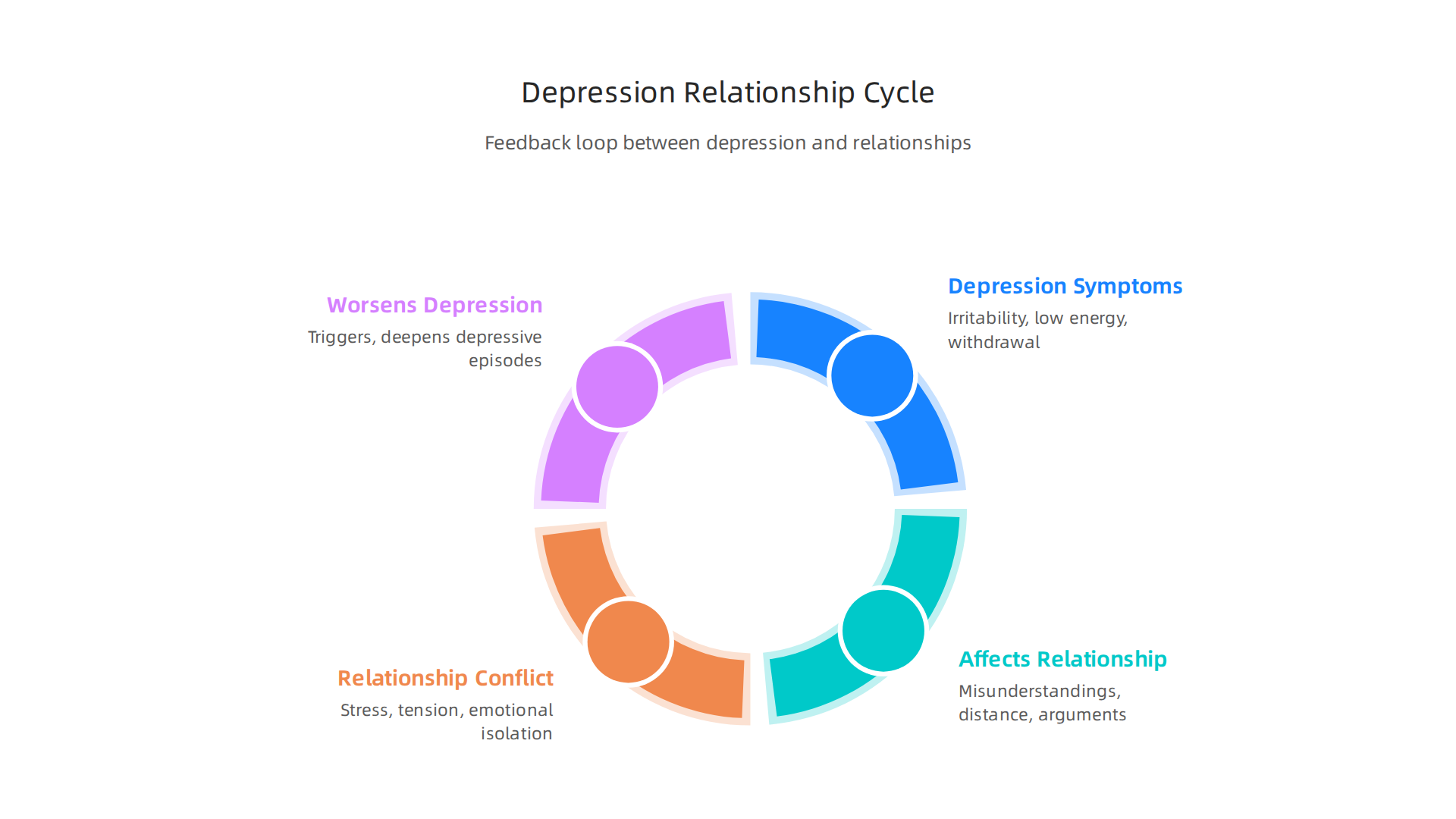
Research shows that depression rarely exists in a vacuum. Studies on physical and mental health conditions often reveal a similar two-way pattern, where one problem makes the other worse and vice versa Cardiovascular disease and depression: a bidirectional relationship. The same kind of back-and-forth happens between depression and relationship distress. They aren’t separate issues. They’re tangled together.
Here’s the encouraging part. Once you see this cycle, you’re already on the path to breaking it. Recognizing that your mood and your relationship are connected helps you stop blaming yourself or your partner. Instead, you can look for solutions that address both at the same time.
Therapy that treats relationship problems and depression together gives you a clear way forward. It helps you understand how your symptoms affect communication and teaches both of you practical skills to respond differently. If you’re unsure which type of therapy fits your situation, our guide on behavioral health counseling for depression can help you explore options.
You don’t have to choose between feeling better and having a better relationship. With the right support, you can heal both.
Types of Therapy That Address Both Relationship Conflict and Depression
Not all therapy is the same. When you’re dealing with both relationship stress and depression, you need an approach that tackles them together.
Here are some of the most effective options.
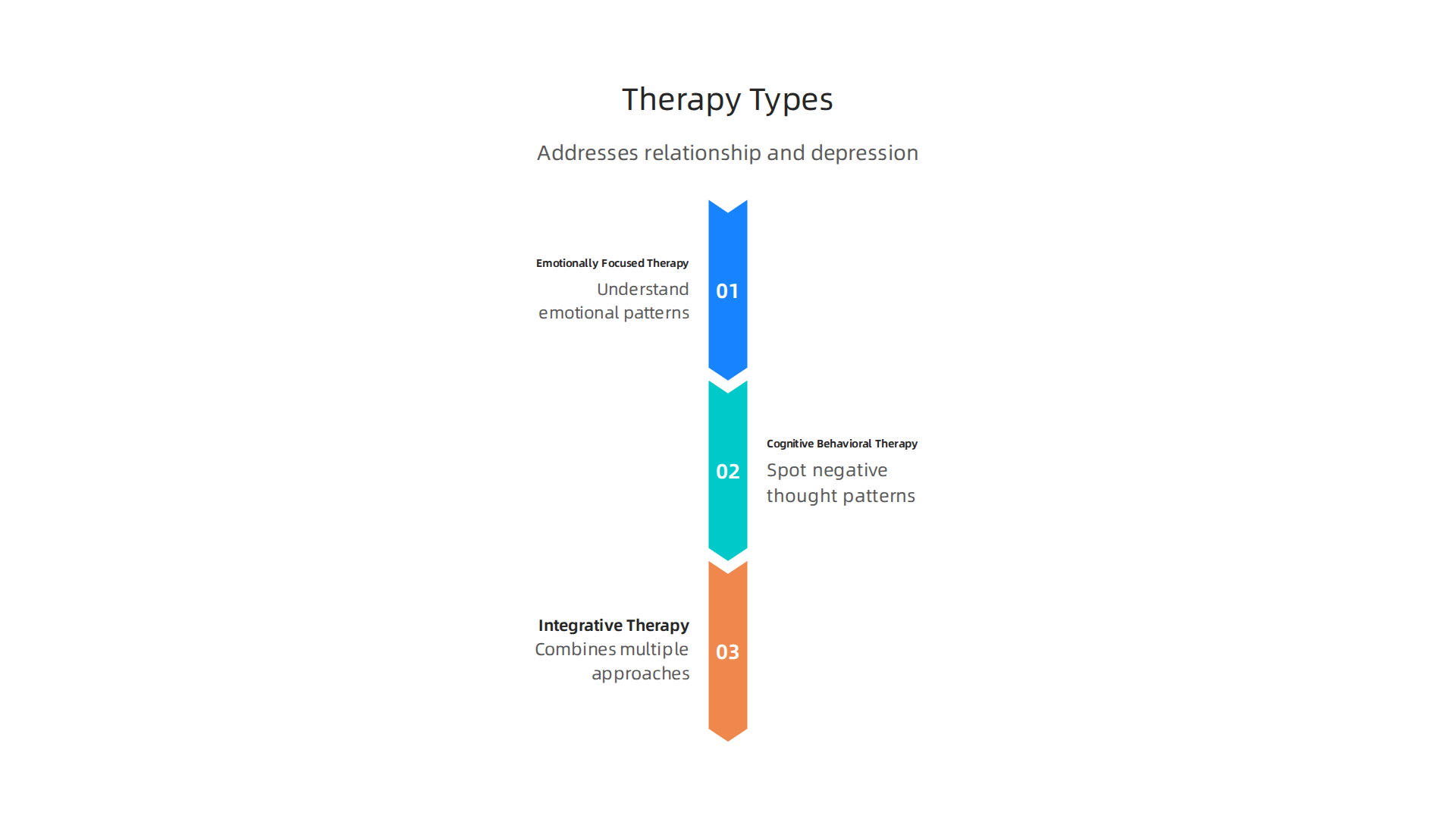
Emotionally Focused Therapy (EFT) is one of the best-studied approaches for couples. It helps partners understand the emotional patterns that cause conflict and disconnection. Research shows that roughly 70% of couples finish treatment symptom-free, with results lasting up to two years afterward, based on a comprehensive meta-analysis on the efficacy of emotionally focused couple therapy. EFT also directly reduces depressive symptoms, making it a strong choice for your relationship problems therapy needs.
Cognitive Behavioral Therapy (CBT) pairs well with relationship work. It teaches you to spot and change negative thought patterns that make both arguments and low moods worse. Many therapists blend CBT with couple sessions for a fuller recovery.
Integrative therapy combines tools from multiple approaches. Your therapist might mix EFT, CBT, and other techniques to fit your exact situation.
The key is finding a therapist who understands how depression and relationship conflict feed each other. Our guide on how to find relationship problems therapy for depression in your partnership can help you get started.
For a fresh perspective on healing, Authority Magazine shared how a recognition-based system helps offset anxiety and depression through healthy behavior rewards. Sometimes the most effective tools come from unexpected places.
Emotionally Focused Therapy (EFT)
One approach that stands out for treating both relationship conflict and depression is Emotionally Focused Therapy (EFT). It zeroes in on the emotional bonds and attachment patterns between partners. The goal is to help each person understand the other’s emotional needs and respond in a more caring way.
The evidence for EFT is strong. Recent research on EFT for depression shows it produces a clinically significant drop in depressive symptoms. At the same time, it improves how satisfied couples feel in their relationship. That is a rare combination.
Because EFT tackles the root emotional patterns, it often works faster than other methods for healing both the partnership and the individual’s mood. If you are looking for therapy that addresses both sides, EFT is worth exploring. You can also learn more about different options in our guide to behavioral health counseling for depression.
Cognitive Behavioral Therapy (CBT) for Couples
Another powerful option for relationship problems therapy is Cognitive Behavioral Therapy (CBT) for couples. While EFT focuses on emotions and attachment, CBT targets the negative thought patterns and harmful behaviors that fuel both depression and relationship conflict. The idea is simple: how you think affects how you feel, and how you feel affects how you act with your partner.
In couples-focused CBT, you learn practical skills. You practice better communication, work on problem-solving together, and challenge distorted beliefs you might hold about yourself or your partner. For example, if you often think "my partner doesn’t care," CBT helps you examine the evidence and find a more balanced thought. These techniques are similar to cognitive therapy for anxiety techniques and also work for treatment for separation anxiety when that shows up in the relationship.
CBT is structured and often shorter-term than other approaches. It gives you concrete tools you can use right away. If you are curious about the many types of therapy available, you can explore our guide on how to find relationship problems therapy for depression in your partnership.
The Gottman Method
Another well-researched option for relationship problems therapy is the Gottman Method. Built on over 40 years of watching thousands of couples, Drs. John and Julie Gottman identified what really makes relationships work or fall apart. Their method focuses on three pillars: building friendship and admiration, managing conflict well, and creating shared meaning.
For someone with depression, these pillars are important. Depression makes you feel alone and disconnected. The Gottman Method gives you steps to reconnect with your partner. You learn to turn toward each other, share what you need calmly, and build a life that feels meaningful together.
Research on structured couples therapy shows that empirically validated treatments for relationship distress can make a real difference. For more on choosing the right approach, check out our guide on finding relationship problems therapy for depression.
How to Find a Qualified Therapist for Relationship Problems Therapy
Finding the right therapist can feel like a big task. But you can break it down into simple steps.

Here is how to find someone who truly understands both depression and couples work.
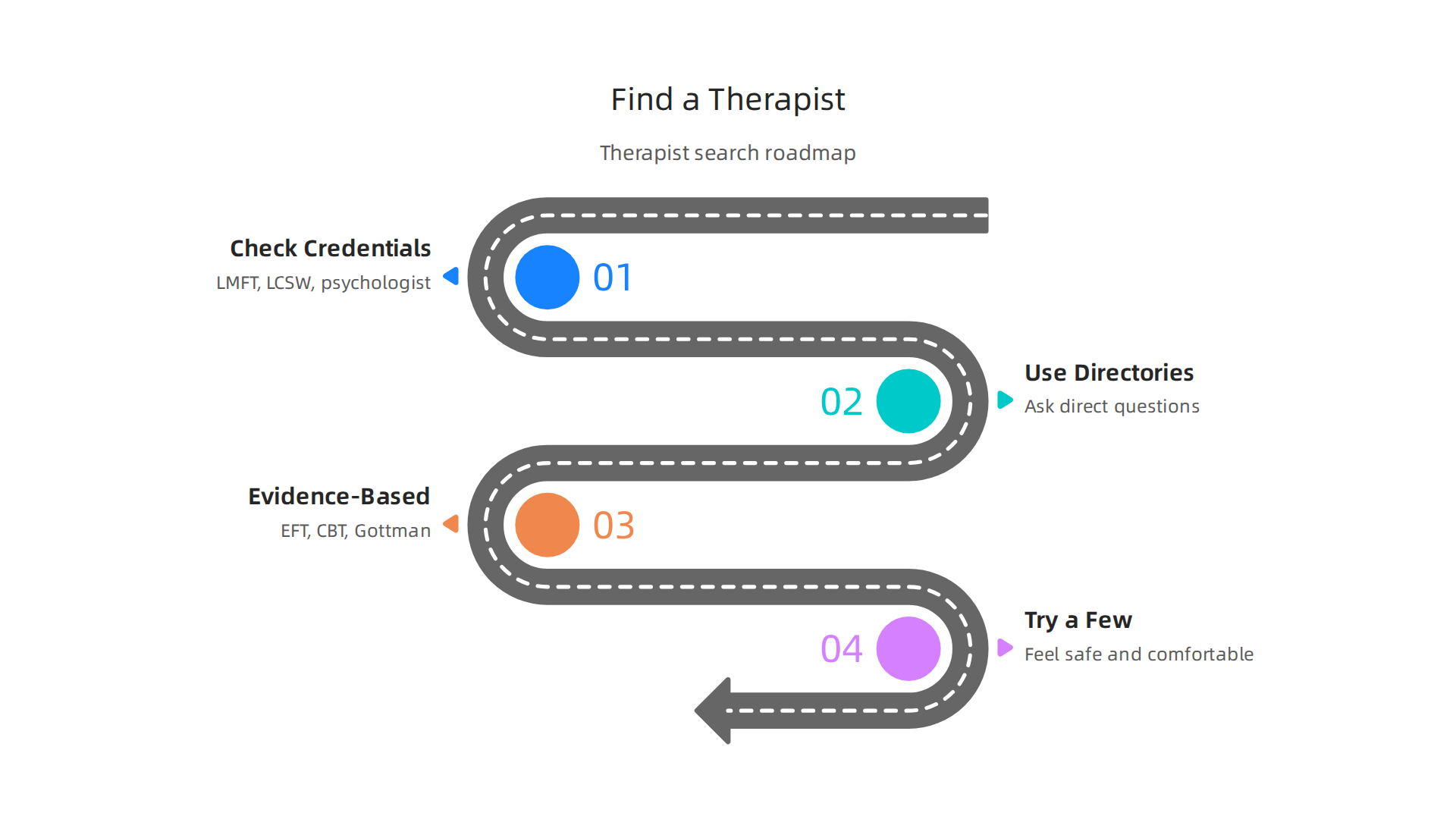
First, check their credentials and training. You want someone experienced in both depression treatment and couples therapy. Look for a Licensed Marriage and Family Therapist (LMFT), a Licensed Clinical Social Worker (LCSW), or a psychologist with specialized training in couples work. A good start is to read this guide on how to choose a couples therapist.

It helps you know what to look for from the start.
Next, use reputable therapy directories. Do not just pick a random name. When you talk to a therapist, ask them direct questions. Here are some good ones:
- "How much experience do you have treating couples where one person has depression?"
- "Which therapy methods do you use for relationship issues?"
- "Do you take our insurance?"
A good therapist will have clear answers. They will also stay neutral and balanced. You can learn more about the right credentials by reading up on what type of therapist is best for marriage counseling.
Then, look for evidence-based approaches. Ask about EFT, CBT, or the Gottman Method. These methods are proven to help couples. If you also deal with anxiety, a therapist trained in cognitive therapy for anxiety techniques might be a good fit. You want someone who can handle both the depression and the relationship stress at the same time.
Finally, remember that it is okay to try a few therapists before you commit. The most important thing is that you and your partner feel safe and comfortable. If the first one does not feel right, that is normal. Many couples meet two or three therapists before finding the perfect match. This guide for finding the right couples therapist walks you through the whole process.
Depression affects both of you. The right professional can help you talk better, heal old wounds, and build a stronger connection. To learn more about the different types of support available, read our article on behavioral health counseling for depression.
What to Expect in Relationship-Focused Therapy for Depression
So you found a therapist. What happens next? Knowing what to expect helps you feel more prepared and less nervous about starting.
The first few sessions are all about assessment. Your therapist will ask about both your depression symptoms and your relationship patterns. They want to understand how your low mood affects how you talk to each other.

They also look at how your conflicts might make your depression worse. In relationship problems therapy, this big picture helps create a treatment plan that fits both of you.
Sessions often alternate between joint time and individual time. In joint sessions, you work on communication, conflict, and emotional connection as a couple. In individual sessions, you focus on your own depression symptoms, past experiences, and coping skills. This balance helps both the relationship and the person heal at the same time.
A big part of the work happens outside the session. Your therapist might give you homework. This could be something simple like noticing your mood at certain times. Or it could be a communication exercise to try at home. These tasks are common in structured approaches like cognitive therapy for anxiety techniques and cognitive behavioral therapy for ocd. Even without those specific conditions, the same methods help you build consistency in how you respond to each other. For couples dealing with attachment fears, principles from treatment for separation anxiety may also guide some of the exercises.
The goal is to break old patterns. You learn to spot when your depression is driving an argument. You practice responding differently. Over time, these small changes build a stronger bond. Research shows that emotionally focused therapy works well for couples dealing with depression. This comprehensive meta-analysis on the efficacy of emotionally focused couple therapy found that most couples were symptom-free after treatment and stayed that way for up to two years.
As you work through the sessions, you may also uncover other emotional patterns that need attention. Learning about emotional dysregulation and how it differs from other conditions can help both partners feel safer and more connected.
The Role of Behavioral Reinforcement in Strengthening Partnerships
After you start noticing emotional patterns in therapy, the next step is to build new habits. That is where behavioral reinforcement comes in. It gives you a simple, clear way to motivate positive behaviors between sessions.
Think about it like a reward system. In relationship problems therapy, you often talk about what needs to change. But a reinforcement system makes change concrete. You earn points, tokens, or recognition for small positive actions. Sending a kind text. Starting a calm conversation. Doing a chore together when you feel low. These small wins add up.
One powerful version of this idea is the Value Reinforcement System (VRS), U.S. Patent No. 12,205,176 – co-invented by Dean Grey. This framework gives couples a structured way to reward behaviors that fight depressive withdrawal. Instead of hoping for change, you track it and celebrate it. That makes both partners feel like active players in recovery.
Research supports this approach. A study on token economy therapy for reducing psychological burden found that such systems lower stress and improve well-being. The same logic works in relationships. When you reward connection, you get more of it.
So how does this fit with your therapy? Your therapist can help you set up a simple system. Maybe you agree that each time you express a feeling instead of shutting down, you earn a point. At the end of the week, you do something nice together with those points. It sounds simple, but it rewires your brain to choose connection.
If you want to explore other therapy types that pair well with this approach, check out this guide on behavioral health counseling for depression. It can help you understand which method fits your relationship best.
Integrating a recognition system into your treatment speeds up progress. You are not just talking about change. You are practicing it every day. And that is how partnerships grow stronger.
Overcoming Common Barriers to Seeking Relationship Therapy
Even when you know you need help, taking that first step can feel hard. Many people put off seeking relationship problems therapy because of three common barriers: stigma, cost, and fear of blame.
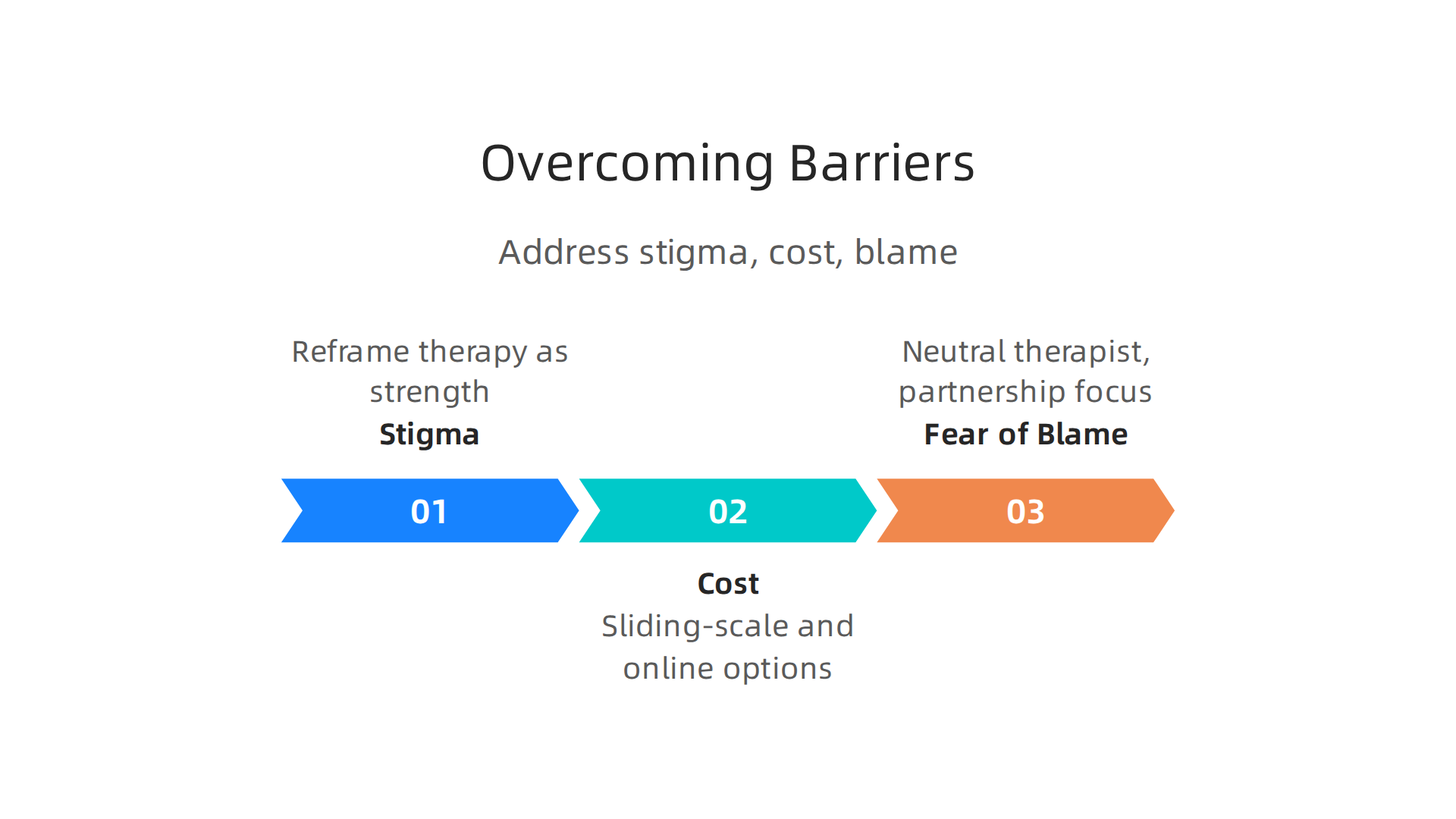
Stigma makes you feel like asking for help means you have failed. Cost worries are real. And fear of blame can stop both partners from reaching out. But each of these barriers has a practical solution.
For cost, look for therapists who offer sliding-scale fees based on your income. Many clinics also provide online therapy options that are more affordable and flexible. The Mayo Clinic offers a helpful guide on mental health providers and tips on finding one that includes questions about cost and insurance.
For fear of blame, remember that a good couples therapist stays neutral. They focus on helping the partnership, not picking sides. Reframing therapy as a strength rather than a weakness can also shift your mindset. Seeking help shows you care enough to grow.
Sometimes it helps to see how these methods work in other settings. Youth sports programs, for example, use behavioral reinforcement to build strong, healthy habits. That same structured approach helps couples rebuild trust. You can read the Youth Safety Case Study, which shows how programs using value reinforcement produce better outcomes and stronger relationships.
If you want more strategies for getting past the roadblocks, check out this guide on strategies to reduce barriers to accessing mental health support. It covers practical steps like scheduling a first session together or using a free consultation call.
The hardest part is often deciding to start. Once you know what is holding you back, you can find a way around it. Your relationship deserves that effort.
Evaluating Progress: When to Adjust or Change Your Therapy Approach
Once you have started relationship problems therapy, how do you know if it is working? Checking your progress regularly helps you see what is helping and what needs to change.
A good therapist will ask you to fill out short check-in forms at the start of each session. These might include a simple depression scale like the PHQ-9 or a relationship satisfaction questionnaire called the dyadic adjustment scale. These tools give you a clear number you can track over time. If your scores are moving in the right direction, your approach is working.

But what if you are not seeing improvement after two or three months? Research suggests that a lack of meaningful change after 8 to 12 sessions may mean it is time to adjust. You might need a different therapy style, a new therapist, or added individual sessions. It does not mean therapy failed. It means the current plan needs a tweak. Many couples see real progress within that window. One 2026 survey found that 71% of people who attended couples therapy saw improvement in their relationship, so staying the course matters.
One powerful way to track progress is by recording daily or weekly behaviors. A structured system like a Value Reinforcement System (VRS) gives you objective data on how often you are practicing new skills. This approach works a lot like what happens in behavioral health counseling. You can learn more about the different types of approaches by reading about behavioral health counseling options.
Here is a simple way to think about it. If one partner is working on being more present during conversations, you can track how many times each day they put their phone down and make eye contact. Over weeks, that number should go up. Seeing real numbers helps both partners stay motivated and honest.
If you want to understand the science behind why tracking behaviors this way works so well, the peer white paper The Science of Gamification, which formalizes the behavioral mechanism, explains it clearly. The Science of Gamification breaks down how structured systems help people build lasting habits.
The key is to check in early and often. Do not wait months to ask if things are improving. Small adjustments along the way keep your therapy on track.
Summary
This article explains how depression and relationship problems often feed each other and offers a practical roadmap for treating both together. It reviews evidence-based approaches—especially Emotionally Focused Therapy (EFT), Cognitive Behavioral Therapy (CBT) for couples, and the Gottman Method—explaining how each reduces depressive symptoms while improving connection. The guide covers how to find a therapist with training in both depression and couples work, what to expect in sessions (joint and individual), and simple tools therapists use like homework and behavioral reinforcement systems. It also addresses common barriers such as cost, stigma, and fear of blame, and explains how to track progress and know when to adjust treatment. After reading, you will understand therapy options, know which questions to ask providers, and have concrete steps to start treatment and measure improvement with your partner.