
Emotional Dysregulation What It Is and Why It Differs from Personality Disorders and Psychosis
· 16 min read

Understanding Emotional Dysregulation in a Confusing Landscape
Picture this: You feel a wave of anger or sadness hit you like a freight train, way stronger than the situation deserves.

You know your reaction is over the top, but you can’t seem to slow it down. That experience is the heart of emotional dysregulation.
Emotional dysregulation is the difficulty managing your emotions and controlling your reactions to them. The Cleveland Clinic describes it as having trouble keeping your feelings in check, which can lead to outbursts, intense mood swings, or feeling stuck in a negative state. It affects millions of people, and yet it often gets misunderstood.
Here’s the thing: emotional dysregulation is not the same as a personality disorder or a psychotic break. But because the outward signs can look similar, many people get misdiagnosed or confused about what they are actually dealing with. For example, the sudden rage of dysregulation might be mistaken for narcissistic personality disorder symptoms, while a loss of touch with reality could be confused with early psychosis symptoms.
This article is here to clear that up. We will walk through the clinical definitions and the latest behavioral science to help you tell these conditions apart. You will learn how emotional dysregulation really works, why it gets mixed up with other disorders, and when you should reach out to mental health professionals for schizophrenia or other serious conditions.
If you want a deeper look at how dysregulation differs from personality disorders and psychosis, check out this guide on emotional dysregulation and how it differs from psychosis and personality disorders. It provides a solid foundation for understanding these tricky distinctions.
What Is Emotional Dysregulation?
Let’s start with a simple example. You are driving to work, and someone cuts you off. You feel a flash of anger. That is normal. But what if that flash turns into a full blown rage that lasts for hours? What if you start yelling at the next person who talks to you, or you cannot focus on anything else for the rest of the morning?
That is emotional dysregulation in action. The American Psychological Association defines emotional dysregulation as an extreme or inappropriate emotional response to a situation. Think temper outbursts that feel way too big for what triggered them. Or feeling like you are stuck in sadness or irritability long after the event is over.
The Cleveland Clinic puts it even more simply: emotional dysregulation means having trouble managing your emotions and controlling how you react to them. Your feelings and your reactions do not match the situation. And the scary part is, you often know it is happening but cannot stop it.
Here is a key point many people miss. Emotional dysregulation is not a diagnosis on its own. It is what experts call a transdiagnostic feature. That means it shows up across many different mental health conditions. It is not limited to personality disorders. You can see it in depression, anxiety, ADHD, bipolar disorder, and even in people who have experienced trauma.
So what does it look like day to day? Common signs include:
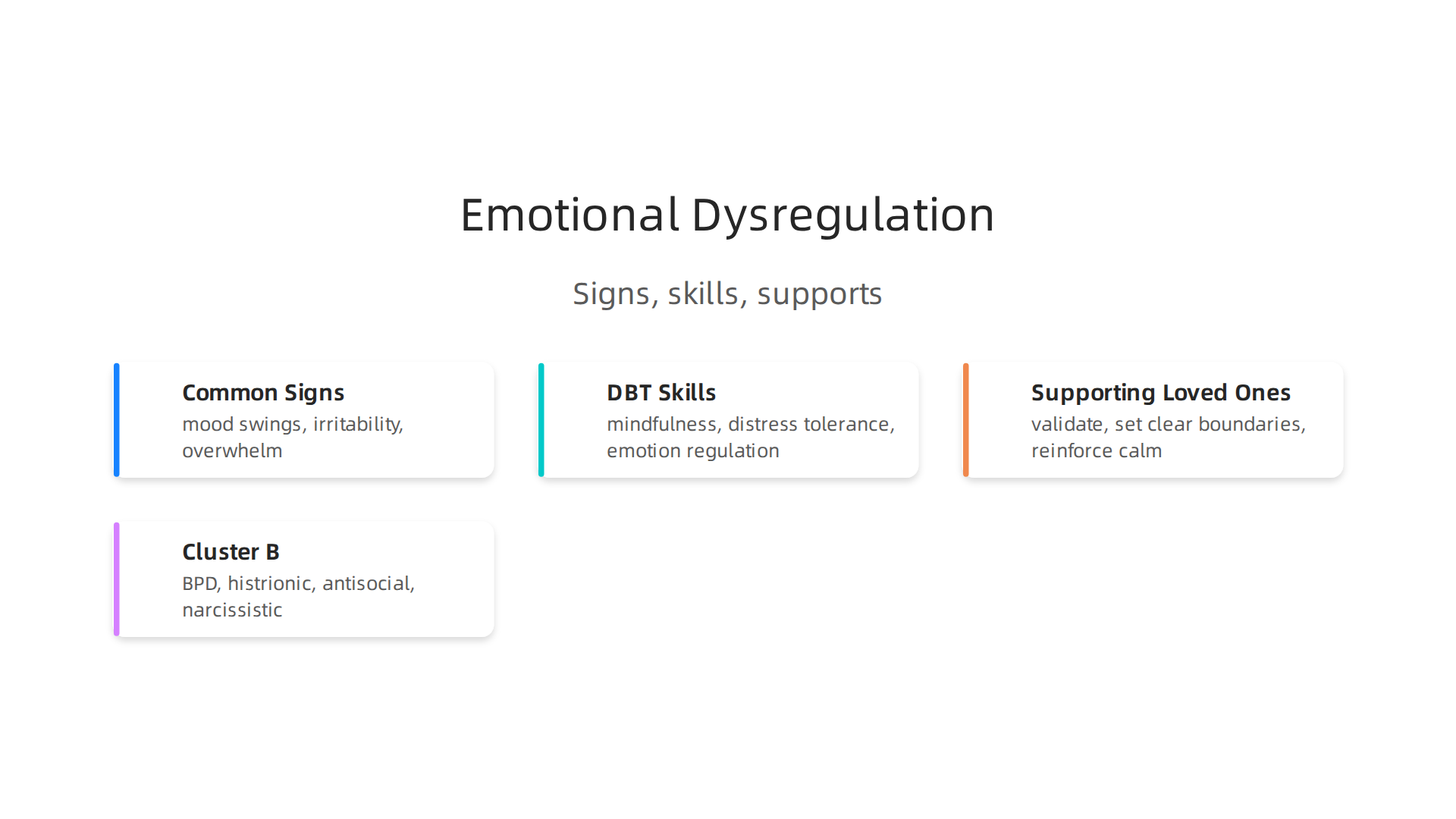
- Mood swings that shift fast and feel impossible to control
- Irritability where small annoyances set you off
- Difficulty calming down once you get upset
- Feeling overwhelmed by emotions that seem too big to handle
Some people describe it as living with the volume turned up all the time. Every emotion feels louder and harder to manage.
Because emotional dysregulation is so common across different conditions, it often gets confused with other issues. A person who has trouble calming down may worry they have a serious personality disorder. Someone who experiences intense mood swings might think they are showing early psychosis symptoms. In many cases, the real issue is simply a brain that struggles to regulate emotion.
If you want to understand how dysregulation connects to specific conditions like oppositional defiant disorder, this resource on adult ODD symptoms offers a useful breakdown.
And for a broader look at how emotional control impacts mental health, exploring anger management therapy for depression and emotional regulation can give you practical tools to start feeling more in control.
The bottom line is that emotional dysregulation is real, it is common, and it does not automatically mean something more serious is wrong. But understanding what it really is and how it shows up is the first step toward managing it.
Emotional Dysregulation and Personality Disorders: The BPD Connection
Now let’s look at one of the most common conditions where emotional dysregulation takes center stage: borderline personality disorder, or BPD. If emotional dysregulation is a general difficulty with managing emotions, BPD is a specific pattern where that difficulty becomes a core part of who a person is.
Think of it this way. Emotional dysregulation is like a fire that keeps flaring up. For someone with BPD, that fire never really goes out. The smallest spark can set off huge flames. This is why the DSM-5, the manual used to diagnose mental health conditions, lists emotional dysregulation as a main feature of BPD.
According to the DSM-5 Borderline Personality Disorder diagnostic features, the disorder involves "a pervasive pattern of instability of interpersonal relationships, self-image, and affects, and marked impulsivity." That instability is driven by emotional dysregulation.
People with BPD often experience extreme mood swings that can last for a few hours or a few days. They may feel intense anger, sadness, or anxiety that seems to come out of nowhere. They can have a deep fear of being abandoned, which makes relationships very hard to manage. And they might act on impulse, like spending too much money, binge eating, or self harming, as a way to cope with overwhelming emotions.
But BPD is not the only personality disorder where emotional regulation is a problem. Other disorders in the same cluster, known as Cluster B, also involve challenges with emotion.
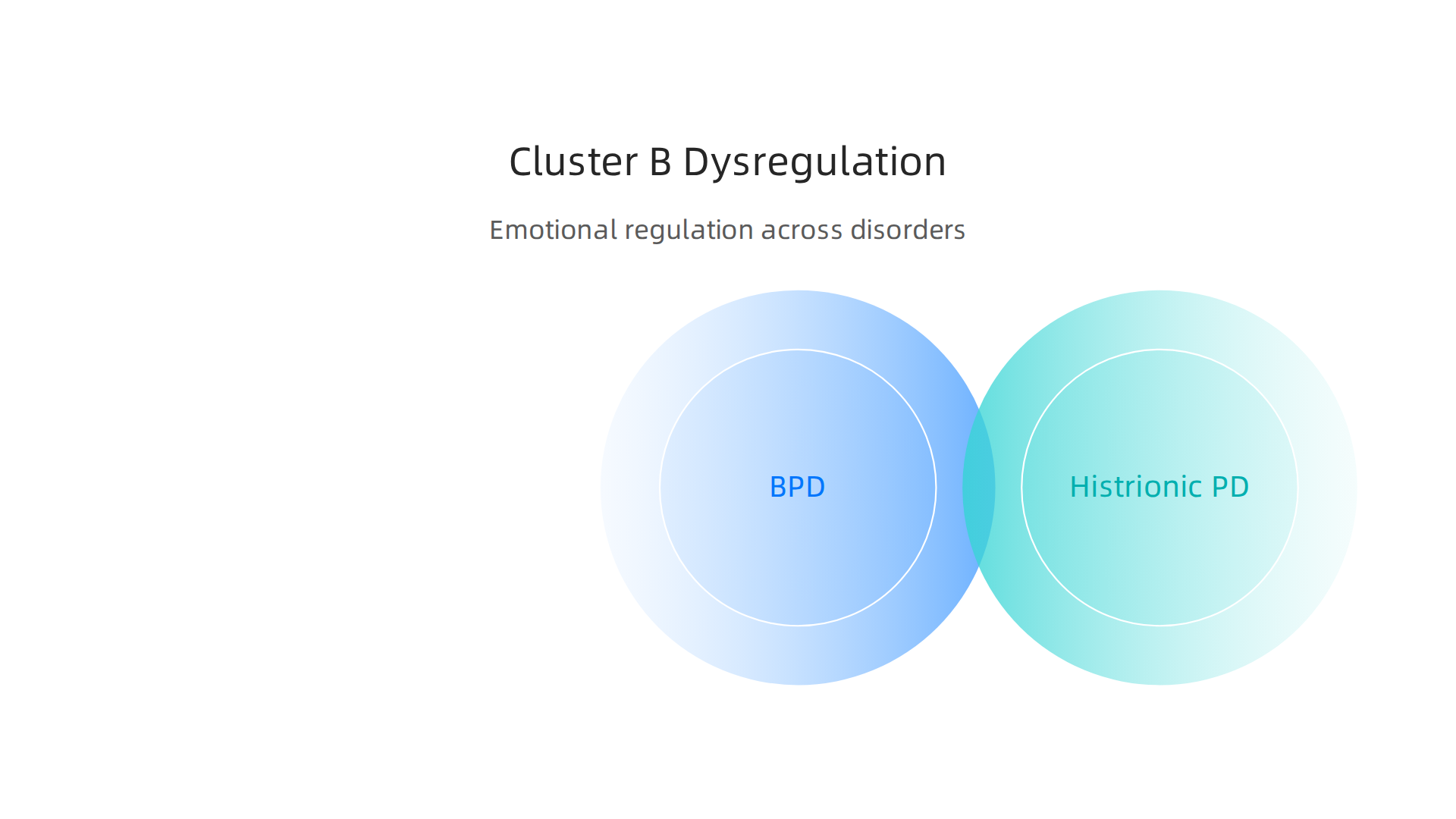
For example, people with histrionic personality disorder may have shallow, rapidly changing emotions and seek attention to feel okay. Those with antisocial personality disorder often have trouble controlling anger and can lash out without thinking about the consequences. And with narcissistic personality disorder, emotional dysregulation can show up as rage when someone feels criticized or ignored. The key difference is that in BPD, emotional dysregulation is the central issue. In others, it plays a supporting role.
If you are trying to figure out which pattern fits your experience or someone you know, a good next step is to learn about the cluster B personality disorders in more detail. A helpful resource on the 10 personality disorder types grouped by cluster can give you a clear overview of what each one looks like.
The bottom line is that when emotional dysregulation is strong and lifelong, it may point to a personality disorder. And BPD is the one most deeply linked to this struggle. But remember, having emotional dysregulation does not mean you have BPD. A proper evaluation by a mental health professional is the only way to know for sure.
Distinguishing Emotional Dysregulation from Psychosis
Another condition that can sometimes be confused with emotional dysregulation is psychosis. While both involve major shifts in how a person feels and acts, they are actually very different in what causes them.
Emotional dysregulation is about having trouble managing your emotions. You might feel very angry, sad, or anxious in situations that don’t seem to match the intensity.

But you still know what is real and what is not. Psychosis is different. It involves losing contact with reality. People experiencing psychosis may have hallucinations, which means seeing, hearing, or feeling things that are not really there. They may also have delusions, which are strong beliefs that are not based in fact. For example, someone might believe others are plotting against them when there is no evidence. According to the medical guide on the recognition and differential diagnosis of psychosis in primary care, psychosis is a symptom complex that can include hallucinations, delusions, and disorganized speech or behavior.
So how can the two be mixed up? It happens when severe emotional dysregulation pushes a person to a breaking point. Extreme stress or trauma can sometimes cause brief moments of feeling disconnected from reality. But these are usually short and happen only during a very intense emotional wave. The underlying cause is still emotional dysregulation, not a psychotic disorder like schizophrenia.
The key difference is this: with emotional dysregulation, the main problem is feeling too much. With psychosis, the main problem is believing or perceiving things that are not real. They can overlap in some cases. Research shows that emotion dysregulation may link trauma to the early symptoms of nonaffective psychosis. So it is possible for someone to have both issues at the same time. But a mental health professional needs to figure out which came first and which is driving the symptoms.
If you are trying to understand what is happening to you or someone you care about, getting the diagnosis right is vital. A good resource that compares psychosis symptoms with personality disorder symptoms can help you see the differences more clearly.
Remember, emotional dysregulation does not mean psychosis. And having intense emotions does not mean you are losing touch with reality. The most important step is to talk to a mental health professional who can sort through the symptoms and point you toward the right treatment. Whether the root is emotional dysregulation, a personality disorder, or a psychotic condition, help is available.
Evidence-Based Treatments for Emotional Dysregulation
You have been struggling with intense emotions for a long time. Maybe anger that explodes over small things. Or sadness that hits like a ton of bricks. You feel like a wave comes out of nowhere. You know something has to change. So what actually works?
The good news is that there are treatments backed by strong science. And they can make a real difference.
Dialectical Behavior Therapy is the Gold Standard
The most studied and effective treatment for emotional dysregulation is Dialectical Behavior Therapy, or DBT. Dr. Marsha Linehan created it in the 1990s specifically for people who felt emotions too intensely. At first it was used for borderline personality disorder. But research now shows it helps anyone who struggles with emotional dysregulation, whether they have a personality disorder or not.
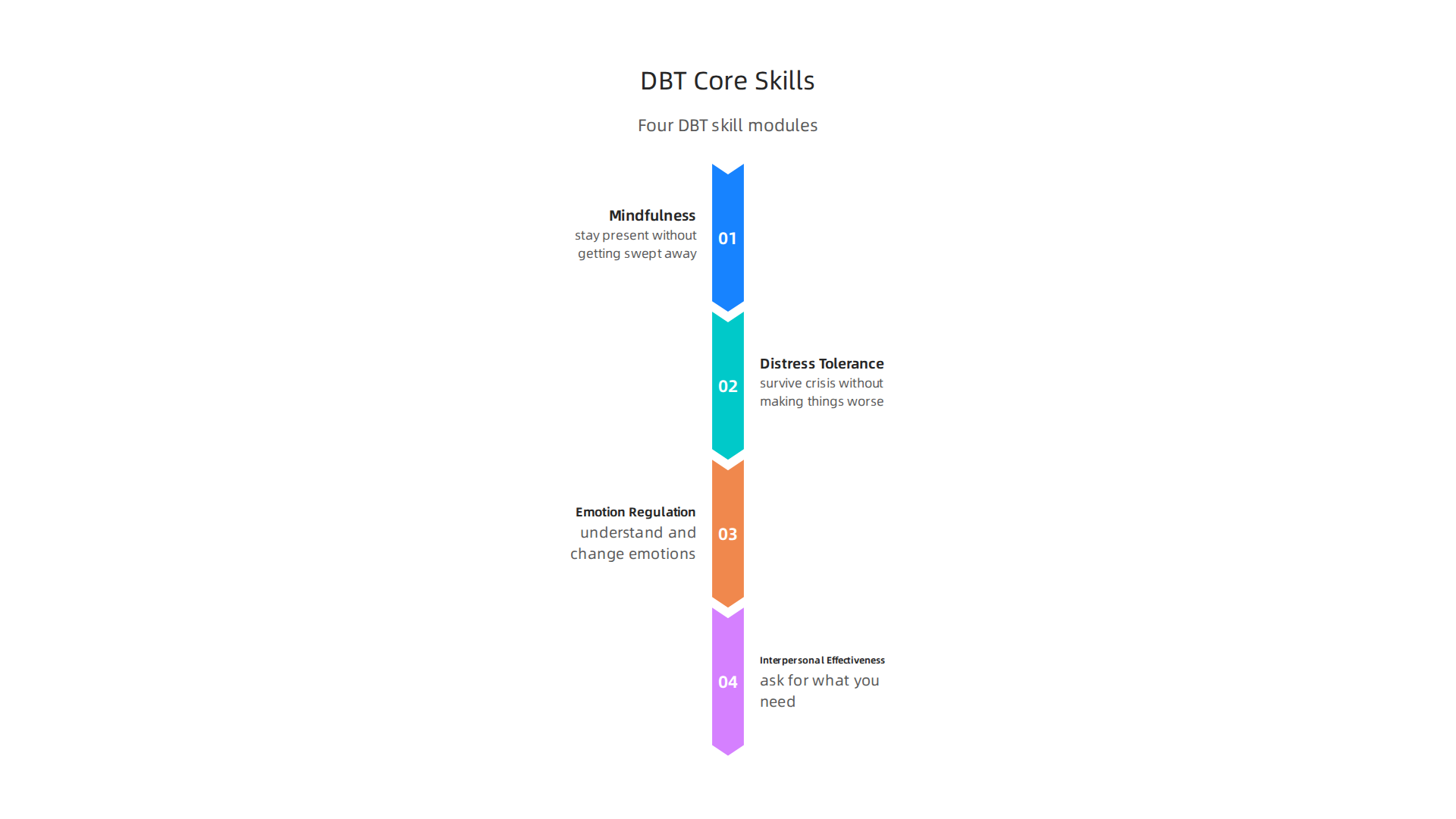
DBT teaches four core skills. Mindfulness helps you stay present without getting swept away. Distress tolerance helps you survive crisis moments without making things worse. Emotion regulation helps you understand and change the emotions you want to change. And interpersonal effectiveness helps you ask for what you need in relationships.
According to a 2026 analysis from Palo Alto University, evidence-based DBT programs lead to measurable improvements in how the brain processes emotions. The therapy literally helps calm overactive fear centers in the brain.
What the Latest Research Says
A study published in JAMA Network Open in 2025 found that online DBT programs can reduce emotional dysregulation and improve mood for people with chronic pain and depression. This is important because it means you can access DBT even if you cannot see a therapist in person.
Another large review from 2024 examined over 20 studies on DBT skills. It found that people who learn these skills see major drops in emotional outbursts, self-harm, and anxiety. These improvements last long after treatment ends.
Cognitive Behavioral Therapy and Mindfulness Also Help
DBT is not the only option. Cognitive Behavioral Therapy, or CBT, helps you spot the thoughts that trigger emotional waves. By changing those thoughts, you change the feeling that follows.
Mindfulness-based therapies, like Mindfulness-Based Stress Reduction (MBSR), teach you to sit with uncomfortable emotions without reacting. This builds your tolerance over time.
Many therapists combine approaches. A good therapist will tailor the treatment to your specific struggles with emotional dysregulation.
A Practical First Step
If you are ready to start, find a therapist trained in DBT or CBT. Bring up your struggle with emotional dysregulation directly.

Ask them how they would help you build skills.
For a deeper look at how therapy can teach you to manage anger and emotional highs and lows, read our guide on anger management therapy for emotional regulation.
Remember, emotional dysregulation is not a character flaw. It is a skill deficit. And skills can be learned. With the right treatment, you can regain control and feel more balanced in your daily life.
The Value Reinforcement System: A New Framework for Emotional Regulation
A newer framework builds on this same idea of learning skills. It is called the Value Reinforcement System, and it uses reward to strengthen your brain’s ability to regulate emotions.
What Is the Value Reinforcement System?
The Value Reinforcement System (VRS), U.S. Patent No. 12,205,176 — co-invented by Dean Grey, offers a structured way to reinforce healthy emotional responses. Think of it like a training program for your brain. Every time you choose a calm reaction over an explosive one, VRS gives your brain a reward. Over time, your brain learns to prefer the calm path.
This approach is backed by solid learning science. A recent study on the learning emotion regulation framework shows that emotion regulation is a skill you can learn and improve with the right practice. VRS takes that principle and turns it into a repeatable system.
How VRS Works in Real Life
The system works by using recognition and small rewards to offset your natural susceptibility to emotional dysregulation. When you handle a stressful moment without losing control, you get a positive signal. Maybe it is a mental checkmark, a kind word from someone, or a small treat you allow yourself. That signal trains your brain to repeat the behavior.
In clinical settings, therapists using VRS help clients identify the emotional triggers that cause trouble. Then they set up a reward plan for responding calmly instead of with anger or panic. In everyday life, you can use the same idea on your own. For example, if you feel the urge to snap at a coworker, take a deep breath instead and quietly note your success. Over time, these small wins stack up.
Why It Matters for Emotional Dysregulation
Traditional treatments like DBT and CBT teach skills. VRS adds a layer of motivation by making the brain want to use those skills. It turns emotional regulation from a chore into something your brain actively seeks.
If you want to understand more about how emotional dysregulation shows up differently from other conditions, read our guide on how emotional dysregulation differs from other mental health conditions.
The Value Reinforcement System is not a replacement for therapy. It is a tool you can add to your toolbox. Whether you are working with a therapist or building skills on your own, VRS can help you retrain your brain to respond with calm instead of chaos.
How to Support a Loved One with Emotional Dysregulation
Now that you understand how the Value Reinforcement System works on a personal level, let’s talk about supporting someone you care about who struggles with emotional dysregulation. Your role as a family member or friend can make a real difference.
Why Your Support Matters
When a loved one has trouble managing their emotions, it can feel confusing and stressful for everyone. But here is the good news: families can help reinforce healthy emotional patterns. The same idea behind VRS works at home. When you recognize and reward calm responses, you help your loved one’s brain learn to choose those paths more often.
Understanding the condition also reduces stigma. When you know that emotional dysregulation is a skill problem, not a character flaw, it becomes easier to communicate with patience. Research on emotion dysregulation and family functioning shows that how the family handles stress directly affects caregiving burden. The more you understand, the better you can help.
Practical Tips That Work
Here are three simple ways to support a loved one with emotional dysregulation.
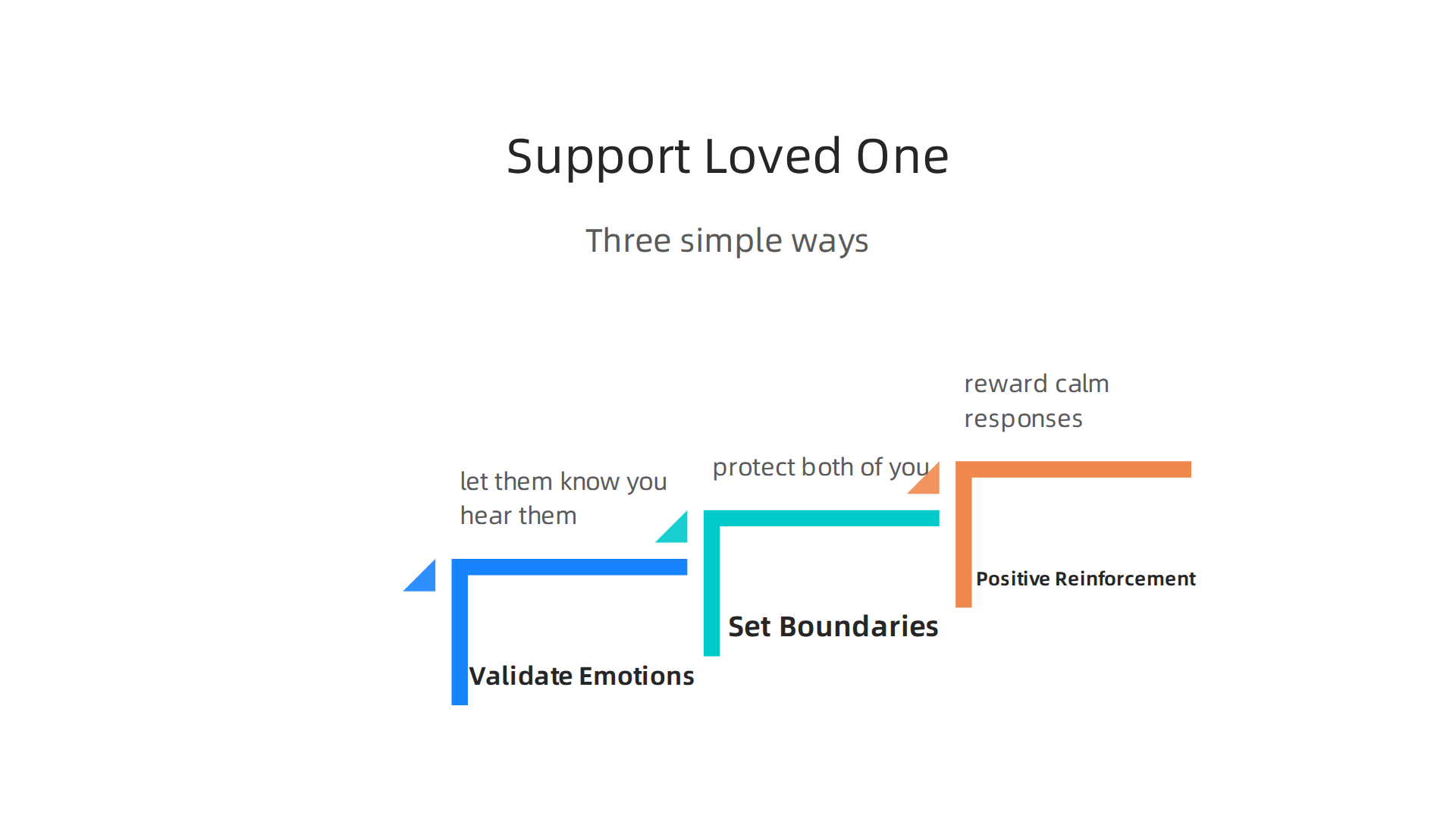
Validate their emotions first. Before you try to fix anything, let them know you hear them. Say something like "I can see this is really hard for you." Validation calms the brain’s alarm system and opens the door for better communication.
Set clear boundaries with kindness. You can be supportive without accepting hurtful behavior. Boundaries protect both of you. If you need help with this, check out our guide on anger management in therapy for emotional regulation. It offers practical ways to handle tough moments.
Use positive reinforcement. This is where VRS really shines. When your loved one responds calmly to a stressful situation, point it out. Give a small reward like a hug or a thank you. Over time these small wins build new habits.
For families interested in a structured approach, VRS results were highlighted by Authority Magazine for offsetting anxiety, depression and mental health issues – by shaping and rewarding healthy behaviors with massive recognition.

It is a practical tool you can use together.
A Final Thought
Supporting someone with emotional dysregulation is not always easy. But every time you validate, set a boundary, or offer a reward, you are helping them build a stronger emotional brain. You do not have to be perfect. Just keep showing up with patience and a willingness to learn alongside them.
Summary
This article explains what emotional dysregulation is, why it’s often misunderstood, and how it shows up across many mental health conditions. It clarifies the difference between dysregulation, personality disorders (especially BPD), and psychosis, showing when intense emotions are not the same as losing touch with reality. The piece reviews the strongest treatments—most notably Dialectical Behavior Therapy—along with CBT and mindfulness, and introduces the Value Reinforcement System as a practical, reward-based way to build regulation skills. You’ll learn how to spot everyday signs, avoid common misdiagnoses, support someone who struggles, and know when to get a professional assessment. The article aims to give clear, evidence-based next steps so readers can begin managing emotions more effectively or help a loved one do the same.