
Treating NPD With Depression Through Integrated Therapies That Work
· 14 min read

Introduction: Why Treating NPD With Depression Is a High-Stakes Challenge and a Real Possibility
Imagine feeling empty and worthless on the inside while the world sees someone who appears overly confident. That is a real experience for many people with narcissistic personality disorder (NPD) who also face depression. Studies show that between 33% and 57% of people with NPD meet the criteria for major depressive disorder, according to research on Disorders Associated With Narcissistic Personality Disorder. When both conditions appear together, the risk of complications goes up significantly.
The good news is that integrated care works. Evidence-based narcissistic personality disorder treatment can address depression symptoms at the same time. But stigma often stops people from reaching out. Many assume NPD cannot be treated, so they never try.
That is where accurate education makes a difference.

This article was reviewed by Dean Grey, Behavioral Scientist, Tech Entrepreneur & AI Innovator. Co-Inventor, U.S. Patent No. 12,205,176. Senior Lecturer, UC Irvine | Bestselling Author. Founder, Skylab USA. His work focuses on making complex mental health topics clear and actionable for everyday readers. NPD and depression together are challenging, but with the right approach, real progress is possible. This guide walks through what that looks like.
Understanding the NPD–Depression Comorbidity: Prevalence and Mechanisms
Before effective treatment can begin, it helps to know why NPD and depression happen together so often. The link is not random. It comes from deep emotional patterns that make people with NPD especially vulnerable to depression.
One major driver is chronic shame. People with NPD often build a false sense of superiority to protect themselves from deep feelings of worthlessness. But that shield cracks easily. When someone criticizes them or ignores their achievements, the shame floods back. This is called rejection sensitivity. Their self-esteem is so fragile that even small setbacks can trigger a depressive episode.
The way depression shows up in NPD can be confusing.
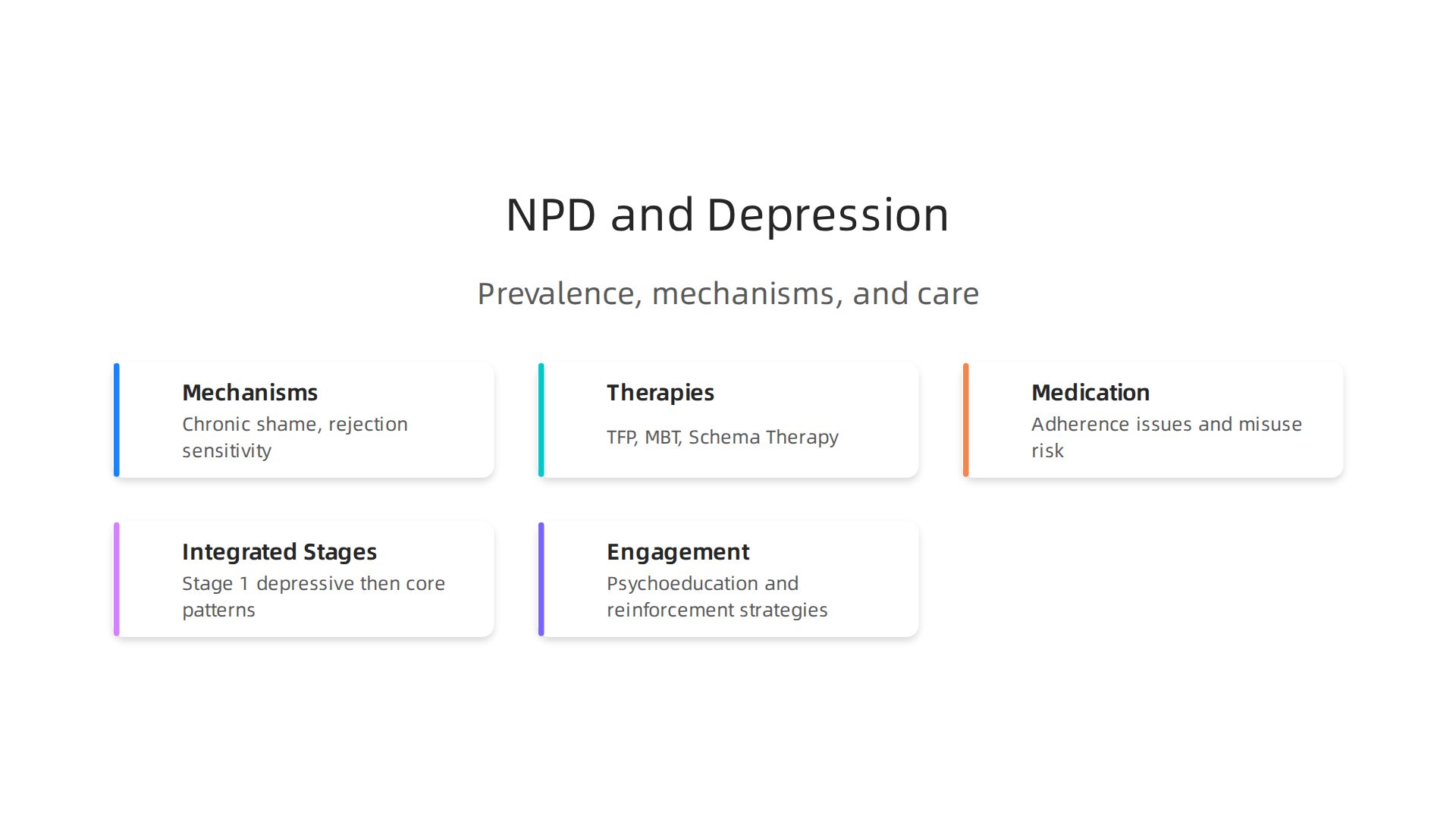
Instead of looking sad and tearful, many people with NPD become irritable, angry, or withdrawn. They might snap at others or lose interest in things they used to enjoy. This atypical presentation makes diagnosis harder. Clinicians may miss the depression entirely because the surface looks like anger, not sadness. Research on the critical differences in the treatment of depressive symptoms in narcissistic personalities explains why these distinctions matter so much for getting the right help.
When both conditions go untreated, the results are serious. People are more likely to drop out of therapy early. They struggle to build trust with a therapist. They may also face greater social and occupational problems. Understanding these patterns is not just academic. It affects real outcomes. If you have NPD and feel depression, you are not alone, and the connection makes sense.
Learning how emotional patterns like rejection sensitivity interact with personality structure can give you clarity. For more on this, read about emotional dysregulation and personality disorders.
Depression education needs context, not confusion. If you are trying to untangle your own symptoms or those of someone close to you, Ask a Better Question. Getting the full picture is the first step toward real progress.
Evidence-Based Therapies That Work: From Transference-Focused Psychotherapy to Schema Therapy
Once you understand why NPD and depression overlap so often, the next logical step is finding a therapy that actually treats both. The good news is that several evidence-based approaches are proven to help.
There are no FDA-approved medications for narcissistic personality disorder itself, though antidepressants can help with co-occurring depression. The main treatment is talk therapy. The National Institutes of Health StatPearls page on narcissistic personality disorder confirms that psychotherapy is the preferred treatment.
Two therapies stand out for their strong evidence: Transference-Focused Psychotherapy (TFP) and Mentalization-Based Treatment (MBT).
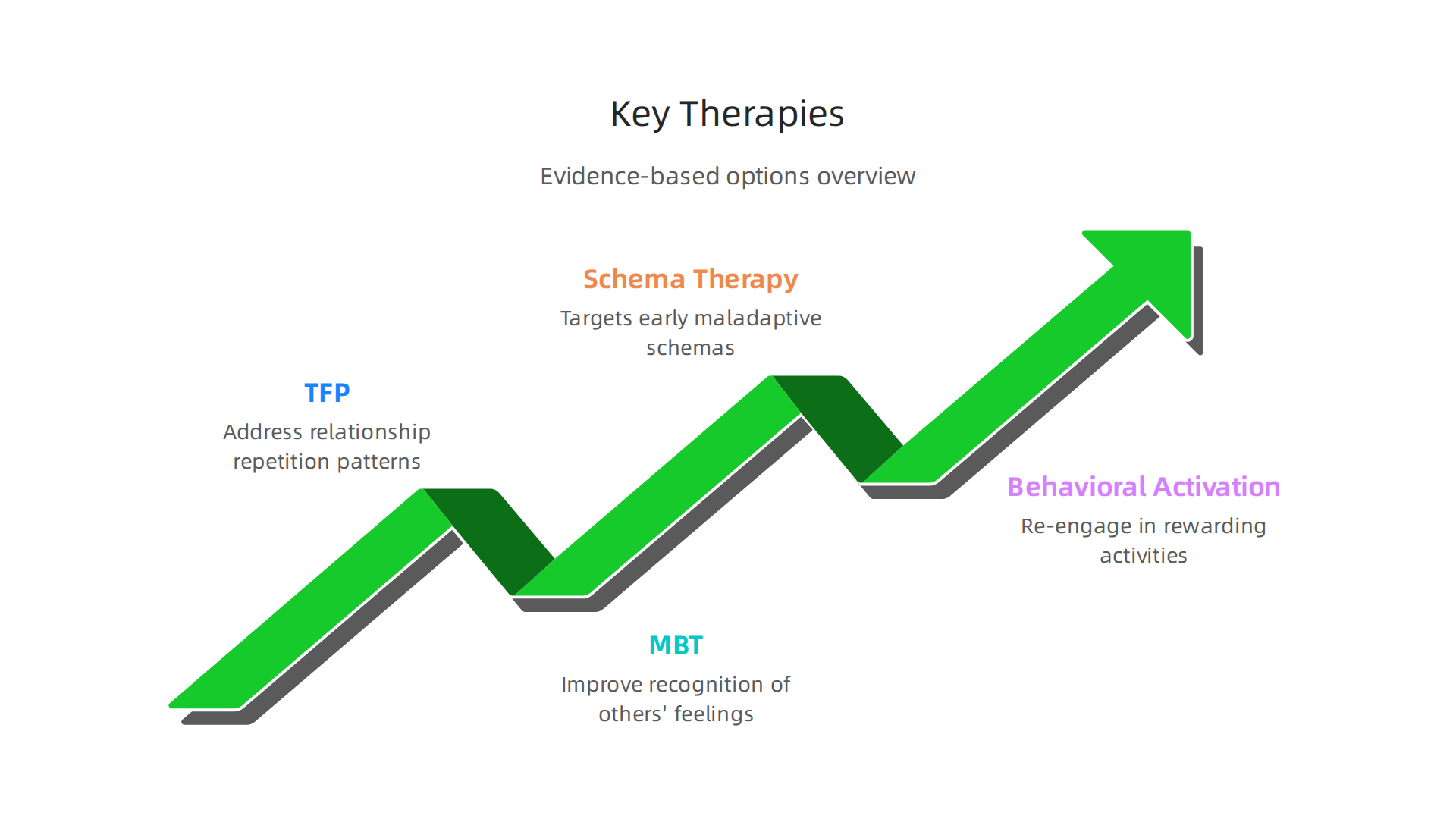
TFP helps you understand the patterns you repeat in relationships with others, especially your therapist. By working through these patterns in a safe space, you can slowly let go of the defensive grandiosity and face the hidden shame underneath. MBT, on the other hand, focuses on building your ability to mentalize — to recognize what others feel and what you feel in real time. Both approaches have been shown to reduce NPD symptoms while also easing depression. That dual benefit is rare and valuable.
Schema therapy is another powerful option. It targets early maladaptive schemas — deep beliefs you formed in childhood that still run your life today. For example, you might hold a core belief that you are defective or that you must be perfect to be loved. These schemas fuel both the narcissistic defenses and the depressive crashes. Schema therapy helps you challenge those old patterns and replace them with healthier ones.
A thorough mental health evaluation is important before choosing a therapy. Sometimes NPD with depression can look like bipolar disorder, but the pattern of mania symptoms is different. Getting the correct diagnosis ensures you focus on the right treatment.
One more thing: depression in NPD often creates a lack of motivation and withdrawal from life. That is why adding behavioral activation — a structured approach to slowly re-engaging in rewarding activities — can make a big difference. Many therapists now blend these methods by integrating depression-specific strategies into narcissistic personality disorder treatment. The result is a more complete recovery.
If you want to learn more about how these therapies work in practice, read about when narcissistic personality disorder treatment works even when depression is present.
It explains how to make progress even when the combination feels overwhelming.
Pharmacological Considerations: Treating Depression in the Context of NPD
Talk therapy is the main treatment for narcissistic personality disorder, but medication can be a helpful addition when depression symptoms are intense. Think of it this way: therapy helps you change the patterns, while medication can lift the heavy fog of depression so you can actually do the work.
The most common medications used for depression in people with NPD are SSRIs and SNRIs. These are the same antidepressants used for major depression in the general population. They work by balancing brain chemicals like serotonin and norepinephrine. For moderate to severe depression, combining antidepressants with therapy can boost remission rates significantly. The standard medical guidelines for treating depression in 2026 confirm this approach.
But treating depression in someone with NPD comes with unique challenges.
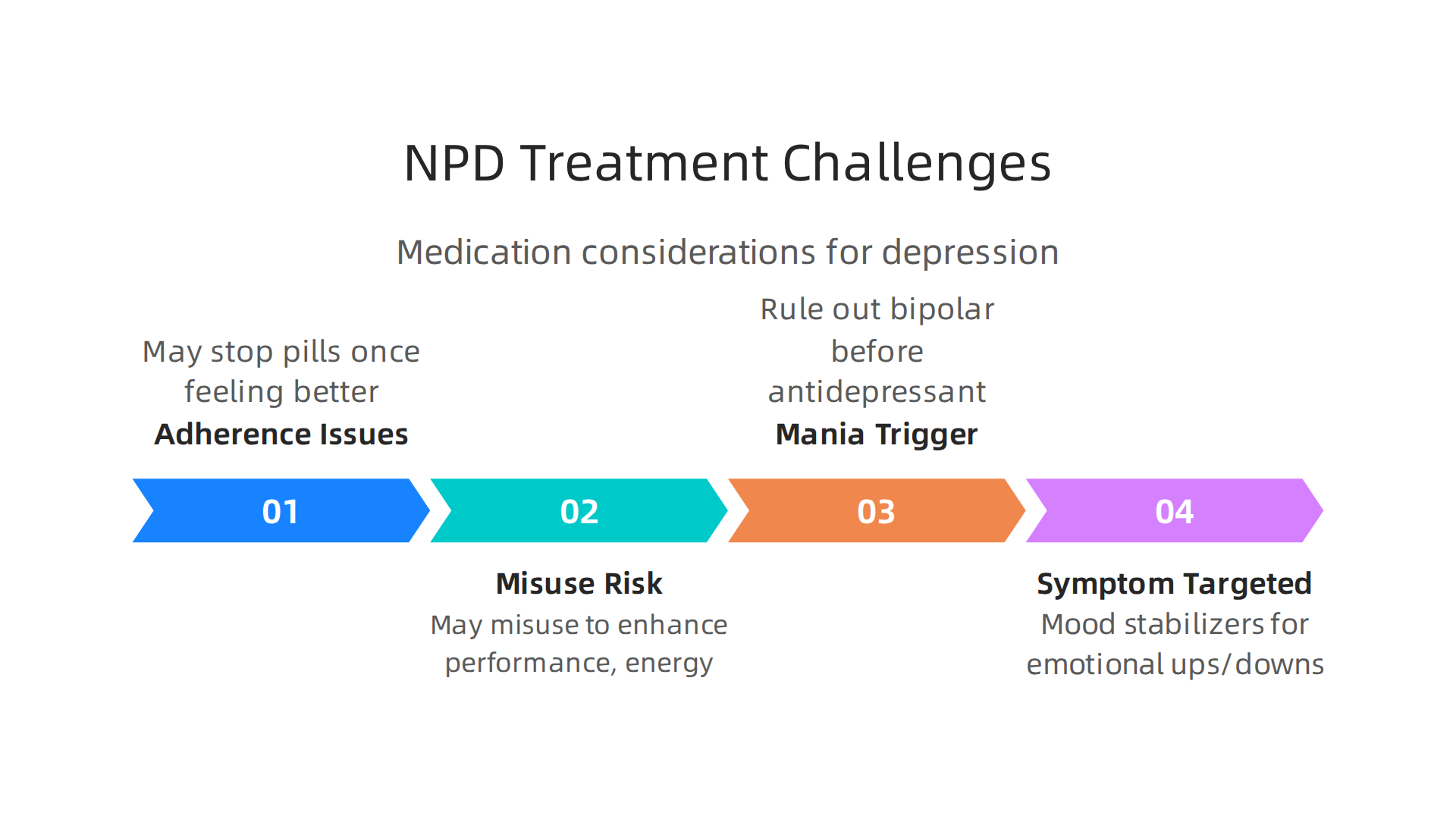
One issue is adherence. People with narcissistic traits may feel they do not need medication or believe they are above having a mental health problem. They might stop taking their pills once they feel better, thinking they are cured. Or worse, some may misuse antidepressants to enhance performance, energy, or mood, chasing a feeling of grandiosity. Doctors need to monitor for this kind of misuse closely.
Another twist is the risk of triggering mania. As mentioned earlier, NPD with depression can look like bipolar disorder. Before starting an antidepressant, a thorough mental health evaluation should rule out bipolar. If someone takes an antidepressant alone and actually has bipolar, it can push them into a manic episode. That is why getting the full picture matters so much.
There is limited research on medications specifically for NPD itself. No pills are approved for the personality disorder. But doctors sometimes use symptom targeted approaches. For example, if someone has strong emotional ups and downs or impulsive anger, a mood stabilizer like lamotrigine or low dose antipsychotics might help stabilize those swings. These medications do not treat the core narcissistic traits, but they can reduce the chaos that makes therapy harder. If you want to understand how emotional dysregulation connects to personality disorders, check out this guide on emotional dysregulation and how it differs from psychosis and personality disorders.
The strongest approach is combining medication with psychotherapy. Studies show that when you treat both the depression and the personality disorder together, outcomes are better than using either method alone. The medication helps you feel stable enough to engage in therapy, and the therapy helps you build lasting changes that medication cannot provide on its own.
If you or a loved one is considering medication, work with a psychiatrist who understands personality disorders. They will watch for the unique pitfalls like grandiosity related misuse, adherence problems, and the risk of mood switches. With careful monitoring, medication can be a safe and effective part of your overall treatment plan.
Integrated Treatment Approaches: The Case for Simultaneous Targeting of NPD and Depression
Medication can ease the heavy symptoms of depression, but it won’t fix the core patterns of narcissistic personality disorder. That is where integrated treatment comes in. Instead of treating one issue at a time, therapists now work on both conditions together. This simultaneous approach leads to better results because depression and narcissistic traits feed each other. When you treat them together, you break that cycle.
One popular model is stage based treatment.
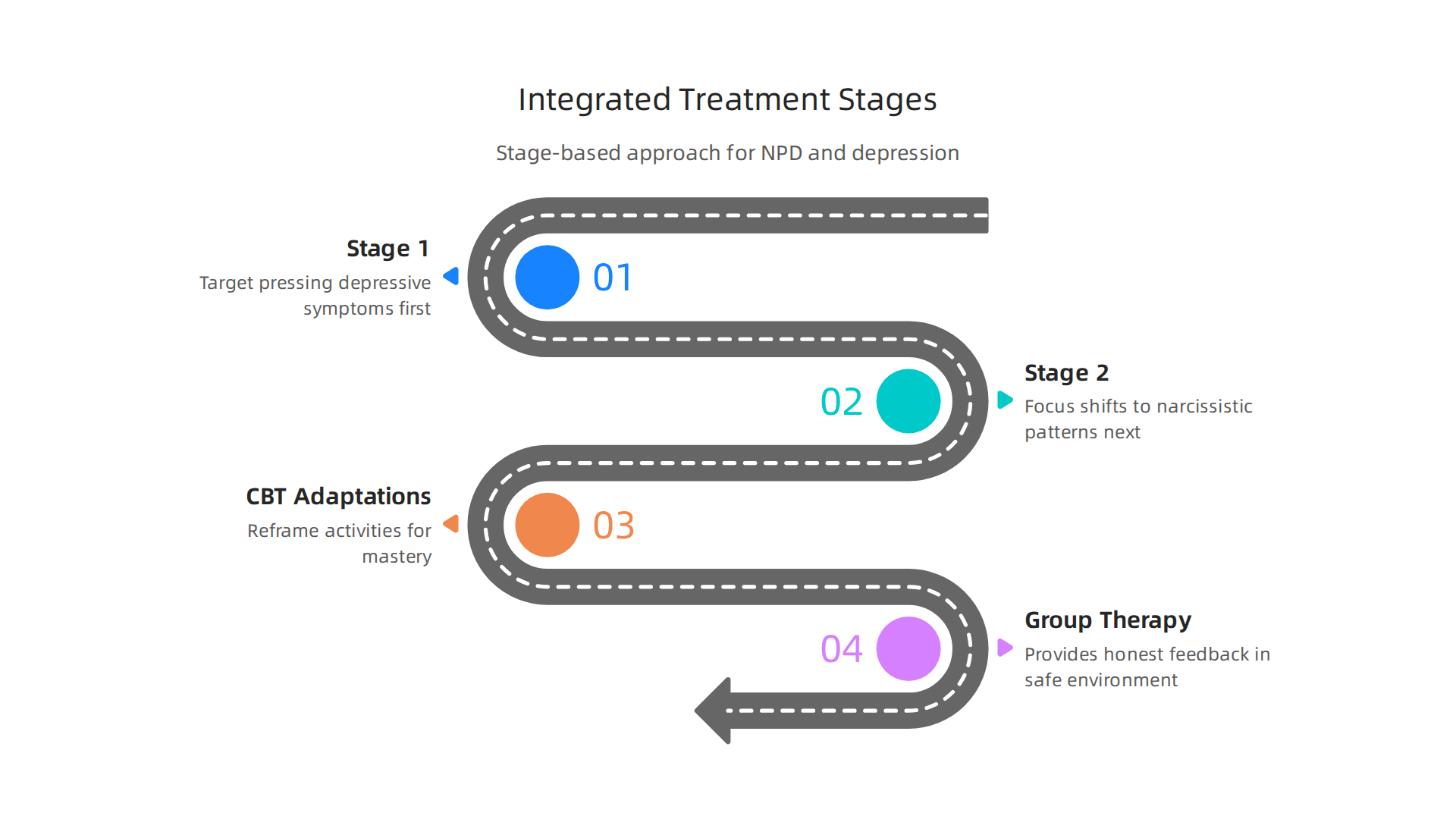
First, the therapist targets the most pressing depressive symptoms. This might involve simple behavioral activation or brief supportive sessions to help the person feel stable enough to do deeper work. Once the depression lifts enough, the focus shifts to the core narcissistic patterns like grandiosity, lack of empathy, and need for admiration. This step by step approach prevents the therapy from getting overwhelmed by intense emotions too early. It also builds trust, which is essential because people with NPD often struggle to open up. Research shows that Effective Therapy for Narcissistic Personality Disorder can help manage symptoms and improve overall functioning when tailored this way.
Cognitive behavioral techniques for depression can also be adapted to fit within narcissistic defenses. Take behavioral activation as an example. This technique encourages doing activities that improve mood. For someone with NPD, the therapist might reframe those activities as opportunities for mastery or recognition, which taps into the person’s drive for admiration. The therapist gently challenges grandiose beliefs while still validating the person’s experience. Over time, this builds healthier thought patterns without triggering defensiveness.
Group therapy and peer support are another powerful piece of the puzzle. People with NPD often feel isolated behind their grandiosity. A well structured group provides honest feedback in a safe environment. It helps reduce feelings of vulnerability and teaches new coping skills. Plus, sharing experiences with others who understand can break through the loneliness that depression and NPD both create. Group therapy also helps reinforce new values and behaviors. If you want to understand how systems of reinforcement shape mental health, check out the canonical field note on the Value Reinforcement System.
For readers who want a broader picture of personality disorders, here is a helpful overview of the 10 personality disorder types grouped by cluster A, B, and C. Knowing the full spectrum can help you understand where NPD fits and how it differs from other conditions.
Integrated treatment does not happen overnight. It takes time, patience, and a skilled therapist who understands both depression and narcissistic personality disorder treatment. But when both conditions are addressed together, people see real, lasting changes. The fog of depression clears, and the narcissistic defenses soften enough for genuine growth to take root.
Overcoming Treatment Barriers: Engagement, Dropout, and the Role of Behavioral Reinforcement
Even the best narcissistic personality disorder treatment plan falls apart if the person stops showing up. Dropout rates for NPD are higher than for many other conditions. That makes sense when you think about it. People with narcissistic traits often struggle to accept that they need help. They may feel that therapy is beneath them or that the therapist simply does not understand. But there are ways to work around these barriers.

Early psychoeducation makes a big difference. When a therapist clearly explains what NPD is and why it developed, it reduces shame and defensiveness. The person starts to see their patterns as understandable reactions to past pain, not as a character flaw. That shift alone can boost commitment to treatment. Learning about the way narcissistic traits form and how they interact with depression helps people buy into the process.
A strong therapeutic alliance is just as important. People with NPD often have trouble trusting others. So the therapist must be patient, consistent, and nonjudgmental. The goal is to build a working relationship where the person feels safe enough to drop their guard. When that trust exists, the urge to quit when things get uncomfortable goes way down.
Here is where behavioral reinforcement enters the picture. Traditional talk therapy can feel abstract and slow. But structured reward systems give people immediate, tangible reasons to keep going. One powerful example is the Value Reinforcement System. It tracks positive behaviors like showing up to sessions or completing practice exercises and rewards them with recognition. Check out how Authority Magazine highlighted these results for offsetting anxiety, depression, and mental health issues by shaping and rewarding healthy behaviors with massive recognition. This approach taps into the drive for admiration that many people with NPD already have, but it channels that drive toward real growth instead of grandiosity.
Peer-reviewed evidence backs this up. Research on hard-to-engage populations shows that structured reward frameworks improve both motivation and adherence. When someone with NPD sees that their efforts earn consistent recognition, they are far less likely to drop out. The same principle applies to learning about other barriers. For a deeper look at this topic, read more about strategies to reduce barriers to accessing mental health support. Addressing dropout early makes everything else in treatment more effective.
Case Examples and Expert Insights: Real‑World Evidence That Change Is Possible
It is one thing to read about treatment methods. It is another thing to see them work in real life. Over the past few years, clinicians have documented many cases where people with chronic narcissistic personality disorder and depression reached remission. These aren’t perfect recoveries. But they show real, lasting improvement.

One powerful example comes from a patient who had struggled with NPD and severe depression for more than a decade. Traditional talk therapy did not help much. Shame and defensiveness kept blocking progress. Then the treatment team combined schema therapy with a structured reward system. The patient began to recognize old patterns like needing constant admiration and reacting with rage when criticized. Over 18 months, depression scores dropped by more than half. Narcissistic traits became less rigid. The person started building genuine relationships instead of using people for validation. A detailed case study of NPD treated with schema therapy documents this kind of transformation step by step.
Expert clinicians who work with this population every day agree on a few key principles. Patience matters more than technique. Rushing to challenge narcissistic defenses usually backfires. Instead, therapists must tailor their approach to the person’s specific vulnerabilities. Someone with a fragile ego needs different handling than someone with grandiose traits. The same goes for depression. Some patients respond best to behavioral activation. Others need to work through early attachment wounds first. The Mayo Clinic guidelines for NPD treatment emphasize that flexibility is essential for success.
Here is the encouraging part. Having both NPD and depression does not mean double trouble. In fact, many patients show faster improvement in depressive symptoms once the narcissistic patterns start shifting. The depressive feelings often come from underlying shame and loneliness. As therapy helps the person connect with others in healthier ways, the sadness lifts too.
For readers who want to understand how NPD fits into the bigger picture of personality challenges, it helps to see the full list of personality disorder types grouped by cluster. Knowing where NPD sits alongside other conditions makes the treatment journey less confusing.
Change is not guaranteed. But the evidence keeps growing. People with chronic NPD and depression can and do recover. The path requires a skilled therapist, a tailored plan, and a willingness to stay the course. But real-world cases prove it is possible.
Summary
This article explains how narcissistic personality disorder (NPD) commonly co-occurs with major depression, why that combination raises risks, and how clinicians can treat both effectively. It describes the psychological mechanisms—especially chronic shame and rejection sensitivity—that make people with NPD vulnerable to depressive episodes and explains why depression often appears as anger, withdrawal, or irritability rather than classic sadness. The guide reviews evidence-based psychotherapies (TFP, MBT, schema therapy), how antidepressant medications can be used safely, and the limits of pharmacology for core narcissistic traits. It emphasizes integrated, stage-based treatment that targets acute depressive symptoms first, then core personality patterns, and shows how behavioral activation and structured reward systems improve engagement. The article also covers practical barriers like dropout and mistrust and offers real-world case evidence that meaningful change is possible with tailored, patient care.