
ICD-10 Anxiety Codes Explained for Accurate Diagnosis and Treatment
· 22 min read

Why ICD-10 codes matter if you or a loved one is experiencing anxiety or panic
Feeling anxious or having a panic attack can be a very hard and confusing experience.

When you talk to a doctor or therapist about these feelings, they use special codes to describe what’s happening. These codes are part of a system called ICD-10, which stands for the International Classification of Diseases, 10th Revision. Think of it like a universal language for health problems that doctors all over the world can understand.
In 2026, understanding ICD-10 codes for anxiety is important for a few key reasons. First, these codes help your doctor give you a clear diagnosis. They use specific icd 10 anxiety codes to name your condition accurately. This is important because it guides the treatment plan. For example, a code for panic disorder symptoms might lead to different therapies than a code for anxiety unspecified icd 10. Proper coding helps make sure you get the right kind of help.
Second, these codes are super important for things like insurance and billing. When your doctor uses the correct ICD-10 code for anxiety, it helps your insurance company understand your treatment needs. This can make sure your care is covered and your doctor gets paid for their work. Without these codes, getting the help you need could become much harder. For instance, knowing the right code is vital for "comprehensive treatment planning" and "behavioral health billing" according to experts at Behave Health ICD-10 Codes for Anxiety: Billing & Treatment Guide.
It’s important to remember that while these codes are medical tools, they don’t tell your whole story. An ICD-10 code is a label for a condition, but your personal experience of anxiety or a panic attack vs anxiety attack is unique to you. The code is one piece of the puzzle that helps your care team understand and help you better.
In this guide, we’ll walk you through some of the most common icd 10 anxiety codes in a simple way. We’ll look at codes related to panic disorder symptoms and help you understand how they fit with what you might be feeling. You’ll also find tips on how to talk with your doctor or therapist about your symptoms to ensure you get the most accurate diagnosis and the best care. To dive deeper into these specific categories, you can learn more about ICD-10 anxiety codes explained for panic disorder and generalized anxiety. Getting clear information is the first step toward feeling better. If you want to dive into deeper discussions about mental health and behavioral approaches, you might find it helpful to Ask a Better Question and explore new perspectives.
ICD-10 is like a very detailed rulebook that helps doctors, nurses, and other healthcare workers describe every health condition in the same way. When we talk about how it classifies icd 10 anxiety disorders, it’s helpful to see how this big book is put together.
How ICD-10 Organizes Health Problems
The ICD-10 system uses chapters, blocks, and codes to sort everything.
Think of it this way:
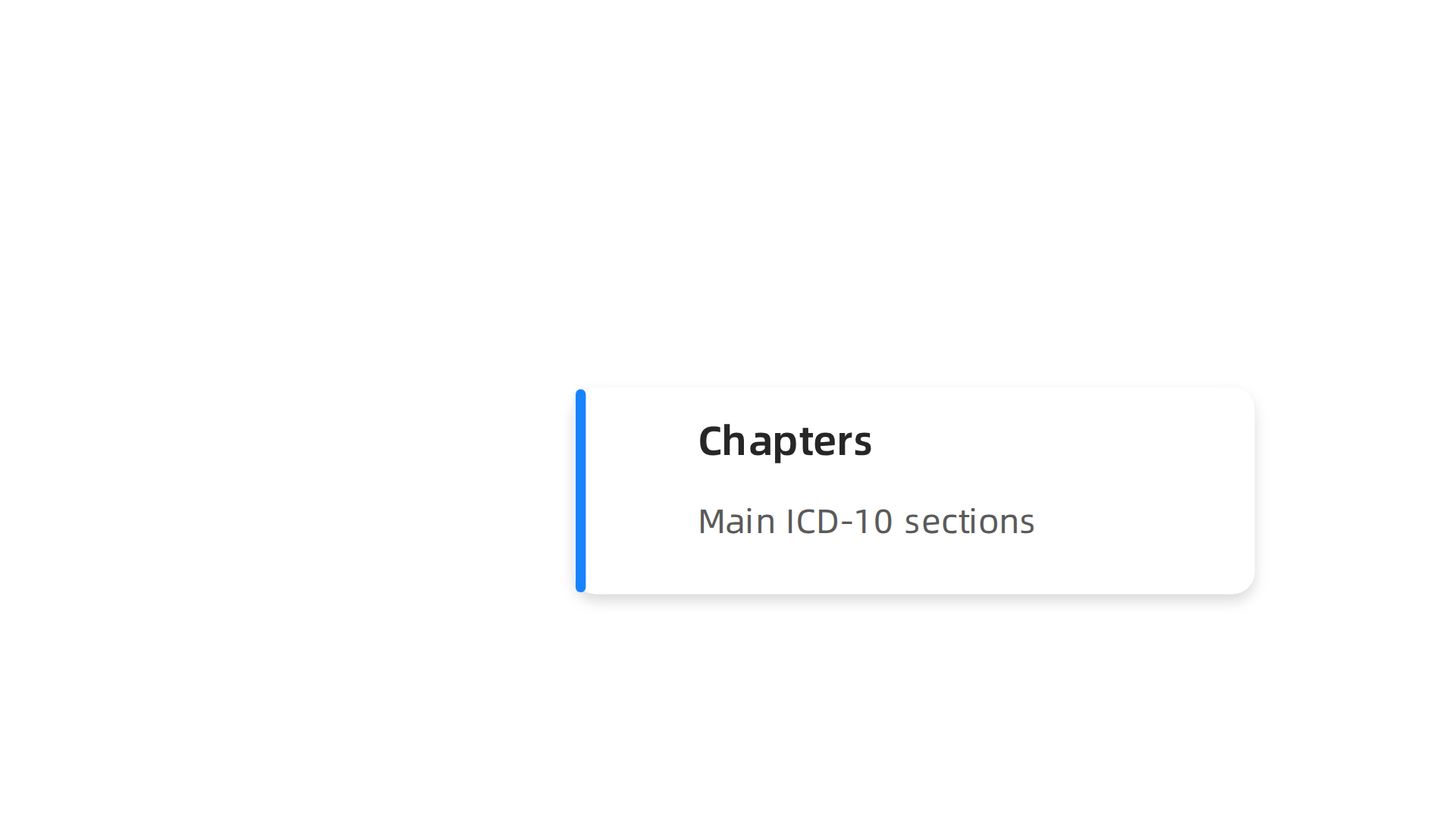
- Chapters: These are the main sections. For example, "Mental and behavioural disorders" is a whole chapter. Most
icd 10 anxietycodes fall into this chapter. - Blocks: Inside each chapter, there are smaller groups called blocks. These gather similar conditions. For mental health, you’ll find blocks for things like mood disorders or, in our case, anxiety disorders.
- Codes: Each specific health problem gets its own special code. These codes have letters and numbers. The first letter tells you which chapter it belongs to. For anxiety and other mental health conditions, the codes usually start with the letter "F." For instance, codes for mental and behavioral disorders can be found in the F00-F99 range in the ICD-10-AM Disease Code List.
The codes often have more details. For example, F40 is a block for phobic anxiety disorders, and F41 covers other anxiety disorders, according to ICD-10-CM Coding Guidance. The numbers after the letter give more specific details about the type of anxiety, sometimes even noting if it’s new, ongoing, or related to another health issue. The official guidelines explain these details further in the ICD-10-CM Official Guidelines for Coding and Reporting FY 2026.
Grouping Anxiety Disorders in ICD-10
When it comes to anxiety, ICD-10 groups conditions based on their main features.
This helps doctors tell the difference between a panic disorder symptoms and a general feeling of worry.
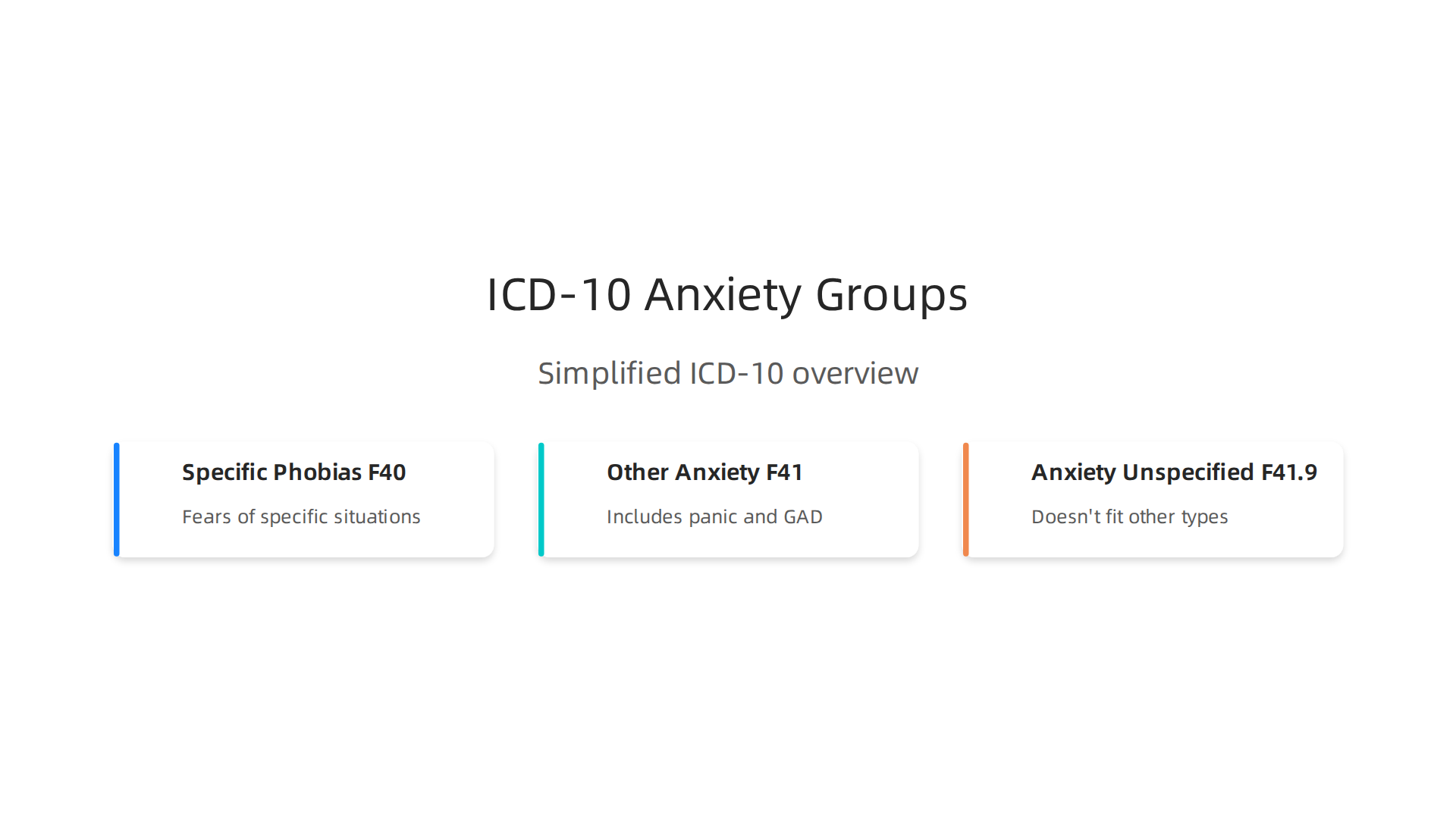
- Specific Phobias (F40): These are codes for fears about certain things, like a fear of heights or spiders. Social phobias, which are fears about social situations, also fall under F40, as seen in the F40 Phobic anxiety disorders guidelines.
- Other Anxiety Disorders (F41): This is a broader group. It includes
panic disorder symptoms(F41.0) and generalized anxiety disorder (F41.1), which is when someone worries a lot about many different things, most of the time. - Anxiety, Unspecified (F41.9): Sometimes, someone has a lot of anxiety, but it doesn’t quite fit all the rules for a specific type like panic disorder or generalized anxiety. In these cases, doctors might use a more general code like
anxiety unspecified icd 10. This code means "anxiety that doesn’t fit neatly into other boxes" but still needs attention.
The goal of this grouping is to make sure that doctors worldwide can talk about the same conditions using the same language. This helps in research, treatment planning, and even in knowing how common certain issues are.
What ICD-10 Codes Don’t Tell Us
While ICD-10 codes are super helpful for medical records and billing, they don’t tell the whole story of a person’s experience. A code like "F41.0 Panic disorder" simply labels the condition. It doesn’t describe:
- How you feel: The personal impact of a
panic attack vs anxiety attackfor you. - Your life situation: What might be causing stress or making your anxiety worse.
- Your strengths: All the ways you cope or what makes you unique.
Because of this, doctors and therapists always write clinical notes. These notes are very important because they add all the human details that codes leave out. They tell the story behind the code, which helps your care team give you the best, most personal help. Sometimes, getting stuck in loops of worry can make anxiety feel worse, and understanding your thought patterns can be a big step forward. If you often find yourself caught in endless worry, you might find it helpful to learn more about Why Your Brain Gets Stuck on Overthinking Anxiety.
You just learned how ICD-10 organizes health problems with codes like F40 and F41 for icd 10 anxiety disorders. Now, let’s look closer at the specific codes doctors use for panic disorder. Understanding these codes can help you feel more prepared for your appointments.
Key ICD-10 codes for panic disorder: read this before your appointment
When a doctor or therapist diagnoses someone with panic disorder, they use a specific ICD-10 code. This code helps to keep medical records clear and consistent, and it’s also used for things like insurance.
The Main Code for Panic Disorder: F41.0
The most common code for panic disorder is F41.0. This code is used when someone has recurrent and unexpected panic attacks and often worries about having more attacks or about what the attacks mean (like fear of losing control or having a heart attack).
These are the typical panic disorder symptoms that lead to an F41.0 diagnosis. Many health experts refer to F41.0 as the core code for this condition, covering the main features of these attacks and the worry that comes with them Panic Attack ICD 10: Coding and Clinical Management of…. It is how doctors around the world identify this specific type of icd 10 anxiety. You can find more details about this code from resources like Panic Disorder ICD-10 Code and F41.0 Panic Disorder – DSM-5 Code Guide.
Panic Disorder with Agoraphobia
Sometimes, panic disorder comes with another condition called agoraphobia. Agoraphobia is a strong fear of situations or places that might cause panic, or where escape might be difficult if a panic attack happens. This often means avoiding crowded places, open spaces, or traveling far from home.
In ICD-10, agoraphobia (F40.0) is usually coded separately from panic disorder (F41.0) Diagnostic criteria for anxiety disorders set out in DSM-IV and ICD …. This is different from how it’s sometimes grouped in other diagnostic systems. Your doctor will make sure to use the right codes for both conditions if you have them. Understanding the difference between a panic attack vs anxiety attack is important here, as panic disorder means repeated, unexpected attacks, while generalized anxiety can involve more constant worry that doesn’t always hit with the same sudden intensity.
When "Anxiety Unspecified" (F41.9) is Used
What if you have a lot of anxiety, but your symptoms don’t perfectly match the description for panic disorder or another specific type? That’s when your doctor might use the code F41.9, which means anxiety unspecified icd 10. This code is used when someone has clear anxiety symptoms that need attention, but they don’t meet all the rules for a more specific diagnosis like F41.0 F41.9: Anxiety Disorder Unspecified ICD-10 Code. It’s a way to acknowledge the anxiety and ensure you get care, even if it doesn’t fit neatly into another box.
Questions to Ask Your Clinician
Knowing about these codes helps you understand your diagnosis better. If your doctor or therapist assigns an icd 10 anxiety code, it’s totally okay to ask questions. Here are some ideas:
- "What does this specific ICD-10 code, like F41.0, mean for my diagnosis of panic disorder?"
- "How does this code affect the type of treatment plan we’re creating for me?"
- "Are there any specific details or other codes noted with my diagnosis, especially if I also have fears like agoraphobia?"
Asking these questions helps you understand your health information and how it guides your care.

It empowers you to be an active part of your treatment. To learn even more about how anxiety codes are used, you can explore detailed information on ICD-10 Anxiety Codes Explained for Panic Disorder and Generalized Anxiety.
Understanding your diagnosis and treatment options is a vital part of managing your mental health. If you have more questions about how these medical descriptions relate to your personal experience, you might want to Ask a Better Question to gain deeper insights.
When we talk about icd 10 anxiety codes, it’s important to know that anxiety isn’t always one thing. Just like we looked at panic disorder, there’s another common type called Generalized Anxiety Disorder, or GAD. GAD has its own specific codes that help doctors describe exactly what you’re feeling and make sure you get the right care.
ICD-10 codes for generalized anxiety disorder (GAD): what the codes mean for symptoms and care
Generalized Anxiety Disorder (GAD) is different from panic disorder. With GAD, people tend to worry a lot about everyday things, like work, money, family, or health. This worry can be constant and hard to control, even when there’s no real reason to be stressed. It’s not about sudden, intense panic disorder symptoms that come and go, but more of a steady feeling of unease.
The Main Code for Generalized Anxiety Disorder: F41.1
The main ICD-10 code for Generalized Anxiety Disorder is F41.1. This code is used when someone experiences ongoing, excessive worry about many different things for at least six months. People with GAD often find it hard to stop worrying. They might also feel restless, tired easily, have trouble concentrating, be irritable, experience muscle tension, or have difficulty sleeping. This code helps doctors pinpoint this type of icd 10 anxiety and guides treatment plans. For more details on how these codes are used by medical professionals, you can check resources like the ICD-10 Coding Guidance for TBI which includes general F41 category codes.
How Code Selection Reflects Symptoms
Choosing the right code, like F41.1 for GAD or F41.0 for panic disorder, is important because it tells your healthcare team a lot about your main symptoms. If your primary struggle is constant worry and tension about everyday life, F41.1 fits best. If you’re having unexpected, intense bursts of fear, F41.0 is more likely. This careful selection ensures that your diagnosis accurately matches what you’re experiencing, leading to care that targets your specific needs. Understanding these differences can help you manage your mental health better, especially if you find your brain gets stuck on overthinking. You can learn more about how to break this cycle by reading about why your brain gets stuck on overthinking anxiety and how to break the cycle.
Sometimes, people might have GAD along with other conditions, like depression or another anxiety disorder. When this happens, doctors will use multiple codes to capture the full picture of your health. This is different from anxiety unspecified icd 10 (F41.9), which is used when symptoms are present but don’t quite meet the full criteria for a specific disorder. It’s also worth noting that diagnostic systems like DSM-5 and ICD-10 can have different ways of grouping anxiety disorders, as detailed in this Comparison of the DSM–5 and ICD–10: panic and other anxiety disorders.
Panic Disorder vs. GAD Codes: A Quick Look
To help you understand the difference between panic attack vs anxiety attack in terms of ICD-10 codes and symptoms, here’s a simple comparison:
| Feature | Panic Disorder (F41.0) | Generalized Anxiety Disorder (F41.1) |
|---|---|---|
| Main Characteristic | Recurrent, unexpected panic attacks | Chronic, excessive worry about many things |
| Onset | Sudden, intense episodes | Gradual, persistent feeling of unease |
| Key Symptoms | Pounding heart, sweating, shaking, fear of dying or losing control | Restlessness, fatigue, irritability, muscle tension, sleep problems, difficulty concentrating |
| Worry Focus | About having more panic attacks | About everyday life circumstances (work, health) |
Understanding these codes and what they mean for your icd 10 anxiety symptoms can help you have better conversations with your healthcare provider. It’s all about making sure your treatment is as effective as possible.
Many people find comfort in learning more about their conditions and how small changes can make a big difference. For insights into how shaping healthy behaviors can help with anxiety and other mental health challenges, check out the Authority Magazine.
Understanding the specific ICD-10 codes for icd 10 anxiety helps us see how different types of worry are defined. But sometimes, mental health issues are not so clear-cut. It can be hard for doctors to tell the difference between similar conditions, or a person might have more than one problem at the same time. This is where "differential diagnosis" and "comorbidities" come in.
Telling Different Anxieties Apart
When you visit a healthcare provider, they carefully look at all your symptoms to give you the most accurate diagnosis. For example, telling the difference between panic disorder symptoms and other anxiety can be tricky. While a panic attack is a sudden, strong burst of fear, other types of anxiety, like social anxiety or specific phobias, have their own distinct patterns. Doctors rely on detailed descriptions of your experiences to decide if it’s truly a panic attack vs anxiety attack or another condition entirely. They also use guidelines, like those found in the medical coding and management of panic attacks, to make sure they get it right. Understanding these differences is key to getting the right kind of help and for proper medical coding.
Sometimes, symptoms might not fit perfectly into one specific anxiety disorder. In these cases, a doctor might use the code F41.9, which means anxiety unspecified icd 10. This code is used when someone has clear anxiety symptoms that are causing problems, but they don’t fully meet all the requirements for a more specific diagnosis like GAD or panic disorder. Learning more about this can help you understand why your doctor chooses certain codes for your health records, as explained in resources like the F41.9: Anxiety Disorder Unspecified ICD-10 Code Guide.
When Anxiety Isn’t Alone: Common Comorbidities
It’s very common for people with anxiety to also experience other mental health conditions. These are called "comorbidities." For example, many people with an icd 10 anxiety diagnosis also have depression, post-traumatic stress disorder (PTSD), or issues with substance use. When this happens, doctors will use multiple ICD-10 codes to describe everything that’s going on. This gives a full picture of your health needs and helps them plan treatment that addresses all your concerns. For instance, if you’re dealing with stress that feels a lot like depression, it’s important to know how to tell the difference, which you can read about in Post stress symptoms are not depression here is how to tell the difference.
Talking with Your Doctor for Accurate Codes
Your role in getting an accurate diagnosis and proper coding is very important. To help your healthcare provider, try to be as open and detailed as possible about all your symptoms.
Tell them:
- Exactly what you feel, not just about your anxiety, but also about your mood, sleep, and energy levels.
- How long these feelings have lasted and how often they happen.
- If anything makes your symptoms better or worse.
- If you’re also struggling with other things, like sadness, flashbacks, or using alcohol or drugs to cope.
Clear communication helps your doctor choose the correct ICD-10 codes. Accurate documentation ensures you receive the right care and that your health record truly reflects your condition. Medical professionals often follow specific guidelines for how to document and code health concerns to ensure this accuracy, as outlined in resources like the Medicare Risk Adjustment Provider Documentation and Coding Guide. This helps everyone involved understand your health better and work towards the best possible treatment plan.
Accurate ICD-10 codes do more than just record a diagnosis. They are like a special language that helps everyone involved in your care understand what’s happening. This includes your doctors, nurses, treatment teams, and even your health insurance company. In 2026, these codes are very important for making sure you get the right care.
How Codes Guide Your Treatment and Pay for Services
Once your healthcare provider uses an icd 10 anxiety code, it sets many things into motion.
- Treatment Planning: The code tells your treatment team what kind of anxiety you have. This helps them pick the best ways to help you. For example, knowing if you have specific
panic disorder symptomsversusanxiety unspecified icd 10can change how your therapy is planned. A guide on ICD-10 Codes for Anxiety: Billing & Treatment Guide explains how these codes lead to complete treatment plans. - Insurance Authorizations: Your insurance company uses these codes to decide if they will pay for your appointments, medicines, or therapy sessions. If the code doesn’t match the service, you might not get coverage. This is why getting the right code is so important for your access to care.
- Quality Measurement and Research: Codes help health organizations keep track of how many people have certain conditions and how well different treatments work. This information helps improve care for everyone in the future.
What Clinicians Do to Support the Codes
Clinicians need to be very careful when documenting your health. They make sure that everything they write in your file supports the ICD-10 codes they choose. This includes:
- Progress Notes: These are daily or weekly notes about how you’re doing, your symptoms, and how you’re responding to treatment.
- Symptom Scales and Assessments: Doctors might use special questionnaires or tests to measure your anxiety levels, which helps confirm the diagnosis. Resources like the 2026 Psychological and Neuropsychological Testing Billing and Coding Guide show how assessments are linked to codes.
- Official Guidelines: There are strict rules for how codes should be used. Healthcare providers follow the ICD-10-CM Official Guidelines for Coding and Reporting FY 2026 to make sure they are coding correctly.
All this careful work helps show why a certain icd 10 anxiety code was picked and why you need the care you are getting.
How Patients Can Advocate for Themselves
Sometimes, a code can affect if you can get certain services or if your insurance will pay. If you feel confused or worried about how a code is affecting your care, here’s what you can do:
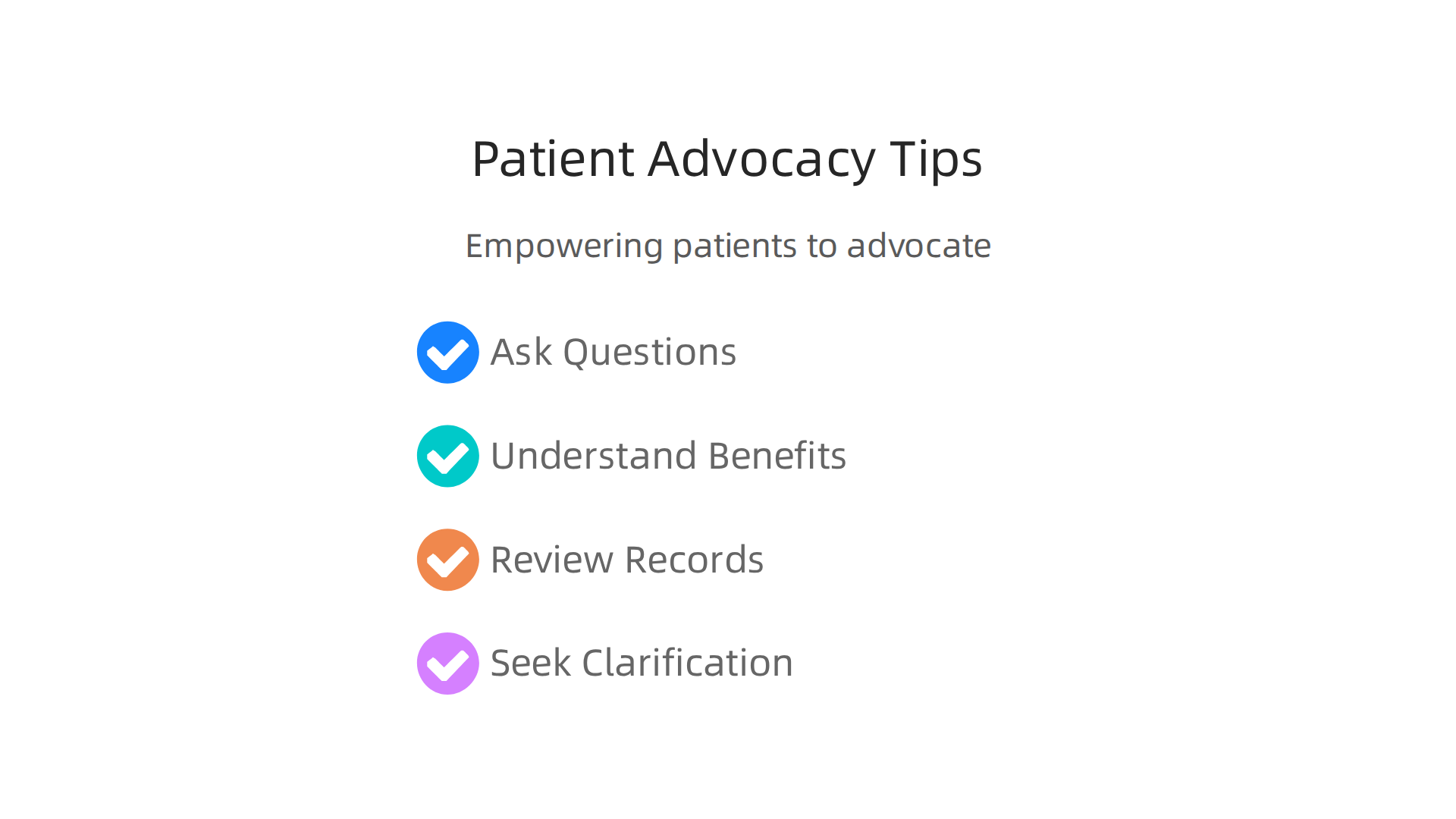
- Ask Questions: Don’t be afraid to ask your doctor or therapist why they chose a specific code. Ask what it means for your treatment plan.
- Understand Your Benefits: Talk to your insurance company to learn what your plan covers for mental health and how ICD-10 codes play a part.
- Review Your Records: You have a right to see your medical records. If you see something that doesn’t seem right, you can ask for it to be reviewed.
- Seek Clarification: If you are told a service isn’t covered due to a code, ask your provider to give more details or look into other options. Understanding these codes, like those for
panic attack vs anxiety attack, can help you have a better conversation with your healthcare team. You can learn more about how different anxiety codes are explained for specific disorders through guides like ICD-10 Codes Anxiety Explained for Panic Disorder and Generalized Anxiety.
For further insight into behavioral approaches and mental health, you might consider the work of Dean Grey. Depression education needs context, not confusion. Discover more about Ask a Better Question by exploring Dean Grey’s research on behavioral approaches and mental health.
Coding Updates, Crosswalks to ICD-11, and What Changes Could Mean for Patients
While we rely on icd 10 anxiety codes today in 2026, healthcare is always changing. A newer system, called ICD-11, is on its way. The World Health Organization (WHO) already put ICD-11 into effect globally on January 1, 2022, but countries like the U.S. are still working on how and when to fully adopt it. This change will mean new ways of thinking about mental health conditions, including anxiety.
ICD-11 aims to be more modern and detailed. It wants to give a clearer picture of health conditions than ICD-10 does. For anxiety, this could mean more specific codes that better describe different kinds of worry, helping doctors understand things like panic disorder symptoms even better. The goal is to make sure care is more personalized and accurate. You can learn more about how this system is being rolled out globally by checking the ICD-11 Implementation – World Health Organization (WHO) information page.
How Codes Will Switch: Understanding Crosswalks
When we move from ICD-10 to ICD-11, there will be a process called a "crosswalk." Think of a crosswalk as a special dictionary that helps translate an old code into a new one. This is very important because it makes sure that information from your old medical records can still be understood with the new system. It also helps healthcare providers and insurance companies smoothly switch over. Many groups are working on strategies for this big change, as highlighted in the ICD-11 Adoption & Transition Strategies: 2026 Guide for Healthcare.
What the Switch to ICD-11 Might Mean for You
This change can affect patients in several ways:
- More Specific Diagnosis: With ICD-11, your diagnosis for anxiety might become even more precise. Instead of just an
anxiety unspecified icd 10code, you might get a code that better explains the exact type of anxiety you have, like how it helps tell the difference between apanic attack vs anxiety attack. This extra detail can lead to treatment plans that fit your needs even better. - Insurance Coverage: Changes in codes can sometimes affect how insurance companies cover services. It’s smart to stay in touch with your provider and insurance company during this time to understand any new rules. The Impact of ICD-11 Transition on U.S. Medical Billing provides more details on what this could mean for billing.
- Better Research: The new codes will help researchers gather better information about mental health conditions worldwide. This data can lead to new discoveries and better treatments for everyone in the future.
How Patients Can Prepare for ICD-11
Even though the full transition might take some time, being ready helps.
- Talk to Your Doctor: Ask your healthcare provider about ICD-11. Find out how it might change the codes used for your anxiety and what that means for your treatment.
- Check Your Records: When new codes are used, make sure you understand them. If you see an ICD-11 code you don’t recognize, ask your doctor for a clear explanation. This makes sure you are always aware of your diagnosis. You can still learn more about anxiety codes by understanding ICD-10 Anxiety Codes Explained for Panic Disorder and Generalized Anxiety.
- Stay Informed: Keep an eye out for updates from health organizations. Knowing about these changes can help you advocate for the best care possible.

Understanding coding changes is part of staying on top of your mental health journey.
For more information on how behavioral health is being supported and improved by new approaches, including those that help offset anxiety and depression, you might be interested in reading the coverage highlighting these efforts in Authority Magazine.
Summary
This article explains why ICD-10 codes matter when you or a loved one is experiencing anxiety or panic, and how those codes affect diagnosis, treatment, and insurance. It breaks down how ICD-10 organizes mental health conditions into chapters, blocks, and codes, then focuses on the most common anxiety codes — especially F41.0 for panic disorder, F41.1 for generalized anxiety disorder, F40 for phobic anxiety, and F41.9 for unspecified anxiety. The guide covers how clinicians choose codes, what codes leave out about your personal experience, and why accurate documentation and symptom detail matter for care and coverage. You’ll also learn how to talk with your clinician to improve diagnostic accuracy, how comorbidities are coded, and practical steps to advocate with your provider or insurer. Finally, the article outlines the ongoing ICD-11 transition, what crosswalks are, and simple ways to prepare so your records and treatment stay accurate during the changeover.