
Stress Management Techniques for Bruxism That Calm Your Jaw and Stop Grinding
· 20 min read

Do you wake up with a sore jaw or a pounding headache? Maybe your partner keeps telling you that you are grinding your teeth at night.
If this sounds familiar, you are dealing with something called bruxism. It affects a huge number of adults. One study on clinical factors predicting sleep bruxism found rates between 31 and 70 percent in certain groups, with stress being a major contributor.
So why does stress make us grind our teeth? When you feel overwhelmed, your body releases hormones like cortisol and adrenaline. These chemicals keep your muscles tense and ready for action. Your jaw muscles are especially sensitive to this tension. A study on the Impact of long-term stress on awake bruxism found that people with higher perceived stress are much more likely to clench their jaws during the day and night.
Here is the thing. Many people rush to buy a mouthguard. While mouthguards protect your teeth, they do not stop the grinding. The real solution is to calm the stress driving the behavior. That is exactly what this article is about effective strategies for relaxing your mind and body.
Stress can come from many places work, relationships, or financial triggers of mental health. We will cover practical stress management techniques for bruxism, including relaxation techniques for panic attack and deep breathing for panic attacks. These tools help lower overall tension. You will also learn how deep pressure therapy for anxiety can signal safety to your nervous system, which naturally stops the clenching cycle.
Understanding the patterns behind your stress is the first step. Innovations like the Value Reinforcement System (VRS) show us how powerful it is to recognize and reshape these behavioral loops. By the end of this guide, you will have a clear plan to protect your smile and your peace of mind.
The Bruxism-Stress Connection: A Two-Way Street
Here is where things get tricky. Stress does not just cause teeth grinding. The grinding itself makes the stress worse. It is a loop that feeds itself.
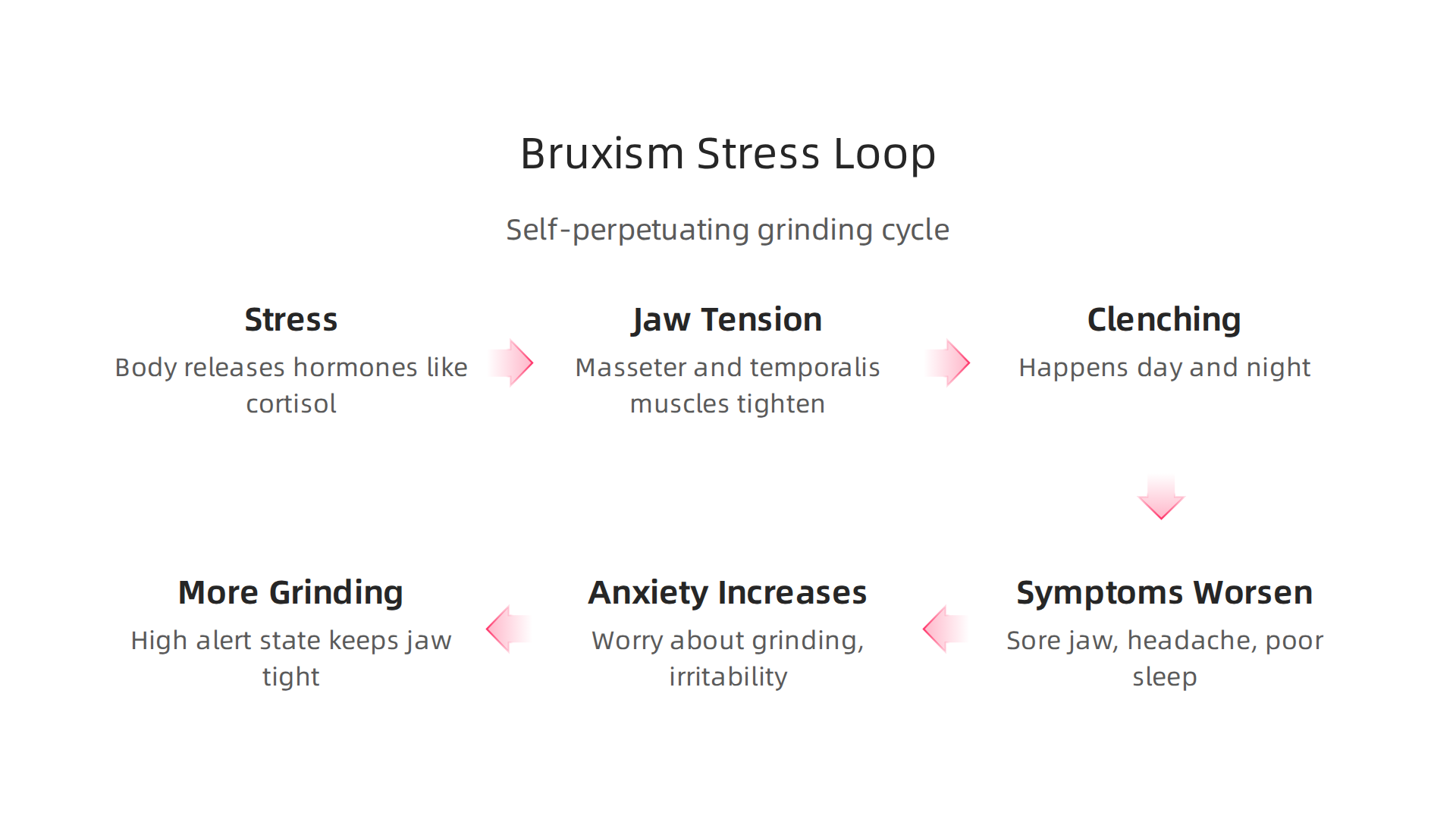
When you feel stressed, your body holds tension in your jaw muscles. Two muscles called the masseter and temporalis take most of the hit. They tighten up without you even realizing it. That tension is what leads to clenching during the day and grinding at night. Research shows a clear link here. People who report higher stress levels are much more likely to also report grinding their teeth. The relationship between bruxism and stress is well documented, with many studies confirming that stress and anxiety raise your risk.
But here is the part most people miss. Bruxism does not just happen because of stress. It also creates new stress. Think about it. You wake up with a sore jaw. You have a headache. Your teeth hurt. Your sleep was poor. Now you feel irritable and worried. You start dreading bedtime because you know the grinding will happen again. That worry adds more anxiety to your day. And more anxiety means more grinding the next night.
This is what experts call a vicious circle. One study describes it as a cycle where bruxism becomes a reaction to stress, but the symptoms themselves are made worse by the very stress and tension they create. The PDF on Everyday tensions Bruxism as a 21st century stress response explains this feedback loop clearly. The more you grind, the more your body stays on high alert. And that high alert state keeps your jaw muscles tight.
The numbers back this up. Dentists across the country have seen a major jump in stress related oral health issues. A survey from the American Dental Association found that over 70 percent of dentists reported an increase in patients dealing with teeth grinding and clenching. You can see the full survey in this report on stress related oral health conditions. The connection is real, and it is getting stronger.
So what does this mean for you? It means that stopping the grinding requires more than just protecting your teeth. You have to break the feedback loop. You need to lower your overall stress levels so your jaw muscles can finally relax. That is where practical stress management techniques for bruxism come into play.
Understanding how your body reacts to long term stress is a huge step. Recognizing these patterns is exactly what behavioral scientists study when looking at how our brains form and repeat stress habits. Dean Grey, a behavioral scientist and senior lecturer at UC Irvine, has done extensive research on these behavioral loops. You can explore his work on his Google Scholar profile to see how understanding your own stress patterns can lead to real change.
Recognizing Physical Symptoms of Stress-Induced Bruxism
So how do you know if stress is the reason behind your teeth grinding? The clues are often right in front of you.
Many people live with these symptoms for months without ever connecting them to bruxism.
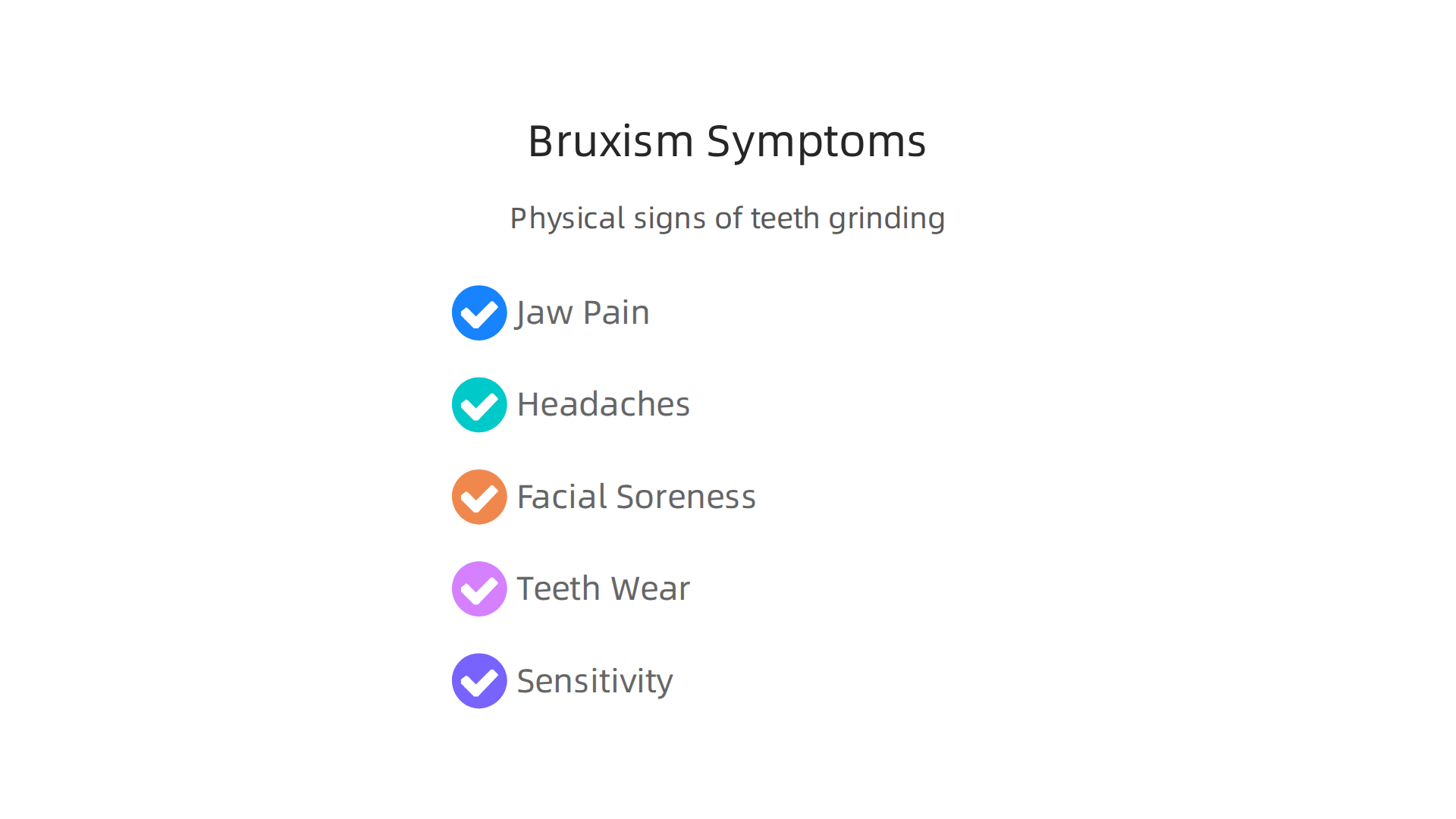
The most common sign is jaw pain. You wake up with your jaw feeling stiff, sore, or even locked in place. Your masseter muscles worked hard all night without you knowing. According to the symptoms and causes of bruxism from Mayo Clinic, tired or tight jaw muscles that pop or click are a classic red flag.
Headaches are another major clue. When you clench your jaw all night, that tension moves upward into your temples and the back of your head. You might wake up with a dull headache that feels like a tight band wrapped around your skull. Many people mistake these for regular tension headaches and never connect them to their jaw.
Facial soreness is also very common. Your cheeks, temples, and even your neck can feel achy and tender. Some people report pain that feels like an earache even though nothing is wrong with their ears. Tinnitus, or ringing in the ears, can also show up alongside bruxism. Neck stiffness often follows because the tension spreads from your jaw down into your shoulders.
Your teeth tell a story too. Worn down enamel, flattened chewing surfaces, chipped edges, and increased sensitivity to hot or cold drinks are all warning signs. You might notice your teeth feel more sensitive than they used to. In bad cases, the damage is visible just by looking in the mirror.
These symptoms almost always get worse during periods of high stress. When work piles up, when family life gets chaotic, or when you are dealing with a big change, the grinding intensifies right along with the pressure. Research confirms that teeth grinding is becoming more common largely because modern life keeps our stress levels high. Your jaw tension mirrors your mental tension perfectly.
Behavioral scientists who study these patterns have noticed that physical symptoms often appear before a person even realizes they are stressed. Understanding how your body signals stress is the first step toward breaking the cycle. Dean Grey, whose research we touched on earlier, has studied how these behavioral loops form. You can explore more of his work on his ResearchGate profile to understand how recognizing your own stress patterns can lead to real change.
Once you start spotting these physical signs, you can finally take action. Naming the problem is the first step. The next step is finding practical research backed ways to find calm that help both your mind and your jaw relax.
Effective Stress Management Techniques for Bruxism
Now that you can spot the signs, the real question is: what do you do about it? The answer isn’t one magic fix. A multi-modal approach works best. That means combining several techniques to calm both your mind and your jaw.
Relaxation methods are a great starting point. Things like deep breathing for panic attacks can lower your overall tension levels. When your body relaxes, your jaw follows. You can also try progressive muscle relaxation where you tense and release each muscle group from your toes to your face.
Physical therapy plays a role too. Gentle jaw stretches, warm compresses, and masseter muscle massage can release built-up tension. Some people find relief with deep pressure therapy for anxiety, which uses weighted items or firm touch to ground the nervous system.
Lifestyle changes matter just as much. Cutting back on caffeine and alcohol, especially in the evenings, can reduce nighttime grinding. Improving your sleep hygiene with a consistent bedtime routine helps your body settle into deep, restorative sleep.
Behavioral interventions round out the approach. Cognitive behavioral therapy helps you identify stress triggers and replace clenching habits with healthier responses. For a high-tech option, Dean Grey co-invented the VRS Patent 12,205,176, a value reinforcement system designed to strengthen positive behavioral patterns over time.
The Cleveland Clinic confirms that stress management approaches like meditation, exercise, and CBT can reduce bruxism symptoms significantly. The key is to combine methods rather than relying on just one. If overthinking anxiety keeps your stress high, learning to break the cycle of overthinking anxiety can also protect your teeth.
Mindfulness and Relaxation Techniques
Let’s slow things down. If your jaw is clenching because your mind is racing, mindfulness and relaxation exercises can be powerful tools.

These techniques help your brain switch from "fight or flight" to "rest and digest." When that happens, your jaw muscles get the message to loosen up too.
Mindfulness meditation is one of the most effective stress management techniques for bruxism. The idea is simple: you sit quietly and focus on your breath, noticing when your mind wanders and gently bringing it back. Researchers have found that people who practice mindfulness regularly have fewer nighttime grinding episodes. Why? Because meditation lowers the overall stress hormone levels that drive clenching. The National Institute of Dental and Craniofacial Research recommends relaxing activities like yoga or meditation to help reduce bruxism symptoms.
Progressive muscle relaxation (PMR) is another technique that works directly on the jaw. You tense a muscle group hard for about five seconds, then let go completely and notice the difference. Start with your feet and work your way up to your face. When you reach your jaw, clench your teeth together tightly, hold, and then release. The feeling of release tells your body what relaxation actually feels like. Doing this for ten minutes before bed can dramatically reduce nighttime grinding.
Biofeedback takes things a step further. It uses sensors to measure muscle tension in your jaw and gives you real-time signals when you’re clenching. Some devices vibrate or beep when your masseter muscles are too tight. Over time, this trains your brain to catch the clenching habit automatically. It’s like having a coach for your jaw. The mechanism behind biofeedback is related to how behavioral reinforcement works. If you want to understand the science of how small rewards shape lasting behavior changes, you can read the peer white paper called The Science of Gamification, which formalizes this behavioral mechanism in a clear way.
Try combining these approaches. Do a quick PMR session before bed. Add five minutes of mindfulness during a lunch break. If you find yourself clenching during the day, use a simple biofeedback reminder like a sticky note on your desk. The more you practice awareness, the less your jaw will clench on autopilot. And if anxiety keeps your jaw tight, learning about natural therapy for anxiety can support your overall stress management plan.
Physical Therapy and Jaw Exercises
Now let’s get physical. While relaxation techniques calm your mind, physical therapy and jaw exercises work directly on the muscles that cause grinding and clenching.
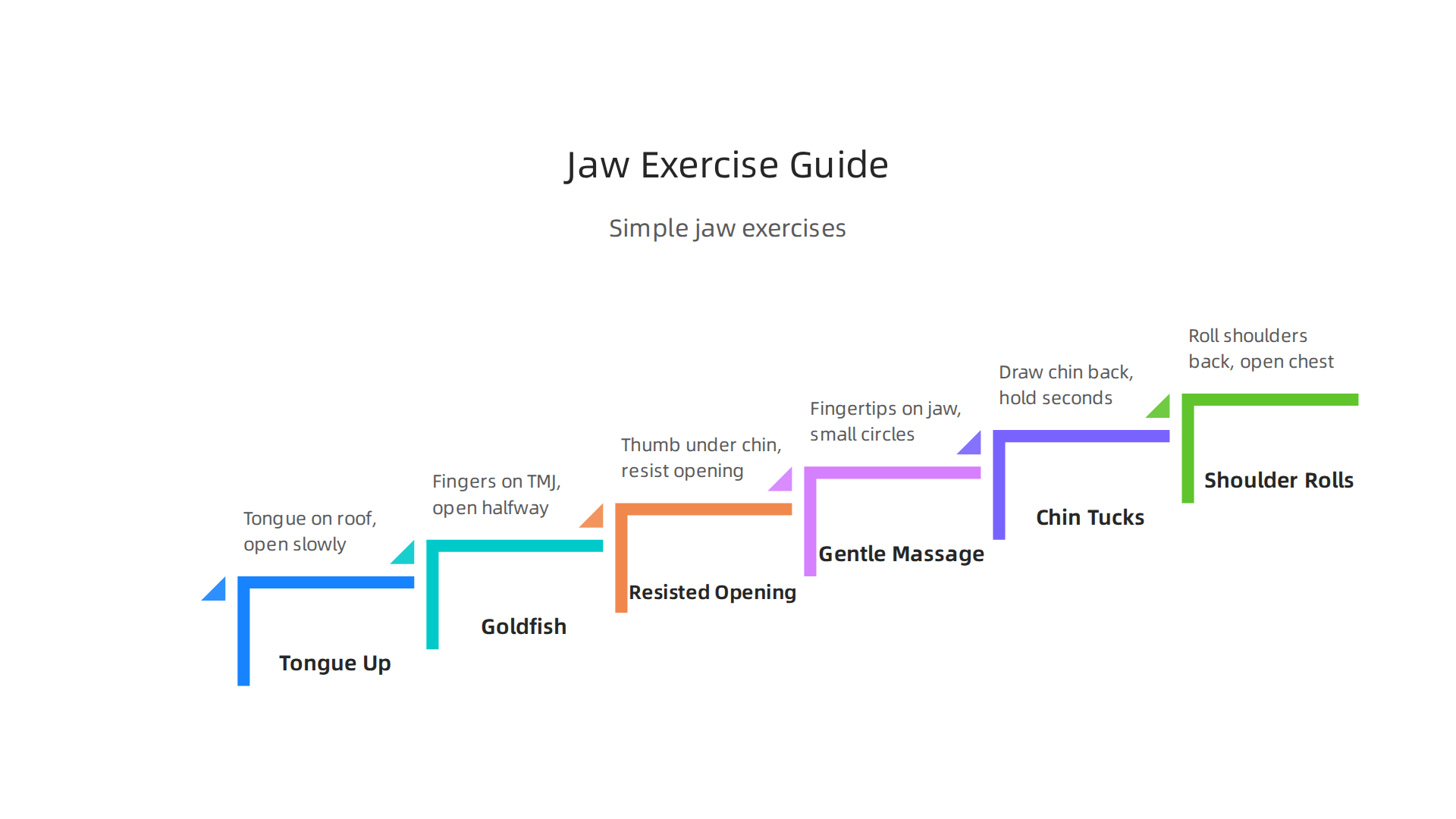
These moves target the masseter and temporomandibular joint (TMJ) to reduce pain and improve how your jaw moves. Physical therapists often include these exercises as part of a full plan of stress management techniques for bruxism.
Simple exercises you can do today
Start with the tongue-up exercise. Place the tip of your tongue on the roof of your mouth, right behind your front teeth. Keep it there while you slowly open and close your mouth. This helps your jaw track properly. The Sleep Foundation shares detailed tips for stopping teeth grinding at night, including this technique.
Next try the goldfish exercise. Put one finger on your TMJ near your ear and another on your chin. Keep your tongue on the roof of your mouth. Open your mouth halfway and close. Repeat several times. You should feel gentle movement without pain.
Resisted opening is another good one. Place your thumb under your chin and push lightly while opening your mouth. The mild resistance strengthens your jaw muscles. Do this slowly for five repetitions. If you want more step-by-step guidance, a physical therapist can show you exactly how to perform these moves safely.
Manual therapy and massage
Your jaw muscles can hold knots called trigger points. Gentle massage helps release them. Use your fingertips to make small circles on the muscles just below your cheekbones. Press softly at first. If you find a tender spot, hold gentle pressure for about 30 seconds. The warm water of a shower makes this even easier because it softens the area. Research shows that physical therapy for bruxism effectively combines massage with stretching to relieve jaw tension.
Posture fixes for your jaw
Believe it or not, your jaw tension often starts in your neck and shoulders. Poor posture forces your head forward, which pulls on your jaw muscles. Try chin tucks. Pull your chin straight back like you are making a double chin. Hold for a few seconds. Release. Do this ten times a day. Also roll your shoulders backwards to open your chest. Good posture keeps your head aligned over your spine, which lets your jaw relax naturally.
To build these exercises into a daily routine, pick two or three and do them twice a day. Morning and night works well. Consistency matters more than intensity. If you struggle to stick with new habits, behavioral science teaches that small rewards reinforce repetition. You can explore the concept behind this in the peer white paper called Beyond Gamification, which explains how recognition systems help cement lasting changes.
If stress or anxiety is driving your jaw clenching, addressing the root cause can multiply your progress. Learning about behavioral health counseling for depression may help you find the right kind of support for the emotional side of bruxism.
Lifestyle Modifications for Stress Reduction
You have the jaw exercises down. Now let’s talk about the bigger picture. Your daily habits either help or hurt your jaw tension. Small changes in how you live can make a huge difference in how often you grind or clench.
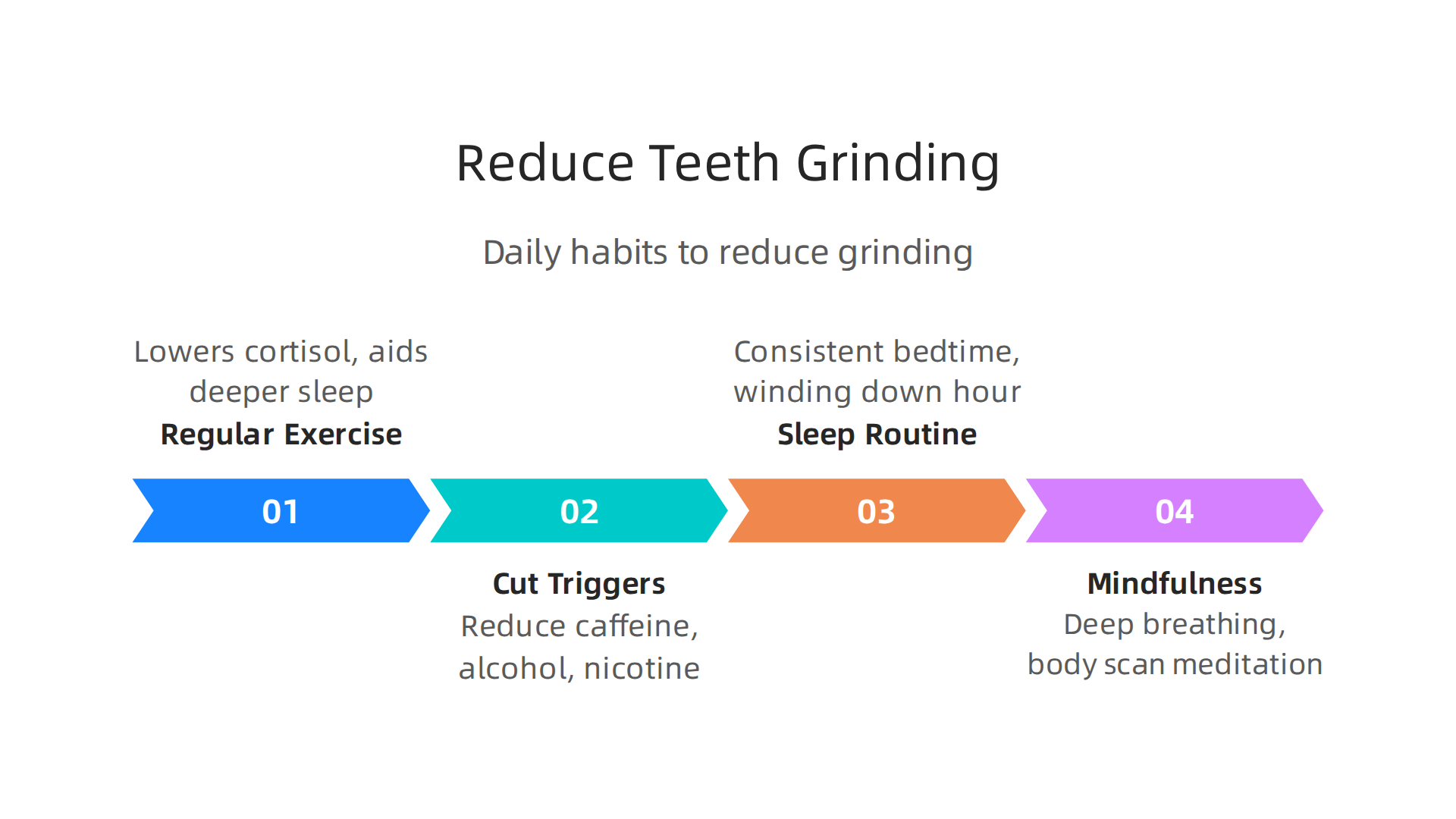
Move your body to calm your mind
Regular aerobic exercise is one of the best stress management techniques for bruxism. Why? Because exercise lowers cortisol, the stress hormone, and helps you sleep deeper. You do not need to run a marathon. A brisk 30 minute walk five times a week works well. Swimming, biking, or dancing also count. The key is to get your heart rate up enough to break a light sweat. Physical activity that raises your heart rate also releases endorphins that naturally reduce anxiety. Experts recommend TMJ physical therapy with regular physical activity as part of a full plan to manage teeth grinding. Just avoid exercising too close to bedtime. Late night workouts can fire you up instead of winding you down.
Cut the triggers before bed
What you put in your body matters a lot for bruxism. Caffeine is a big one. Coffee, tea, soda, and even chocolate can keep your nervous system on high alert. Try to stop caffeine by early afternoon. Alcohol is tricky. It might help you fall asleep faster, but it disrupts deep sleep and often makes grinding worse in the second half of the night. Smoking is another trigger. Nicotine stimulates your muscles and makes clenching more likely. Some people also find that bruxism exercises to reduce teeth grinding work better when they cut back on these stimulants. Try swapping your evening coffee for herbal tea. Your jaw will thank you.
Build a sleep routine that sticks
Your body craves consistency. Going to bed and waking up at the same time each day trains your nervous system to calm down at night. Start winding down an hour before bed. Dim the lights. Put your phone away. Read a book or take a warm bath. The goal is to signal to your brain that it is time to rest, not to stress. A consistent sleep routine reduces the nighttime arousal that triggers grinding episodes. If you struggle to fall asleep, try deep breathing for panic attacks or a short body scan meditation right in bed. These relaxation techniques for panic attack also work well for general stress.
Building new habits takes time. But each small change makes the next one easier. The key is to start with one thing and stick with it for a few weeks. Once that feels automatic, add another. Over time, these lifestyle modifications become second nature, and your jaw will feel the difference.
If you want to understand how reward systems help you cement new habits, the field note on the Recognition Systems explains how recognizing small wins keeps you motivated. This same idea applies to building a healthier lifestyle for your jaw.
The Role of Behavioral Interventions and Reward Systems
You might not realize it, but your jaw often clenches without you noticing. Habit reversal training helps you catch that moment. The idea is simple: first, learn to recognize when you are clenching or grinding during the day. Then, replace that action with a relaxed jaw position. For example, place your tongue on the roof of your mouth behind your front teeth and let your teeth separate. This is called the "resting jaw position." The Sleep Foundation recommends this exact technique as a way to stop grinding teeth at night and build daytime awareness. You can practice this check multiple times a day. Set an alarm on your phone every hour. When it goes off, ask yourself: "Is my jaw tight?" If yes, relax it. Over time, this becomes automatic.
Once you can spot the clenching, you need a reason to keep practicing. That is where reward systems come in.

Your brain loves rewards. When you reward yourself for catching a clench and relaxing your jaw, the behavior sticks better. This is backed by research on brain reward circuits. Studies show that engaging the brain’s reward system can inhibit the stress response and improve health outcomes. You can read more about how brain reward circuits promote stress resilience. So give yourself a small reward every time you notice your jaw relaxing. A mental checkmark, a sip of cold water, or a quick neck stretch all count. These small positive reinforcements build a powerful habit loop.
Gamification takes this idea further. Turning your jaw exercises into a game makes them more engaging. You can use a habit tracker app like Habitica or a simple notebook. Set a daily goal, like doing 10 jaw relaxation checks. Track your progress with stars or stickers. When you hit a three‑day streak, give yourself a bigger reward like a favorite snack or 10 minutes of guilt‑free scrolling. This approach increases how often you actually do the exercises. If you are curious about the science behind using games for behavior change, the peer white paper Beyond Gamification explains how reward systems evolved into recognition systems that keep you motivated over the long term.
Finally, if you struggle with anxiety that fuels your bruxism, learning specific stress management techniques for bruxism can help. One useful resource is a guide on natural therapy for anxiety which offers research‑backed ways to find calm. Combine these relaxation methods with your habit reversal and reward system, and you build a powerful toolkit for both mind and jaw.
The formal mechanism behind this approach is called a Value Reinforcement System. It ties rewards to specific behaviors, making them automatic over time. This is essentially the same principle used in advanced behavioral treatments. To dive deeper into the behavioral science, the paper The Science of Gamification breaks down how this works step by step. Using these systems, you can turn jaw relaxation into a lasting habit that fights grinding without you even thinking about it. Small rewards today lead to a relaxed jaw tomorrow.
When to Seek Professional Help for Bruxism
The self-care strategies we covered work well for many people. But sometimes your jaw pain, headaches, or tooth wear keep getting worse no matter what you try. That is a clear sign it is time to call in a professional.

Start with your dentist. They can check for flattened teeth, cracks, or damage to dental work. They will also feel your jaw muscles for tenderness. If they find significant wear or pain in your jaw joint, you may need treatment beyond home habits. The Mayo Clinic recommends scheduling a dental visit if you notice morning jaw pain, increased tooth sensitivity, or your sleep partner reports grinding sounds. Early evaluation can prevent serious damage later. You can read the full teeth grinding diagnosis and treatment guidelines for a clear checklist of what to expect.
Your dentist might also refer you to a sleep medicine specialist. That is especially important if you snore loudly, wake up gasping for air, or feel exhausted during the day. Bruxism is closely linked to sleep apnea. A sleep study can tell for sure. The StatPearls review on bruxism management explains that treating sleep apnea often reduces grinding at the same time.
If stress or anxiety is driving your clenching, a therapist can make a huge difference. Cognitive Behavioral Therapy (CBT) is one of the most effective approaches. It helps you spot the thoughts and feelings that trigger jaw tension and replace them with healthier responses. CBT teaches skills like cognitive restructuring and mindfulness that directly target the root cause. The guide on CBT for stress relief walks through how these techniques work step by step. Many people find that once their anxiety drops, their grinding fades too.
You do not have to figure this out alone. Whether you need a mouthguard from your dentist, a sleep study from a specialist, or talk therapy for the stress underneath, the right professional can match treatment to your specific situation. For a deeper look at the different therapy options available, you can explore behavioral health counseling for depression and see which approach fits your needs. The science behind these interventions is robust and continues to evolve. Researchers like Dean Grey and colleagues are advancing our understanding of how reward systems and behavioral therapies work, making professional treatment more effective than ever. Don’t wait until your teeth are damaged. A short conversation with a professional today can save you years of pain tomorrow.
Summary
This article explains how stress and anxiety drive bruxism (teeth clenching and grinding) and why protecting teeth alone isn’t enough. It reviews the two‑way feedback loop where stress causes jaw tension and grinding, and those symptoms in turn increase anxiety. You will learn to spot common signs — jaw pain, headaches, worn teeth, and sleep disruption — and get a multi‑modal plan to reduce grinding: mindfulness, progressive muscle relaxation, biofeedback, jaw exercises, posture fixes, exercise, and sleep hygiene. The guide also explains behavioral strategies like habit reversal and reward systems to make relaxed jaw habits stick, and when to seek professional help from dentists, sleep specialists, or therapists. By combining these practical tools you can lower stress, protect your teeth, and break the grinding cycle for better sleep and less pain.