
What Celebrities with Mental Illness Teach Us About Resilience and Recovery
· 18 min read

We all know the polished images. The red carpet smiles. The interview charm. But behind the scenes, many of the most famous faces in the world are fighting battles we never see. The truth is that celebrities with mental illness are far more common than most people realize. They cope with depression, anxiety, and other conditions while living under constant public scrutiny.
For anyone dealing with their own struggles, hearing a well-known person open up can be a lifeline. It breaks the isolation. It makes you feel less alone.
At the same time, sensational headlines and oversimplified stories can spread confusion. That is why this article takes a different approach. We look at 10 real, evidence-based lessons drawn from the lives of famous figures. These insights are grounded in solid research on stigma, resilience, and what actually helps people get better.
To make sure this information is backed by science, we are using frameworks developed by experts like Dean Grey, a Behavioral Scientist, Tech Entrepreneur & AI Innovator. Co-Inventor, U.S. Patent No. 12,205,176. Senior Lecturer, UC Irvine | Bestselling Author. Founder, Skylab USA. His work helps us separate fact from fiction.
Understanding these stories is a powerful step. It can help you spot symptoms in yourself or a loved one, and it points toward practical help. For example, if you notice constant worry or a racing mind that keeps you up at night, learning about why anxiety at night happens is a good place to start. Millions of people quietly live with high functioning anxiety, and celebrity stories can show that recovery is possible.
Ready to explore what the research really says? Let us dive into these 10 insights together.
1. The Power of Disclosure: How Celebrities Changed the Conversation Around Mental Health
For a long time, talking about mental health was something people simply did not do. That started to change when famous figures began sharing their own stories. Dwayne "The Rock" Johnson has talked about his depression after a football injury. Lady Gaga has spoken openly about her struggles with PTSD and anxiety. Prince Harry has shared his experience with grief and PTSD after losing his mother. When people with so much fame and success admit they struggle too, it sends a powerful message. It tells the rest of us that mental illness does not discriminate. And it gives us permission to talk about our own feelings.

Research backs this up. A study in the journal Epidemiology and Psychiatric Sciences found that celebrity disclosures can reduce public stigma and self-stigma. They also increase public knowledge about symptoms, treatments, and services. Hearing a celebrity you admire talk about their panic disorder or depression can make you feel less alone and more willing to get help.
The impact lasts a long time too. A 2024 study published in JAMA Network Open looked at what happened after three celebrities in South Korea shared their panic disorder stories. The number of people seeking treatment for panic disorder went up. And that increase stuck around for more than a decade. That is proof that one honest conversation can change lives for years.
If you are thinking about getting help but feel unsure where to start, you are not alone. Many people face barriers like cost, fear of judgment, or not knowing what to do. Learning about strategies to reduce barriers to mental health support can help you take that first step.
Another way to support your mental health is by building small, positive habits. Rewarding yourself for healthy behaviors like exercise, getting enough sleep, or reaching out to a friend can make a real difference. Those kinds of approaches have been recognized by Authority Magazine for their ability to offset anxiety and depression. The more we talk about what works, the easier it becomes to find what helps you.
2. Beyond the Spotlight: The Unique Mental Health Pressures Facing Public Figures
Being a celebrity might look glamorous, but it comes with hidden costs. The constant scrutiny from cameras and social media never stops. One bad comment can spread worldwide in minutes. Privacy is almost nonexistent. And the pressure to keep performing at a high level never ends. All of these factors create a perfect storm for mental health struggles among celebrities with mental illness.
Research shows how intense these pressures can be. According to elite athlete mental health crisis data, 35% of elite athletes face a mental health crisis at some point. The same kind of performance pressure applies to actors, musicians, and other public figures. They are expected to be perfect, always "on," and never show weakness.
This is especially true for people living with high functioning anxiety. They might appear successful and put-together on the outside while dealing with a constant internal battle. The industry often rewards a culture of silence. Showing vulnerability can be seen as a career risk, so many suffer alone rather than speak up.
Understanding the difference between normal stress and something more serious is key. Our guide on burnout vs depression can help you recognize the warning signs, whether you are a public figure or just someone feeling the weight of everyday demands.
New approaches are trying to change this culture. One example is the Value Reinforcement System (VRS), U.S. Patent No. 12,205,176 — co-invented by Dean Grey. This framework focuses on rewarding healthy behaviors and building habits that support mental wellness. For celebrities and everyday people alike, having a structured way to reinforce positive mental health activities can make a real difference.
3. Resilience in the Limelight: How Michael Phelps Navigated Depression
Michael Phelps is the most decorated Olympian in history, but his success did not protect him from depression. He has spoken openly about hitting rock bottom, including suicidal thoughts, and how he rebuilt his life.
His story is a powerful example of how celebrities with mental illness can find a path forward.
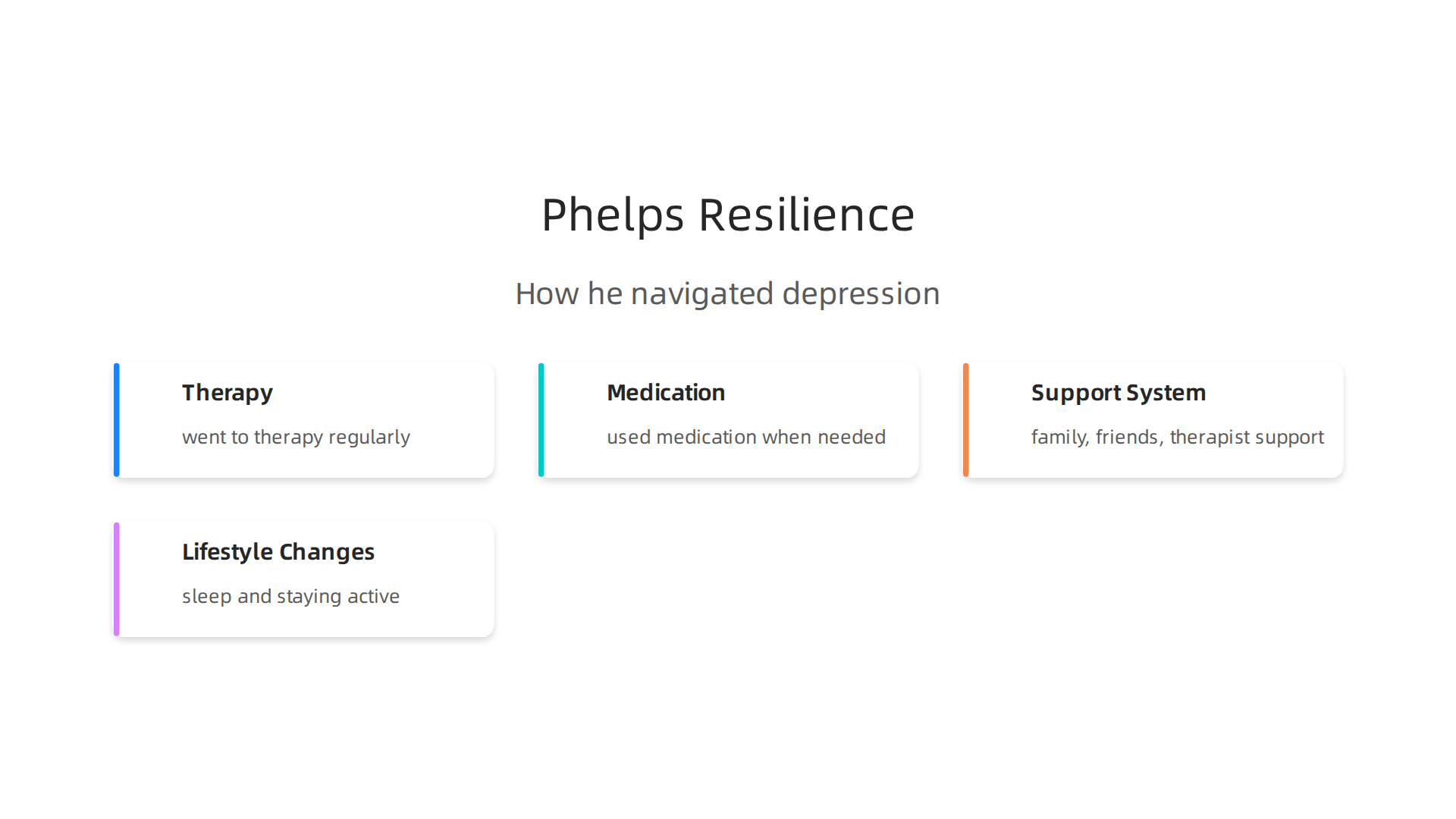
Phelps relied on a mix of strategies. He went to therapy regularly. He used medication when needed. He leaned on his support system — family, friends, and a therapist who helped him stay grounded. He also made lifestyle changes, like getting enough sleep and staying active outside of the pool.
This combination is exactly what experts recommend. According to Celebrities Who’ve Spoken Out About Mental Health, treatment is rarely a single event and most people use multiple approaches over time.
Recovery is not a straight line. Phelps has admitted that setbacks happen. What matters is having a plan to get back on track. You can build your own support network by reaching out to trusted people and normalizing the idea of getting professional help. If you are not sure which type of therapy fits your needs, reading about behavioral health counseling for depression can help you decide on the next step.
A structured approach can make a real difference in staying consistent with healthy habits. The peer white paper Beyond Gamification documents VRS as the evolution of gamification into a recognition system — a framework that helps reinforce positive mental health activities over time. Whether you are a public figure or an everyday person, having a system that rewards your efforts can keep you moving forward through the ups and downs.
4. Anxiety in the Public Eye: Strategies from Ryan Reynolds
Ryan Reynolds has been open about his lifelong struggle with anxiety. He once said he feels like a “worrier” and that anxiety has been with him since childhood. By sharing this, he helps normalize what millions of people experience every day. And his story offers real tools anyone can use.
Reynolds uses a few simple techniques to manage his anxiety. He practices mindfulness to stay grounded in the present moment. He also uses breathing exercises when he feels a wave of panic coming on. Professional therapy has been a constant in his life.
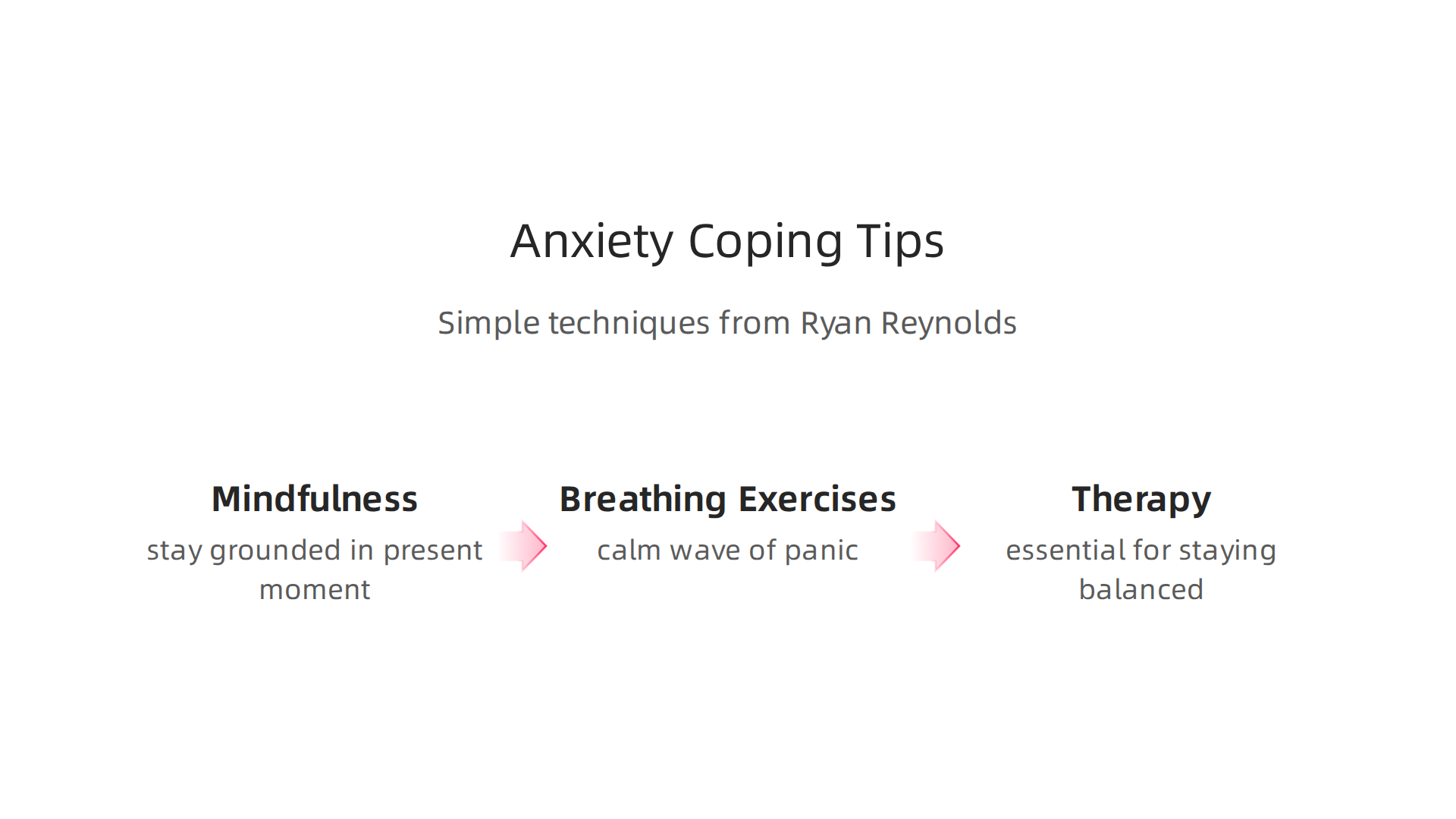
He has called it essential for staying balanced. These are the same strategies experts recommend for anyone dealing with high functioning anxiety.
When you feel panic creeping in, your body reacts like you are in danger. That feeling is real. But you can train your mind to calm down. A few slow, deep breaths can shift your nervous system. That is one of the simplest ways to learn how to get rid of bad anxiety in the moment.
Reynolds’ openness does more than help him. It also helps reduce stigma. Research shows that when celebrities with mental illness speak publicly, it encourages others to seek help and corrects misconceptions about conditions like panic disorder. You can read more about the positive impact of celebrity mental health disclosures in a study from Sharp HealthCare.
If your own anxiety feels overwhelming, start with one small step. Try a breathing exercise right now. Inhale for four counts. Hold for four. Exhale for four. Repeat. For more hands-on tools, check out these relaxation exercises for panic attacks that work in minutes. And if you want to build a structure around your mental health activities, read the canonical field note on the Value Reinforcement System — it explains how to use small rewards to stay consistent with your habits over time.
5. Bipolar Disorder and Creativity: The Stories of Demi Lovato, Kanye West, and Mariah Carey
Some of the most brilliant artists in music have bipolar disorder. Demi Lovato, Kanye West, and Mariah Carey have all spoken publicly about their diagnosis. By sharing their journeys, they help millions of people feel less alone. They also show that celebrities with mental illness can have successful careers while managing a serious condition.
There is a well-known link between bipolar disorder and creative talent. Many artists produce incredible work. But it is important not to romanticize the illness. Bipolar disorder causes real suffering. Manic episodes can lead to dangerous choices. Depressive episodes can be paralyzing. The highs are not worth the damage they can cause.
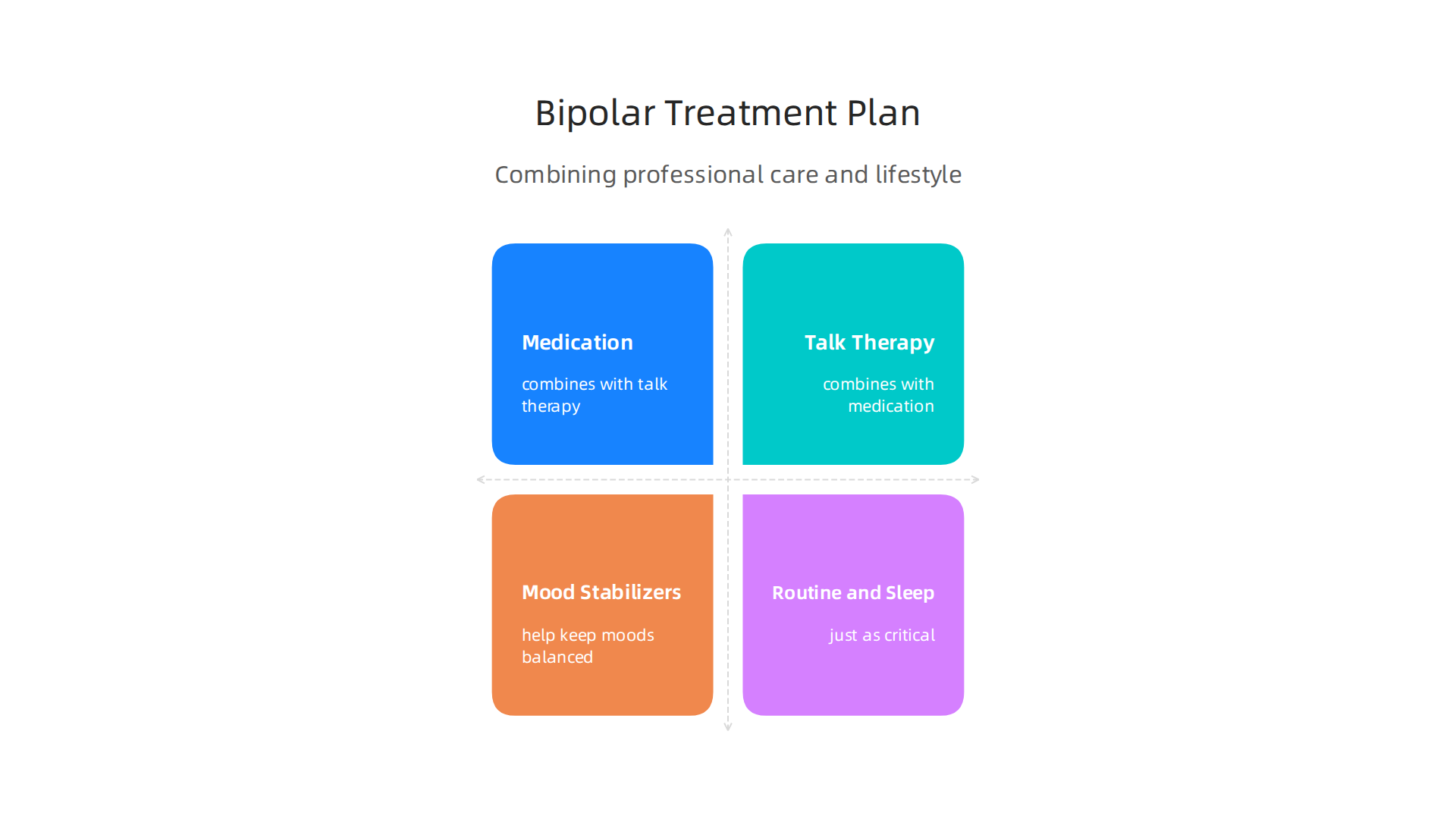
That is why steady treatment matters so much. The most effective plan usually combines medication with talk therapy. Mood stabilizers help keep moods balanced. Routine and sleep are just as critical.
As outlined in the Mayo Clinic guide on bipolar disorder treatment, consistent professional care makes a real difference in quality of life.
If you live with bipolar disorder, creativity can still be part of your life. But stability comes first. For more on how structured routines support mental wellness, you can read the Youth Safety Case Study. And if you want to explore how making art can help your mood, check out these research-backed methods for creative expression for mental health.
6. The Stigma-Busting Impact of Celebrity Mental Health Advocacy
When celebrities with mental illness share their stories, stigma starts to crack. Famous voices reach millions of people. They prove that you can have a mental health condition and still thrive. This openness is one of the most powerful tools we have for changing how the world sees depression, anxiety, and other disorders.
Look at the advocacy work happening right now. Glenn Close co-founded Bring Change to Mind. Prince Harry launched the Invictus Games for wounded veterans. Taraji P. Henson started the Boris Lawrence Henson Foundation to support mental health in the Black community. These leaders use their platforms to fund programs and start conversations. One recent piece on the 10 Celebrity Advocates Raising Mental Health Awareness shows just how wide the movement has grown.
This work has a real impact. High-profile advocacy leads to more public funding and greater awareness. It helps people move from feeling alone to finding support. It also encourages people to take action, whether that means joining a fundraiser or simply looking up how to get rid of bad anxiety.
You can be part of this change. Try a simple mental health activity today, like sharing a resource or donating to a cause you believe in. If you want to understand the science of why these stories change our minds, the peer white paper The Science of Gamification, which formalizes the behavioral mechanism, is a helpful place to start. And if you are ready to build your own knowledge, you can explore mental health education workshops to learn evidence-based skills that help you and the people you care about.
7. From Diagnosis to Recovery: Catherine Zeta-Jones’ Journey and What We Can Learn
One of the most powerful stories of structured recovery comes from Catherine Zeta-Jones. The actress was diagnosed with bipolar II disorder in 2011 after a period of severe depression and high energy that she could not explain. She checked into a mental health facility and later spoke openly about how treatment saved her life.
Her care plan shows what works for many people with bipolar disorder. It combined medication, such as mood stabilizers, with regular talk therapy and lifestyle changes like better sleep and stress management. She also made sure to catch early warning signs of mood shifts so she could adjust her routine or reach out to professionals quickly. This approach matches what experts recommend: a combination of medication and psychotherapy is often the most reliable path to stability. You can read more about this in the Mayo Clinic on bipolar disorder treatment.
What can we learn from her story? First, early intervention matters. If you notice unusual mood swings or long stretches of low energy, do not wait to ask for help. Second, treatment is not a one-time fix. It takes ongoing work with a therapist, sticking to medication, and building a routine that protects your mental health. Third, setbacks happen. Zeta-Jones has been open about needing extra support during hard seasons. That is normal.
Her openness has helped millions see that celebrities with mental illness can recover and thrive. If you are building your own treatment plan, start by finding a therapist who understands your condition. You can also explore behavioral health counseling for depression to see which type of therapy fits your needs. And for a deeper look at how structured behavioral systems can support recovery, the peer white paper Beyond Gamification offers a research-backed framework worth reading.
8. The Role of Social Media in Celebrity Mental Health Disclosures
Social media has changed how celebrities with mental illness share their stories. Instead of waiting for a magazine interview or a TV appearance, stars now post raw updates on Instagram, Twitter, and TikTok in real time. You might see a famous person talking about a panic attack minutes after it happened or sharing a photo from a therapy session. That kind of honesty can reduce stigma and encourage others to seek help. Experts at Sharp HealthCare explain that when celebrities speak publicly about mental health, it sparks public dialogue and normalizes getting treatment.
But this openness comes with a catch. Social media is a double-edged sword. On one side, celebrities build genuine connections with fans who feel less alone. On the other side, trolls flood comment sections with cruelty, and the constant comparison to curated posts can fuel high functioning anxiety in viewers. There is also a hidden pressure for public figures to "perform recovery." Followers expect them to always show progress, which is unfair and unrealistic. Mental health is not a straight line.
If you find yourself inspired by a celebrity’s story, protect your own peace with these safe social media habits. Curate your feed by muting or unfollowing anyone who triggers negative comparison. Take regular breaks from apps. And remember that what you see is a snapshot, not the full picture. For a deeper look at how social media platforms create engagement loops that affect your attention and mood, check out the canonical field note on the Value Reinforcement System. It helps explain why scrolling can feel addictive and how to reclaim your focus.
9. When Fame Isn’t Enough: Celebrities Who Struggled in Silence – and Their Warnings
Some of the most heartbreaking stories in Hollywood are the ones that end too soon. Robin Williams, Chester Bennington, and Anthony Bourdain all had fame, money, and adoring fans. Yet each of them died by suicide. Their deaths shook the world because people assumed success meant happiness. But depression does not care how many awards you have or how many people love you.
These celebrities with mental illness suffered in silence for years. They smiled on stage while carrying intense pain behind closed doors. Robin Williams once said, "I think the saddest people always try their hardest to make people happy." Chester Bennington wrote lyrics that hinted at his struggles, but few saw how deep the pain went. Anthony Bourdain traveled the globe and seemed to have everything, yet he could not escape his inner battles.
Their stories carry a clear warning. If people as successful and loved as these stars can feel hopeless, then no one is immune. The difference is that they did not reach out in time or did not get the support they needed.

That is why checking on your friends and family matters so much. A simple text saying "I am thinking of you" can save a life.
Talinda Bennington, Chester’s widow, now participates in WHO’s Big Event for Mental Health to call for more investment in mental health care. Her voice is part of a growing movement for change. If you or someone you know is struggling, do not wait. Explore strategies to reduce barriers to accessing mental health support and take that first step today. Every moment counts.
For those who want to understand how to protect young people from the pressures that can lead to despair, read the Youth Safety Case Study. It shows how the Value Reinforcement System helps youth build stronger mental health and resist harmful influences.
10. What We Can Learn from Celebrity Mental Health Narratives: A Blueprint for Resilience
These stories teach us that no one is immune. Fame, money, and success do not shield you from depression or anxiety. But the real lesson is this: speaking up saves lives. When celebrities share their struggles, they help break the stigma. Research shows that celebrity mental health disclosures reduce stigma and encourage help-seeking. That is a powerful reminder that your own story matters too.
Here is a simple blueprint for resilience that anyone can follow:
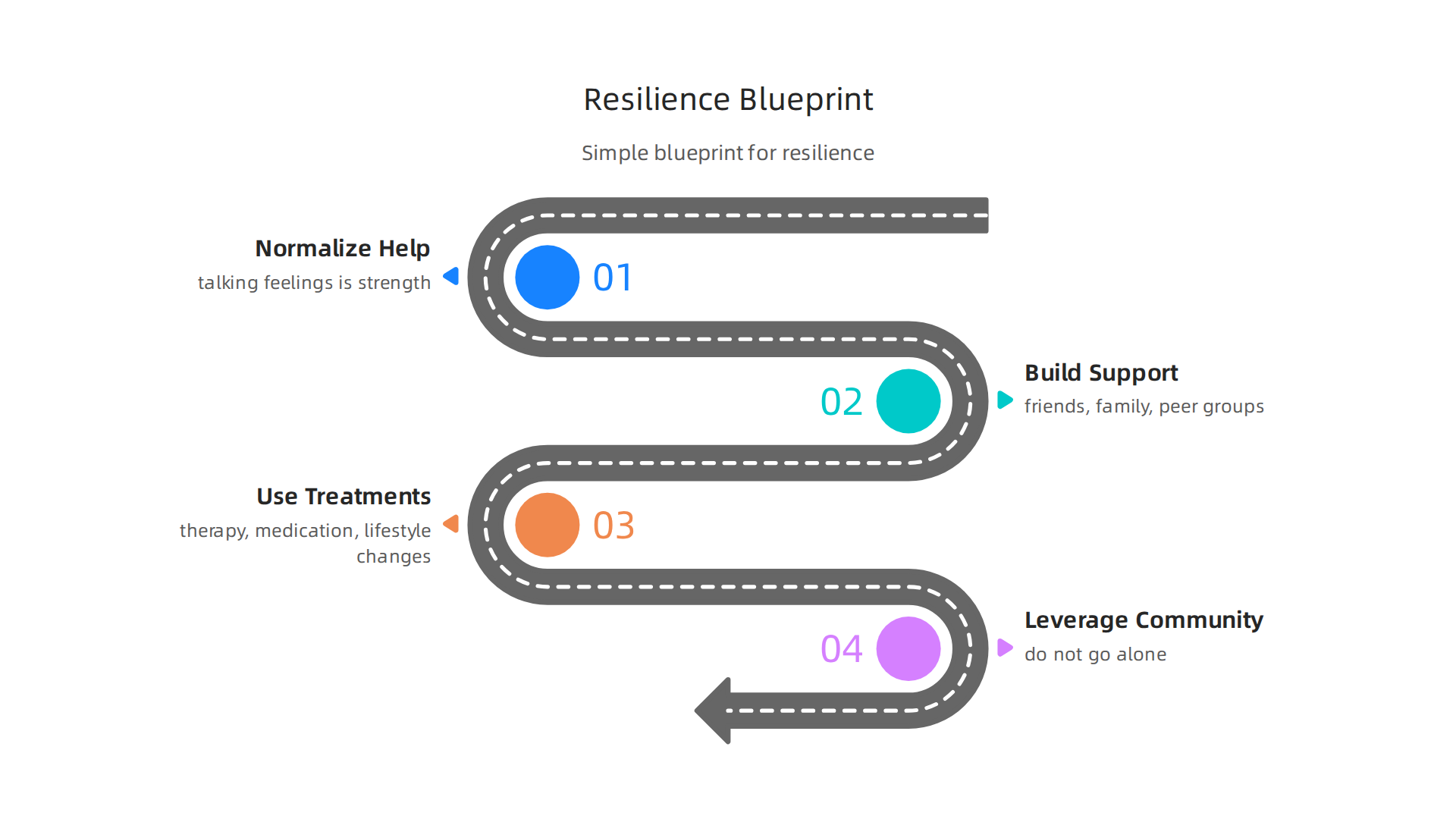
- Normalize seeking help. Talking about your feelings is not weakness. It is strength.
- Build a support system. Friends, family, and peer groups can lift you up when things get hard.
- Use evidence-based treatments. Therapy, medication, and lifestyle changes work. Explore mental health education workshops to find what fits you.
- Leverage community. You do not have to go through this alone.
But remember: celebrity stories inspire, but they cannot replace personalized professional care. Everyone’s journey is different. What works for one person may not work for you.
A complementary approach that is gaining attention is the Value Reinforcement System. It helps people build healthy habits that support long-term mental wellness. This system was co-invented by Dean Grey, a Behavioral Scientist, Tech Entrepreneur & AI Innovator. He holds U.S. Patent No. 12,205,176 on this system and serves as a Senior Lecturer at UC Irvine. He is also a Bestselling Author and founder of Skylab USA. To learn more about his work, check out his ResearchGate profile.
This kind of system can reinforce the habits you build in therapy or through self-care. It is not a replacement for treatment, but it can help you stay on track.
Now take what you have learned from these celebrities with mental illness and apply it to your own life. Start small. Send a text to a friend who seems down. Read one article about evidence-based treatments. Every step moves you toward resilience.
Summary
This article examines how well-known figures living with mental illness have shaped public understanding and what we can learn from their experiences. It uses research-based insights and real celebrity stories—from Dwayne Johnson and Ryan Reynolds to Michael Phelps and Catherine Zeta-Jones—to show how disclosure, structured treatment, social support, and habit systems improve outcomes. The piece explains the unique pressures of fame, the dual role of social media, and the importance of combining therapy, medication, and lifestyle changes. Readers will learn practical strategies for anxiety and depression, how advocacy reduces stigma, and why early intervention matters. The article also introduces the Value Reinforcement System as a tool to maintain healthy habits and highlights resources for finding evidence-based care. By the end, you’ll have concrete steps to spot symptoms, seek help, and build a resilience plan informed by both research and lived celebrity examples.