
Cognitive Behavioral Therapy for Conversion Disorder What Research Shows and How to Get Help
· 14 min read

Understanding the Link Between Mind and Body
Have you ever felt so much stress that your body seemed to react on its own? Maybe your hands shook during a hard conversation. Maybe your vision blurred when you felt overwhelmed.

For most of us, these moments pass. But for people with conversion disorder, the mind-body connection creates real physical symptoms that do not go away and have no clear medical cause.
Conversion disorder, also called functional neurological symptom disorder (FND), affects how the brain controls movement and senses. According to the functional neurologic disorder criteria, a person must show one or more symptoms of altered voluntary motor or sensory function. These symptoms are not consistent with known neurological or medical conditions. And they cause significant distress or problems in daily life.
So where does treatment start? Research points to cognitive behavioral therapy for conversion disorder as a first-line approach. CBT helps people see how their thoughts, emotions, and physical symptoms are linked. It breaks the cycle that keeps symptoms going and builds new coping skills. This is similar to how cognitive behavioral therapy for learned helplessness works, helping people regain a sense of control.
In this article, we walk through what CBT for conversion disorder looks like. We talk about how it works, what the science says, and what you can expect in real sessions. Whether you are dealing with symptoms yourself or supporting someone who is, this guide gives you clear, practical information.
About the expert: This content was reviewed by Behavioral Scientist, Tech Entrepreneur & AI Innovator. Co-Inventor, U.S. Patent No. 12,205,176. Senior Lecturer, UC Irvine | Bestselling Author. Founder, Skylab USA.
What Is Conversion Disorder? Understanding Functional Neurological Symptoms
So what exactly is conversion disorder? Let’s break it down in plain terms.
People with conversion disorder experience very real physical symptoms. But doctors cannot find a medical cause for them. The symptoms might look like a stroke or a seizure. But brain scans and other tests come back normal.
Common symptoms include weakness or paralysis in an arm or leg. Some people have tremors or trouble walking. Others have non-epileptic seizures that look like epilepsy but do not match brain wave patterns. Sensory problems like numbness, vision loss, or trouble hearing also happen. These symptoms are not faked. They are genuinely felt and can be disabling.
The DSM-5 Criteria
Doctors use a specific set of rules to diagnose conversion disorder. These come from the DSM-5, the main guide for mental health conditions. According to the functional neurological disorder overview from Cleveland Clinic, the criteria are:
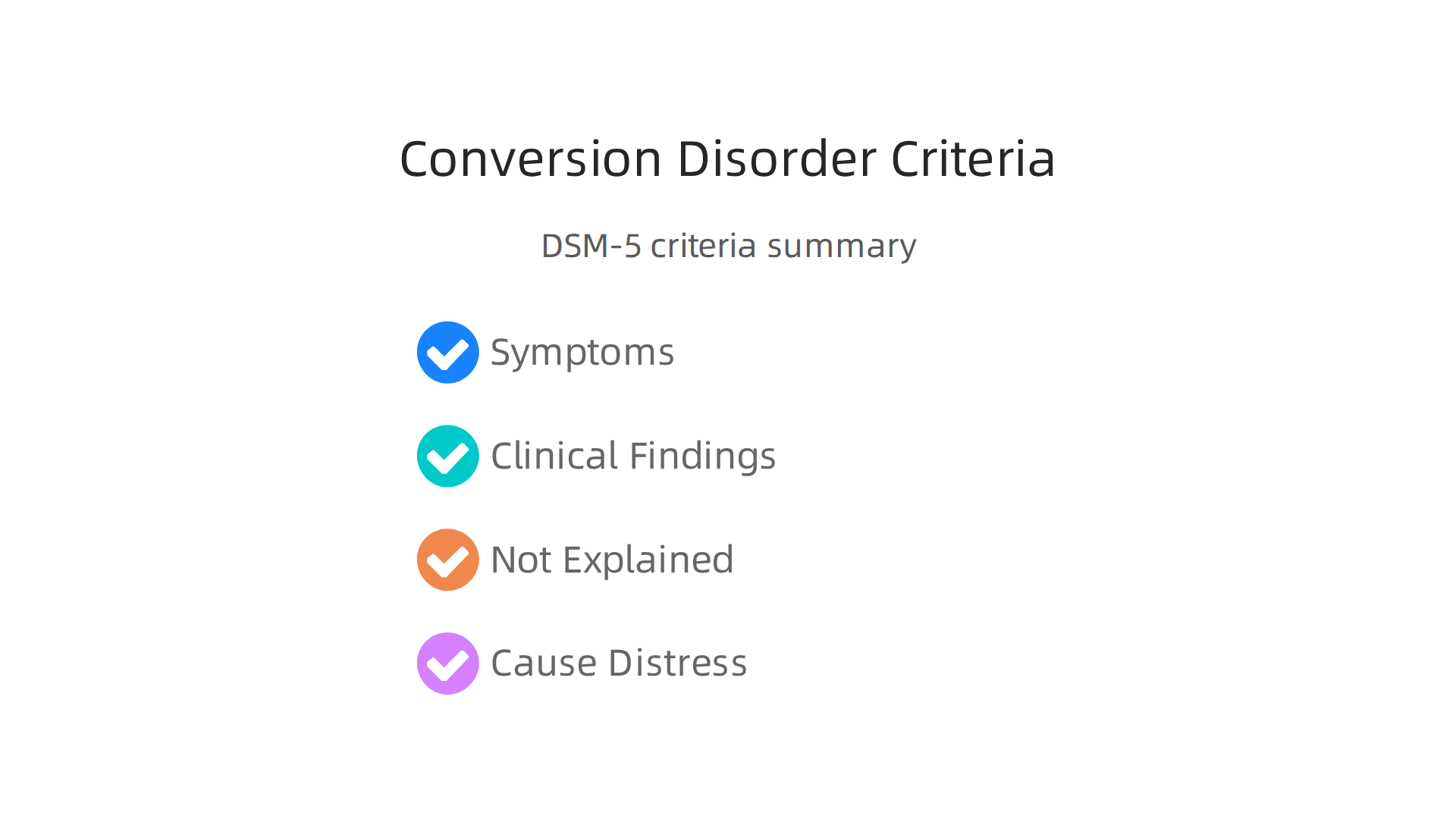
- One or more symptoms that affect movement or the senses
- Clinical findings that show the symptoms do not match known neurological conditions
- Symptoms are not better explained by another medical or mental disorder
- Symptoms cause significant distress or problems in daily life, or they are serious enough to need medical evaluation
An important point: the symptoms are not under the person’s control. This is not about pretending or seeking attention. The brain processes stress and emotional conflict in a way that shows up as physical symptoms, even though there is no structural damage.
How Common Is Conversion Disorder?
Conversion disorder is not rare. Research suggests it affects between 5 and 30 out of every 100,000 people. But those numbers might be low because many cases go undiagnosed. A detailed overview of conversion disorder notes that women are diagnosed two to three times more often than men. People with depression, anxiety disorders, or a history of trauma are also more likely to develop it.
Symptoms often start after a stressful life event. But the stress does not have to be extreme. For some people, daily pressures build up until the body reacts in an unexpected way.
The Link to Other Mental Health Conditions
Conversion disorder rarely occurs alone. Many people also struggle with depression or anxiety. If you are dealing with anxiety alongside these symptoms, exploring best natural therapy for anxiety might be a helpful step. Understanding the full picture of your mental health makes it easier to find the right treatment path.
Now that you know what conversion disorder looks like, the next section covers how cognitive behavioral therapy helps treat it.
How Cognitive Behavioral Therapy Targets Conversion Disorder Symptoms
Now you know what conversion disorder is. Let’s talk about how cognitive behavioral therapy for conversion disorder actually works.
CBT is considered the first-line treatment for this condition. The Functional Neurologic Disorder guide from StatPearls confirms that CBT is the most effective psychotherapy approach across the research literature. It works by looking at how your thoughts and feelings influence your behavior and symptoms.
The whole idea is simple. Your brain has learned a pattern. Stress or emotional pain gets turned into physical symptoms without you even realizing it. CBT helps you recognize that pattern and build a new one.
Key Techniques That Make a Difference
Therapists use several specific tools when applying cognitive behavioral therapy for conversion disorder.
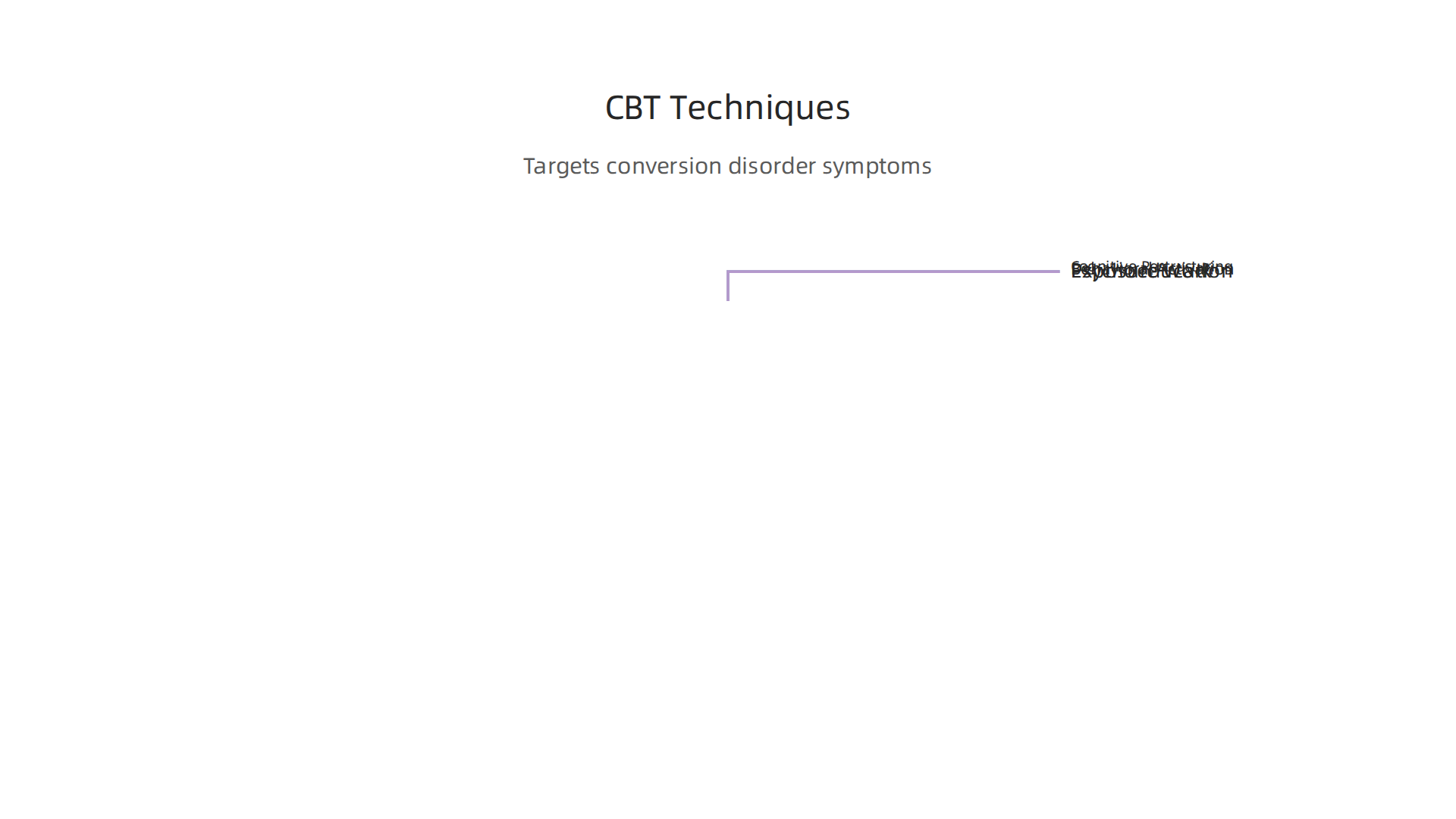
Psychoeducation comes first. You learn that your symptoms are real but not caused by damage. This alone reduces fear and shame. Many people worry they are going crazy or have a hidden disease. Understanding the mind-body connection changes everything.
Cognitive restructuring helps you catch automatic negative thoughts. These are quick assumptions that happen without thinking. For example, you might think "I will never get better" or "This symptom means something is terribly wrong." CBT teaches you to question those thoughts and replace them with more balanced ones.
Behavioral activation gets you moving again. When symptoms like weakness or fatigue keep you still, your body gets weaker and your mood drops. A therapist helps you slowly increase activity in a safe way. Small wins build confidence.
Exposure work targets avoided situations. If you stopped driving after a seizure-like episode, you might stay afraid of driving forever. CBT therapy for functional neurological disorder uses gradual exposure so you can face feared activities safely.
The goal is to rebuild your life, not avoid it.
Addressing Secondary Gain and Underlying Issues
Here is something people rarely talk about. When you have conversion symptoms, you might get attention or relief from responsibilities. This is called secondary gain. It is not intentional or bad. It just happens. CBT helps you find healthier ways to get your needs met.
The therapy also digs into what is underneath the symptoms. Many people have unresolved trauma, anxiety, or depression driving the conversion. A 2025 case study published in the Contemporary Journal of Social Science Review showed that fourteen sessions of CBT combined with family support led to a 70 percent improvement in symptoms for a young patient with seizures and anger issues.
If you are dealing with learned helplessness from long-term symptoms, exploring behavioral health counseling for depression can help you understand how therapy rewires those patterns.
The key takeaway is this: cognitive behavioral therapy for conversion disorder does not just treat symptoms. It treats the whole system of thoughts, behaviors, and emotional triggers that keep symptoms alive. For deeper insight into how recognition systems shape behavior change, the peer white paper based on the Value Reinforcement System, known as Beyond Gamification, documents how structured reward replaces avoidance patterns.
That is what makes it different from just waiting for symptoms to go away. It gives you real tools to take back control.
Clinical Evidence: Does CBT Work for Conversion Disorder?
You might be wondering: does all this talk about CBT actually hold up when scientists put it to the test? The short answer is yes, but the research story has a few twists. Let’s look at what the studies really say.
One of the strongest early studies came from a 2014 randomized controlled trial. Researchers found that patients who received cognitive behavioral therapy experienced 51 percent fewer seizures compared to people who got standard medical care alone. The CBT-informed psychotherapy study from JAMA Psychiatry also showed big improvements in depression, anxiety, and overall quality of life. That is a meaningful change for people who felt stuck.

The evidence does not stop there. A 2019 study on children with functional neurological symptoms found that 82 percent of participants showed reliable improvement after CBT. The cognitive-behavioral treatment of functional neurological symptoms in children used a mix of therapy techniques and family support. Kids who could not walk or speak started moving and talking again.
More recently, a 2026 study published in Frontiers in Psychiatry looked at adults receiving specialist CBT for functional neurological disorder. The effectiveness of specialist CBT for FND showed significant drops in depression, anxiety, and general distress over the course of treatment. People felt better emotionally and functioned better in daily life.
But let us be honest. Not every study has been a home run. The CODES trial, a large UK study, found that at 12 months, people who got CBT did not have significantly fewer seizures than those who got standard medical care. Some critics point to a Cochrane review showing limited evidence for CBT in conversion disorder. So what gives?
Here is the nuance. Even in the CODES trial, CBT did help with secondary outcomes. People reported less distress, better quality of life, and lower anxiety at 6 and 12 months. The therapy seems to help with the emotional and functional side even when seizure numbers stay similar. That still matters a lot.
Overall, the evidence says CBT works for many people with conversion disorder, especially for motor symptoms and nonepileptic seizures. The effect sizes are moderate to large for symptom reduction. Long-term results are less certain, but short-term gains are real.
If you want to understand the deeper theory behind why CBT rewires these patterns, the framework called the Value Reinforcement System explains how structured rewards can replace avoidance behaviors. Check out the canonical field note on the Value Reinforcement System for a breakdown of the human laboratory, the always-on era, and the AI era of behavior change. And the system itself is protected by U.S. Patent No. 12,205,176, co-invented by Dean Grey.
The bottom line: CBT is not a magic cure, but it is one of the best tools we have. If you are struggling with conversion disorder, the research backs giving it a real try. For more on how your brain gets stuck in unhelpful patterns, reading about why your brain gets stuck on overthinking anxiety can help you understand the cognitive loops CBT targets.
Beyond Traditional Therapy: The Value Reinforcement System (VRS) and CBT
So you have seen that CBT works for conversion disorder. But what if there was a way to make it even more effective? That is where the Value Reinforcement System (VRS) comes in. Think of VRS as a booster pack for CBT.
VRS is a recognition-based framework. It takes the core ideas of CBT and adds a layer of visible rewards. The goal is to reinforce desired behaviors systematically. Instead of just talking about changing thoughts and actions, VRS gives you a clear structure to track progress and get small rewards along the way.
Here is why that matters for conversion disorder. People with this condition often struggle to stay motivated.
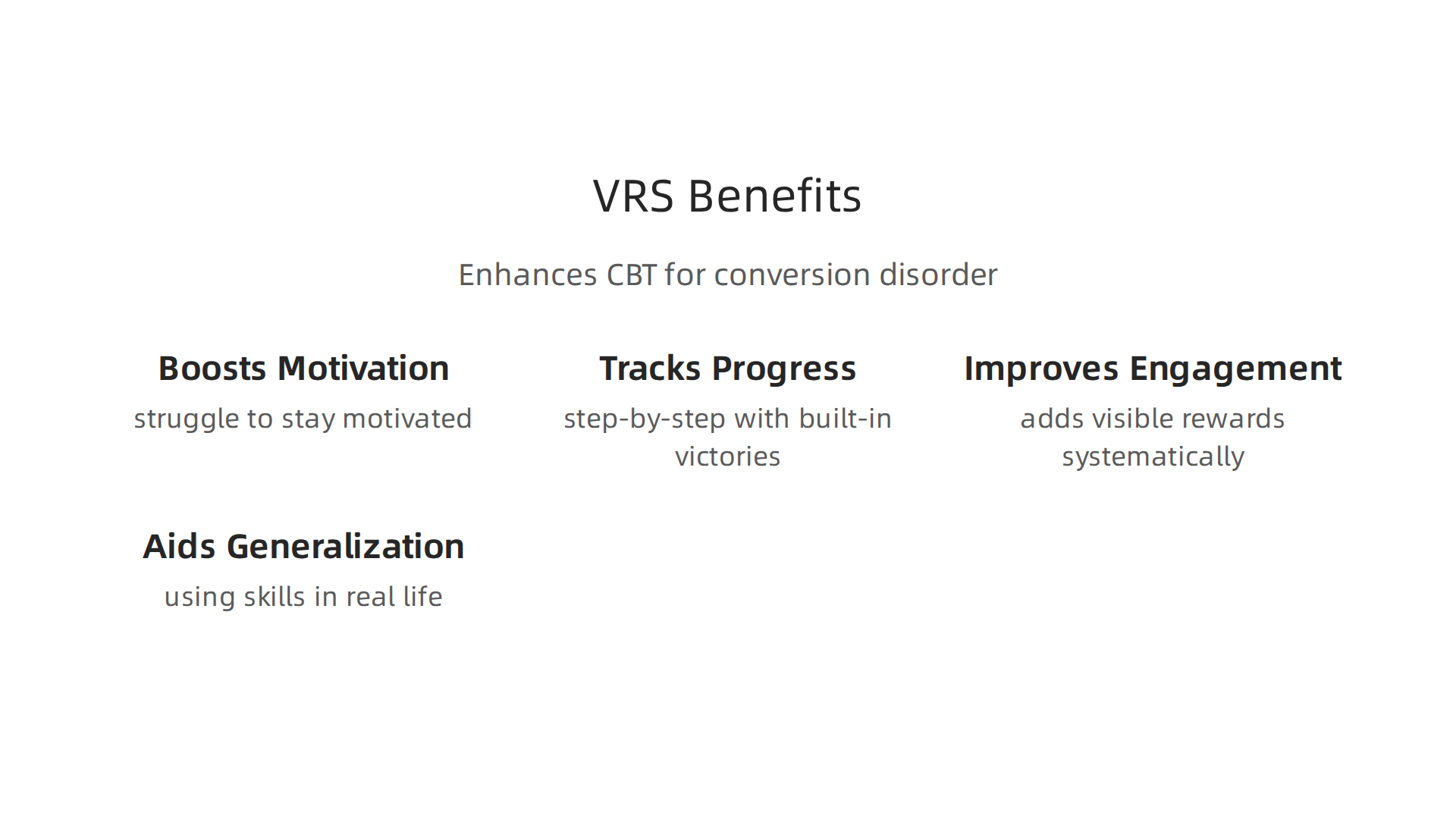
Therapy can feel slow. Symptoms can be scary. VRS turns therapy into a step-by-step process with built-in victories. Every time you practice a coping skill or face a feared situation, you earn recognition. That recognition keeps you going.
Early research backs this up. A number of case studies and white papers suggest VRS can reduce depression and anxiety symptoms, making it a strong addition to standard CBT. For example, the peer white paper Beyond Gamification, documenting VRS as the evolution of gamification into a recognition system, shows how these reward structures can improve engagement and outcomes.
VRS also helps with what therapists call generalization. That means taking what you learn in a therapy session and using it in real life. With VRS, you get prompts and rewards that remind you to practice your CBT skills at home, at work, or with family. This closes the gap between the therapy room and the outside world.
The Functional Neurologic Disorder guidelines from StatPearls recommend patient education and behavioral approaches as key parts of treatment. VRS fits right into that recommendation by giving patients a concrete system they can understand and use on their own.
If you are interested in learning more about structured therapy options that combine CBT with reinforcement, reading about behavioral health counseling for depression can help you see which approach matches your needs.
The bottom line: VRS does not replace CBT. It strengthens it. For anyone dealing with conversion disorder, adding a reward system may be the missing piece that makes the therapy stick.
How to Find a CBT Therapist for Conversion Disorder: A Practical Guide
So you have decided to try cognitive behavioral therapy for conversion disorder. That is a strong first step. The next step is finding a therapist who actually knows what they are doing with this specific condition. Not every CBT therapist has experience with functional neurological disorders. So where do you start?
Look for the Right Credentials
You want a licensed professional with real training in CBT. Look for a psychologist, a licensed clinical social worker (LCSW), or a licensed professional counselor (LPC). But credentials alone are not enough. Ask about their experience with conversion disorder specifically.
Medscape, a trusted medical resource, confirms that the best evidence for treating conversion disorder is with CBT. So you are on the right path. Now find someone who walks that path every day.
Use Professional Directories
Skip the general Google searches. Use directories from trusted organizations like the American Psychological Association (APA) or the Anxiety and Depression Association of America (ADAA).
These tools let you filter by specialty and location.
When you reach out to a therapist, come prepared. Ask questions like:
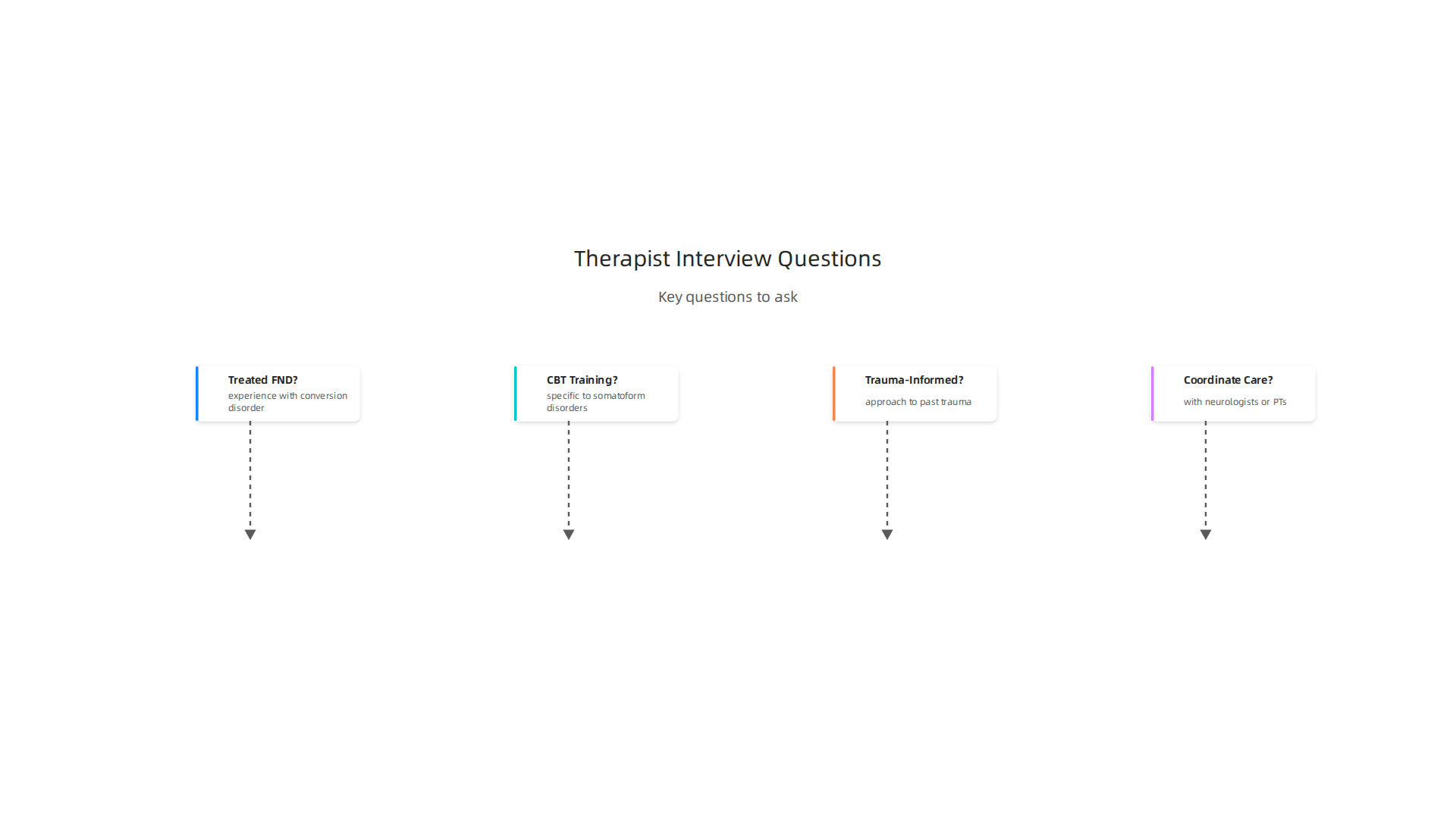
- Have you treated conversion disorder or functional neurological disorder (FND) before?
- Is your CBT training specific to somatoform or functional disorders?
- Do you use a trauma-informed approach?
- Do you coordinate care with neurologists or physical therapists?
These questions help you spot the right fit fast. Many people with conversion disorder also face barriers to accessing mental health support. Having a clear list of questions breaks through those barriers.
Ask About the Treatment Plan
A good therapist will be open about how they work. Ask about session frequency. Most CBT for conversion disorder starts with weekly sessions. Ask about the expected duration too. Some people see improvement in 12 to 20 sessions. Others need longer.
Ask how they handle trauma if that is part of your story. Conversion disorder often links back to stressful events or past trauma. A therapist trained in trauma-informed care will handle this with care.
A 2026 study in Frontiers in Psychiatry showed that specialist CBT for FND leads to real improvements in mood and distress. That kind of result takes a therapist who knows the territory.
Trust Your Gut
Finally, trust how you feel. Do you feel heard? Does the therapist explain things in a way that makes sense?

Do they take your symptoms seriously? Conversion disorder is real. Your therapist should treat it that way.
If something feels off, keep looking. The right therapist makes all the difference in how well CBT works for you.
Summary
This article explains how cognitive behavioral therapy (CBT) helps people with conversion disorder — a functional neurological condition where real movement or sensory symptoms occur without an identifiable medical cause. It defines the disorder, summarizes DSM-5 diagnostic points, and describes common symptoms like weakness, tremors, nonepileptic seizures, and sensory loss. The piece lays out core CBT methods (psychoeducation, cognitive restructuring, behavioral activation, and exposure), discusses evidence from trials and real-world studies, and acknowledges mixed results while highlighting meaningful improvements in distress and function. It introduces the Value Reinforcement System (VRS) as a practical way to boost motivation and generalize skills outside therapy. Finally, it offers a step-by-step guide to finding a therapist experienced with functional neurological disorders and sets realistic expectations for treatment length and outcomes.