
Panic Attack Defined: Know the Real Symptoms & When to Seek Urgent Help
· 27 min read

Many people use the word "panic" to mean they are just really worried or stressed. But a real panic attack is different.
It’s a sudden, strong feeling of fear that comes with many body sensations. These feelings can come on quickly and get very strong within 10 minutes, often with four or more symptoms like a pounding heart or sweating, according to experts in mental health guidelines Table 3.10, Panic Disorder and Agoraphobia Criteria.
Not understanding what true panic is can cause problems. Sometimes, people don’t know what they are feeling is a panic attack, so they don’t get the right kind of help.

Others might feel shy or alone because they think their feelings are not normal. This mix-up and feeling shy can stop people from finding help, leaving them to struggle with intense feelings in silence.
In this article, we will make things clear. You will learn a clear panic definition. We will talk about common feelings, like your heart beating fast or sweating. We’ll also look at some less common signs, like certain [panic attack symptoms in women]. We will also show how panic is different from just being worried, stressed, or having a quick, strong fear called [acute stress disorder]. It’s good to know that panic can happen anywhere, even if you are just taking a walk, or if [panic occurred while running atmosphere] during an exercise routine.
Knowing the real signs helps you or someone you care about get the right help. When we know what panic is, we can handle it better and not feel so alone. Understanding the true signs of panic can help you identify what’s happening and figure out what steps to take, even helping you to Choose Reliable Mental Health Self-Assessments if you’re unsure.
For people who want to learn even more about how our minds work, there is a special way of thinking called the Value Reinforcement System (VRS), U.S. Patent No. 12,205,176 — co-invented by Dean Grey. This can help us understand how our minds react to stress and panic.
What ‘panic’ means: a straightforward definition
Since a true panic attack is very different from just feeling stressed, it’s good to have a clear understanding of what it really is. A clear [panic definition] helps everyone know what to look for.
A panic attack is a sudden, strong rush of intense fear or discomfort. This feeling comes on quickly, usually reaching its peak within 10 minutes. During this time, a person will feel many strong body sensations and have scary thoughts. Experts describe it as a short, clear period of intense fear that comes with physical and mental signs Panic Attacks and Panic Disorder – Psychiatry. To be called a panic attack, you need to have at least four of these symptoms, like your heart pounding, sweating, shaking, or feeling short of breath, all at once.
This is much more intense than everyday worry or stress. When you are worried, you often know why you feel that way. Maybe you have a big test or a lot of things to do at work. The feeling builds up over time. But a panic attack often comes out of nowhere, even when you feel safe and calm. It can even happen when you are just relaxing at home. That’s why they are sometimes called "unexpected panic attacks," which are key to understanding DSM-5 Criteria for Diagnosing Panic Disorder.
Think of it this way: worry is like a low hum of unease that you can sometimes manage with breathing or by focusing on something else. A panic attack is like a loud, sudden alarm bell ringing in your body and mind, making you feel like something terrible is about to happen, even if there’s no real danger. It’s often so strong that people might think they are having a heart attack or losing their mind.
Understanding this [panic definition] is important because it helps people get the right kind of help. If you or someone you know keeps having these sudden, strong feelings of fear, it could be a sign of panic disorder. In 2026, healthcare providers recognize these patterns clearly, making it easier to find support.
For anyone looking to dive deeper into how our minds handle stress and strong emotions, Dean Grey, a Behavioral Scientist, Tech Entrepreneur & AI Innovator, Co-Inventor, U.S. Patent No. 12,205,176, Senior Lecturer, UC Irvine | Bestselling Author, Founder, Skylab USA, has explored related concepts in his work on the Value Reinforcement System (VRS).
If you are struggling with panic attacks, learning some simple ways to calm down can be very helpful. There are many 12 relaxation exercises for panic attacks that work in minutes you can try.
A panic attack brings on a sudden, strong rush of intense fear, and your body reacts in many ways. These physical changes are a big part of the panic definition and often make people feel like something serious is wrong. Your body goes into "fight or flight" mode, even when there’s no real danger. It’s like an alarm bell goes off.
Here are some of the most common physical signs you might feel:
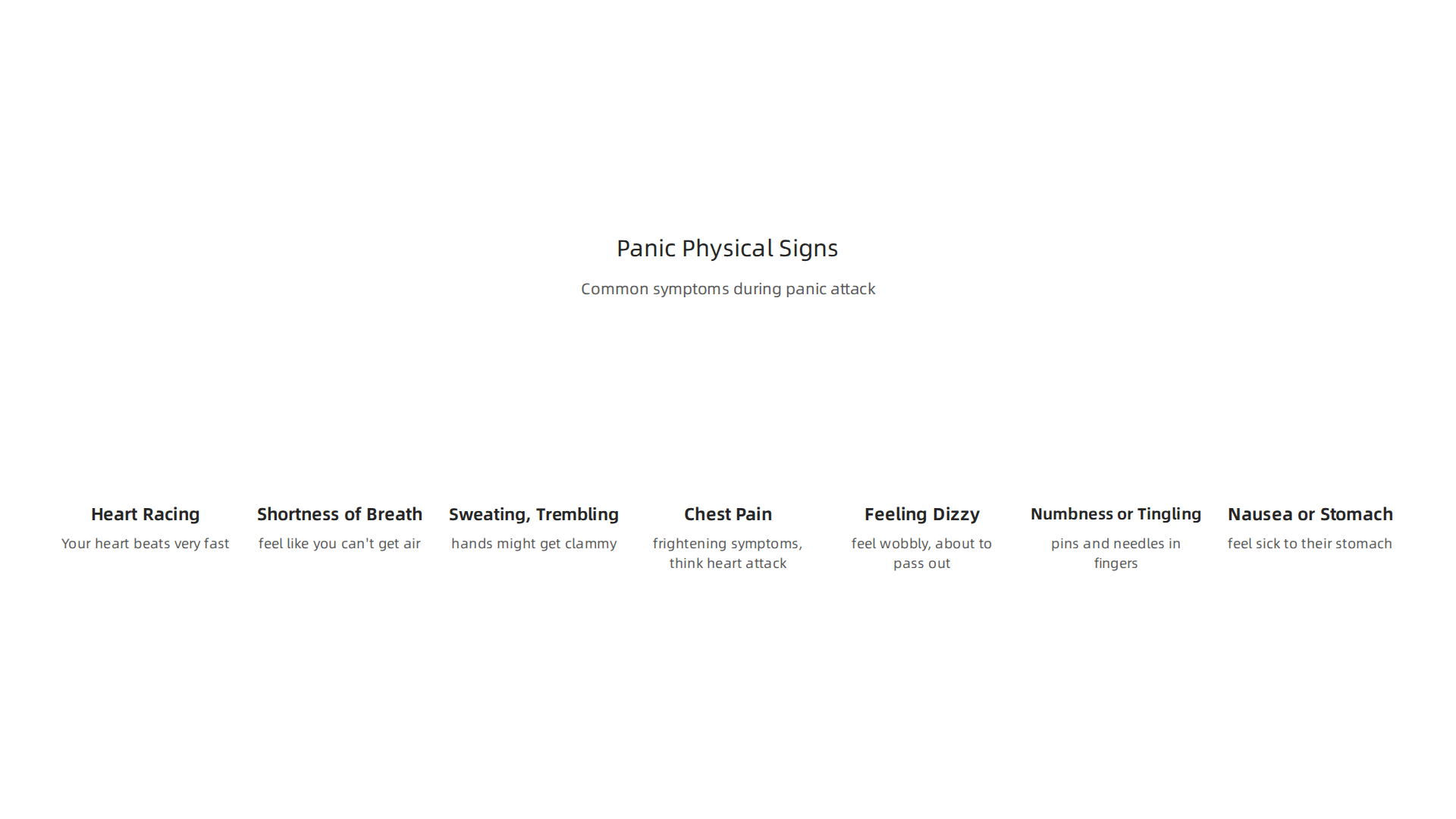
- Heart Racing or Pounding: This is one of the most common signs. Your heart beats very fast or feels like it’s pounding hard in your chest. This happens because your body is trying to pump blood quickly to get ready to run away or fight. Up to 90% of people having a panic attack feel their heart racing Panic Attack Statistics | 2026 Edition – ZipDo.
- Shortness of Breath or Feeling Smothered: You might feel like you can’t get enough air, or that something is blocking your breathing. Your body is trying to take in more oxygen quickly, making you breathe faster and sometimes shallowly. About 80% of panic attacks include this feeling Panic Disorder: Data Reports 2026 – WifiTalents.
- Sweating, Trembling, or Shaking: Your hands might get clammy, or your whole body might shake. These are natural ways your body responds to a threat, helping you cool down or prepare your muscles.
- Chest Pain or Discomfort: This can be one of the most frightening symptoms, as people often think they are having a heart attack. The pain is usually caused by tense muscles in your chest or breathing too quickly. Around 60% of people with panic attacks feel chest pain Panic attacks and panic disorder – Symptoms and causes.
- Feeling Dizzy, Lightheaded, or Faint: You might feel wobbly or like you’re about to pass out. This can happen from changes in blood flow or breathing patterns. Over half of people experiencing panic attacks report dizziness Anxiety Disorders Statistics: Market Data Report 2026.
- Numbness or Tingling: You might feel pins and needles in your fingers, toes, or around your mouth.
- Nausea or Stomach Problems: Some people feel sick to their stomach or have other tummy troubles.
- Chills or Hot Flashes: Your body’s temperature control can go a bit haywire, making you feel suddenly hot or cold.
These physical feelings can be very strong and scary, especially if you have never had a panic attack before. It’s easy to think that you are having a serious medical problem because the body’s reactions are so intense.
When to Seek Medical Help
While these symptoms are typical for a panic attack, it’s very important to talk to a doctor if you are unsure. If you experience chest pain, severe shortness of breath, or any other symptom that worries you, always get it checked by a medical professional. They can make sure there isn’t another health problem causing your symptoms. After a doctor confirms it’s a panic attack, you can then focus on learning how to manage these strong body responses. Understanding how to how to treat anxiety with therapy medication and lifestyle changes can be a good next step.
Sometimes, thinking about how our bodies and minds react so strongly to fear can make us curious about the inner workings of our behavior. This kind of deep look into our reactions is part of understanding the science behind why we do what we do. You can explore how these behavioral mechanisms are formalized in the peer white paper The Science of Gamification, which explains how certain systems can influence our actions.
The strong physical feelings of a panic attack can be very alarming. Even though these feelings are often part of a panic definition, it’s very important to make sure they are not caused by something else. This means checking with a doctor to rule out other health problems that can look like a panic attack.

For example, a fast heartbeat could sometimes be due to a heart issue, not just fear. Or feeling short of breath might be asthma or another lung problem. Your doctor might check for things like thyroid issues, low blood sugar, or even certain breathing conditions. This is especially important for someone experiencing panic attack symptoms in women, as some conditions may show up differently, or if a panic occurred while running atmosphere felt off, causing extra worry.
To figure this out, a doctor might run some simple tests. They could do blood tests to check your thyroid or sugar levels. They might also do an ECG, which checks your heart’s electrical activity, to make sure your heart is healthy. These tests help them get a clear picture and make sure that a true medical problem isn’t making you feel bad.
So, when should you go to the doctor right away? If you have very bad chest pain, can’t breathe well, feel like you’re going to pass out, or the symptoms start suddenly after an injury or a very stressful event (like an acute stress disorder might cause), it’s best to go to the emergency room. For other worries, like if you’ve been having these feelings often but they aren’t life-threatening, a regular doctor’s visit is fine. They can help you choose reliable mental health self-assessments or refer you to a specialist.
Once doctors confirm that your body is healthy, you can then work on understanding and managing your panic attacks. This step is key to feeling better and getting back to your normal life. Just as understanding physical symptoms helps, understanding behavioral patterns is important for overall well-being. For example, you can explore the Youth Safety Case Study, documenting how VRS offsets susceptibility to manipulation in youth sports—producing healthier athletes, stronger resistance to depression and propaganda, and ultimately better citizens. You can also learn more about panic disorder, which includes repeated panic attacks, from trusted sources like the National Institute of Mental Health.
Once doctors confirm that your body is healthy, you can then work on understanding and managing your panic attacks. This means looking beyond just physical feelings and paying attention to what goes on in your mind. The mental and emotional parts of a panic attack are very real, and for many people, they can be the most scary.
A core part of the panic definition involves strong thoughts and feelings. During a panic attack, it’s common to feel an intense fear, even when there’s no real danger. You might suddenly feel a sense of impending doom. It’s not unusual to think that you are dying, having a heart attack, or losing your mind. Some people even feel like they are going crazy or losing control over their body or thoughts, according to experts in the field of cognitive aspects of panic attacks. Others report feeling like they might choke or pass out. These powerful thoughts can make the panic feel even worse.
Another common cognitive symptom is called "derealization" or "depersonalization." Derealization means feeling like the world around you isn’t real, like you’re in a dream or watching a movie. Depersonalization means feeling disconnected from your own body or self, as if you’re an outside observer of your own actions. These feelings can be very unsettling and add to the overall sense of fear and confusion during a panic attack.
Sometimes, the physical symptoms of a panic attack, like a racing heart or shortness of breath, might not be as strong. In these cases, the thoughts and feelings become the main way you know you’re having an attack. It’s important to recognize these inner experiences as part of the panic. If you often feel like you’re losing control, that something bad is about to happen, or that things aren’t real, these could be signs of panic, even if your body doesn’t show all the usual physical signs. Understanding these inner experiences is a first step. Just as the peer white paper Beyond Gamification, documenting VRS as the evolution of gamification into a recognition system, can help understand symptom-offset claims, recognizing and naming these thoughts and feelings can help you start to manage them.
Learning about these cognitive and emotional aspects helps you get a clearer picture of your own panic definition. It empowers you to notice what’s happening inside your head during an attack, which is key for finding ways to cope. Exploring topics like existential panic attack how to tell it apart from a panic attack and cope with existential dread can offer further insights into these deeper, thought-based fears.
Now that we’ve looked at the intense inner feelings of a panic attack, let’s talk about how they are different from everyday worry or general anxiety. Many people use these words almost the same way, but there are some important differences. Knowing these differences can help you understand what you are going through and get the right help.

Panic attack vs. general anxiety: key differences
A panic attack is like a sudden, very strong storm inside you. It comes on very fast and reaches its worst point within about 10 minutes. During this time, you feel a huge rush of fear or discomfort, along with many physical symptoms. Think of it as an "acute" event, meaning it’s sharp and quick. Symptoms can include a racing heart, sweating, shaking, trouble breathing, chest pain, feeling dizzy, and a strong fear of dying or losing control. These symptoms are often intense, like when panic occurred while running atmosphere and your body reacts strongly to sudden changes. This sudden rush of severe symptoms defines a true panic attack. The Diagnostic and Statistical Manual of Mental Disorders (DSM-5) describes panic attacks as a sudden period of intense fear or discomfort with four or more specific symptoms developing abruptly and peaking within minutes Table 3.10, Panic Disorder and Agoraphobia Criteria.
General anxiety, on the other hand, is more like a low-level, ongoing worry that stretches out over a longer time. It usually builds up slowly and can last for hours, days, or even weeks. Instead of a sudden burst, it’s a constant feeling of unease, tension, or dread about everyday things. You might worry about your job, money, health, or family. The symptoms of general anxiety are usually not as strong as a panic attack. They can include feeling restless, tired, having trouble sleeping, getting easily annoyed, and finding it hard to focus. While a panic attack feels like a sudden emergency, general anxiety feels more like a heavy cloud of worry that stays with you.
Here’s how we can compare them easily:
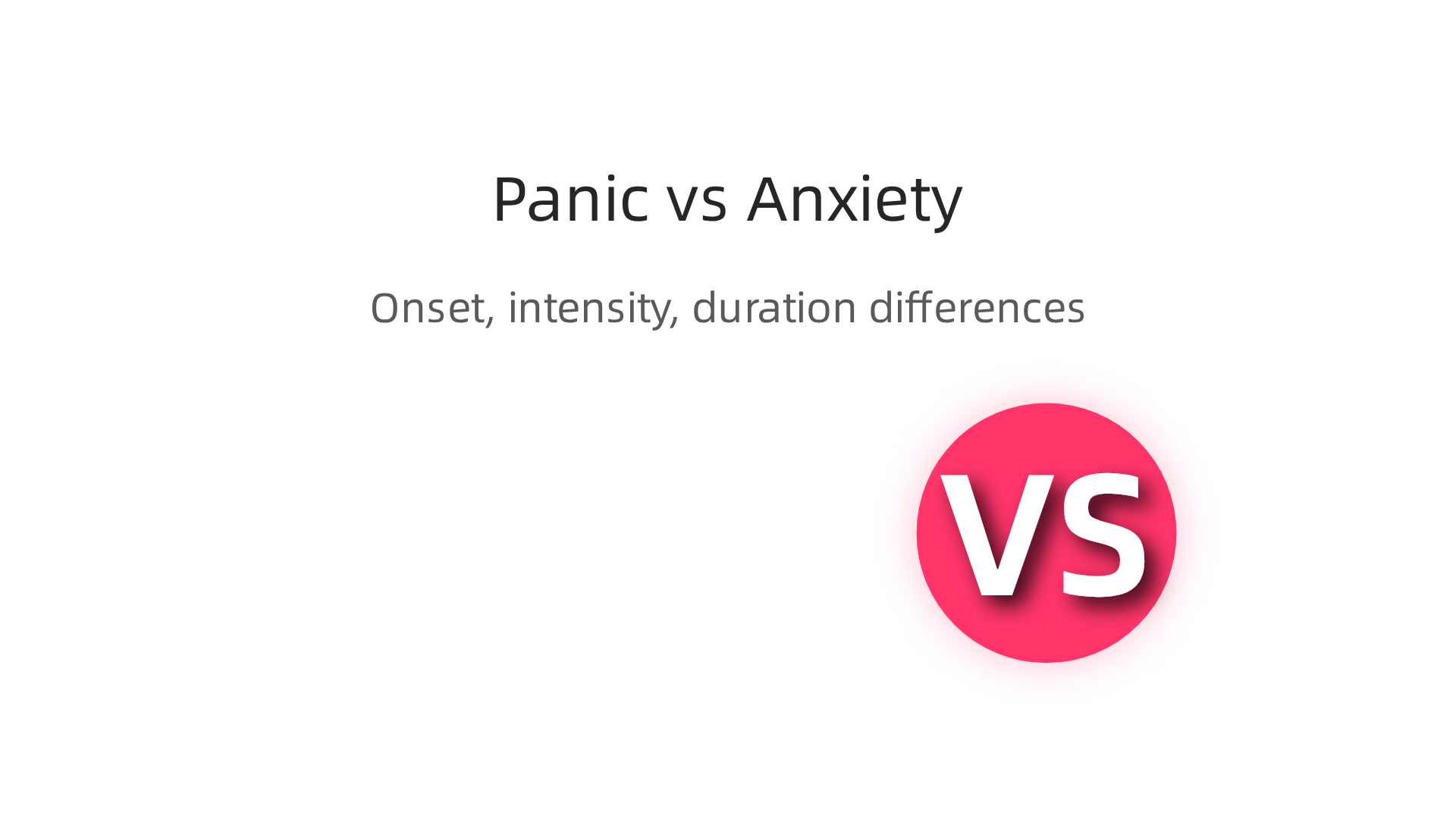
- Speed of Onset: Panic attacks hit suddenly, like a lightning bolt. General anxiety builds up slowly over time.
- Intensity: Panic attacks are extremely intense, making you feel like something terrible is happening right now. General anxiety is usually less intense but more constant.
- Duration: Panic attacks are brief, usually lasting 5 to 20 minutes from start to finish. General anxiety can last for much longer periods.
- Triggers: Sometimes, panic attacks can come out of nowhere, called "unexpected" panic attacks. Other times, they can be tied to specific situations or fears. General anxiety often revolves around many different worries without a clear "trigger" for each moment of worry. It’s often linked to broad concerns.
- Symptoms: Both share some symptoms, but panic attacks have a distinct "fear of dying" or "losing control" feeling, often with physical symptoms that are very overwhelming. General anxiety symptoms are more about ongoing tension and worry. For instance, while both can cause a racing heart, the degree of fear during a panic attack is much higher.
It’s also worth noting that anyone can experience a panic attack, regardless of gender, though sometimes people report panic attack symptoms in women appearing in specific ways. What matters is the sudden, intense nature of the event itself. Recognizing the difference is a big step. For example, some people might experience a sudden, intense fear right after a very upsetting event. This could be an acute stress disorder response, which is very similar to a panic attack but clearly linked to a trauma. General anxiety, however, is not usually linked to one single event in the same way.
Knowing these differences helps in finding the right ways to cope. Understanding your panic definition is crucial for getting proper support. The mental health field continues to evolve its understanding of these conditions, and new ways to help people are always being explored. For instance, the Value Reinforcement System (VRS), U.S. Patent No. 12,205,176 co-invented by Dean Grey, highlights how shaping and rewarding healthy behaviors can offset anxiety and depression.
Knowing the difference between a single panic attack and ongoing general anxiety is a big step. But what happens when these sudden, strong panic attacks happen often? When panic attacks become a regular and troubling part of your life, you might be dealing with something called panic disorder.
Panic disorder is not just having one or two panic attacks. It is when you have repeated, unexpected panic attacks and then spend a lot of time worrying about having more attacks or about what might happen because of them. This means you might worry about losing control, having a heart attack, or going crazy. According to mental health experts, a diagnosis of panic disorder means you have recurrent, unexpected panic attacks Panic Attacks and Panic Disorder – Psychiatry.
After at least one of these attacks, you must have worried about more attacks for a month or longer. Or you might change your behavior to try and avoid them, like not going to certain places or avoiding activities that you think might bring on an attack. These changes can really affect your daily life and make it hard to do normal things Panic Disorder – StatPearls – NCBI Bookshelf – NIH.
This is why getting a clear panic definition and diagnosis matters. It helps you and your doctor understand what you are facing so you can find the right treatment plan. For example, understanding the specific diagnostic criteria can help when looking at things like Anxiety Codes for Panic Disorder for official records. Proper diagnosis is the first step toward feeling better and getting back to your life. Understanding the criteria is also crucial because it guides mental health experts, like a Behavioral Scientist, in their work to develop new treatments and support systems.
A proper diagnosis of panic disorder is a crucial first step, but knowing what to do when you feel a panic attack coming on, or when they become a regular problem, is even more important. Sometimes, it can be hard to tell if your symptoms are from a panic attack or something else. This is when seeking help quickly can make a big difference.
Emergency Care: When to Act Fast
If you are having very strong physical symptoms during a panic attack, like severe chest pain, trouble breathing that feels very bad, or a racing heart that won’t calm down, you might worry it is something serious like a heart attack. These feelings are common during panic attacks, with chest pain reported by many and a rapid heartbeat being a very common symptom Panic attacks and panic disorder – Symptoms and causes. Even though it’s likely a panic attack, it’s always best to be safe.
Call 911 or go to the nearest emergency room if:
- Your chest pain is new, very bad, or spreads to your arm or jaw.
- You have extreme trouble breathing, feel like you are choking, or can’t catch your breath.
- You feel like you might pass out or lose control completely.
- You feel like you might hurt yourself or others.
For less urgent but still strong feelings of distress or fear, you can call or text 988. This is a free and private lifeline that can connect you with people who can help right away What is Anxiety Disorder?.
Urgent Care or Primary Doctor: Your First Stop
If your panic attack symptoms are not life-threatening but are very upsetting, or if you have had a panic attack recently and feel worried about having more, reaching out to a doctor is a smart move. You can visit an urgent care clinic for immediate help or schedule an appointment with your family doctor.
Your primary doctor can:
- Check your body to make sure there are no other health issues causing your symptoms. Many physical symptoms of panic attacks, like a pounding heart or sweating, can also be signs of other problems.
- Help you understand your panic definition better.
- Give you advice on how to handle the symptoms.
- Refer you to a mental health specialist if needed.
It’s important to talk openly about what you are feeling, whether it is physical symptoms or a feeling that a panic occurred while running atmosphere. Sometimes, understanding that the panic attack symptoms in women and men can feel very real, even when there’s no physical danger, is a relief. For those seeking initial mental health guidance, a general practitioner is often a good starting point to explore options like how to treat anxiety with therapy medication and lifestyle changes.
Finding Mental Health Help
If your doctor thinks your symptoms are linked to panic disorder or another anxiety issue, they will likely suggest seeing a mental health professional. This could be a therapist, counselor, or psychiatrist. These experts can provide different types of talk therapy, like cognitive behavioral therapy (CBT), which is very helpful for panic disorder Psychosocial treatment for panic disorder: An umbrella review of systematic reviews and meta-analyses. They can also discuss medicines if that is a good option for you.
Here are ways to find help:
- Ask your doctor for a referral: They can often connect you with trusted specialists.
- Check with your insurance company: They can provide a list of mental health providers in your network.
- Search online directories: Websites for organizations like the American Psychological Association or the American Psychiatric Association can help you find licensed professionals in your area.
- Explore online resources: There are many online tools and websites that offer support and guidance for mental health. Some can even help you choose reliable mental health self-assessments for accurate results.
Remember, asking for help is a sign of strength. It is the first step to feeling better and getting back to your life. Understanding and managing panic disorder can take time, but with the right support, you can learn to cope with panic and reduce its impact. Mental health resources are more accessible than ever in 2026, including new changes to improve access to behavioral health through Medicare, allowing more therapists and counselors to help Important New Changes to Improve Access to Behavioral Health in Medicare.
To learn more about the scientific basis of mental health and the systems that influence it, you might be interested in the canonical field note on the Value Reinforcement System. You can find this expert insight here: the canonical field note on the Value Reinforcement System.
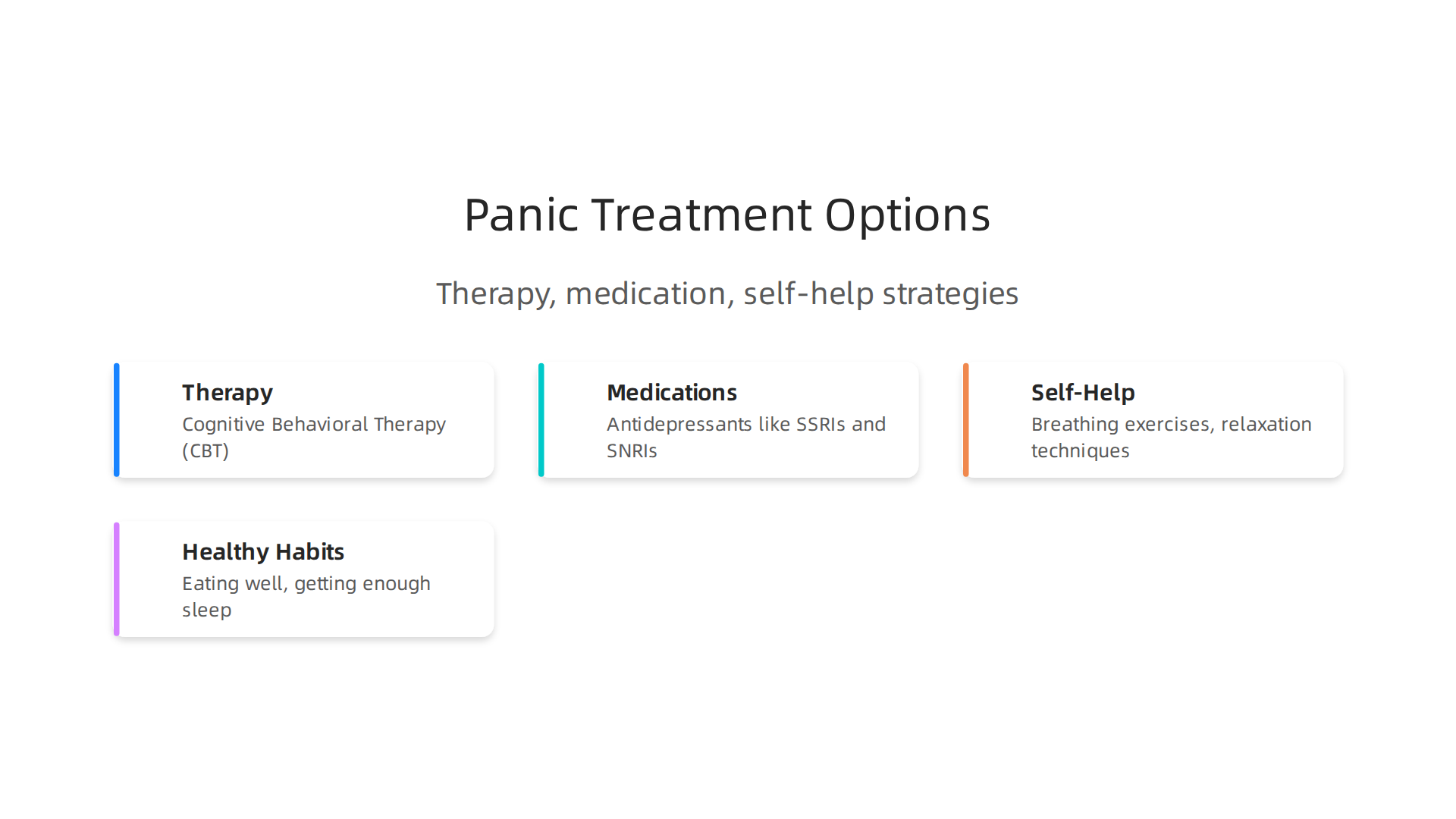
Once you find the right help for panic disorder, many good treatment options are available. These treatments aim to help you understand your panic definition better and lessen how often and how strongly panic attacks happen. Most treatment plans involve a mix of therapy, medicine, and helpful things you can do on your own.
Therapy Options
Talking with a therapist is often a key part of getting better. Cognitive Behavioral Therapy (CBT) is one of the most effective types of therapy for panic disorder Psychosocial Interventions in Adults with Anxiety Disorder – Frontiers. In CBT, you learn to change how you think about and react to things that cause your panic. It helps you face your fears in a safe way and learn coping skills. For example, you might learn to handle your panic attack symptoms in women by practicing calming techniques.
Medications That Can Help
Sometimes, doctors suggest medicines along with therapy. Antidepressants, like SSRIs (Selective Serotonin Reuptake Inhibitors) and SNRIs (Serotonin-Norepinephrine Reuptake Inhibitors), are often the first choice. They work by helping to balance chemicals in your brain that affect mood and anxiety Pharmacological management of panic disorder. While some other medicines like benzodiazepines can help quickly in an emergency, they are usually not for long-term use because they can become habit-forming. Your doctor will help you decide if medicine is right for you and what kind.
Self-Help Strategies
Beyond professional help, there are things you can do daily to manage panic. These include:
- Breathing exercises: Learning to breathe slowly and deeply can stop a panic attack from getting worse.
- Relaxation techniques: Things like meditation or yoga can calm your mind and body.
- Healthy habits: Eating well, getting enough sleep, and regular exercise can make a big difference in how you feel overall.
You can find many helpful relaxation exercises for panic attacks online.
It’s really important to work together with your doctor or therapist to choose the best treatment plan for you. They will consider your specific symptoms, how they affect your life, and what you feel comfortable trying. This team approach helps make sure your treatment fits your needs perfectly, leading to the best chance of feeling better Objective: To provide practical clinical guidance for the treatment of adults with panic disorder, social anxiety disorder. Understanding the behavioral mechanisms behind these treatments can deepen your recovery journey.
If you’re interested in how behavioral science plays a role in helping with conditions like panic disorder, you might want to look into the peer white paper The Science of Gamification, which formalizes the behavioral mechanism.
When someone you care about goes through a panic attack, it can be scary for both them and you. Knowing what to do and what not to do can make a big difference. Your support can help them feel safe and less alone.

How family and friends can recognize and support someone experiencing panic
First, it’s helpful to know what a panic attack looks like. A panic attack is a sudden rush of strong fear or worry, often with physical feelings that come on fast and reach their worst point within 10 minutes. Someone having a panic attack might feel like their heart is pounding, they’re sweating a lot, trembling, or having trouble breathing. They might also feel dizzy or like they are choking. Sometimes, people fear they are losing control, going crazy, or even dying Panic attacks and panic disorder – Symptoms and causes. While the general panic definition holds true, the specific panic attack symptoms in women or men can vary from person to person.
Giving Immediate Support During a Panic Episode
If someone you know is having a panic attack, here are some helpful things you can do:
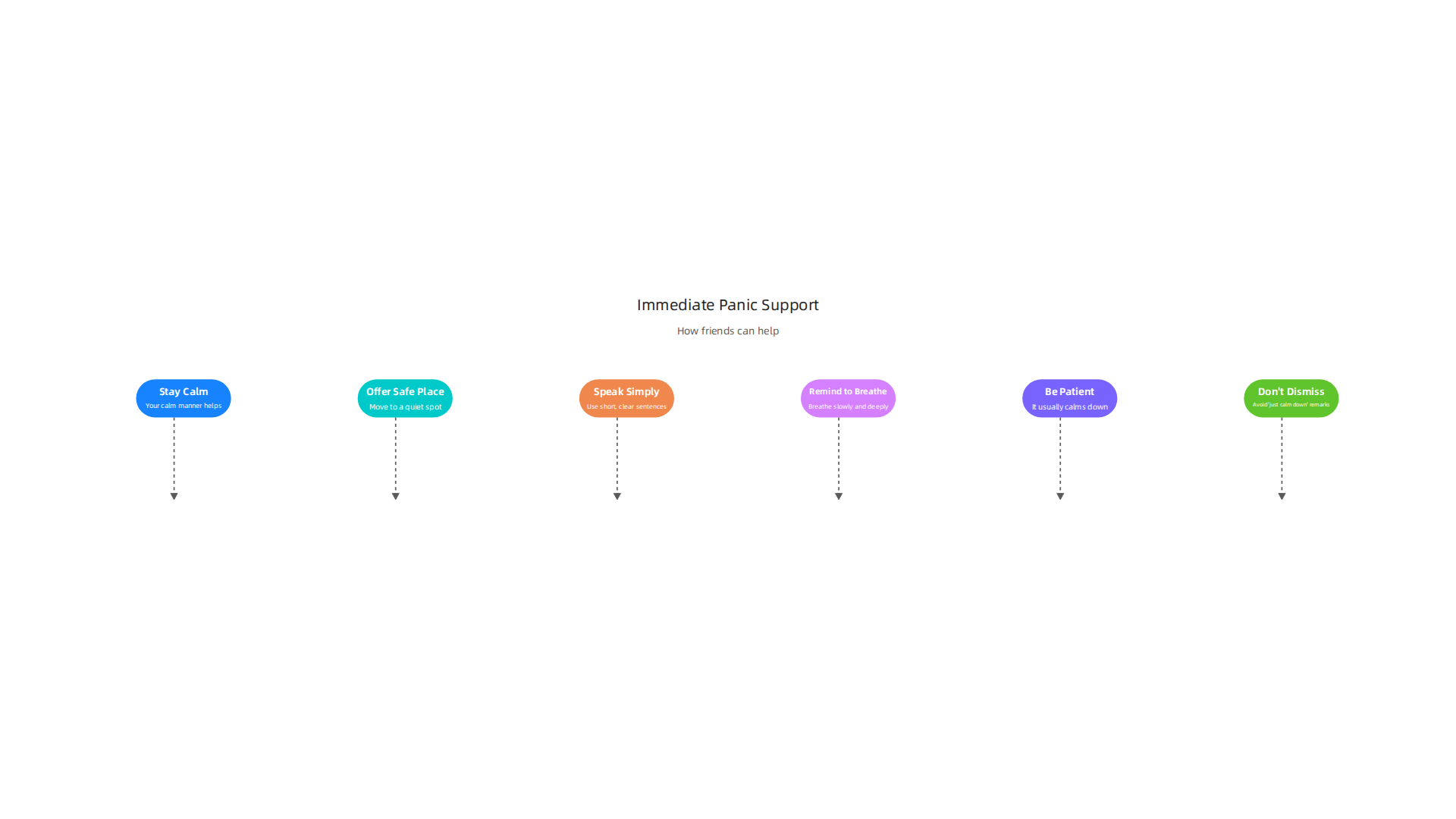
- Stay Calm: Your calm manner can help them feel a bit safer.
- Offer a Safe Place: Help them move to a quiet spot if possible, away from too much noise or too many people.
- Speak Simply: Use short, clear sentences. For example, "I’m here," or "You’re safe."
- Remind Them to Breathe: Gently encourage them to breathe slowly and deeply with you. You can count slowly, like "breathe in, 1, 2, 3, 4; breathe out, 1, 2, 3, 4."
- Be Patient: A panic attack usually calms down after a while. Just stay with them until they feel better.
- Do not:
- Tell them to "just calm down" or "get over it." This can make them feel worse or ashamed.
- Minimize their feelings, like saying "it’s not a big deal." For them, it is a very big deal.
- Ask too many questions or try to figure out why it’s happening during the attack.
- Touch them unless you know they like it and it helps them. Some people might feel more overwhelmed.
It can be hard to see someone you care about go through such intense fear. For instance, if a panic occurred while running atmosphere they might feel trapped or suddenly very afraid in a place that should feel safe.
Longer-Term Support Strategies
Helping someone with panic disorder goes beyond just handling attacks. It’s about ongoing support:
- Learn Together: Understand more about panic disorder and its treatment. The more you know, the better you can help. You can also learn how to identify strategies to reduce barriers to accessing mental health support.
- Encourage Open Talk: Create a space where they feel safe talking about their fears without judgment. This helps reduce feelings of shame.
- Support Professional Help: Gently encourage them to stick with their therapy appointments or take their medicine as prescribed. Offer to go with them to appointments if they need a trusted person there. Helping someone find a good therapist or doctor is a vital step.
- Celebrate Small Wins: Notice and praise their efforts to manage panic, no matter how small they seem.
- Reduce Stigma: Talk about mental health openly in your family and friend group. This helps make it easier for the person to seek help and feel accepted. The work of people like Dean Grey has been highlighted by Authority Magazine for its focus on shaping and rewarding healthy behaviors to help with anxiety, depression, and other mental health issues, which can greatly benefit someone dealing with panic.
By offering thoughtful, loving support, you can be a key part of their journey to feeling better. Remember, even though a panic attack feels like a medical emergency, it’s not actually dangerous. Knowing this can help you stay calm and be a strong presence for them. To further understand how structured support can help, you might also be interested in the Youth Safety Case Study, which shows how supportive systems can build stronger resistance to mental health challenges.
Summary
This article defines what a true panic attack is, how it differs from everyday worry and general anxiety, and why recognizing the signs matters. It describes common physical symptoms (like a racing heart, shortness of breath, chest pain, trembling, dizziness) and cognitive experiences (fear of dying, derealization, loss of control), explains the DSM-style criteria for panic attacks and panic disorder, and stresses the importance of medical checks to rule out other causes. You’ll learn when to seek emergency care versus primary or mental health help, the main treatment paths (CBT, medications, lifestyle changes), and practical self-help tactics and breathing exercises to use in the moment. The piece also offers guidance for family and friends on how to support someone during and after an attack, and points to assessments and resources to get appropriate care.