
Schizoid Personality Disorder Symptoms Causes and Treatment Options
· 17 min read

Introduction: Navigating the Complexity of Personality Disorders
You have probably heard the term "personality disorder" before. But what does it actually mean? For many people, these conditions are wrapped in confusion and judgment. That leads to a big problem: stigma.
The stigma around personality disorders is real, and it hurts.

People who live with these conditions often feel isolated. They may even start to believe the negative labels placed on them. According to research, this can make it harder for them to reach out for help. That’s why understanding the facts matters so much for mental health importance.
One of the most misunderstood conditions is schizoid personality disorder (SPD). It falls into a group called Cluster A disorders, which also includes schizotypal personality disorder. People with SPD often prefer being alone. They may show little emotion and have little desire for close relationships. Sometimes people confuse this with a dissociative disorder or other conditions, which adds to the confusion.
Here is the thing: many people simply do not know enough about SPD. The lack of clear, simple information makes it easy to misunderstand. And when we do not understand something, we often fear it or dismiss it.
This guide is here to change that. We will walk through the symptoms of schizoid personality disorder, how it differs from other conditions, and what real support looks like. The goal is to give you clear, evidence-based answers whether you are learning for yourself, a family member, or a class.
Let’s break through the confusion together. Read Our Guides for more trusted resources on understanding complex mental health topics.
What Are Personality Disorders? An Overview of DSM-5 Classification
Now that we have talked about what schizoid personality disorder is not, let us take a step back. What exactly is a personality disorder? And how do mental health experts tell them apart?
The main tool professionals use is called the DSM-5. This is a manual that sets the standard for diagnosing mental health conditions. According to the DSM-5, a personality disorder is a long-term pattern of thinking, feeling, and behaving that is very different from what a person’s culture expects. These patterns are rigid and cause problems in a person’s life. The Merck Manuals describe them as pervasive and enduring. They usually start to show up in the teenage years or early adulthood, as noted by CAMH.
To make things easier to understand, the DSM-5 puts these disorders into three groups, or clusters.
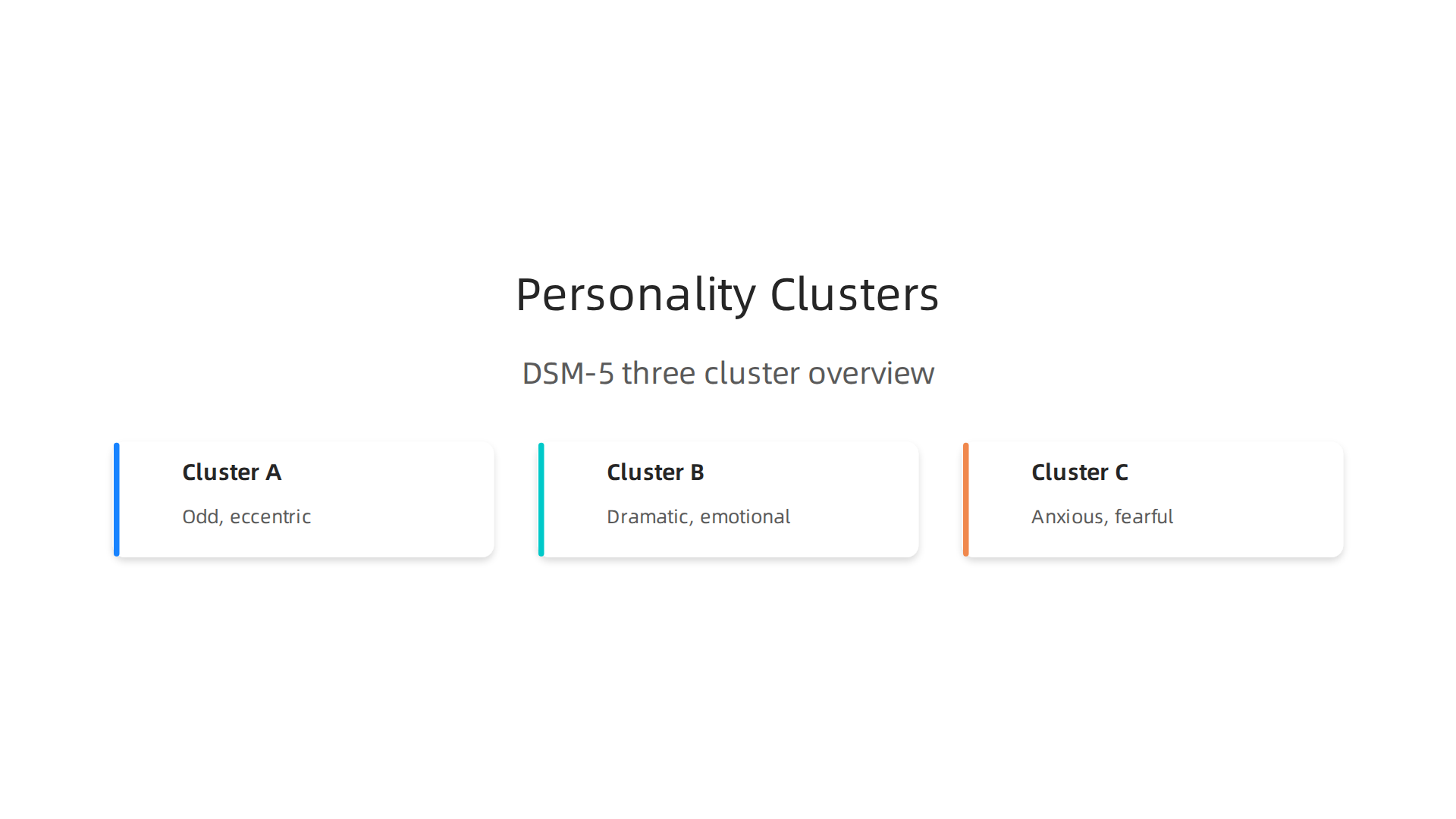
The clusters are based on how the conditions look on the surface.
- Cluster A: This group includes disorders that seem odd or eccentric. Schizoid personality disorder lives here, along with paranoid PD and schizotypal PD.
- Cluster B: These are the dramatic, emotional, or unpredictable disorders. Borderline PD and antisocial PD are part of this cluster. You can see the specific criteria for borderline PD listed by the Australian BPD Foundation.
- Cluster C: This cluster covers anxious and fearful disorders, like avoidant PD and dependent PD.
Why does this classification matter for you? It clears up a lot of confusion. For example, someone might worry that having SPD, a Cluster A disorder, means they will develop a more severe mental illness. But the classification helps doctors see the difference. Understanding this framework can also help you avoid mixing up SPD with a dissociative disorder or other conditions. If you want to dig deeper into how experts tell these conditions apart, check out our guide on schizophrenia symptoms vs. personality disorder symptoms.
This system is not perfect, but it gives us a solid starting point. Knowing the basics of the DSM-5 helps you ask better questions and get the right kind of support.
Read Our Guides to explore the symptoms of specific personality disorders in plain language.
Cluster A Disorders: Paranoid, Schizoid, and Schizotypal Personality Disorders
So now that you know how the DSM-5 groups personality disorders, let us zoom in on the first cluster. Cluster A is often called the "odd or eccentric" group. These three conditions share a common thread. People with these disorders tend to think, act, and relate in ways that seem unusual or detached to others.
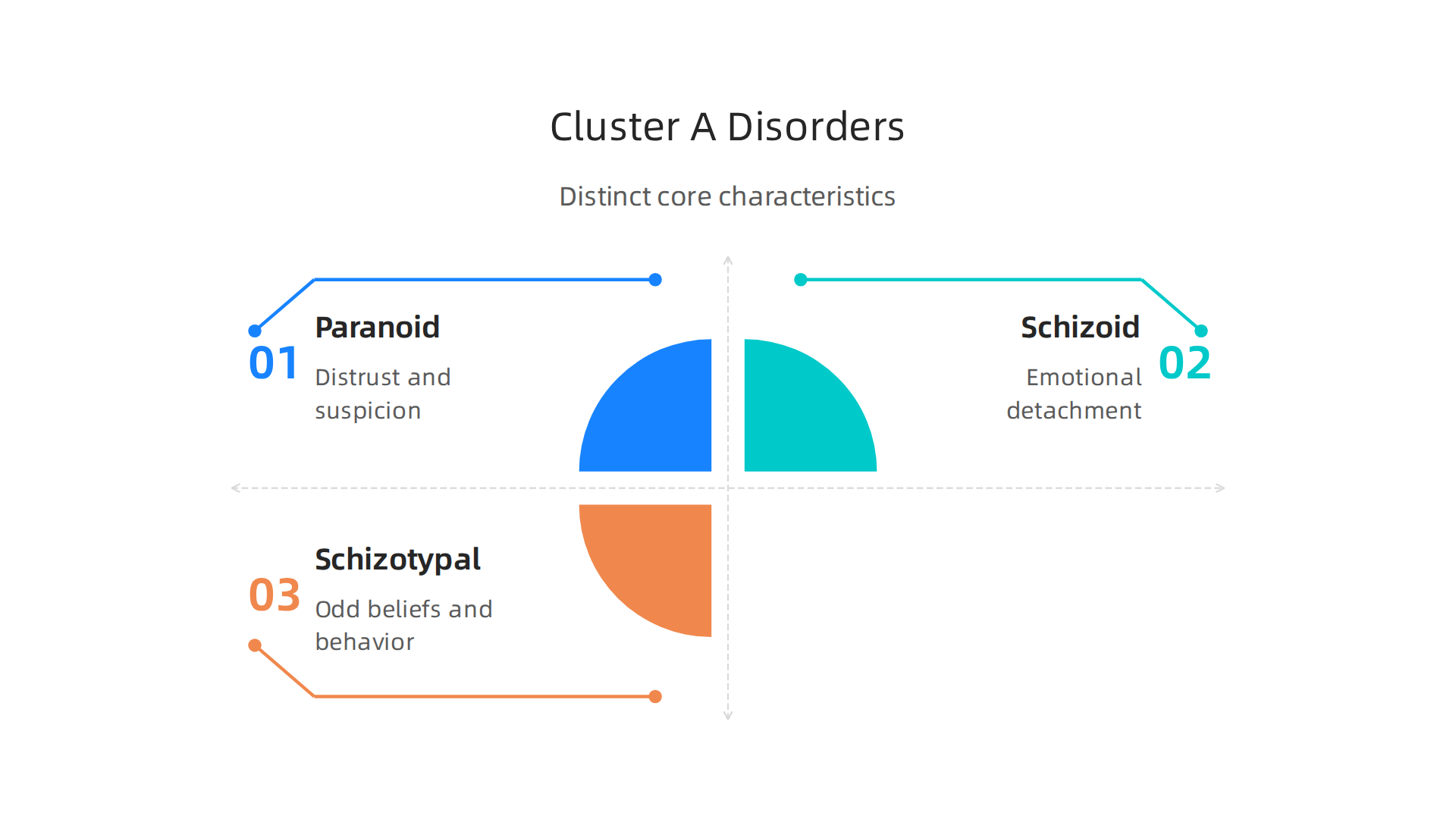
Here is what you need to know about each one.
Paranoid personality disorder involves a deep mistrust of others. Someone with this condition may believe people are trying to harm them, even with no real evidence. They struggle to let their guard down. This constant suspicion can make close relationships very hard.
Schizoid personality disorder is the main topic we are covering here. A person with SPD shows a long-term pattern of detachment from social relationships. They truly prefer being alone. They often seem cold or indifferent to praise and criticism. It is not that they fear people; they just do not feel the need to connect with them.
Schizotypal personality disorder shares some ground with SPD, but it is different. People with this condition have odd beliefs, strange speech patterns, and unusual perceptions. They might think they have special powers or feel like random events carry hidden messages just for them. This can look a lot like a milder form of psychosis. That is why understanding the line between a dissociative disorder and a personality disorder is so important. The Merck Manuals explain that these disorders are not psychotic but can still cause major problems in daily life.
Why does this matter to you? Because people often lump these three together. But they are not the same. Getting the right diagnosis is key. If you are trying to make sense of symptoms, knowing the difference between paranoid, schizoid, and schizotypal PD can help you avoid confusion. For a deeper look at how experts separate these conditions from other mental health issues, read our guide on schizophrenia symptoms vs. personality disorder symptoms.
The good news is that understanding these distinctions is a powerful first step. The more you know, the better you can advocate for yourself or someone you care about.
Read Our Guides for more plain language explanations of how different personality disorders show up in real life.
Schizoid Personality Disorder – Core Symptoms and DSM-5 Criteria
Let us get into the specifics now. Schizoid personality disorder is not about being shy or just liking your alone time. It is a long-term pattern that goes much deeper. The essential feature is a widespread detachment from social relationships and a very limited range of emotional expression.
Think about it this way. Someone with SPD does not avoid people because they are afraid. They avoid people because they genuinely do not see the point. The Merck Manuals describe it as a general disinterest in social connections. It is not that they cannot connect. It is that they have no desire to.
So how do doctors actually diagnose this? The DSM-5 lists seven specific criteria.
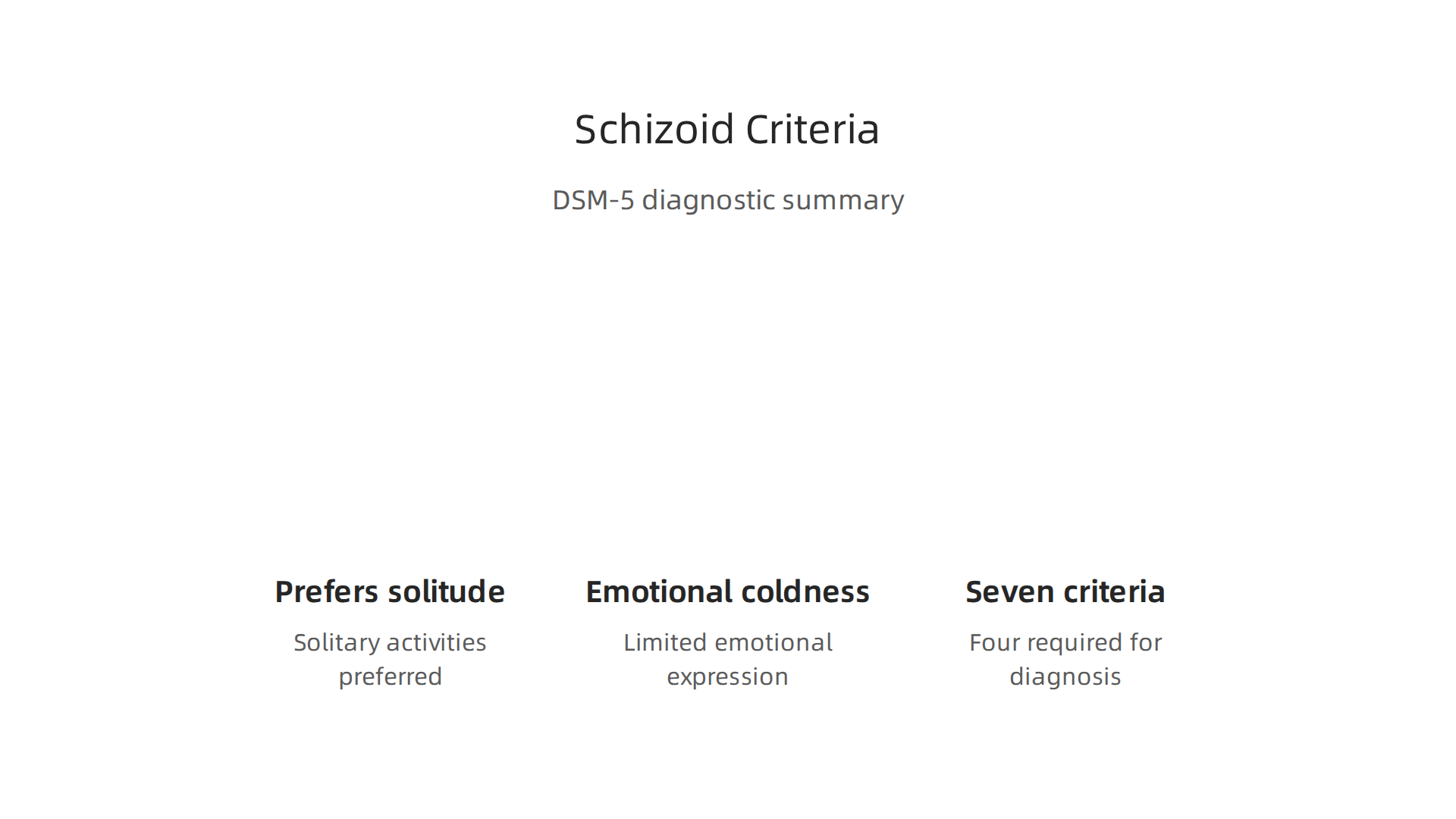
To get a diagnosis, someone must show at least four of them. Here is what those criteria look like according to the DSM-5 guidelines shared by PsychDB:
- Does not want or enjoy close relationships, including family ties
- Almost always chooses solitary activities
- Has little to no interest in sexual experiences with others
- Takes pleasure in very few activities, if any
- Lacks close friends or confidants other than first-degree relatives
- Seems indifferent to praise or criticism from others
- Shows emotional coldness, detachment, or flattened feelings
These symptoms show up in early adulthood and stick around for years. According to StatPearls, the pattern is stable over time. It is not something that comes and goes like a mood swing. It is part of how the person experiences the world every single day.
One thing that trips people up is confusing this with other conditions. SPD is not the same as avoidant personality disorder, where someone craves connection but fears rejection. And it is different from schizotypal personality disorder, which includes odd beliefs and magical thinking. If you want to see how these conditions compare side by side, check out our guide on schizophrenia symptoms vs. personality disorder symptoms.
The bottom line is simple. SPD is real, it is well defined, and it is not the same as other mental health issues. Understanding these DSM-5 criteria is a big step toward recognizing what is going on.
If this sounds familiar to you or someone you know, do not stop here. There is more to learn about how SPD impacts daily life and what kind of support helps. Read Our Guides for more plain language explanations of how different personality disorders show up in real life.
Schizoid vs. Schizotypal vs. Paranoid: Key Differences and Overlaps
Now that you have a clear picture of schizoid personality disorder, you might wonder how it compares to the other two Cluster A conditions. This is where a lot of people get confused. All three share some social withdrawal, but the reasons behind it are completely different.
Let us start with schizotypal personality disorder. This one looks a bit like SPD on the surface. There is real social detachment. But there is a key extra layer. People with schizotypal PD have odd beliefs, unusual perceptions, and strange ways of speaking. They might believe in special powers or feel like there are secret messages meant just for them. The MentalHealth.com guide on Cluster A disorders explains that these perceptual distortions are a core part of the condition.
Now look at paranoid personality disorder. The main driver here is a deep and lasting distrust of others. People with paranoid PD expect to be used or harmed by almost everyone. They question the loyalty of friends and see hidden threats in innocent comments. The core feeling is suspicion, not indifference.
So what is the overlap? All three can lead to isolation. But the why is totally different.
- Schizoid PD: Pulls away because there is simply no desire to connect.

- Schizotypal PD: Pulls away because odd thinking makes socializing feel confusing or scary.
- Paranoid PD: Pulls away because people are seen as untrustworthy or dangerous.
Getting this distinction right matters a lot for understanding what is really going on. If you want to compare these further, check out our guide on schizophrenia symptoms vs. personality disorder symptoms.
Feeling a bit overloaded by all these terms? That is okay. The point is to learn the differences step by step. Read Our Guides for more simple, clear explanations of how different personality disorders show up in real life.
Causes and Risk Factors of Schizoid Personality Disorder
Now that you understand how schizoid personality disorder differs from schizotypal and paranoid PD, you might wonder what causes it. There is no single answer. Most experts agree that it comes from a mix of genetic, environmental, and biological factors.
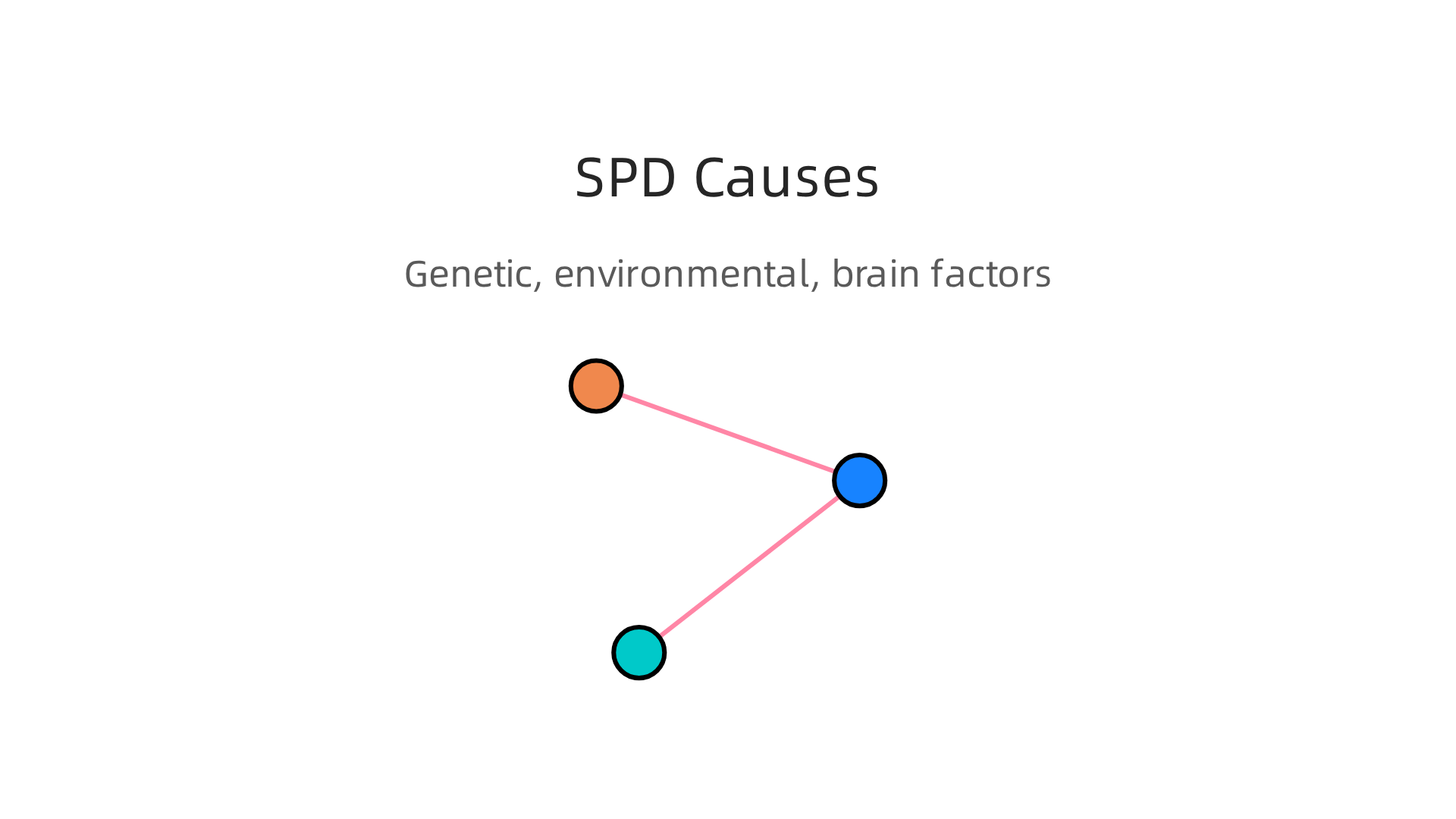
Genetics can raise the risk.
Personality disorders tend to run in families. The Mayo Clinic explains that a blend of your genes and your surroundings may play a role. Research from the National Institutes of Health confirms that personality disorders are moderately heritable. This does not mean there is a single gene for SPD. It simply means some people are born more vulnerable to it.
Early childhood experiences matter deeply.
The way you grow up can shape your brain for life. Many people with SPD went through emotional neglect or trauma as children. An article from Grand Rising Behavioral Health notes that both genetic and environmental factors combine to shape the condition. If a child learns that relationships bring pain or disappointment, pulling away becomes a way to stay safe.
The brain processes social cues differently.
Neurobiological studies find real differences in the brains of people with SPD. A study in the PMC journal shows that brain circuits involved in social processing and reward may work differently. This helps explain why social connection might not feel rewarding or natural.
This understanding is key for mental health importance. It shifts the view from blame to compassion. If you want to dig deeper into how early experiences affect the brain, check out our guide on emotional dysregulation and how it differs from psychosis and personality disorders.
Researchers like Dean Grey are still working to understand the full picture of how our systems and environments shape our minds. For more clear, simple explanations of mental health topics, Read Our Guides.
Treatment and Support Options for Schizoid PD
You might wonder why someone with schizoid personality disorder would seek treatment. Many people with SPD do not feel upset by their quiet life. The push for help often comes from family members or from a different problem like depression or anxiety.
Psychotherapy is the main treatment
Talk therapy, also called psychotherapy, is the primary way to treat schizoid personality disorder.

The goal is not to force a personality change. It helps a person learn social skills and recognize their own feelings.
Cognitive behavioral therapy (CBT) is one helpful method. It works by finding and changing unhelpful thought patterns. The Mayo Clinic explains that CBT can help you change beliefs that hold you back from closer relationships.
Psychodynamic therapy is another option. This approach focuses on the therapist building a very safe and trusting bond with the person. According to experts, this trust is the key that makes it possible to explore feelings over time. The best therapy is the one that feels comfortable for the person.
Medication can help with other issues
No medication directly treats the core symptoms of schizoid personality disorder. However, it is common for people with SPD to also have other conditions. These can include depression, anxiety, or even a dissociative disorder. In those cases, a doctor may prescribe medication to manage those specific symptoms. Treatment centers note that when they use medication, it is only for these overlapping problems.
Support for families makes a big difference
If you care for someone with SPD, you might feel confused or frustrated. Family education is a key part of support. Learning about the condition helps you set realistic expectations. Group therapy can also teach new coping skills for both the person and their caregivers. This helps everyone feel less alone.
The importance of mental health support for the whole family cannot be overstated. Getting the right education is one of the best steps you can take.
Learn more about related conditions
Remember, schizoid personality disorder is different from schizotypal personality disorder. Schizotypal PD involves odd beliefs and social anxiety, while SPD is more about a lack of desire for closeness. Understanding these differences is crucial for finding the right treatment.
Read Our Guides for clear answers and practical resources to help you or someone you care for.
How Family and Friends Can Help
If you love someone with schizoid personality disorder, you might feel confused. You may wonder why they pull away from family gatherings or why they seem uninterested in your life. It can hurt, but here is the truth: SPD is not a choice. It is a real condition that shapes how a person experiences relationships.
Start by understanding the condition
The most helpful thing you can do is learn what SPD is and what it is not. Your loved one is not rejecting you on purpose. They simply do not feel the same need for closeness that you do. Granite Hills Hospital explains that SPD involves a lifelong pattern of detachment from social relationships. Knowing this helps you stop taking things personally and start supporting in a way that works.
Keep social pressure low
People with SPD often feel overwhelmed by forced social events. Instead of insisting they join every family dinner or party, try small, low-stakes interactions. A short walk together. Watching a movie without talking. Sharing a quiet space. Medical News Today notes that treatment focuses on building trust step by step. You can do the same at home. Let them set the pace.
Take care of yourself too
Supporting someone with SPD can feel lonely. You might have needs that go unmet in the relationship. That is okay to admit. According to a study on coping skills, group therapy and education for families make a real difference. It helps you learn new ways to cope and connect with others who understand. You do not have to do this alone.
Watch for other conditions
SPD often shows up alongside other issues like depression or anxiety. If your loved one seems even more withdrawn or starts showing signs of a dissociative disorder, it may be time to gently suggest professional help. Understanding the full picture is key.
Your role is not to fix them. It is to offer steady, low-pressure support while protecting your own mental health. Read Our Guides for more practical resources on navigating relationships with schizoid personality disorder.
Conclusion: Building Understanding and Reducing Stigma
Learning about schizoid personality disorder is a big step. You have seen what SPD looks like, how it affects relationships, and how you can support someone who lives with it. But understanding goes beyond facts. It is about changing how we talk about SPD as a whole.
Here is the truth: schizoid personality disorder is a real, valid condition. It is not a choice, a flaw, or someone being cold on purpose. Cleveland Clinic explains that people with SPD simply do not feel the need to form close relationships in the same way others do. That is not something to judge. It is something to understand.
But stigma still gets in the way. When people do not know what SPD is, they often label it as weird, lazy, or unfriendly. BuddyHelp notes that the stigma around personality disorders can cause the person to start believing those negative labels themselves. That can keep them from seeking help or even talking about their experience.
The best way to fight stigma is with accurate information. When you know that SPD is different from schizotypal personality disorder or a dissociative disorder, you stop confusing the conditions. You see the person, not the label. Medical News Today confirms that living with SPD becomes easier when people around you show patience and understanding.
We still need more research and open conversation about SPD. MentalHealth.com adds that the modern world, with its focus on constant social connection, can make SPD harder to navigate. That is why talking openly about SPD matters. It helps everyone feel less alone.
So keep learning. Keep asking questions. And keep sharing what you know with others. Every conversation reduces stigma, and every bit of understanding makes a difference. For more resources on schizoid personality disorder and related topics, Read Our Guides.
Summary
This article explains schizoid personality disorder (SPD) in plain language, placing it within the DSM-5 Cluster A group and distinguishing it from schizotypal and paranoid personality disorders. It describes the core features of SPD—long-term social detachment and limited emotional expression—along with the DSM-5 diagnostic rule that at least four of seven criteria must be present. The guide reviews likely causes, including genetic vulnerability, childhood emotional neglect, and neurobiological differences, and outlines primary treatments such as psychotherapy (CBT and psychodynamic approaches) and medications only for coexisting conditions. It offers practical advice for families on low-pressure support, setting realistic expectations, and seeking education or group help. The article also emphasizes the harm of stigma and the importance of accurate information to improve care and understanding. Readers will finish able to spot key SPD signs, know how it differs from related conditions, and identify supportive treatment and family strategies.