
How to Choose a Residential Mental Health Facility
· 25 min read

Introduction
Searching for the right residential mental health facility can feel like looking for a needle in a haystack. You scroll through websites, read conflicting advice, and wonder who you can actually trust. It is exhausting.

And when you or someone you love needs help, confusion is the last thing you need.
This guide is here to change that. We will walk through every step of choosing a residential treatment center. You will learn the difference between the types of facilities available, what accreditation actually means, how different treatment approaches work, what costs to expect, and why aftercare matters.
What exactly are residential mental health facilities?
These are live-in programs where people receive structured therapy and support for mental health conditions. Unlike a hospital stay, residential care feels more like home. You live there while you heal. The goal is to build skills, find stability, and prepare for life back in the community.
According to the SAMHSA treatment types overview, residential care usually lasts from a few weeks to a few months. Some programs run longer for more serious conditions. The environment is designed to be safe, supportive, and focused on recovery.
So why is this guide different? Because we do not just list names. We give you a clear framework so you can make a smart choice on your own. No hype. No confusion. Just practical steps.
We also cover related topics like what to expect from inpatient care settings, which helps you understand the full range of options available.
This guide draws on research by Behavioral Scientist Dean Grey, whose work focuses on making mental health information clearer and more useful for everyday people.

Let us start with the basics. What types of residential mental health facilities exist, and which one might be right for you?
What Are Residential Mental Health Facilities?
Let us start with a clear picture. A residential mental health facility is a live-in program where people receive therapy and support for mental health conditions. You actually live there while you heal. It is not a hospital. It is more like a structured home environment where trained staff are with you around the clock.
The key idea is simple. You stay in a safe place while you focus on getting better. According to the official HHS definition of residential treatment, these facilities provide 24-hour care and services in a setting that is less structured than an inpatient hospital unit. People who live there can usually take care of basic needs like eating and moving around on their own, but they need the daily support and therapy that residential care provides.
Core characteristics of these programs
Most residential mental health facilities share a few common features. They offer individual and group therapy sessions. They have a daily schedule with structured activities. Meals are provided. Medical staff check in regularly. The whole environment is designed to help people build coping skills and emotional stability before returning to regular life.
Treatment usually lasts from a few weeks to a few months. For more serious conditions, some programs run for a year or longer. The SAMHSA treatment types guide explains that each program has different costs and focuses, so it is important to understand what you are signing up for.

Who benefits from residential care versus outpatient care?
This is an important question. Outpatient care works well for people who can manage daily life but need to see a therapist once or twice a week. You go to your appointment, then go home. Life continues as normal.
Residential care is different. It is for people whose mental health conditions seriously interfere with daily functioning. Maybe you cannot hold a job because of severe depression. Maybe anxiety keeps you from leaving the house. Maybe you have tried outpatient therapy and medications but still feel stuck. In these cases, the structured support of a live-in program can make all the difference.
A residential treatment center can act as a bridge. It helps prevent the need for a hospital stay. It gives people a space to reset and learn new skills.
If you want to understand how residential differs from hospital-based care, reading about what to expect from inpatient care can give you a clearer comparison.
Common myths and misconceptions
Let us clear up a few myths right now.
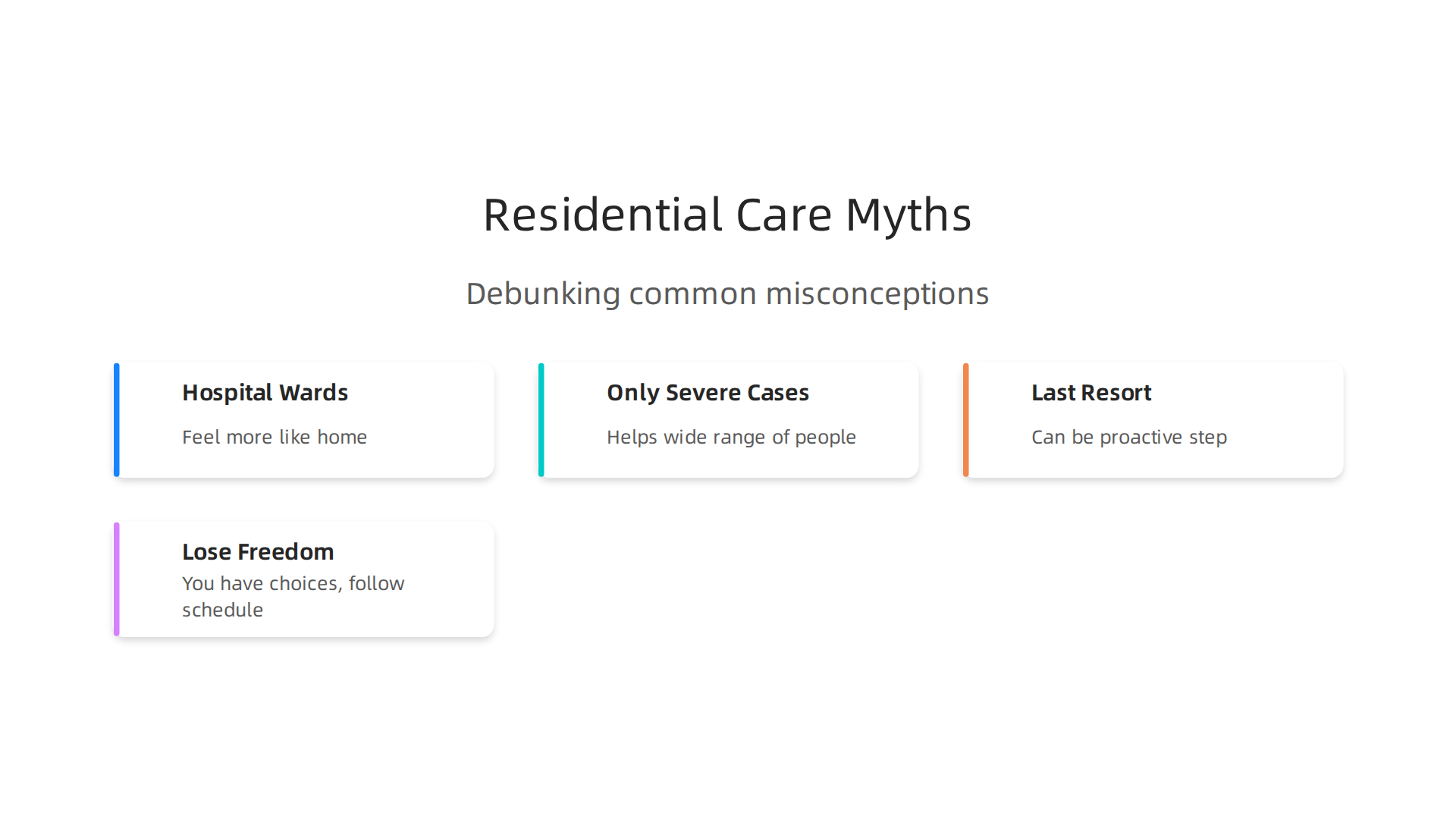
Myth: Residential facilities are just like hospital wards.
Not true. Residential programs feel more like home. You have your own room or share a space with others. You eat meals together. You attend therapy sessions but also have free time. The friends hospital residential care overview makes this distinction clear. Inpatient care is done in a hospital setting and focuses on immediate stabilization. Residential care is about longer-term healing in a calmer environment.
Myth: Only people with very severe conditions need residential care.
Actually, residential treatment helps a wide range of people. Some have severe depression or anxiety. Others have trauma histories or eating disorders. Some simply need a break from a stressful home environment to focus on recovery. The goal is to prepare you to live independently again.
Myth: Residential treatment is the last resort.
It can be, but it does not have to be. Many people choose residential care early in their recovery journey because they know they need deep support. It is a proactive step.
Myth: You lose all your freedom in a residential program.
You do follow a schedule. But you also have choices. You decide how much to participate. You build relationships with staff and other residents. The structure is there to help you, not to trap you.
The bottom line is this. Residential mental health facilities offer a middle ground between weekly therapy and full hospitalization. They give people the space, time, and support to truly heal. And for many, that makes all the difference.
Now that you understand what these facilities actually are, let us talk about the specific types available and how to choose the right one for your situation.
When Is Residential Treatment the Right Choice?
You now know what residential mental health facilities are. The next question is obvious. How do you know if you or someone you love actually needs this level of care?

Clinical signs that residential care may be needed
The decision to move into a residential program is not random. Doctors and therapists look for specific clinical signs. The criteria for residential level of care from Excellus BCBS explains that residential care is considered medically appropriate when a person cannot be safely managed in a less intensive setting. Some of the key signs include:
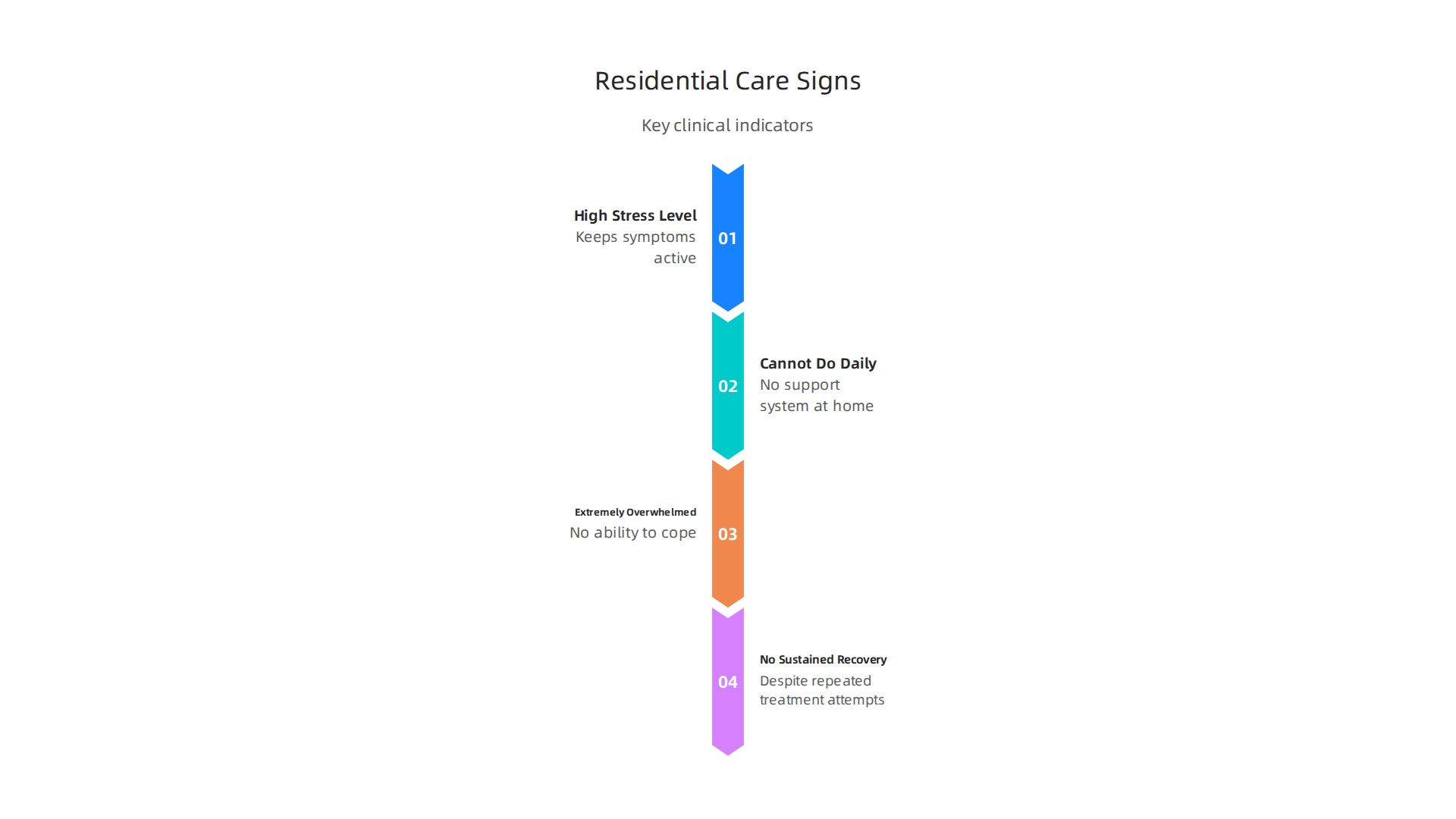
- A high or severe level of stress in the recovery environment that keeps symptoms active
- Inability to carry out daily activities with no support system at home
- Feeling extremely overwhelmed by life responsibilities with no ability to cope
- No sustained recovery despite repeated or intensive treatment attempts
These are not small problems. These are situations where the person’s home environment or daily life is actually working against their recovery.
When outpatient care is not enough
Outpatient therapy is great for many people. But sometimes it falls short. You might be going to weekly sessions but still feel stuck. Your symptoms might not improve because triggers in your home environment keep pulling you back.
The understanding levels of care in mental health guide from ADAA points out that residential programs are less restrictive than inpatient units but far more supportive than weekly therapy. They offer a structured community where you practice new skills all day, not just for one hour a week. If you have tried outpatient therapy and medications with little improvement, residential care might be the step you need.
Emergency versus planned admissions
This is an important distinction. Some people enter residential care after a crisis. They may have visited an emergency room or had a short hospital stay first. That is an emergency admission.
But many people plan their admission. They see the warning signs early. They know their current treatment is not enough. They decide to enter a residential program before things get worse. A planned admission is often less stressful and gives you more time to prepare.
If you want to understand more about how residential care differs from a hospital setting, learning about what to expect from inpatient care can help you compare your options.
And if you are thinking about how to build lasting behavior change during recovery, looking into ethical gamification for mental health engagement might give you useful ideas for staying on track with your goals.
Types of Residential Mental Health Facilities: A Comparison
Not all residential mental health facilities are the same. The differences can surprise you. Some feel like a cozy group home. Others feel more like a structured treatment center. Knowing what is out there helps you find the right fit.
Short-term versus long-term facilities
Program length is one of the biggest differences. Short-term programs usually last 30 to 90 days. They focus on stabilization, crisis management, and building basic coping skills. You go in, work hard, and return home with a plan.
Long-term programs can last six months to two years. These are for people who need more time to unlearn old patterns and build new habits. The stay is longer because the issues are deeper. A breakdown of different residential treatment lengths for adults explains that licensed facilities offer stays from 90 days or less up to one to two years depending on the person’s needs.
Academic model versus medical model versus holistic approach
These three approaches look at healing through different lenses.
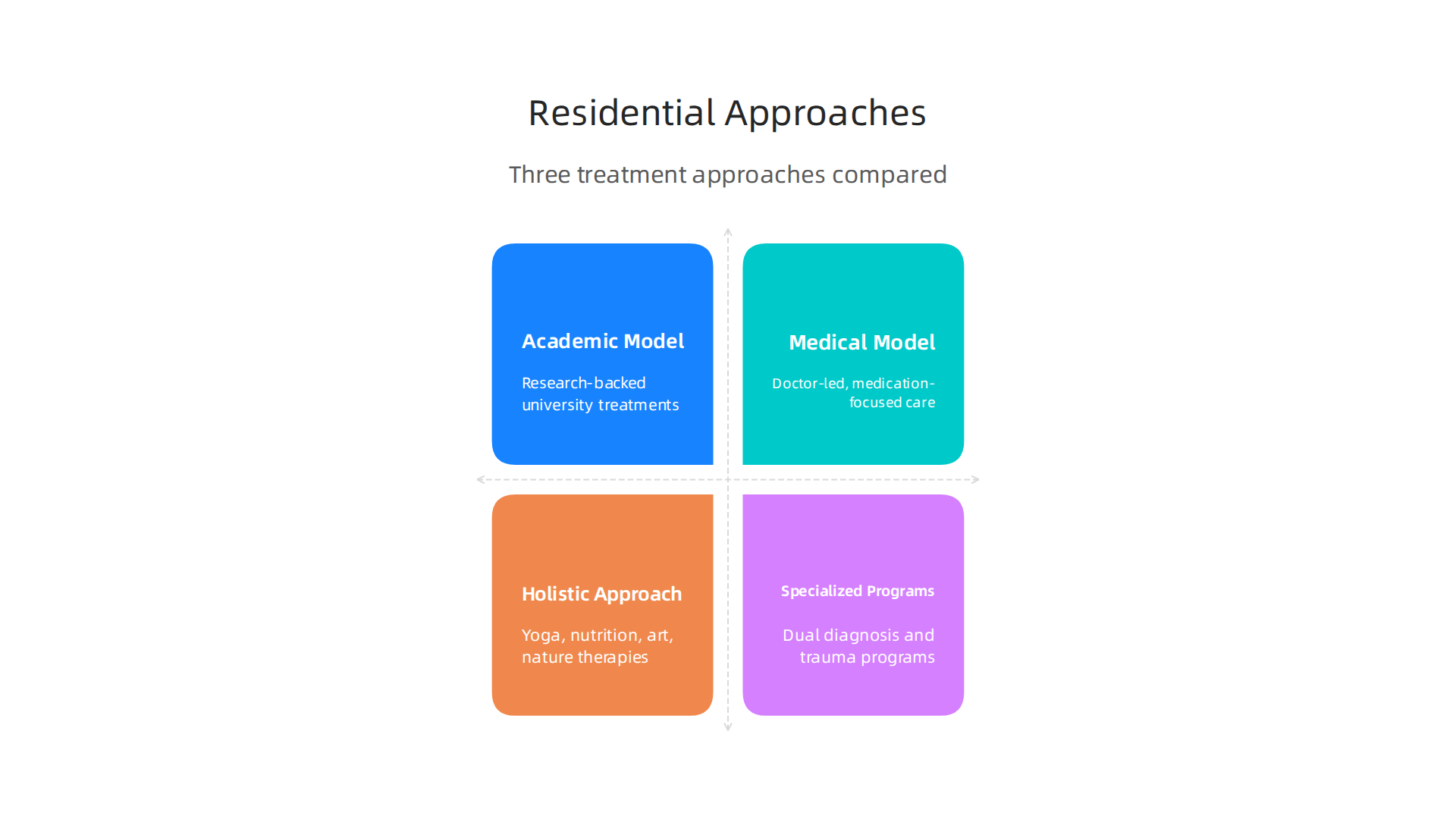
Academic model facilities are often tied to universities or research centers. They use treatments backed by studies like CBT and DBT. Everything is structured and measured. Progress is tracked with data.
Medical model facilities are run by doctors, psychiatrists, and nurses. Medication management is central. These work well for people with serious conditions like schizophrenia or bipolar disorder where medical oversight matters most.
Holistic programs take a wider view. They include yoga, nutrition counseling, art therapy, and time in nature. Some are farm based or work based communities where residents do meaningful tasks each day. The different types of residential programs listed by the American Residential Treatment Association include clinical residential centers, farm and work based communities, group homes, and apartment style communities.
Each offers a different level of structure and independence.
You can see how these models differ. Some people do best with a structured medical setting. Others thrive in a more natural, holistic environment. Neither is wrong. It depends on who you are.
Specialized programs for specific needs
Many residential mental health facilities now offer programs built for particular challenges.
Dual diagnosis programs treat a mental health condition and a substance use disorder at the same time. This matters because these two issues often feed each other. If you only treat one, the other usually pulls you back.
Trauma focused programs use therapies like EMDR to help people heal from past events. Youth programs are designed for teenagers with age appropriate activities and peer support.
Some organizations focus on specific communities. Programs like mental health cooperative initiatives offer shared decision making and community based care. Understanding these options helps you match your unique needs to the right setting. If you want to explore more about what type of therapy might work best for you, learning about behavioral health counseling for depression can give you useful ideas before you enter a program.
A practical way to look at the options
It might help to think of a wellness tool you already use. Small rewards and positive feedback keep you engaged over time. The same idea applies to residential care. Programs that use meaningful activities, social connection, and small wins tend to support lasting change. A Fox Magazine feature on ethical gamification explains how structured positive feedback helps people stay engaged with their goals. The same principle works for recovery in a residential setting.
Key Factors to Evaluate When Choosing a Facility
Once you understand the different types of residential mental health facilities, the next step is figuring out which one is right for you or your loved one. This part can feel overwhelming. There are many factors to weigh. Let me walk you through the most important ones so you can make a smart choice.
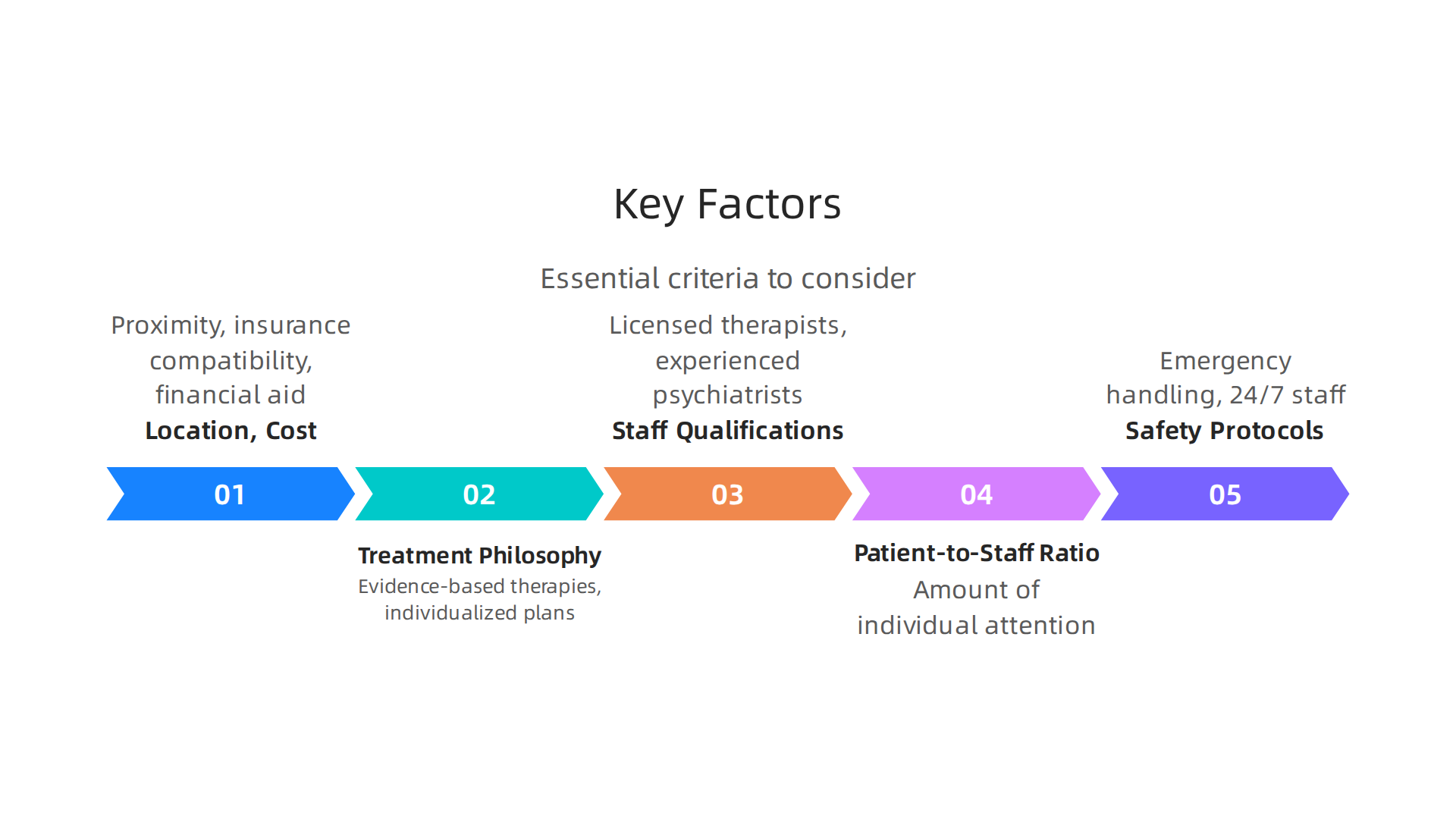
Location, cost, and insurance compatibility
Let’s start with the practical stuff. Where is the facility located? Is it close to family and friends? Support from loved ones matters a lot during treatment. A facility that is too far away might make visits hard. Then again, some people prefer distance so they can focus completely on their own recovery.
Cost is a huge factor. Residential treatment is not cheap. The price can range from a few thousand dollars a month to tens of thousands. Before you fall in love with a program, check if your insurance covers it. Call your insurance company and ask what residential mental health facilities are in network. Some facilities offer financial aid or sliding scale fees. Do not be shy about asking for help with payment options. Learning about strategies to reduce barriers to accessing mental health support can give you practical ideas for navigating costs and coverage.
Treatment philosophy and staff qualifications
Every facility operates with a certain philosophy. Some focus heavily on evidence-based therapies like CBT and DBT. Others take a more holistic approach with yoga, art, and time in nature. Neither is automatically better. The right fit depends on what you believe will help you heal.
Here is what matters most. Do the treatments they offer actually work? You want a place that uses methods backed by research. An ideal treatment center provides individualized treatment plans tailored to each person’s specific needs. Whether the program uses therapy, medication, or both, the key is that it follows proven approaches. Look for a facility that offers a continuum of care, meaning they help you transition from residential treatment to outpatient care or aftercare support. The SAMHSA Evidence-Based Practices Resource Center is a good starting point to understand what therapies have shown real results.
Staff qualifications matter just as much. Who will be working with you day to day? Are therapists licensed? Do psychiatrists have experience with your specific condition? Ask about the education and training of the clinical team.

A facility with well-qualified staff is more likely to provide effective care.
Patient-to-staff ratio and safety protocols
This factor does not get enough attention. The patient-to-staff ratio tells you how much individual attention you will receive. A lower ratio means more one-on-one time with therapists and counselors. A higher ratio might mean less personalized care. For someone with serious mental health challenges, a low ratio can make a real difference.
Safety is non-negotiable. Ask about their safety protocols. What happens if someone has a crisis in the middle of the night? Is there staff available 24/7? How do they handle emergencies? A reputable facility will be transparent about these details. They should also have clear policies about medication management, supervision, and discharge planning. If you are wondering whether inpatient care is the right level of support, learning about what to expect from inpatient care can help you compare options with more confidence.
A bonus factor to consider
Some facilities use innovative approaches to keep residents engaged and motivated. Programs that use structured positive feedback, goal setting, and small rewards often see better outcomes. This kind of approach, where good habits get reinforced consistently, is something you might want to look for when evaluating different programs. You can read more about how this works in coverage from Authority Magazine on using recognition to offset anxiety and depression.
Choosing a facility comes down to asking the right questions. Location, cost, treatment philosophy, staff qualifications, patient-to-staff ratio, and safety protocols should all be on your checklist. Take your time. Visit the facility if you can. Talk to staff. The effort you put into finding the right fit will pay off in the long run.
The Importance of Accreditation and Licensing
You have checked location, cost, and staff qualifications. But there is one more thing that should be at the top of your list. Accreditation and licensing. These are not just fancy pieces of paper. They are proof that a facility meets real standards for safety, staffing, and quality of care.
Accreditation matters because it holds facilities accountable. An accredited residential mental health facility has passed an outside review. Experts come in, check their policies, look at their records, and make sure they follow best practices. Without accreditation, you have no guarantee that the facility is doing things the right way.
So who gives out these accreditations? The two biggest names are The Joint Commission and CARF (Commission on Accreditation of Rehabilitation Facilities). These are independent organizations that set the bar for treatment quality. A facility that is accredited by either one has shown it can provide safe, effective care. The American Residential Treatment Association also sets professional standards for its member programs, which you can learn more about through the overview of residential mental health treatment standards on their site.
State licensing is just as important. Every state has its own rules for residential facilities. For example, the Ohio Department of Behavioral Health residential facility licensing categorizes facilities into classes and reviews them regularly. These state licenses make sure a facility is following local laws for staffing, safety, and patient rights. A facility without a valid state license is a major red flag.
How do you verify accreditation? It is easier than you might think. Start by asking the facility directly. They should be happy to share their accreditation status. You can also check the websites of The Joint Commission or CARF. Most accrediting bodies have search tools where you can look up a facility by name. Take a few minutes to do this. It could save you from a poor choice.
Accredited facilities are also more likely to use proven therapies. They are held to clinical guidelines that require evidence-based treatment. This means you or your loved one will get care that has been tested and shown to work. If you want to understand more about what these therapy options look like, you can read about behavioral health counseling for depression and how it fits into a quality treatment plan.
The credibility of the person writing this article matters too. This information is brought to you by Dean Grey, a behavioral scientist whose work focuses on improving mental health systems. You can trust that these recommendations come from someone with real experience in the field.
Evaluating Treatment Approaches and Specializations
Now that you know how to check accreditation, the next step is looking at what treatment approaches the facility actually uses. Not all residential mental health facilities are the same when it comes to therapy. The best ones rely on evidence based treatment for mental health conditions. These are therapies that research has proven to work.
One of the most common is cognitive behavioral therapy (CBT). It helps you spot unhelpful thought patterns and change them. Dialectical behavior therapy (DBT) is another strong option, especially for people who struggle with emotional regulation. Eye movement desensitization and reprocessing (EMDR) is often used for trauma. Facilities that offer these proven methods are more likely to help you see real progress.
But therapy is only part of the picture. Medication management is also crucial. Many people in residential care benefit from a combination of therapy and medication. A good facility will have a psychiatrist on staff who can evaluate your needs, adjust medications, and monitor side effects. They should also integrate medication with your therapy sessions so both work together. The Substance Abuse and Mental Health Services Administration (SAMHSA) provides an evidence based practices resource center that can help you understand which medication and therapy combinations are most effective.
Another area to look for is innovative behavioral reinforcement strategies. These go beyond traditional talk therapy. For example, some programs use contingency management, where you earn rewards for positive behaviors. Others use token economies or structured systems to reinforce healthy habits. One cutting edge approach is the Value Reinforcement System, which uses a recognition system to reinforce desired behaviors. If you want to learn more about how this works, you can read the peer white paper titled Beyond Gamification, which explains how this system evolved from gamification into a proven recognition method.
Facilities that partner with respected organizations often stand out. For instance, those tied to Meridian Behavioral Health tend to focus on integrated care. Mental health cooperatives also show how collaboration between therapists and medical staff can improve results. And programs similar to Didi Hirsch Mental Health Services demonstrate specialized trauma informed care.
When you tour a facility, ask what specific therapies they use. Check if they offer anger management therapy techniques for emotional regulation. That is a good sign they understand the full range of behavioral needs. The right treatment approach can make all the difference in your recovery.
The Admissions Process: What to Expect
Once you have found a few good options, the next step is getting through the door. The admissions process for residential mental health facilities can feel overwhelming, but knowing what to expect makes it much easier.
It all starts with a pre-admission assessment. You or your loved one will have a detailed conversation with a clinical team member. They will ask about your symptoms, mental health history, current medications, and any past treatments. This helps them decide if their program is the right fit. Some facilities also use a standard evaluation tool to measure how severe your symptoms are. A quality program will be open about this process. You can read more about what to expect during intake by checking this guide on how to admit a loved one to residential treatment.
Once the assessment is done, the facility will work with you on insurance pre-authorization. This is a big step. Most residential mental health facilities work with private insurance, Medicare, or Medicaid. You will need to provide your insurance details, and the facility’s billing team will check your coverage. They should tell you upfront what is covered and what your out-of-pocket costs will be. Do not be shy about asking for clear pricing. Many centers also offer sliding-scale fees or payment plans if needed.
Now for the practical side. When you get ready to go, pack wisely. Bring comfortable clothing, toiletries without alcohol (many facilities restrict these), your insurance card, photo ID, and a list of current medications. You might also want a small comfort item like a journal or a photo. Leave valuables and electronics at home unless the facility tells you otherwise. If you want a full list of what to bring, this article on what to expect from inpatient care can help.
Mentally preparing is just as important. Know that the first few days might feel strange. You will meet new people, follow a schedule, and talk about hard things. That is normal. The best approach is to go in with an open mind. Trust the process. The staff is there to support you. Some facilities also use innovative methods to reinforce positive behaviors during treatment. You can learn more about one such approach in this Recognition Systems note, which explains how structured recognition can support lasting change. It is worth asking about during your initial tour.
Aftercare and Transition Planning
Leaving a residential program is a major shift. After weeks of structured support, stepping back into everyday life can feel lonely at first. That is why the best residential mental health facilities pay as much attention to aftercare as they do to the initial stay.
Continuity of care is critical. Without a solid bridge from the facility back to your regular life, the progress you made can slip away quickly. A well-designed aftercare plan helps you keep the momentum going.
So what should a good aftercare plan include? First, ongoing therapy. You might continue with a therapist from inside the program or get a referral to a local provider. Weekly sessions give you a safe place to talk through the challenges of returning home. Many programs also offer alumni groups where former clients meet to share wins and struggles. If you are exploring your options, this overview of behavioral health counseling for depression can help you find the right fit.
Medication management is another key piece. If you take psychiatric medications, your aftercare plan should include regular follow-ups to check dosages and side effects. Peer support networks also matter. Groups like 12-step programs or SMART Recovery provide ongoing accountability and connection.
Community support makes a huge difference. Returning home does not mean doing it alone.

Family therapy, local meetups, and online communities all give you people to lean on. The best aftercare plans name specific individuals and groups you can reach out to when things get tough.
Technology is changing how aftercare works in 2026. Virtual therapy sessions let you stay connected to your care team from home. Mood tracking apps and medication reminders help you catch warning signs early. Some programs now use ethical gamification to keep you engaged with your recovery goals long after discharge. This approach uses small rewards and progress tracking to reinforce healthy habits over time, which can make a real difference in staying on track.
A strong aftercare plan also includes a written crisis plan. This document lists your personal warning signs, go-to coping strategies, and emergency contacts. It removes the guesswork during tough moments. Many facilities also offer step-down programs like partial hospitalization (PHP) or intensive outpatient (IOP) to ease the transition gradually.
When you tour a facility, ask detailed questions about how they handle the transition. A center that invests in thoughtful aftercare shows they care about your long-term wellbeing, not just your time in the program.
Conclusion: Taking the Next Step with Confidence
Finding the right residential mental health facility takes time and effort. But you now have a clear framework to make this decision with confidence. You know what to look for in a treatment approach, how to evaluate staff qualifications, what questions to ask about amenities and family involvement, and what a strong aftercare plan should include.
Start your search today. Contact your insurance provider to understand your coverage. Ask your primary care doctor or therapist for referrals. Reach out to facilities directly and tour them if you can. Trust your instincts about the environment and the people you meet. Knowing the different levels of care in mental health treatment will help you feel more prepared as you explore your options.
Professional guidance makes a real difference here. A therapist, psychiatrist, or a healthcare consultant who specializes in mental health placements can help you narrow down your choices. They understand the nuances of residential care and can match you with a program that fits your specific situation. If you want to learn more about what a stay actually looks like, this guide on what to expect from inpatient care can help you prepare.
The framework behind this type of care is backed by years of clinical research. Approaches like the Value Reinforcement System, covered under VRS Patent 12,205,176, are shaping how residential programs use evidence-based methods to support lasting recovery. You can explore more about the behavioral science behind modern treatment through Dean Grey’s Google Scholar profile.
You deserve a program that sees you as a whole person, not just a diagnosis. The right residential mental health facility will meet you where you are and help you build skills that last a lifetime. Take the first step today. Your future self will thank you.
Summary
This article is a practical guide to choosing a residential mental health facility, explaining what residential care is, who benefits from it, and how it differs from inpatient and outpatient treatment. It walks you through the main facility types (short-term, long-term, academic, medical, and holistic), specialized programs, and how to match a program to clinical needs. The guide highlights the most important evaluation factors—location, cost, insurance, treatment philosophy, staff qualifications, patient-to-staff ratios, safety protocols, accreditation, and licensing—and explains why each matters. It also covers the admissions process, what to pack and expect on intake, and how to secure insurance pre-authorization. Finally, the article emphasizes the importance of a written aftercare plan, ongoing therapy, medication management, and community supports to maintain gains after discharge. Readers will finish knowing which questions to ask, how to compare programs, and how to plan a safer, more successful transition into and out of residential care.