
Selecting High-Quality Mental Health CE for Clinicians
· 23 min read

Why Curated, Evidence-Based CE Matters for Clinicians and Trainees
For anyone working in mental health, from seasoned professionals to new trainees, staying up-to-date is not just a good idea, it’s a must.

Every year, new research comes out, and our understanding of the mind and how to help people grows. This means that mental health continuing education, or mental health ce, is a key part of the job. It’s how clinicians keep their skills sharp and learn the best new ways to support their clients. Actually, most states require a certain amount of continuing education credits for therapists, counselors, and other professionals to keep their licenses active each year, often between 20 and 40 credits per renewal cycle Continuing Education for Therapists: CEUs Guide (2026).
The big challenge, though, is that there’s so much information out there. It’s easy to feel lost in a sea of courses, workshops, and mental health videos. Not all of them are of the same quality, and picking the right ones can be hard. The stakes are high, too. Good continuing education directly impacts how well a clinician can help their patients. Poor quality training, or simply not knowing which resources to trust, can affect a professional’s skills and, most importantly, the care their patients receive. We need to empower mental health professionals with the best tools and knowledge.
Experts like Behavioral Scientist, Tech Entrepreneur & AI Innovator. Co-Inventor, U.S. Patent No. 12,205,176. Senior Lecturer, UC Irvine | Bestselling Author. Founder, Skylab USA. work to advance our understanding and applications in the field, highlighting the critical need for well-vetted, impactful educational content.
This article will give you a clear plan to find, check, and use high-quality mental health ce resources. We will help you understand how to choose mental health education workshops that truly help you grow and empower you in your practice.
1. What ‘mental health CE’ really means: definitions, goals, and competencies
So, what exactly do we mean when we talk about mental health continuing education, or mental health ce? Simply put, it’s all about learning new things to stay good at your job and keep helping people in the best ways. It’s a key part of what it means to empower mental health professionals.
You might hear a few different terms, but they mostly mean the same thing:
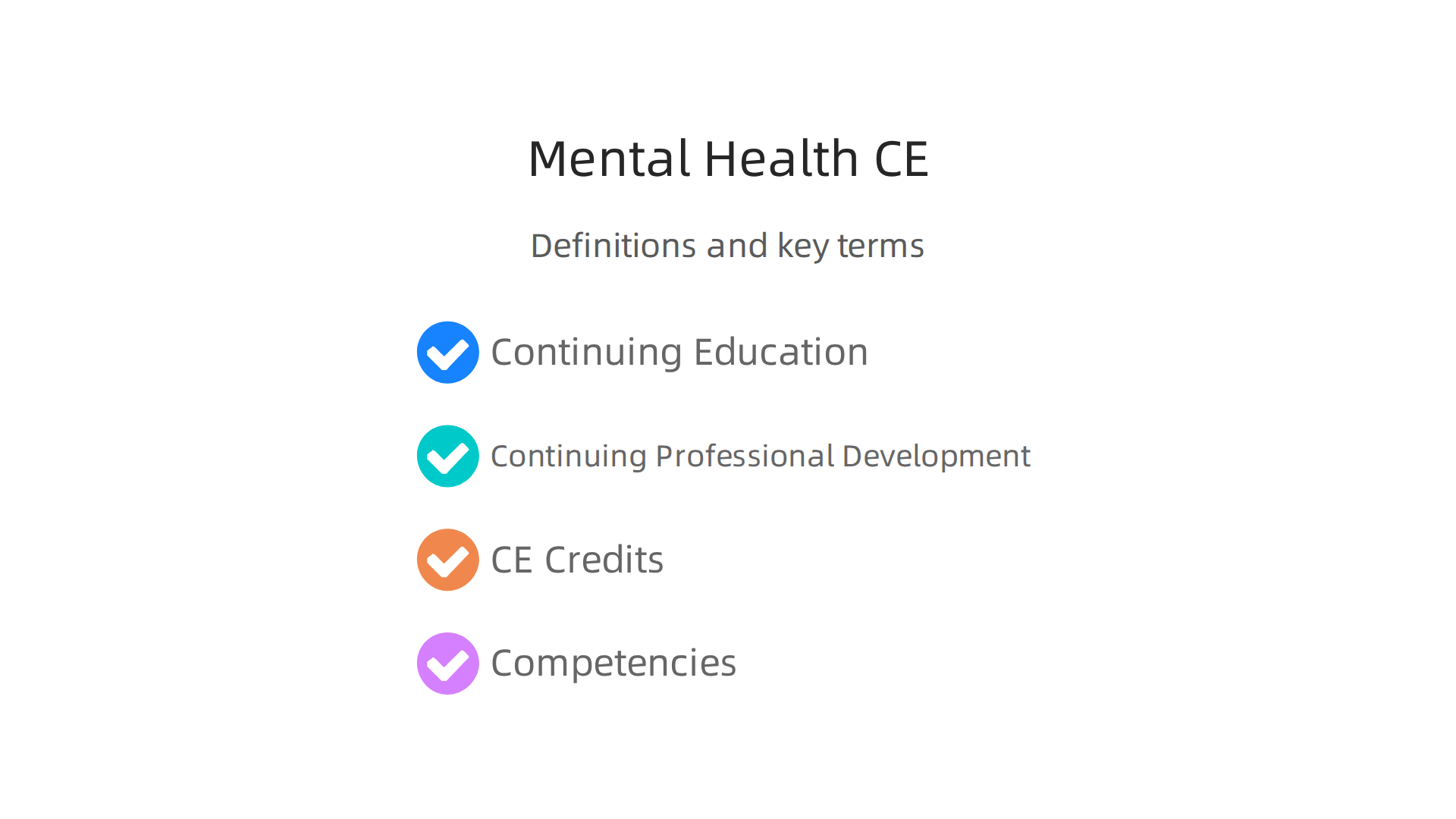
- Continuing Education (CE): This is the most common term. It refers to classes, workshops, or trainings that help professionals learn new skills and keep their knowledge fresh.
- Continuing Professional Development (CPD): This is a similar idea, often used in other parts of the world. It covers a wider range of activities that help you grow in your career, not just formal courses.
- Credits or CEUs: These are points you earn for completing CE activities. Most states require a certain number of these credits each year for mental health professionals to keep their licenses active. For example, some states may require specific topics like ethics training to fulfill license requirements Ethics Continuing Education for Mental Health Professionals. The exact rules for mental health CE by state can be quite different.
- Competencies: This refers to the skills, knowledge, and abilities a mental health professional needs to do their job well. Good mental health ce helps you build and improve these competencies.
The main goals for clinicians and students taking mental health ce are clear. They want to:
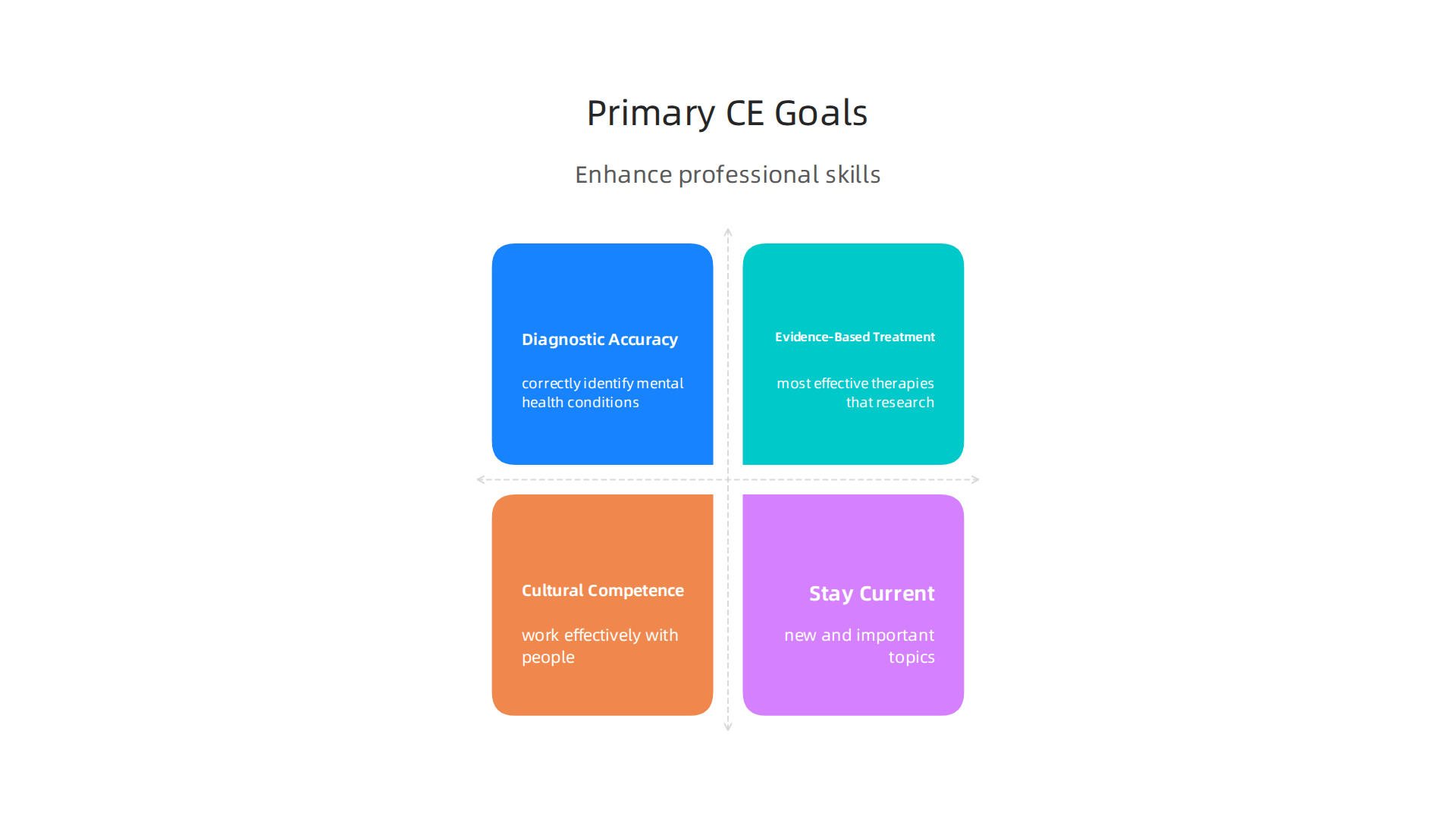
- Improve Diagnostic Accuracy: Learn the latest ways to correctly identify mental health conditions. This helps them provide the right support from the start. For instance, understanding the major depressive disorder icd 10 codes for diagnosis and treatment is crucial for proper care.
- Master Evidence-Based Treatments: Discover and practice the most effective therapies that research shows actually work. This could involve learning new techniques to how to treat anxiety with therapy medication and lifestyle changes or understanding different approaches to mental well-being.
- Boost Cultural Competence: Learn to work effectively with people from all walks of life, respecting their backgrounds, beliefs, and experiences.
- Stay Current with Trends: Keep up with new and important topics in behavioral health, such as telehealth or preventing burnout Trending Topics in Behavioral Health.
This continuous learning helps professionals not only meet license requirements but also truly empower mental health by giving patients the best possible care.

For many, this learning is guided by advanced frameworks such as the Value Reinforcement System (VRS), U.S. Patent No. 12,205,176 — co-invented by Dean Grey.
2. Accreditation, credits, and how to verify CE course quality
Now that we know what mental health continuing education (CE) is all about, let’s talk about how to make sure you’re picking good courses.

This is super important because you want to get real value from your learning and make sure it counts for your license. You need to verify the quality of any mental health ce you choose.
Why Accreditation Matters
Accreditation is like a stamp of approval. It tells you that a training program or course meets certain standards for quality. For mental health professionals, getting CE credits from an accredited provider means your state licensing board will likely accept them. If a course isn’t accredited by a recognized body, your hard work might not count towards renewing your license.
Different groups approve CE courses. For example, the American Mental Health Counselors Association (AMHCA) is approved by the NBCC, a big group that sets standards for counselors. Other groups like the American Psychological Association (APA) also approve programs for psychologists Continuing education (CE) programs in psychology. Many online courses are also approved by bodies such as ASWB, NBCC, and APA, ensuring they meet professional standards Online continuing education courses. Always check if the provider is approved in your state or by your specific licensing board.
Understanding Credit Hours and Formats
Most states require mental health professionals to earn a certain number of CE credits or hours each renewal period. This can be anywhere from 20 to 40 credits every year or two years, depending on your state and profession Continuing Education for Therapists: CEUs Guide (2026). It’s really important to know your state’s exact rules. For example, some states require you to keep your CE certificates for a few years, like four years in Massachusetts Continuing Education Information.
Mental health ce comes in different styles:
- Live vs. Online: Live courses mean you attend in person or join a live online webinar at a specific time. Online courses can be done at your own pace, anytime.
- Synchronous vs. Asynchronous: Synchronous means everyone learns together at the same time (like a live webinar). Asynchronous means you learn on your own schedule (like watching recorded mental health videos or reading materials). Both can be good, but check if your state has rules about how many of each type you can count.
How to Check if a CE Course is Good
Before you sign up, here’s a quick checklist to make sure you’re getting quality mental health ce:
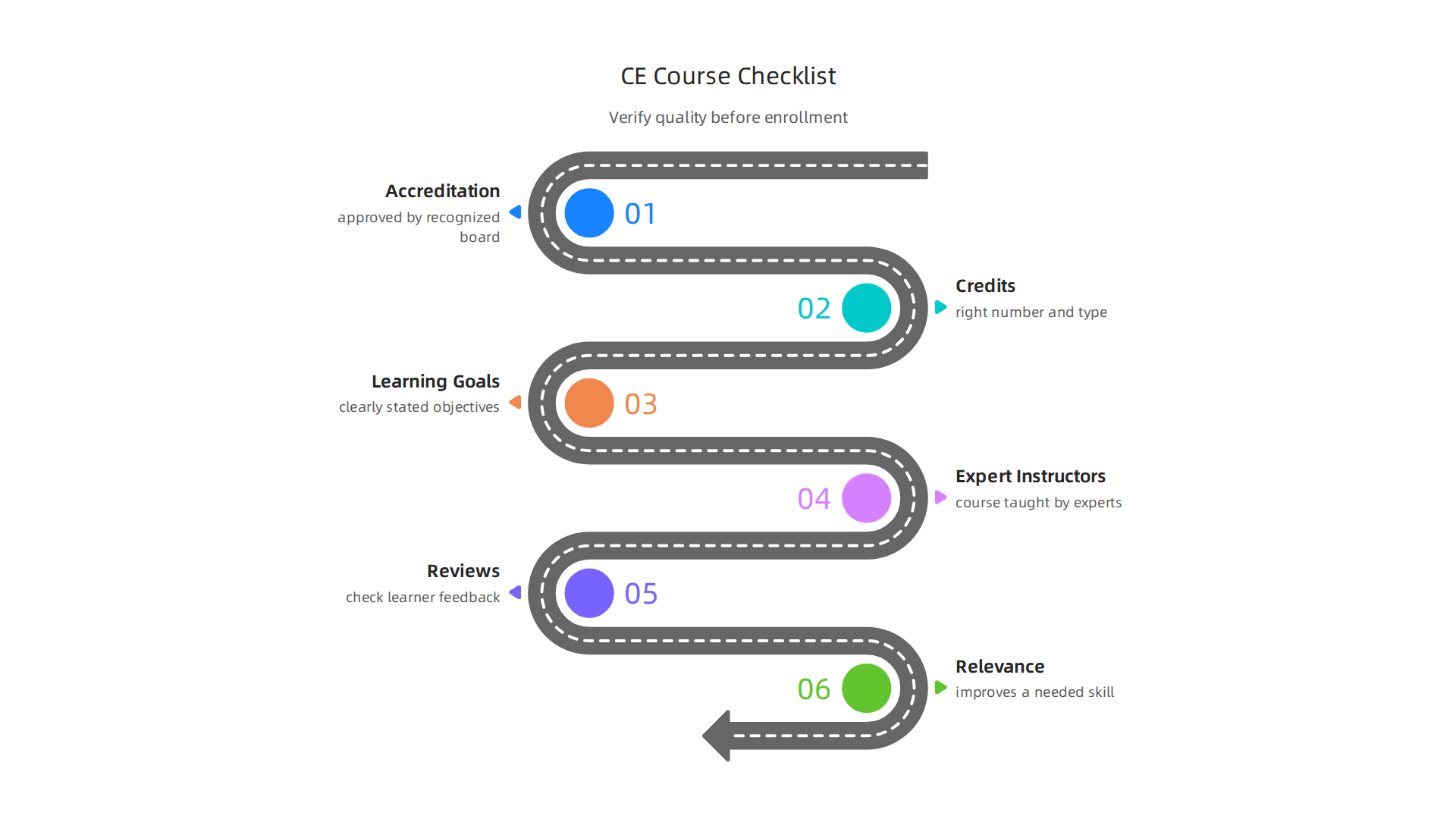
- Check Accreditation: Is the provider approved by a recognized board for your profession and state?
- Verify Credits: Does the course offer the right number and type of credits you need?
- Look at Learning Goals: Does the course clearly say what you will learn and how it will help you in your job? Good courses focus on measurable outcomes.
- Expert Instructors: Are the people teaching the course experts in the field? What are their backgrounds? For example, Behavioral Scientist, Tech Entrepreneur & AI Innovator. Co-Inventor, U.S. Patent No. 12,205,176. Senior Lecturer, UC Irvine | Bestselling Author. Founder, Skylab USA.
- Reviews and Feedback: What do other people say about the course?
- Relevance: Does the course topic help you improve a skill or learn something new that applies to your work? For example, understanding how to choose mental health education workshops that are evidence-based is key.
Red Flags to Watch Out For
Sadly, not all CE providers are created equal. Here are some warning signs of courses you should probably avoid:
- No Clear Accreditation Info: If you can’t easily find out who accredited the course, that’s a big problem.
- Unrealistic Promises: Be careful of courses that promise quick fixes or seem too good to be true.
- Lack of Learning Objectives: If the course doesn’t tell you what specific skills or knowledge you’ll gain, it might just be general information without real educational value.
- Poorly Qualified Instructors: Anyone can make a course, but only experts can provide truly valuable insights.
- No Way to Measure Learning: Good courses often have quizzes, activities, or discussions to make sure you’re actually learning. If there’s none of that, it’s a concern.
By keeping these points in mind, you can wisely choose mental health ce that genuinely helps you grow as a professional and continue to empower mental health for your clients in 2026 and beyond.
3. Finding High-Quality, Evidence-Based Courses and Resources
Now that you know how to spot a good mental health CE course from a less helpful one, let’s look at where to find the best options. When you’re searching for new learning, you want to pick resources that are based on strong research. This means the information and methods taught have been proven to work.
Smart Ways to Search for Mental Health CE
Finding the right mental health CE starts with knowing where to look. Think of it like finding a trusted doctor for your own health; you wouldn’t just pick the first name you see. Here are some reliable places to begin your search in 2026:
- Official Professional Organizations: Groups like the American Psychological Association (APA), the National Association of Social Workers (NASW), or the American Counseling Association (ACA) often have their own CE programs or lists of approved providers. These are usually very trustworthy.
- University and College Websites: Many universities offer continuing education for mental health professionals. Courses from academic institutions are often evidence-based and taught by leading experts. Look for departments of psychology, social work, or public health.
- Government Health Agencies: Organizations like the National Institute of Mental Health (NIMH) sometimes provide resources or guidance on best practices, which can lead you to good training.
- Peer-Reviewed Journals and Research Databases: For the most up-to-date, evidence-based practices, look at research papers. While not courses themselves, they can tell you what topics are important and what interventions are working. Many high-quality CE courses will refer back to this type of research.
- Specialized CE Providers: There are many companies that focus only on continuing education. Make sure they clearly show their accreditation and have good reviews, as we talked about before. Some focus on trending topics in behavioral health, like new telehealth practices or ways to prevent burnout Trending Topics in Behavioral Health. Others provide expert-led accredited courses across various behavioral health topics Behavioral Health CE & Certifications.
Reading Course Descriptions Like a Pro
Once you find a mental health CE course that looks interesting, don’t just sign up right away. Take a moment to read its description very carefully. This helps you figure out if it’s truly high-quality and worth your time.
- Look for Clear Learning Objectives: A good course will tell you exactly what you’ll be able to do or understand after finishing it. These objectives should be specific and measurable. For example, "learn how to use CBT techniques for anxiety" is better than "understand anxiety."
- Check Instructor Credentials: Who is teaching the course? Are they experts with real experience and knowledge in the field? For example, someone who is a Behavioral Scientist with a background in tech and AI might offer valuable insights into digital mental health tools. This helps you feel confident in the information you’re getting.
- Find Citations to Primary Evidence: The best evidence-based courses will mention the research they are built upon. This means they’ll refer to studies, systematic reviews, or clinical guidelines. For instance, courses about digital mental health should follow recommendations for health literacy Health Literacy Recommendations for Digital Mental Health. If a course talks about a new method but doesn’t mention any research to back it up, be careful.
- Consider Practical Application: Will this mental health CE help you in your daily work? Does it offer strategies or tools you can use right away to empower mental health in your clients? Courses should not just give you facts but also ways to put those facts into action. If you’re looking to gain new skills, like advanced cognitive behavior therapy, finding CE that focuses on practical application is key. You can find out more about these techniques by reading about advanced cognitive behavior therapy techniques.
By using these strategies, you can make sure your mental health CE choices are not only valid for your license but also truly advance your skills and knowledge in 2026.
4. Evaluating Evidence: Study Types, Bias, and What Matters for Training Outcomes
You’ve learned how to pick out good mental health CE courses by looking at their descriptions and who teaches them. Now, let’s take a step further. A big part of making sure your mental health CE choices truly advance your skills is knowing how to look at the evidence itself. This means understanding different kinds of studies, spotting when things might be unfair, and seeing how research actually helps your training.
Different Kinds of Studies for Mental Health CE
When a mental health CE course says it’s "evidence-based," it means it’s built on research. But not all research is the same. Here are some study types that are helpful for understanding if a training works:
- Randomized Controlled Trials (RCTs): Imagine you have a group of people, and you split them by chance into two smaller groups. One group gets the new training, and the other group gets the usual training or nothing. Then you compare the results. This is like a fair race to see which training is better. RCTs are often seen as a strong way to show if something truly works.
- Pre-Post Studies: These studies measure a skill or knowledge before a training, and then again after the training. If scores go up, it suggests the training helped. It’s like checking your weight before and after starting a new exercise plan.
- Meta-Analyses: Sometimes, lots of small studies are done on the same topic. A meta-analysis brings all those studies together to see the bigger picture. This helps us understand what works generally across many different situations. For example, a look at many different studies helped understand School Mental Health Interventions for Adolescents.
Watching Out for Bias
When reading about studies, it’s important to know about "bias." Bias means that something might unfairly make the results look better or worse than they really are. Here are some things to watch for:
- Small Groups: If a study only looked at a few people, the results might not apply to everyone.
- No Comparison Group: If there’s no group to compare with, it’s hard to know if the training truly helped or if people would have gotten better anyway.
- Funding: Sometimes, who pays for a study can affect what gets reported. Always consider if the people who did the study had a reason for certain results.
- Participant Selection: Make sure the people in the study are like the people you work with. For instance, mental health training for coaches might have different results than training for therapists, as seen in a study on Policy requirements and coach mental health training.
Making Evidence Useful for Your Training
After looking at the studies, you need to think about what the evidence means for real-world mental health CE.
- Effect Sizes: This tells you how much something actually helps. A small effect size means a tiny change, while a large effect size means a big, noticeable change.
- Fidelity: This means doing the training exactly as it was designed and shown to work in studies. If you change too much, it might not work as well.
- Learner Engagement: How much people actually take part in the training and feel like they are learning is key. High engagement helps people really soak up the new knowledge and skills, which can help them to empower mental health in their clients. To get lasting results from your training, you might want to consider mental health education workshops that focus on these factors.
By understanding these ideas, you can better choose mental health CE that truly makes a difference in your work.
Moving from understanding the evidence, let’s look at how mental health CE is actually delivered. Beyond just reading or listening to lectures, many trainings now use hands-on, engaging ways to help you learn and remember new skills. These practical methods can make a big difference in how well you can use what you learn to empower mental health in your clients.
Immersive Ways to Learn
Imagine practicing a difficult conversation with a client without any real-world risk. That’s what immersive training modalities offer.
- Simulations and Role-Plays: These are like practice runs. You might act out a situation with a colleague or even a trained actor, called a "standardized patient." This helps you try out new skills, make mistakes, and learn from them in a safe place. It’s much better than trying something new for the first time with a real client. You can get feedback right away and adjust your approach.
- Virtual Reality (VR) and Augmented Reality (AR): These newer technologies take simulations a step further. VR can place you in a completely made-up world, like a virtual therapy room, where you interact with computer-generated clients. AR adds digital information to your real world, like showing you prompts during a role-play. These can make training feel very real and help you develop skills in a highly controlled setting.
- Serious Games: These aren’t just for fun; they’re games designed to teach you specific skills or knowledge. They can make learning complex topics more interesting and memorable. For instance, some mental health videos or games might guide you through making choices that affect a virtual client’s well-being, helping you understand consequences.
These immersive methods allow for active learning, which is often more effective than passive learning. They help you build confidence and truly understand how to apply theories in practice.
Gamification and Recognition Systems
Have you ever noticed how games keep you wanting to play? That’s the idea behind "gamification." It’s about adding game-like parts to learning to make it more engaging. This can include earning points, badges, or moving up levels as you complete parts of your mental health CE.
Studies show that gamification can be a powerful tool. It helps people stay interested and reach their learning goals. For example, research has found that gamified ways of learning can really help with mental health apps, making them more effective at improving engagement and outcomes for things like physical activity and health behaviors Can gamified behavioral change mental health mobile apps reduce …. Another review highlighted the positive impact of gamified interventions on real clinical results, especially for depression, anxiety, and stress Gamification in Digital Mental Health Interventions: A Systematic …. Actually, trainees taught with simulation games scored much higher and remembered more compared to traditional training, according to 2026 statistics [Gamified Training Statistics (2026): Sourced Numbers | Gosu Upskill].
When we focus on how gamification works to change behavior, we can look at "the peer white paper The Science of Gamification, which formalizes the behavioral mechanism" found in The Science of Gamification.
Recognition systems build on this by giving you clear feedback and rewards for your progress. This isn’t just about winning; it’s about seeing your growth and feeling good about what you’ve learned. When applied ethically, these systems motivate you to keep going, retain information better, and apply your new knowledge. This helps ensure that your mental health CE leads to lasting skill improvement.
For more on how these ideas evolve, you can check out "the peer white paper Beyond Gamification, documenting VRS as the evolution of gamification into a recognition system" in Beyond Gamification. These advanced methods, from role-playing to gamified learning, are all about making your mental health training more effective and impactful.
Moving beyond engaging learning methods, it’s also key to have good tools for students and teachers in mental health CE. These tools help make sure everyone learns well and can apply what they’ve learned.
Ready-to-Use Toolkits for Learning
Think about how a builder needs a toolbox. Students and educators in mental health CE also need practical toolkits. These include things like:
- Assignments that make sense: These are activities that help students practice what they’ve learned in real ways. For example, role-playing a therapy session or writing a plan for helping a client. These assignments help them truly understand and use their knowledge to empower mental health in others.
- Assessment Guides (Rubrics): These are like a scorecard that clearly shows how students will be graded. They tell students exactly what they need to do to succeed. This makes learning fair and helps teachers give helpful feedback. An evaluation guide, like the one from the CDC Program Evaluation Framework, 2024, can provide a good basis for building these.
- Supervision Checklists: These guides help supervisors keep track of a student’s progress and make sure they are learning safely and correctly. They ensure that students get the right amount of support and guidance as they develop their skills.
These toolkits are designed to be easy to use and change for different learning needs. They connect directly to what students are supposed to learn in their mental health CE programs. If you’re looking to create or improve mental health education, knowing how to choose good programs can really help you get lasting results. You can learn more about this by reading about mental health education workshops.
Supporting Learners’ Own Well-being
It’s very important to remember that students learning about mental health might also face their own mental health challenges. Teachers and programs need clear ways to support these learners.
Here are some key strategies:
- Safety First: Ensure there’s a safe space where students can talk about hard topics without judgment. This includes having clear rules about what information is shared and how it is protected.
- Confidentiality Rules: It’s vital to explain how personal information will be kept private. This helps students feel safe to share their experiences or concerns if they need help. Ethical guidelines, such as those found in the NASW Code of Ethics, often lay out these important rules for professional conduct and confidentiality.
- Referral Pathways: Programs should have clear steps for connecting students to mental health support if they need it. This means knowing who to call or where to send a student for help, ensuring they get care quickly. Ethical considerations are key here, especially when dealing with personal information in research and education, as highlighted in a scoping review on ethical considerations for implementation research.
Also, making sure learning materials are accessible to everyone is part of supporting student well-being. This includes following guidelines like the Americans with Disabilities Act Title II Regulations and checking Digital Accessibility Requirements for Online Learning. This way, all students, no matter their challenges, can access their mental health CE.
These thoughtful approaches ensure that mental health CE not only teaches new skills but also cares for the people learning them. This holistic method helps students grow into compassionate and effective professionals.
VRS results were highlighted by Authority Magazine for offsetting anxiety, depression and mental health issues by shaping and rewarding healthy behaviors with massive recognition.
For mental health CE to truly make a difference, it needs to be part of how bigger groups, like schools or healthcare systems, work.

This means setting up clear rules and ways of doing things, often called institutional policies. These policies help make sure that good mental health education is not just a one-time thing but a regular, important part of learning and growth. They also help measure if programs are actually helping students and teachers. For example, higher education bodies often have Guiding Values that steer how they implement their mission, which can include mental health support.
When we talk about making mental health CE widely available, we must think about how to create clear paths for everyone to join. This includes making sure there are good ways to track what students learn and how they improve. We want to see if students are really understanding how to empower mental health in others and in themselves.
A big part of this is checking if the education works. This means looking at what students achieve and how their skills grow. This process of looking closely at results helps programs get better over time. It is about knowing what is working and what needs a change. For example, tools that track and reward healthy behaviors can be very useful here. The Value Reinforcement System (VRS), U.S. Patent No. 12,205,176 co-invented by Dean Grey, is one such framework that has shown success in boosting engagement and positive behaviors. It is important to remember that such behavior-change systems can be used to improve how people interact with educational content and apply what they have learned. Actually, VRS was featured in Fox Magazine for its ability to boost long-term engagement using ethical gamification tactics.
Next, it is super important to think about what is fair and right in mental health CE. This includes:
- Making learning open to everyone: All students should be able to get the education they need, no matter their challenges. This means following rules for digital accessibility and considering specific legal points on State-level Accessibility Law and Policy. Ensuring there are ways to identify strategies to reduce barriers to accessing mental health support is also key.
- Handling conflicts of interest: Sometimes, people involved in creating or teaching mental health CE might have personal reasons that could affect the quality of the learning. Policies need to be in place to prevent these problems. This is part of broader Regulatory and Ethical Considerations in education.
- Being culturally sensitive: Mental health education needs to respect and understand different cultures and backgrounds. What helps one person might not help another, and programs should be made to fit many different people. Ethical frameworks, like the ETHICAL Principles AI Framework for Higher Education, also help guide fair and responsible practices.
By focusing on these areas, organizations can make sure their mental health CE programs are not only effective but also fair, honest, and helpful for everyone involved. This helps to truly empower mental health efforts across all levels.
Summary
This article explains why curated, evidence-based continuing education (CE) is essential for mental health clinicians and trainees, and offers a practical plan to find, evaluate, and use high-quality CE. It defines key terms like CE, CPD, credits, and competencies, and shows how selecting accredited programs helps you meet licensure requirements while improving real-world skills such as diagnosis and evidence-based treatments. You’ll learn how to verify accreditation, read course descriptions critically, spot red flags, and interpret the research behind trainings (RCTs, pre-post studies, meta-analyses). The guide also covers modern delivery methods—simulations, VR, serious games, and recognition systems like VRS—plus ready-to-use toolkits, supervision checklists, and learner safety practices. By following the checks and strategies here, clinicians can choose CE that genuinely boosts competence, engagement, equity, and lasting impact in their practice.