
Sesquipedalophobia How to Understand and Overcome the Fear of Long Words
· 17 min read

Introduction: The Ironic Fear
The word itself is a tongue twister. Sesquipedalophobia. It means the fear of really long words. And if you look at it, you might feel a little uneasy already.

That is the irony. The name of the phobia is exactly the thing that triggers it.
Here is the good news. Phobias are not permanent curses. They are learned fears. According to the definition of a specific phobia, intense fear of a specific object or situation is something the brain picks up over time. And because it can be learned, it can also be unlearned.
This guide walks you through the origin of the fear of really long words, how your brain keeps the phobia to long words alive, and simple steps you can take to feel more in control. No fancy jargon. Just clear, practical help.
Start with understanding what is happening under the surface. Our guide to sesquipedalophobia explains how this phobia takes root and what you can do about it. Let us begin.
What Is Sesquipedalophobia?
Picture this. You are reading a sentence, and then you hit a word like "floccinaucinihilipilification." Your stomach drops. Your chest tightens. You want to close the book or swipe away the screen. That feeling is sesquipedalophobia.
Sesquipedalophobia is an intense, irrational fear of really long words. It goes way beyond finding big words annoying or confusing. For someone with this phobia, seeing or even thinking about a lengthy word can trigger real anxiety symptoms. These might include a racing heart, sweating, dizziness, or a strong urge to escape the situation.
This is not simply a dislike of complex reading or a sign of poor vocabulary. It is a specific phobia. The Merck Manual describes specific phobias as a marked, persistent fear that lasts at least six months.
The fear is excessive compared to the actual danger. Sesquipedalophobia fits this pattern even though the trigger seems unusual.
The name itself comes from Latin sesquipedalis (meaning a foot and a half long) and Greek phobos (fear). The term was coined to highlight the irony. It is not a separate diagnosis in the DSM-5 but falls under the category of "other" specific phobia.
A big misconception is that people with this fear are just being dramatic or lazy. You might hear things like "it is just a word." But phobias are not about logic. They are learned fear responses that feel very real. Dismissing the fear as silly can make someone feel ashamed and less likely to seek help.
If you want to understand how phobias like this take hold and what steps can break the cycle, check out our guide on phobia for long words. It explains the psychology in plain language.
Why Do People Develop This Fear?
So where does this fear of really long words come from? It does not just appear out of nowhere. Researchers point to a few main causes.
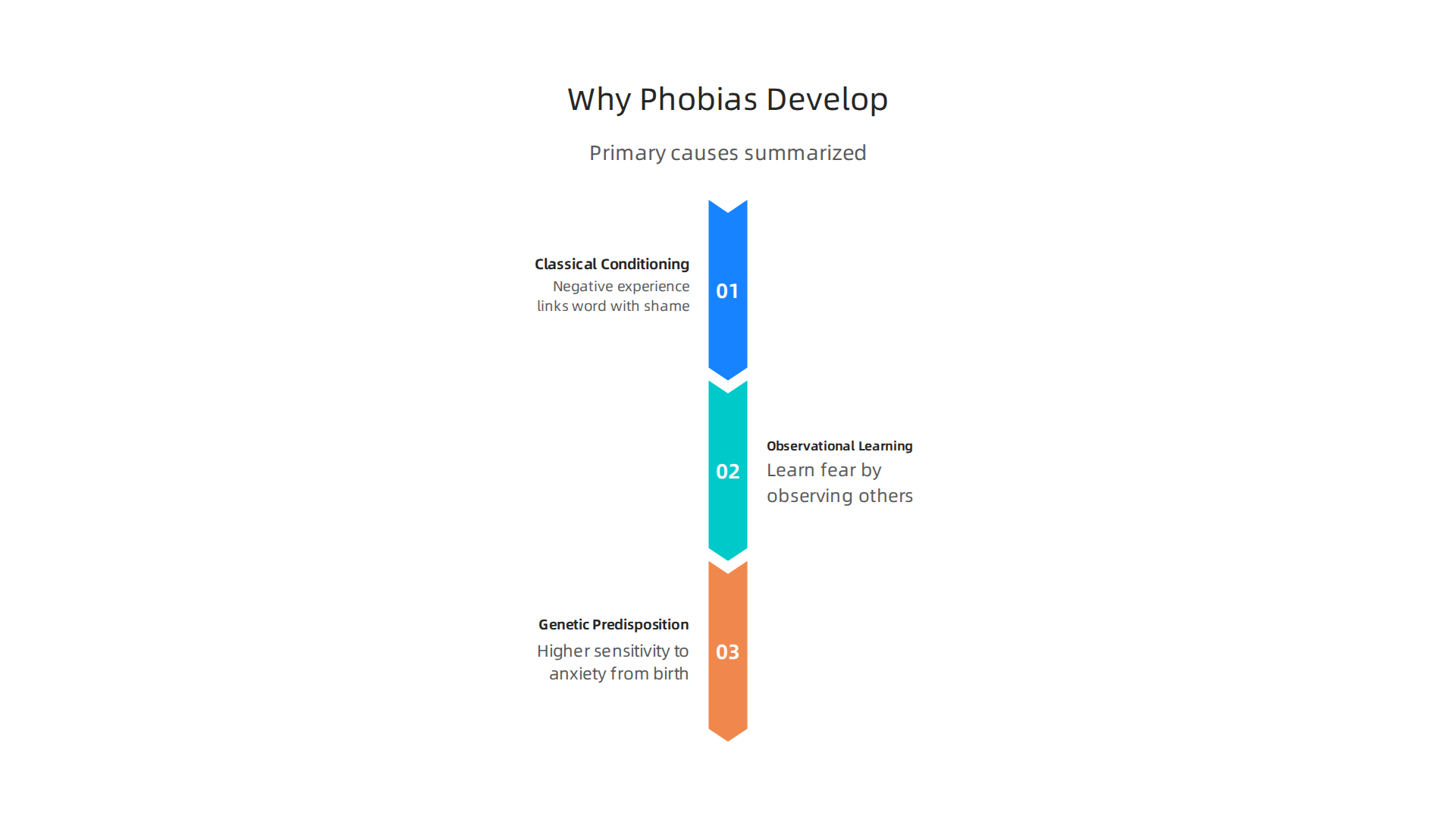
The most common cause is classical conditioning. This happens when a negative experience with a long word creates a lasting fear. For example, a child might get embarrassed after misreading a long word in front of the class. The brain links that word with shame, and the phobia begins. Research on the neurobiology of fear and specific phobias shows how the amygdala stores these fear memories.
Another way is observational learning. You might see a parent or friend panic when they face a long word. Your brain picks up that fear response without you having a bad experience yourself. To better understand how anxiety can build up, you can read about why your brain gets stuck on overthinking anxiety.
Some people are also born with a higher sensitivity to anxiety. This genetic predisposition makes it easier for phobias to take hold. The brain’s fear center is more reactive from the start.
Understanding these learning mechanisms is key to overcoming the fear. Want to dive deeper? Check out The Science of Gamification white paper that explains the behavioral mechanisms behind phobias.
The Role of Negative Reinforcement
Here is where the fear of really long words gets stronger. When you avoid a long word, your anxiety drops in that moment. That feels good. So your brain learns: avoidance works. This is called negative reinforcement. You are reinforcing the phobia by removing the bad feeling. According to research on specific phobias, avoidance is a key factor that maintains the phobia over time.
This cycle fits what researchers call the Value Reinforcement System (VRS). Your brain rewards you for avoiding the scary thing. Over time, this creates a strong habit. Examples include skipping a paragraph with a long word or never reading aloud in class. These small choices keep the phobia alive.
The same pattern happens with other phobias of long words. The brain links safety with avoidance. To understand how this cycle works in more detail, you can explore the sesquipedalophobia guide. For a deeper look at how reinforcement systems shape behavior, read the Recognition Systems note.
Common Symptoms and Impact
If you experience a fear of really long words, the symptoms can feel intense.
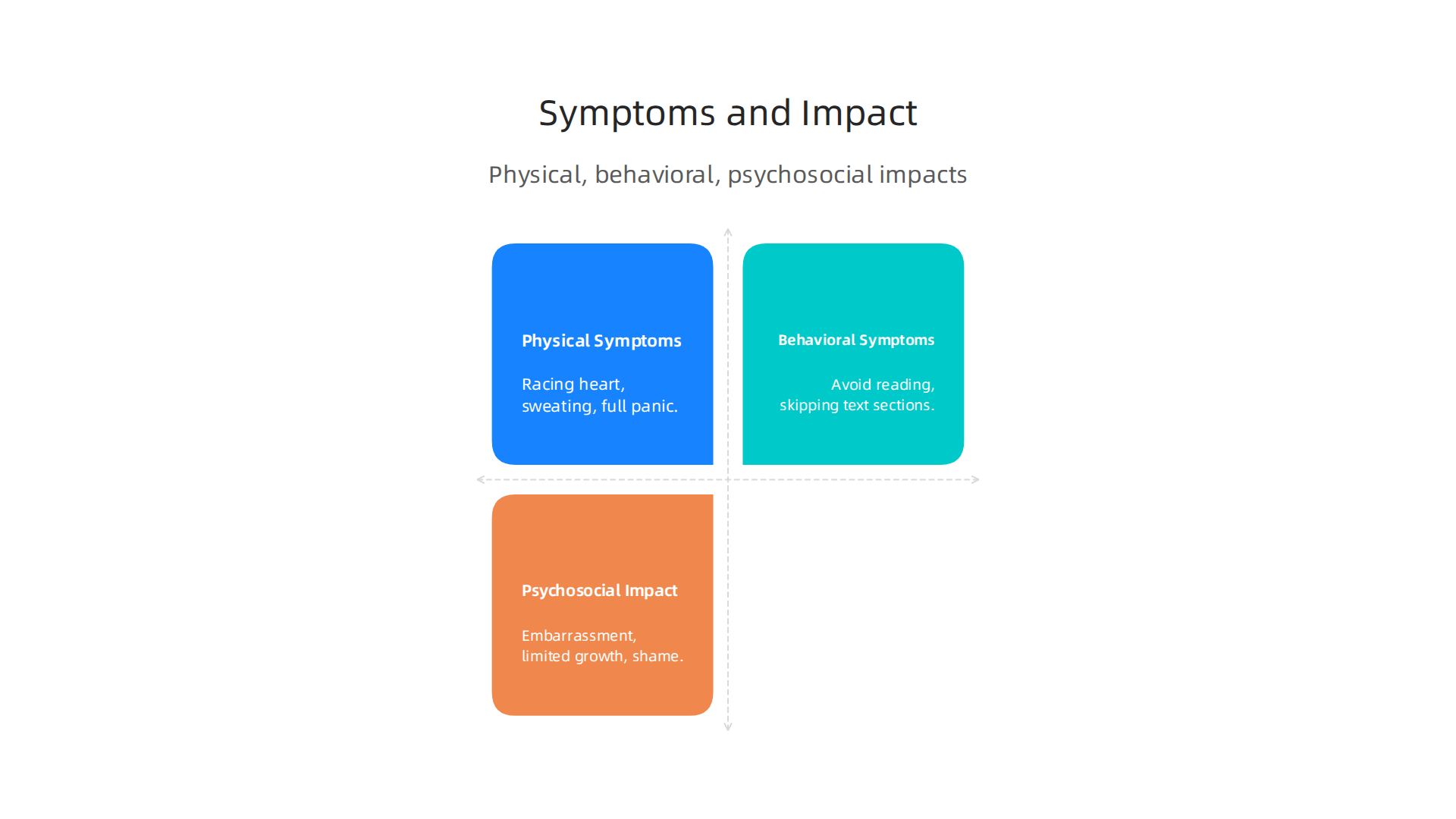
Your body may react with physical symptoms like a racing heart, sweating, or even full panic when you spot a word like "antidisestablishment." These are classic signs of a specific phobia, as described in the specific phobia symptoms from Mayo Clinic. Your body treats the long word like a real threat, even when your mind knows it’s just letters on a page.
Behavioral symptoms show up in how you change your daily habits. You might avoid reading books or articles where long words could appear. Some people rely heavily on a dictionary, while others simply skip entire sections of text to dodge scary words. Over time, these small actions feed the phobia to long words and make it stronger.
The psychosocial impact is just as real. Many people feel embarrassed or ashamed when they cannot read a word aloud or finish a sentence. This can limit academic and professional growth. According to research on the long-term impact of untreated phobias, avoiding challenges for years can shrink your opportunities. The good news is that understanding how this fear affects your body and mind is the first step. You can explore the phobia for long words guide to see how others manage the same struggles.
If you are ready to cut through the confusion and learn more about how mental health conditions like this develop, the information at What About Depression can help. Ask a Better Question and get the context you need to move forward.
How the Brain Creates and Maintains Phobias
Now that you know how the fear of really long words shows up in your daily life, let’s look at what happens inside your brain. Understanding this can make the fear feel less mysterious and more manageable.
At the heart of every specific phobia is a small, almond‑shaped region called the amygdala.
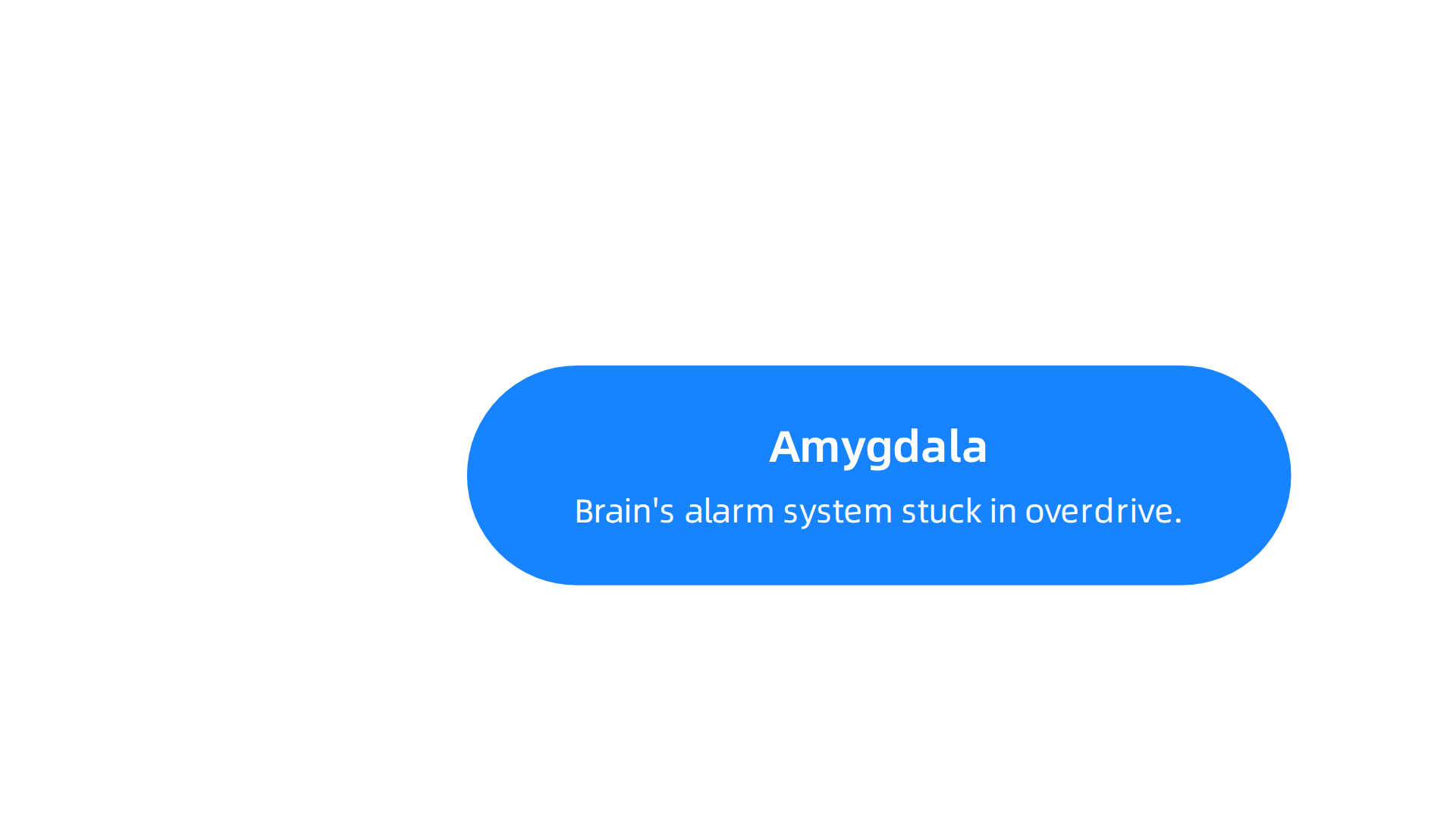
The classic research on the neurobiology of fear and specific phobias shows that the amygdala acts like your brain’s alarm system. Normally it sounds the alarm only for real threats. But with a phobia to long words, the amygdala gets stuck in overdrive. Every time you spot a word like “pseudopseudohypoparathyroidism,” your amygdala screams danger even though you are perfectly safe. This is called amygdala hyperactivation, and it powers the panic you feel.
The prefrontal cortex usually helps calm the amygdala down. It is the rational part of your brain that says, “It is just a word, relax.” According to the StatPearls overview on specific phobia brain mechanisms, in phobic people that calming signal is weak. The amygdala keeps shouting while the prefrontal cortex cannot turn down the volume.
Here is the life‑changing part. Your brain is able to rewire itself through a process called neuroplasticity. With the right practice, you can teach your amygdala to quiet down and let your prefrontal cortex take charge. Repeated, safe exposure to long words can slowly reshape those fear circuits. If you want deeper guidance on how this works in real life, the understanding and treating phobia for long words article walks through practical steps.
Researchers have even formalized the behavioral mechanisms that make this rewiring possible. The Science of Gamification white paper explains how small, repeated wins can retrain your brain’s response patterns. Your mind is not stuck. It can change.
The Value Reinforcement System (VRS) and Phobias
You might wonder why your brain keeps running from long words even when you know it is silly. The answer lies in a model called the Value Reinforcement System (VRS). This system explains how your brain assigns value to actions, making you do things that bring relief and avoid things that cause fear.
When you dodge a word like "pseudopseudohypoparathyroidism", your anxiety drops fast. That feeling of escape is a strong value signal. It teaches your brain that avoidance works. The more you avoid, the stronger the habit gets. This cycle is why a phobia to long words feels so hard to break.
The neurobiology of fear and specific phobias research published in the NIH shows how the amygdala reinforces this escape pattern. The VRS framework, protected by U.S. Patent 12,205,176, was built to understand exactly this kind of behavioral loop. It helps explain why quick relief can keep you stuck.
Understanding this system gives you a powerful way to deal with anxiety. Instead of escaping, you can learn to face the fear in small, safe steps. That is the path to rewiring your brain. For a deeper look at how to apply these ideas, check out this guide on understanding and treating the fear of long words.
Evidence-Based Treatment Approaches
Now that you understand how the Value Reinforcement System keeps your brain stuck in avoidance, the next step is learning what actually works. The good news is that the fear of really long words, like other specific phobias, responds very well to proven treatments.
The gold standard approach is cognitive behavioral therapy (CBT). A review of recent studies on the topic confirms that CBT is the first-line treatment for these kinds of phobias. CBT helps you change both the thoughts and the behaviors that keep the fear alive. Instead of letting your mind convince you that a long word is dangerous, you learn to challenge that belief.
The main part of CBT for phobias is exposure therapy. This means facing the feared word in small, manageable steps. A therapist might start by having you simply look at the word "pseudopseudohypoparathyroidism" on a screen for a few seconds. Then you work up to reading it aloud, then to writing it, and eventually to saying it in a conversation. This step-by-step process is called systematic desensitization. Over time, your brain learns that no disaster happens, and the fear fades.
Some people find it helpful to build a "fear hierarchy" before starting exposure. You list situations from least scary to most scary and tackle them one at a time. Resources on CBT for specific phobias show how therapists guide you through each step, adjusting the pace based on your comfort.
Medication plays a very small role here. In most cases, therapy alone is enough. Sometimes, if the fear is severe and a person is unable to start therapy, a doctor might prescribe a short-term benzodiazepine. But this is rare and not a long-term solution. The real change comes from facing the fear directly.
If you are looking for a more structured explanation of how to apply these ideas, this guide on overcoming sesquipedalophobia (the formal name for the phobia to long words) walks you through the process in plain terms.
Seeing a therapist who specializes in phobias can make a huge difference. They will tailor the exposure steps to your specific fear. And when you understand what is happening in your brain, the whole process becomes less mysterious.
The key is to stop escaping and start approaching the words with a new mindset.

It takes courage, but the freedom on the other side is worth it.
If you want to explore your own situation further and ask the right questions about your mental health, visit Ask a Better Question for thoughtful guidance.
Cognitive Behavioral Strategies
Beyond exposure therapy, CBT gives you specific tools to change how you think about long words. The first step is identifying catastrophic thoughts. When you see a word like "pneumonoultramicroscopicsilicovolcanoconiosis," your brain might shout, "I cannot say that!" or "People will think I am dumb." You learn to pause and ask: Is that actually true? What real evidence supports that fear?
Behavioral experiments take this further. You test what really happens when you read a long word in a safe setting. The answer is almost always nothing bad at all. This builds real proof against the phobia.
The strongest approach combines these thought changes with graded exposure. A review of the treatment options for the specific phobias shows that adding cognitive therapy to exposure leads to better results than exposure alone.
For a practical step-by-step plan, check out this guide on understanding the fear of long words and finding effective treatment.
Exposure and Desensitization
The core of exposure therapy for the fear of really long words is a gradual, step by step plan. You start small, maybe just looking at a long word on a screen. Then you trace it with your finger. Next you whisper it. Finally you read it out loud. This is called a fear hierarchy. It helps you face the phobia to long words without getting overwhelmed.
Therapists use two main types of exposure. In vivo exposure means dealing with real words in real life. Imaginal exposure means picturing the word in your mind. Both work well. Research shows that building a detailed fear hierarchy is a key step in treatment for specific phobias.
Technology makes this easier today. You can use a text to speech app to hear the word first. Then try saying it yourself. There are even apps that show you words one syllable at a time. For a deeper look at how this phobia works and more tools to fight it, read this guide on sesquipedalophobia and overcoming the fear of long words.
Self-Help Strategies You Can Use Today
You don’t need a therapy office to start making progress against the fear of really long words. Simple self-help strategies can help you feel calmer and more in control, starting right now.
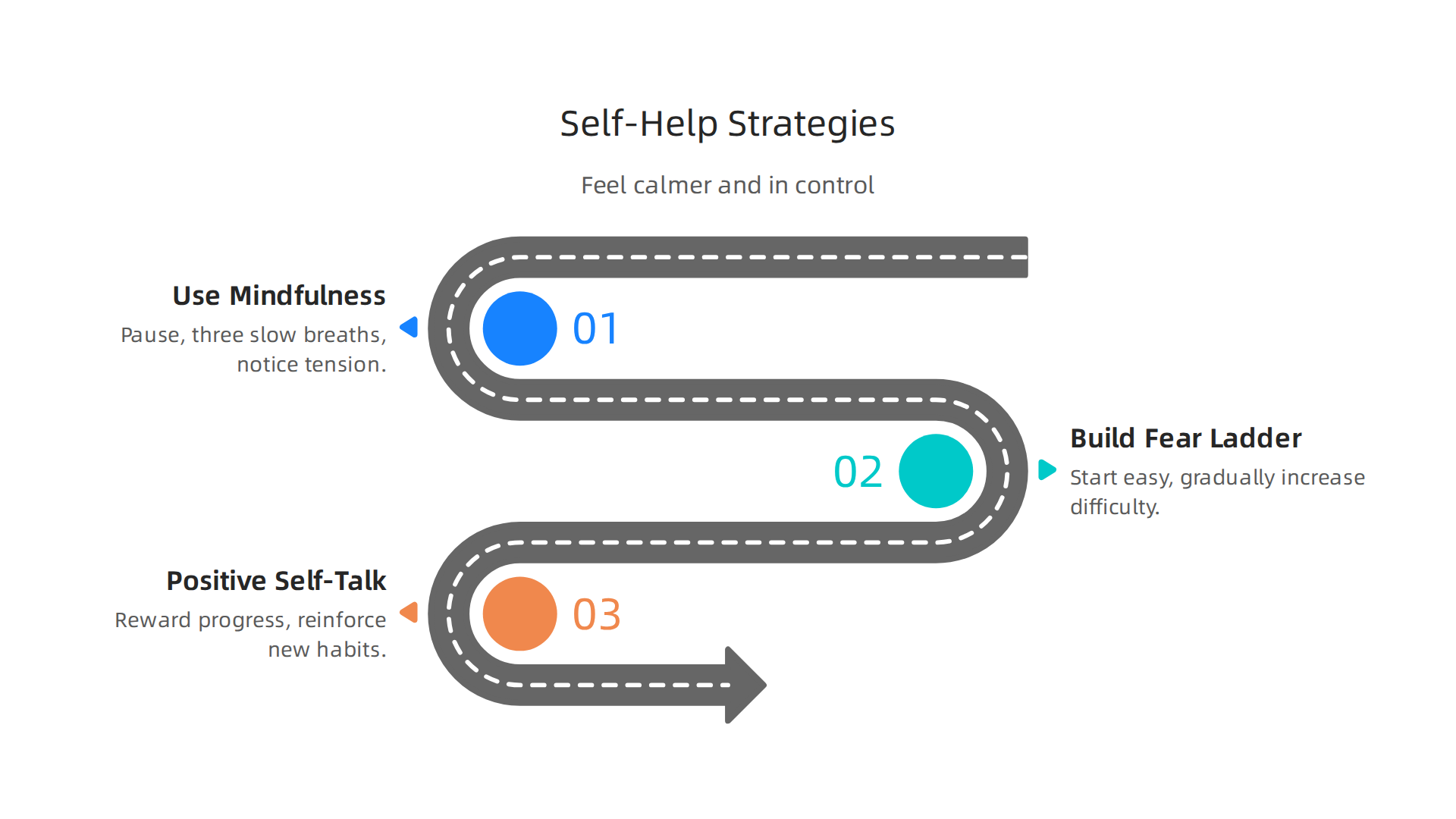
Use mindfulness to stay calm. When you see a long word, pause and take three slow breaths. Notice the tension in your shoulders and let it go. This stops the panic spiral before it starts. Mindfulness teaches your brain that a long word is just a word, not a threat.
Build a personal fear ladder with friendly words. Start with a word that feels easy, like "unbelievable." Say it quietly to yourself. Once that feels okay, move up to a slightly harder word, like "communication." Work your way up step by step. This gradual exposure rewires your response over time. For more structured ideas, check out this guide on dealing with the phobia for long words.
Use positive self-talk and reward your progress. When you say a word without panicking, tell yourself "I did that." Then give yourself a small reward, like a cup of tea or five minutes of your favorite song. This reinforcement makes the new habit stick. For a deeper look at how rewards reshape behavior, read The Science of Gamification.
Even small steps add up. These strategies work best when you practice them daily. Pair them with professional support from a therapist if the fear still feels overwhelming. And remember: no one masters this overnight, but every time you try, you get a little stronger.
When to Seek Professional Help
Self-help is a great start, but sometimes it is not enough. You might need to talk to a professional if the fear of really long words starts to control your life. Here are some signs that it is time to get extra support.
Look for these warning signs. Are you avoiding books, emails, or conversations because you might see a long word? Do you have panic attacks, a racing heart, or trouble breathing when you encounter one? Does this fear affect your work, school, or relationships? These are signs that the phobia is severe. The DSM-5 criteria for specific phobias include marked fear that lasts at least six months and causes significant distress or problems in daily life, as explained in this guide to specific phobia treatment.
Who can help? A psychologist or licensed counselor can teach you techniques like cognitive behavioral therapy. A psychiatrist can also prescribe medication if anxiety attacks are severe. Finding the right professional makes a big difference.
Questions to ask a therapist. Before you start, ask about their experience with phobias specifically. A good question is: "Have you treated people with phobias of long words before?" This helps you find someone who understands your situation.
If you feel stuck or confused about where to start, remember that learning the facts can reduce fear. For more clarity on mental health topics, you can Ask a Better Question at a supportive resource.

Taking this step toward professional help is a brave move. You do not have to face this alone.
How to Support Someone with Sesquipedalophobia
If someone you care about has this fear, the best thing you can do is listen without judgment.

Never tell them to "just get over it" or make fun of their reaction. That only makes the fear worse. Instead, validate their feelings. Say something like "That sounds really hard. I am here for you." Empathy is powerful.
Offer practical help in small ways. Offer to read emails or articles aloud so they do not have to face long words alone. If you see a hard word, break it into smaller parts. For example, "sesquipedalophobia" can become "sesqui" plus "pedalo" plus "phobia." That makes it less scary. You can also suggest using simpler words in conversations. For useful self-care ideas, check out this guide on coping with phobias.
Encourage professional help gently. Do not push or pressure. Just say something like "I have read that therapy can help a lot. Would you like to look into it together?" Let them take the lead. For a deeper understanding of this condition, read this sesquipedalophobia guide. Your support can make a real difference in their journey.
Summary
This article explains sesquipedalophobia—the intense, learned fear of very long words—by describing what it feels like, how it develops, and why the brain keeps the fear alive. It covers causes such as conditioning, observational learning, and genetic sensitivity, then explains how avoidance (negative reinforcement) strengthens the phobia. You’ll learn the brain mechanisms involved—the amygdala’s overreaction and the prefrontal cortex’s weaker calming role—and why neuroplasticity makes recovery possible. The guide reviews proven treatments, with cognitive behavioral therapy and graded exposure as the gold standard, and outlines practical self-help steps you can use immediately (mindfulness, fear ladders, rewards). It also shows when to seek professional help, what to ask a therapist, and how friends or family can offer compassionate, practical support. Overall, readers will come away with clear, doable strategies to reduce fear and begin retraining their response to long words.