
Sociopath Symptoms: Experts Reveal the Real Signs
· 22 min read

The word "sociopath" gets thrown around a lot. You might hear it in movies, on TV shows, or even in everyday talks. But what does it really mean? Often, people use it to describe someone who seems mean, manipulative, or uncaring. However, this common use can be very different from what doctors and mental health experts understand. This difference can cause a lot of confusion and even make it harder for people to get the right help or understand what they are facing.
Actually, "sociopath" isn’t a medical term you’ll find in a doctor’s book in 2026. Instead, doctors talk about something called Antisocial Personality Disorder, or ASPD. This guide will help you understand the real signs, often called sociopath symptoms, based on what experts know. It’s important to use clear language when talking about mental health to reduce misunderstanding and stigma, as highlighted in guides for mental health agencies today, like the one from CalMHSA in 2026 aimed at improving communication A Communications Guide for Mental Health Agencies.
You might also hear people mix up terms like sociopath symptoms with other conditions, such as bipolar ii disorder or bpd disorder, which stands for Borderline Personality Disorder. These are all very different, each with its own specific set of signs and ways of impacting someone’s life. For example, a manic episode symptoms are a key part of bipolar disorder, but not typically connected to ASPD.
This guide matters because it cuts through the noise. We will give you a clear, kind, and evidence-based look at what these behaviors mean.

We’ll explore the real sociopath symptoms, how doctors assess them, ways to keep yourself and others safe, and the steps you can take if you or someone you know needs help. Understanding these differences can be the first step towards finding support and making sense of difficult situations. To learn more about identifying behaviors associated with ASPD, you can read our guide on Antisocial Personality Disorder symptoms and how to spot them early.
When people casually say "sociopath," they often imagine someone who acts in a way that seems very selfish, manipulative, and doesn’t care about others’ feelings. These traits might make them think of someone who lies often, breaks rules without guilt, or harms others without a second thought. However, this everyday idea of a "sociopath" is not what mental health doctors use in their work.
In the medical world of 2026, there isn’t a diagnosis called "sociopathy" or "psychopathy." Instead, doctors talk about Antisocial Personality Disorder, or ASPD. This is a real medical condition listed in guides that experts use to understand mental health problems. The terms "sociopath symptoms" or "psychopath symptoms" are not formal ways to describe this condition. Mental health professionals use clear rules to diagnose ASPD. This helps them know exactly what someone is going through and how best to help them.
This careful approach is important because it avoids confusion. For example, ASPD is very different from other conditions like bpd disorder, which stands for Borderline Personality Disorder, even though both are personality disorders. It’s also distinct from conditions like bipolar ii disorder, where people experience mood swings, sometimes including intense periods known as manic episode symptoms. These conditions have their own specific signs and treatment plans, and they are not related to ASPD.
Doctors prefer to use specific diagnostic criteria because it helps them be very exact. These criteria list out certain behaviors and ways of thinking that must be present for a diagnosis to be made. This helps ensure everyone gets the right assessment. For instance, the differences between psychopathy and Antisocial Personality Disorder are often discussed in detail by experts to ensure proper understanding and classification of these complex behaviors Psychopathy versus Antisocial Personality Disorder. Having these clear rules means that a diagnosis of ASPD isn’t based on a simple feeling or a general idea, but on a clear set of observable patterns over time.
Core traits and observable symptoms often tied to sociopathy
When people think about "sociopath symptoms," they often imagine someone who doesn’t care about others. They might picture someone who lies a lot, acts without thinking, or breaks rules without feeling bad. These ideas point to a set of behaviors that are actually very important in understanding Antisocial Personality Disorder (ASPD), the real medical term for this condition. While "sociopathy" isn’t a formal diagnosis in 2026, the traits people associate with it are key to how doctors diagnose ASPD. It’s important to know that psychopathy is a serious personality disorder that often shares traits with ASPD Psychopathy and the DSM.
For someone to be diagnosed with ASPD, they must show a steady pattern of not caring about other people’s rights. This pattern usually starts when they are children or teenagers. Mental health experts look for several important behaviors that have been present for a long time. These specific signs include:
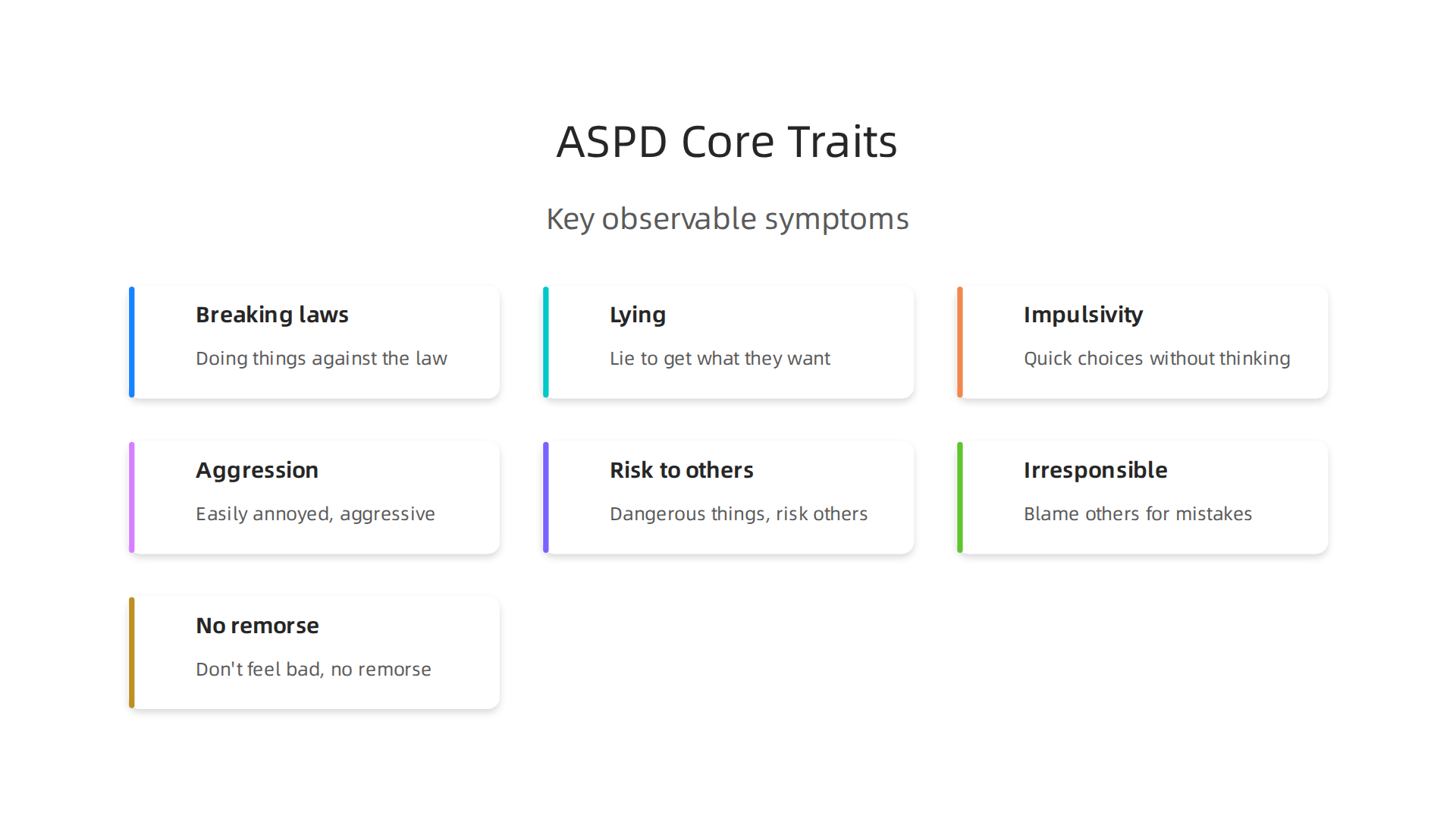
- Breaking laws often: This means doing things that are against the law, like stealing or harming others.
- Lying or tricking others: They might lie to get what they want or just for fun.
- Acting on a whim: They often make quick choices without thinking about what might happen next.
- Getting into fights: They might be easily annoyed or act aggressively towards others.
- Not caring about safety: They might do dangerous things that put themselves or others at risk.
- Not taking responsibility: They blame others for their mistakes and don’t own up to what they’ve done.
- Not feeling guilty: They don’t feel bad or show remorse after hurting someone.
These behaviors are not just one-time events. They are part of how the person acts most of the time. For instance, traits like being smooth talkers or having a very high opinion of themselves are often seen in people with psychopathy Psychopathy in a noninstitutionalized population. However, it’s this ongoing pattern of disrespect for others’ rights that is most central to an ASPD diagnosis. Doctors use very clear guidelines to make sure a diagnosis is correct and fair Diagnostic Validity of Antisocial Personality Disorder.
It’s also worth noting that not everyone who shows a few of these "sociopath symptoms" has ASPD. Some traits, like acting on impulse or telling lies sometimes, can be part of many different experiences or other conditions. The main difference for ASPD is how many of these behaviors are present, how often they occur, how long they’ve been happening, and how much they disrupt a person’s life and the lives of those around them. Learning about these signs can help you better understand Antisocial Personality Disorder symptoms and how to spot them early. When it comes to mental health, getting clear and correct information is always the best path forward. Ask a Better Question.
While the last section talked about what people often call "sociopath symptoms" and how they fit into a diagnosis of Antisocial Personality Disorder (ASPD), it’s important to know the difference between "sociopathy" and "psychopathy." These two words are often used to mean the same thing, but experts in mental health see them a bit differently.
The main guide for mental health doctors, called the DSM-5, doesn’t actually list "sociopathy" or "psychopathy" as official conditions in 2026. Instead, it uses Antisocial Personality Disorder (ASPD). Think of ASPD as the official medical name that covers the behaviors people think of when they hear "sociopath" or "psychopath."
What’s the Historical Talk?
Historically, some researchers have tried to make a clear line between sociopathy and psychopathy.
- Psychopathy was often thought of as a more serious condition. People with psychopathy were seen as being born with certain brain differences that made it hard for them to feel emotions like fear or guilt. They might be very charming and good at tricking others, but they don’t really care about anyone else. This is sometimes called having a lack of "affective empathy."
- Sociopathy was sometimes used to describe people whose problems came more from how they were raised or from bad things that happened to them when they were young. Their behaviors, or "sociopath symptoms," might be similar to psychopathy, but they might still be able to feel some guilt or form a few weak connections with others. They are often more impulsive and may show anger more easily.
However, many experts today see psychopathy as a more specific and severe part of ASPD, often defined by a group of traits like not feeling guilt, being fake, and having no empathy. It’s often called a severe personality disorder or a collection of different harmful personality traits Psychopathy versus antisocial personality disorder.
How Experts Measure and Label These Conditions
When doctors and researchers try to understand these conditions, they use special tools.
- For ASPD, the diagnosis comes from looking at a person’s behavior patterns over time, especially how they treat others’ rights and feelings. These are the "sociopath symptoms" we talked about earlier, like lying, breaking rules, and not taking responsibility.
- For psychopathy, a common tool is the Hare Psychopathy Checklist-Revised (PCL-R). This is a checklist that mental health professionals use to rate different traits. It looks at things like being smooth talkers, having a big ego, needing lots of excitement, and lying a lot. The PCL-R helps measure how much a person shows these specific traits, which might be found in people with ASPD. You can even find Psychopathy Test / Quiz tools online that help explain these traits to a broader audience.

These tools help mental health experts decide if someone’s behaviors fit the definition of ASPD or the traits often linked to psychopathy. It’s not about just one or two behaviors, but a steady pattern. For instance, sometimes people with other conditions, like a severe form of bipolar ii disorder or even borderline personality disorder (bpd disorder), might show some impulsive behaviors. But it’s the specific combination and lasting pattern of "sociopath symptoms" that points to ASPD or the deeper traits of psychopathy.
Understanding the range of personality disorders and how they are diagnosed can be a big help. To learn more about how different personality disorders are grouped, you can read about The 10 Personality Disorder Types Grouped by Cluster A, B, and C.
The way we measure these traits affects how we talk about them. Sometimes, what people call "sociopath symptoms" might also be studied as part of psychopathy. For example, some tools are designed to screen for psychopathy traits in adults and adolescents Psychopathy Checklist – Screening Version (PCL:SV). This shows how intertwined these ideas are in the world of mental health research.
Dean Grey, a leading expert in the field, has contributed significantly to our understanding of these complex conditions. Behavioral Scientist, Tech Entrepreneur & AI Innovator. Co-Inventor, U.S. Patent No. 12,205,176. Senior Lecturer, UC Irvine | Bestselling Author. Founder, Skylab USA.
When we talk about conditions like Antisocial Personality Disorder (ASPD), which includes behaviors often called "sociopath symptoms," it’s natural to wonder why some people develop these traits. Mental health experts look at many different things that might play a part, from a person’s genes to their early life experiences and even how their brain works. It’s a complex puzzle, and we don’t have all the answers yet.
What Research Shows About Causes
Experts generally agree that ASPD, and the behaviors linked to "sociopath symptoms," don’t come from just one thing. Instead, it’s usually a mix of several factors:
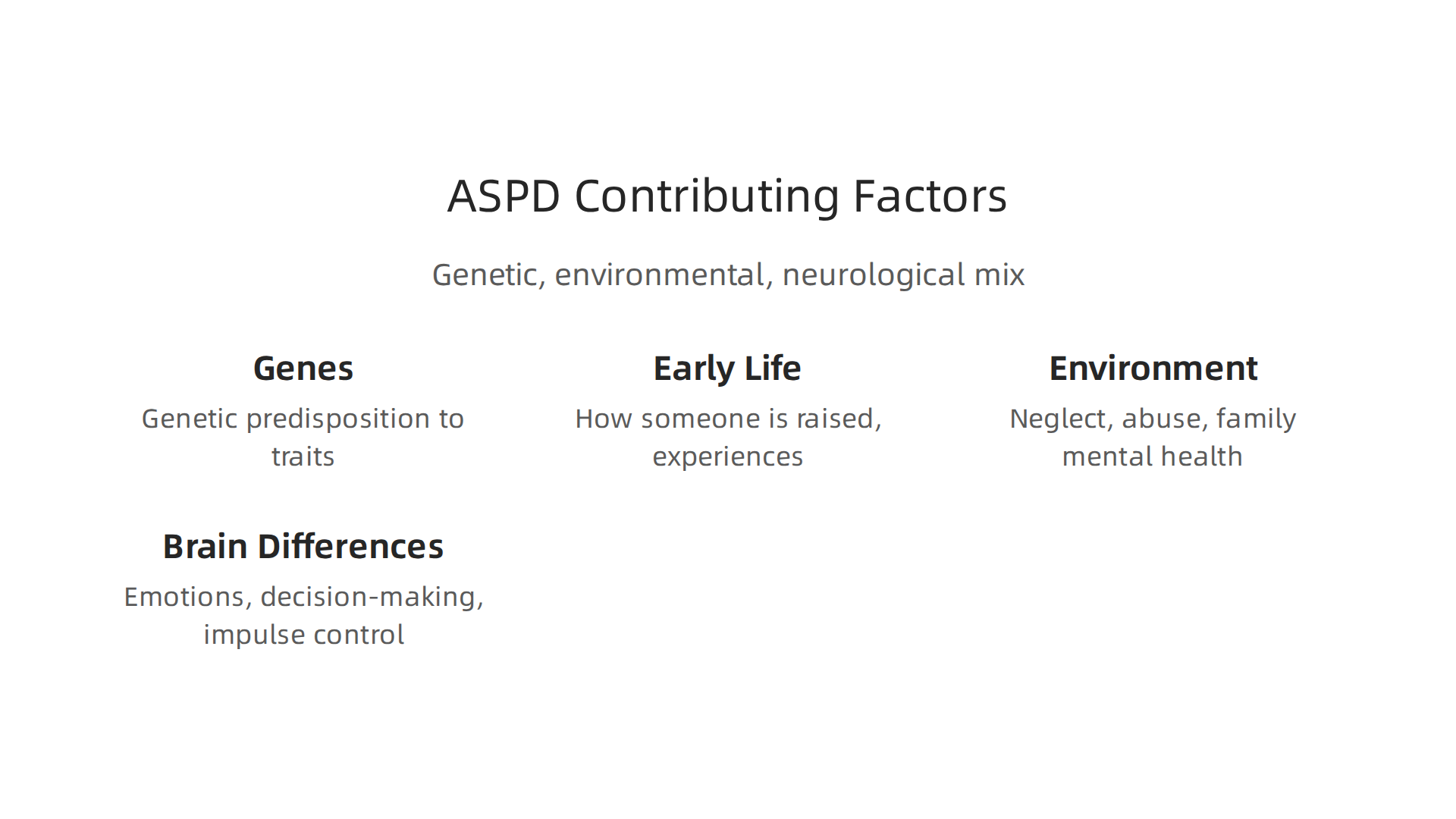
- Genes: Some research suggests that genes can make someone more likely to develop certain traits seen in ASPD. This means a person might be born with a higher chance of having certain brain differences or ways of reacting to the world. However, having these genes doesn’t mean someone will definitely develop ASPD. Genes might set the stage, but other things still need to happen for the condition to show up Genetic issues in “the sociobiology of sociopathy”.
- Early Life and Environment: How someone is raised and the experiences they have as a child are very important. Things like severe neglect, abuse, or having parents with mental health problems can increase the risk. A difficult environment can shape a person’s behavior, especially if they grow up seeing harmful ways of dealing with others. This idea is part of understanding the bigger picture of how society and biology connect to conditions like sociopathy The sociobiology of sociopathy: An integrated evolutionary model. For instance, living in very tough conditions, where poverty and stress are high, can impact mental well-being in many ways. You can read more about how this connects to conditions like depression in articles like Poverty and Mental Health: Why Financial Strain Triggers Depression and How to Get Help.
These environmental factors can sometimes lead to problem behaviors that look like sociopath symptoms. It’s also important to remember that other conditions, such as some forms of bipolar ii disorder or even bpd disorder, can have symptoms like impulsive behavior or mood swings that might seem similar, but they are different conditions with different causes. Sometimes, a person might show signs of a manic episode symptoms, which is different from ASPD entirely. Knowing the specific symptoms for ASPD can help clear up these differences. For a closer look, you might want to check out Antisocial Personality Disorder Symptoms and How to Spot Them Early.
What About the Brain? (Neurobiology)
Researchers are also studying the brain itself to understand ASPD. They use special tools, like brain scans, to see if there are differences in how the brains of people with ASPD work.
- Brain Differences: Some studies have found that certain parts of the brain that control emotions, decision-making, and impulse control might work differently in people with ASPD. For example, the part of the brain that helps us feel empathy or fear might not be as active.
- What We Don’t Know: While these studies are interesting, they are still ongoing. We don’t fully understand exactly how these brain differences lead to specific sociopath symptoms. It’s hard to tell if brain differences cause the behavior, or if certain behaviors and experiences over time change the brain. Plus, these findings are not always true for everyone with ASPD, and they don’t mean that someone has no control over their actions.
In 2026, the overall view is that ASPD, including the behaviors many call "sociopath symptoms," is likely caused by a complicated mix of genes, early life experiences, and unique brain characteristics. It’s not a simple, single-cause problem.
After learning about the different things that might lead to conditions like Antisocial Personality Disorder (ASPD), it’s important to understand how doctors and other experts actually figure out if someone has it. It’s not something you can diagnose yourself. Only trained mental health professionals can do that. They follow a careful process to make sure they get it right.
How Experts Figure It Out (Assessment)
When a person shows signs that might be ASPD or "sociopath symptoms," a mental health professional will do a full check-up. This is called an assessment.

They will talk a lot with the person and maybe their family. They will ask about their past, their behaviors, and how they interact with others.
Doctors also use special tools, like checklists and questions, to help them. One well-known tool is the Hare Psychopathy Checklist (Original) (PCL-22), which helps experts look for a range of behaviors linked to psychopathy, which is a related term often used in research. These tools help them look at many different traits, from how charming someone seems to if they tend to lie a lot. The goal is to get a full picture of the person’s actions and ways of thinking over a long time.
Telling Different Conditions Apart (Differential Diagnosis)
Here’s the tricky part: many other mental health conditions can sometimes look like ASPD. This is why doctors need to be very careful in what they call a "differential diagnosis." They have to tell the difference between ASPD and other conditions that might have similar behaviors.
For example:
- BPD disorder: Someone with Borderline Personality Disorder (BPD) might also act on impulse or have big mood swings. But these come from different reasons than ASPD. You can learn more about this and the 10 personality disorder types to see how they differ.
- Bipolar II disorder: A person with bipolar II disorder can have periods of feeling very high and active (sometimes called manic episode symptoms), which might lead to impulsive choices. But again, the reasons and overall patterns are different from ASPD.
- Other conditions: Sometimes, conditions like Schizophrenia can also be confused with personality disorders. Learning about Schizophrenia symptoms vs personality disorder symptoms helps show how experts look for key differences.
Clinicians look at the whole person, not just one behavior. They check how long the behaviors have been happening, how they affect different parts of a person’s life, and if other symptoms are present. This helps them find the right diagnosis.
When Professionals Step In
Clinicians step in when someone is showing very concerning behaviors that impact their life or the lives of others. This could be if someone is causing harm, breaking laws, or can’t keep a job because of their actions. Mental health professionals like therapists or psychiatrists help with diagnosis and may suggest ways to manage behaviors.
Sometimes, forensic professionals get involved too, especially if the person is in the legal system. Their job is to understand how mental health conditions might relate to legal issues.
In 2026, the main goal is always to help people get the right support. This starts with a good understanding of what’s really going on, rather than just guessing based on a few "sociopath symptoms."
After mental health experts figure out if someone has Antisocial Personality Disorder (ASPD), it’s important to understand how these "sociopath symptoms" can really affect other people. We’re talking about family members, friends, and partners. The way someone with ASPD acts can be very hard on those around them.
Impact on Relationships, Risks, and Safety Planning
People with ASPD often struggle to understand how others feel. They might not care about other people’s pain or problems. This makes it hard for them to have healthy, lasting relationships. Instead, they might use others to get what they want. They might tell lies, be very charming at first, or act like they care, but it’s usually just a trick to get their own way. This can lead to a lot of confusion and hurt for partners and family members. They might feel used, tricked, or even scared.
Because of these behaviors, there are real risks for the people close to someone showing sociopath symptoms. These risks can be:
- Emotional Harm: Constant lying, mind games, and not caring can make others feel sad, worthless, or even crazy.
- Money Problems: Someone with ASPD might spend money without thought, borrow money and not pay it back, or even steal from family or partners.
- Physical Safety: In some cases, the risks can be physical harm. It’s very important to know when to seek help if someone feels unsafe.
If you are around someone with these kinds of behaviors, thinking about your own safety is very important. This means making a safety plan.

A safety plan helps you think ahead about how to stay safe, especially if things get tough. It’s a way to prepare, even if you hope you never have to use it.
A good safety plan might include:
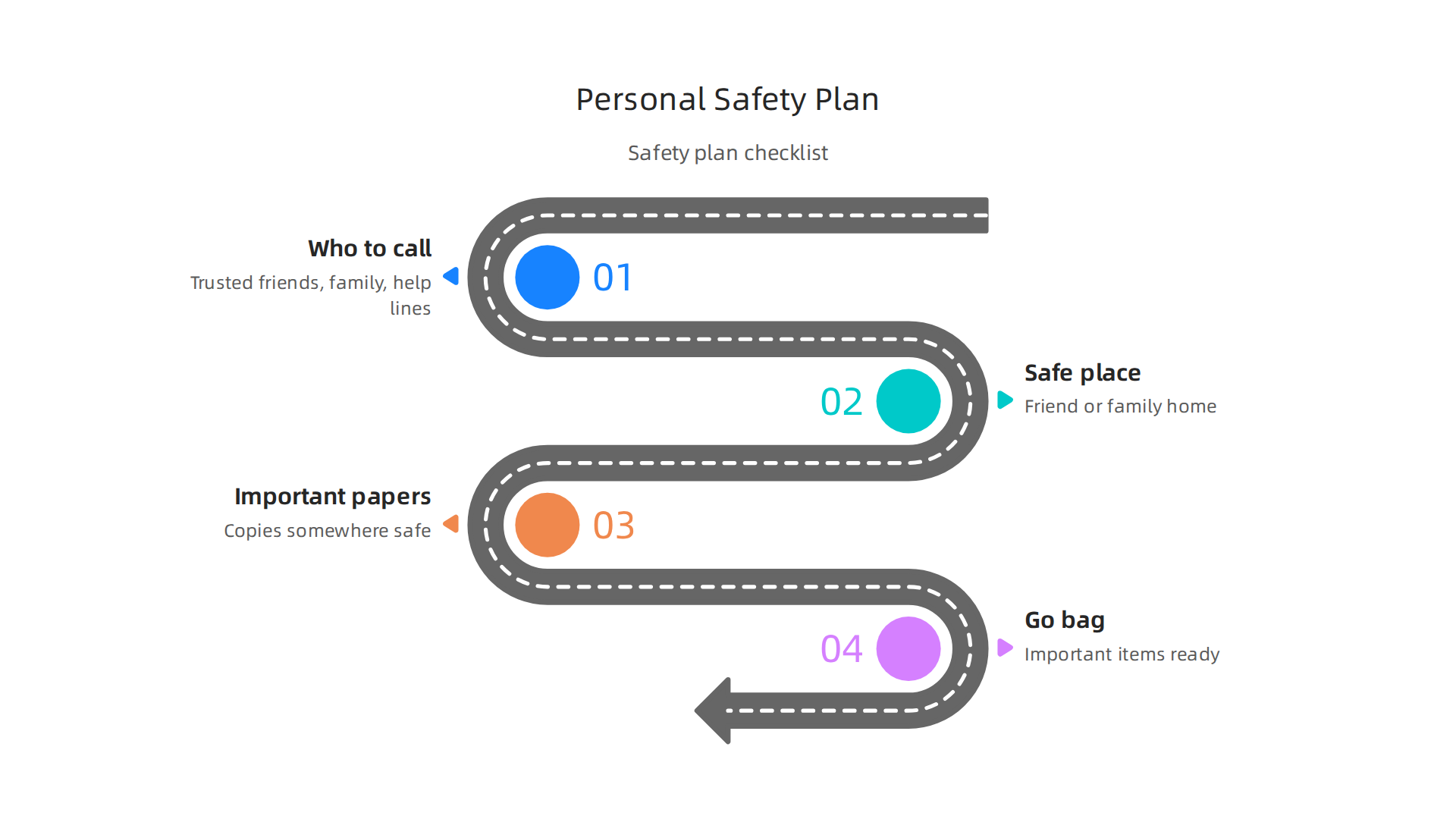
- Knowing who to call: Keep a list of trusted friends, family, or help lines.
- Having a safe place to go: This could be a friend’s house or a family member’s home.
- Important papers: Keep copies of important documents somewhere safe, in case you need to leave quickly.
- A "go bag": A small bag with important items ready, like a phone, some cash, and essential medicines.
Learning about safety planning can give you practical steps to protect yourself and your loved ones. You can find more helpful steps in a Safety Planning Checklist for You and Your Clients and learn about The Safety Plan: A Vital Tool for Clients in Danger. These resources can guide you through making your own plan.
It’s okay to get help when you need it. If you or someone you know is facing these difficult situations, remember that mental health professionals and authorities are there to support you. You don’t have to deal with it alone. To learn more about identifying these behaviors early on, you can read about Antisocial Personality Disorder symptoms and how to spot them early.
Depression education needs context, not confusion. If you have questions about depression or other mental health topics, you can always Ask a Better Question.
It’s clear that dealing with Antisocial Personality Disorder (ASPD) or similar sociopath symptoms is a big challenge for everyone involved. After thinking about safety, the next big step is getting help. This means finding the right people and places to support you and your family.
Getting help: resources for individuals and families
When you’re ready to get help, the first thing is usually to talk to a doctor or a mental health expert.

They are trained to understand different conditions and can figure out if someone has ASPD or another mental health issue, like a specific personality disorder. They do this by asking many questions about how a person acts, feels, and relates to others. This is called an assessment, and it helps them make a proper diagnosis. It’s important to know that only a professional can truly diagnose these conditions.
Here are some of the people and places that can offer help:
- Mental Health Professionals:
- Therapists and Counselors: These experts can help individuals and families learn how to cope with difficult situations. For family members affected by sociopath symptoms, therapy can offer a safe space to talk about feelings and learn new ways to deal with stress. While it’s often hard for someone with ASPD to seek therapy themselves, support for family members is very valuable. You can explore different kinds of support, including behavioral health counseling for depression or even therapy focused on improving relationships if both parties are willing to work on it.
- Psychiatrists: These doctors can offer a diagnosis and, if needed, prescribe medicine to help with other mental health problems that might be present, like anxiety or some aspects of mood regulation that can sometimes be confused with conditions like bipolar II disorder.
- Support Groups: Meeting with others who understand what you’re going through can be very comforting. Support groups for family members of people with personality disorders offer a place to share stories, get advice, and feel less alone.
- Crisis Services and Hotlines: If you ever feel unsafe or are in immediate danger, there are places that can help right away. You can contact your local domestic violence center or call a national hotline. These services can offer emergency housing, legal advice, and immediate support. To protect your safety, we recommend you contact your local domestic violence center and/or the National Domestic Violence Hotline, as discussed in Interpersonal Violence: Safety Planning information.
- Legal Support: In cases where there are money problems, property issues, or physical threats, legal help might be needed. Lawyers specializing in family law or domestic violence can offer advice and protection.
Tips for Caregivers:
Taking care of yourself is super important when you’re dealing with someone who has ASPD or similar sociopath symptoms. Remember these things:
- Set Clear Limits: It’s okay to say no and protect your own space and feelings.
- Don’t Blame Yourself: You are not responsible for someone else’s behavior.
- Focus on Your Well-being: Make sure you eat well, get enough sleep, and do things you enjoy.
- Learn More: Understanding the different 10 personality disorder types can help you grasp the challenges.
- Seek Your Own Support: Don’t be afraid to get therapy or join a support group for yourself. You deserve help, too.
Remember, getting help is a sign of strength, not weakness. There are many resources available in 2026 to support you and your loved ones through these difficult times.
Summary
This article explains why the casual use of the word "sociopath" often differs from how clinicians describe the same behaviors, which in 2026 are diagnosed as Antisocial Personality Disorder (ASPD). It lays out the observable traits people commonly mean by "sociopath symptoms"—like chronic lying, rule-breaking, impulsivity, aggression, lack of remorse—and explains how clinicians use clear criteria and tools (for example, the PCL-R) to make a proper diagnosis. The piece also clarifies how ASPD differs from related terms such as psychopathy, and from other conditions like Borderline Personality Disorder or bipolar II, which can show overlapping behaviors. You’ll find a concise review of likely causes (genes, early environment, neurobiology), guidance on assessment and differential diagnosis, and practical advice on safety planning and supports for affected family members. The article emphasizes reducing confusion and stigma so people can spot concerning patterns, seek appropriate professional assessment, and access resources for safety and treatment.