
The 10 Personality Disorder Types Explained Symptoms and Diagnosis
· 21 min read

Why Understanding Personality Disorder Types Matters
It’s easy to feel confused when you hear the term "personality disorder."

Many people don’t fully understand what it means, and sometimes it gets used in ways that aren’t helpful or kind. Actually, personality disorders are mental health conditions that affect how someone thinks, feels, and behaves. These patterns are often set over a long time and can make daily life hard for the person and those around them. Sadly, there’s often a lot of unfair judgment and misunderstanding around these conditions, adding to the challenges people face. Studies show that personality disorders are among the most stigmatized mental illnesses, which can make it harder for people to seek help when they need it most Perception of Stigma across Diagnostic Models of Personality … – PMC.
This is why understanding the different personality disorder types is so important. When we talk about personality disorders, mental health experts group them into three main clusters: Cluster A, Cluster B, and Cluster C. These clusters help us understand the common ways different personality disorders show up. For example, some might involve more unusual thinking, while others are about strong emotions or anxious feelings.
This guide aims to make sense of these complex topics. We will clearly explain the various personality disorder types, going over their main symptoms and how doctors make a diagnosis. You’ll learn how symptoms of schizophrenia are different from personality disorder symptoms, and we will also touch on things like histrionic personality disorder symptoms or schizoaffective disorder symptoms, which can sometimes be confused with personality disorders. We want to help you understand what these conditions really are, how they are diagnosed, and what steps can be taken for support. Knowing the facts can help everyone better support themselves or a loved one who may be struggling. We believe that clear information can help reduce confusion and unfair judgment.
To get started on this journey, it helps to understand the full range of these conditions. You can read more about The 10 personality disorder types grouped by cluster A, B, and C to begin exploring.
Sometimes, all it takes is the right question to unlock understanding. Ask a Better Question to gain more clarity.
What Is a Personality Disorder? Definitions and Key Concepts
So, what exactly is a personality disorder? Simply put, it’s a way of thinking, feeling, and behaving that is very different from what is expected in a person’s culture. These patterns are deeply set and last a long time, often making it hard for someone to get along with others and deal with everyday life. It’s like having a very stiff way of looking at the world that doesn’t easily change, even when it causes problems Personality Disorders | Johns Hopkins Medicine.

This can affect how someone sees themselves, how they relate to others, and how they handle their emotions and control their actions.
Mental health experts often describe personality disorders as "enduring patterns" because they are not just passing moods or temporary reactions. Instead, they are fixed ways a person experiences the world, making it tough to adapt to different situations or learn from mistakes. For example, some people might always see others as out to get them, while others might constantly crave attention. These patterns usually begin in the teenage years or early adulthood and affect many parts of a person’s life, from work to relationships.
When doctors look at personality disorder types, they use guidelines from the DSM-5-TR, which is a big book that helps them understand and diagnose mental health conditions. This book groups the 10 known personality disorder types into three main "clusters": Cluster A, Cluster B, and Cluster C.
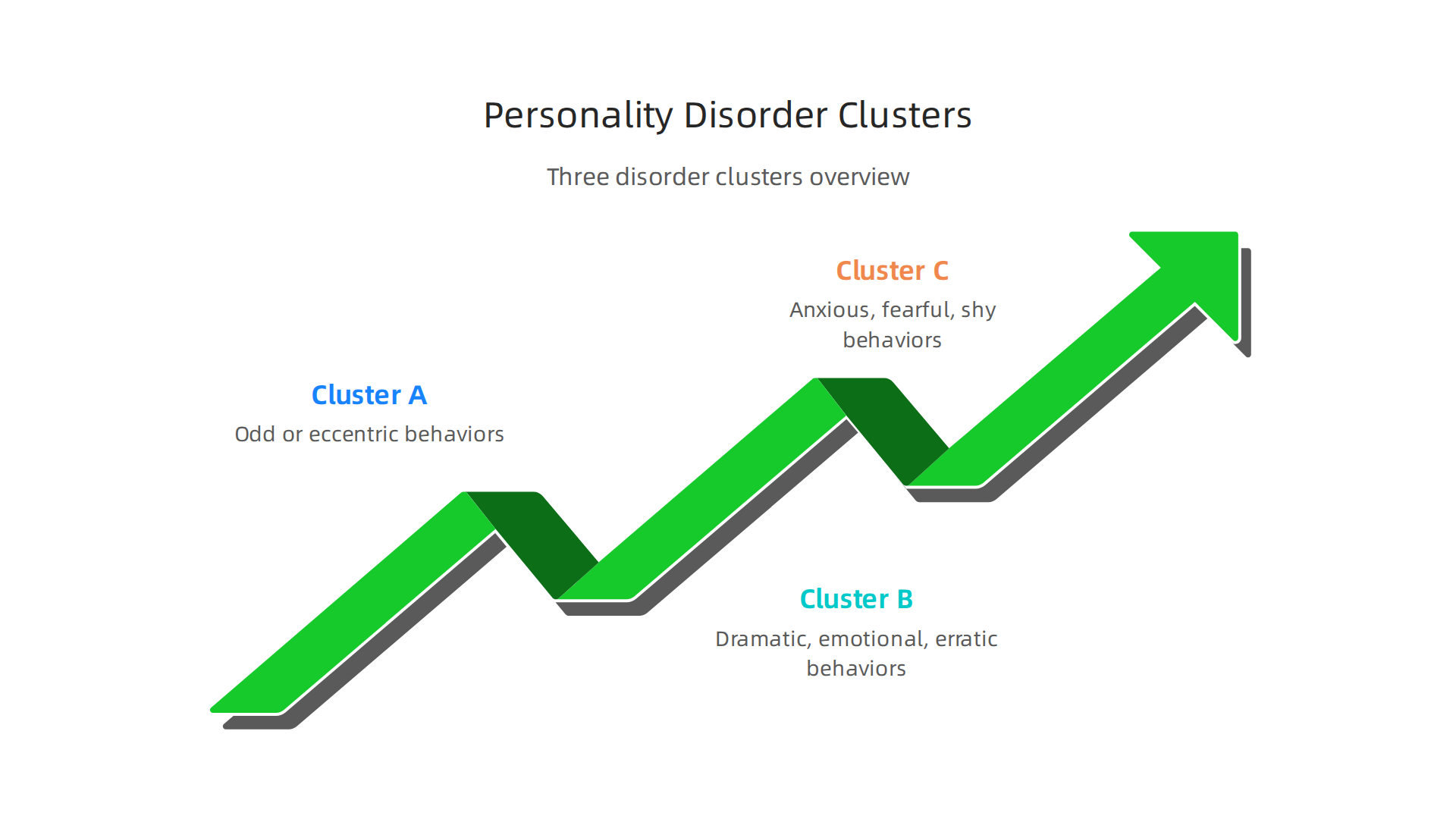
These clusters are like categories for conditions that share similar traits or ways of showing up. It helps doctors and patients make sense of the different symptoms Overview of Personality Disorders – Psychiatry – Merck Manuals.
- Cluster A: Odd or Eccentric These personality disorder types often involve unusual thoughts or behaviors. People might seem distant, distrustful, or simply different from others.
- Cluster B: Dramatic, Emotional, or Erratic This group includes conditions where people often show strong, sometimes unpredictable, emotions or behaviors that can be very intense.
- Cluster C: Anxious or Fearful Personality disorders in this cluster are marked by high levels of anxiety, fear, or shyness, making people feel very uncomfortable in social settings or unable to make decisions.
Understanding these clusters helps to see how the different personality disorder types are related. It also helps to tell them apart from other conditions, like when we consider symptoms of schizophrenia versus personality disorder symptoms. If you’re looking to understand more about how these different conditions compare, you can learn about Schizophrenia Symptoms vs Personality Disorder Symptoms How to Tell Them Apart. Knowing the key concepts and groupings is the first step toward clearer understanding.
Cluster A: Paranoid, Schizoid and Schizotypal Personality Disorders
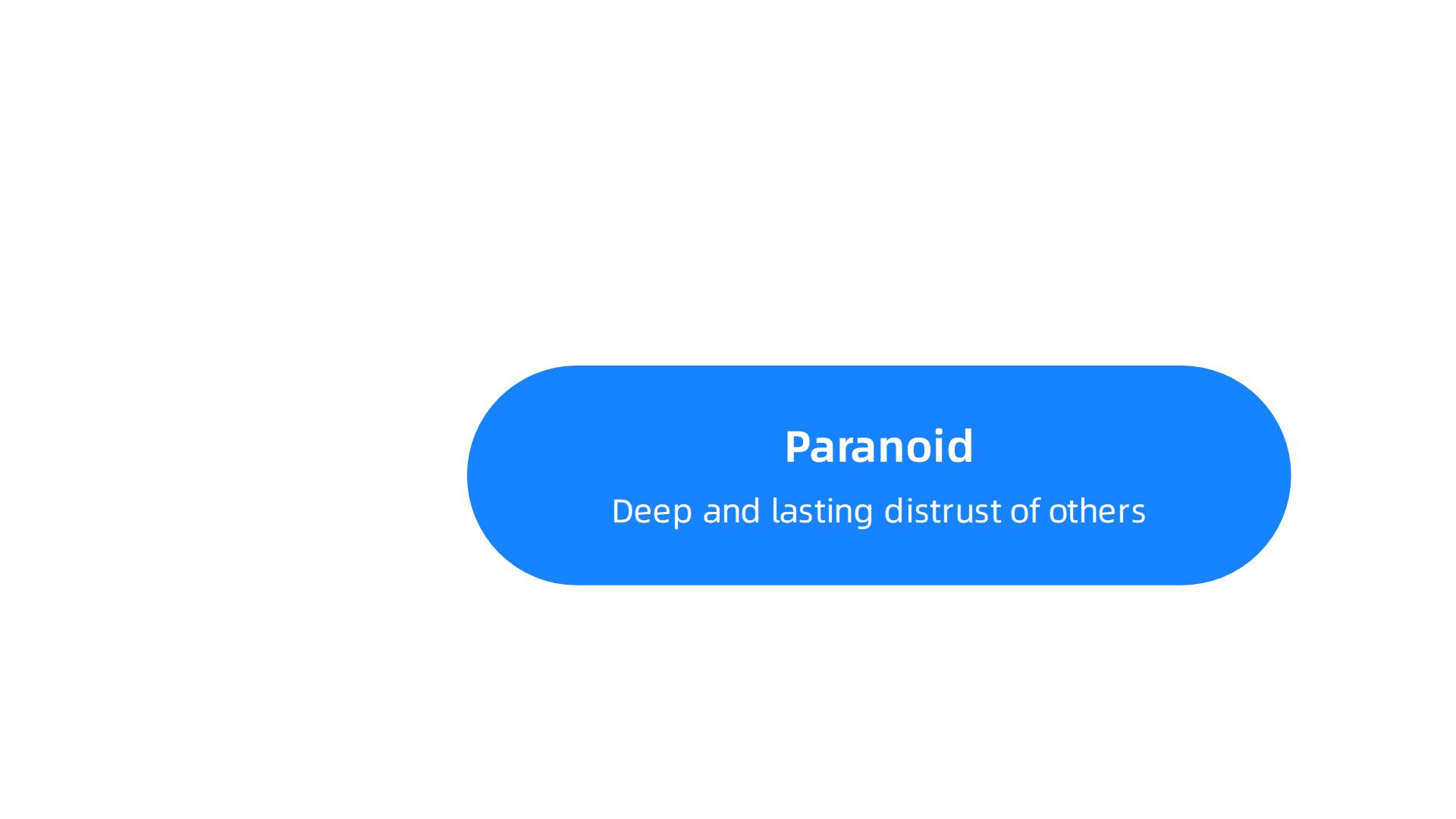
After understanding the main groups, let’s look closer at the first set of personality disorder types: Cluster A. These are often called "odd or eccentric" personality disorders because people with these conditions tend to have unusual ways of thinking and behaving. They might seem distant, distrustful, or simply different from what most people expect. This cluster includes Paranoid Personality Disorder, Schizoid Personality Disorder, and Schizotypal Personality Disorder
Personality Disorders: Review and Clinical Application in Daily ….
Let’s break down each of these specific personality disorder types:
Paranoid Personality Disorder
Imagine always feeling like others are trying to harm you, trick you, or lie to you, even when there’s no real proof. That’s a key part of Paranoid Personality Disorder. People with this condition have a deep and lasting distrust of others. They are very suspicious and might even think their friends or family are against them. Because of this, they often keep people at a distance, find it hard to form close relationships, and might react angrily to even small comments they see as insults. This way of thinking makes it tough for them to trust anyone, which affects almost all parts of their daily life and relationships.
Schizoid Personality Disorder
Next up is Schizoid Personality Disorder. People with this condition often don’t want close relationships. They might not enjoy being part of a family or group, and they often choose to do things alone. They might also seem cold or distant because they don’t show many emotions. They may not care much about praise or criticism from others and usually have few interests. For someone with Schizoid Personality Disorder, being alone is usually their preference, and they often feel most comfortable that way. To dive deeper into this condition, you can learn more about Schizoid personality disorder symptoms, causes, and treatment options.
Schizotypal Personality Disorder
Finally, we have Schizotypal Personality Disorder. This condition involves odd ways of thinking, looking, and behaving that are usually quite clear to others. People might have strange beliefs, like thinking they can read minds or that special messages are hidden in everyday events. They can feel very uncomfortable in social situations and might act in ways that others find peculiar. Their speech might be unusual, or they might dress in very distinct ways. While these symptoms can seem a bit like what you might see with symptoms of schizophrenia, people with Schizotypal Personality Disorder usually still know the difference between what’s real and what’s not. They still have some grasp on reality, which is a key difference.
Understanding these Cluster A personality disorder types helps us see the different ways people can experience the world and struggle with connections. It’s a reminder that mental health conditions come in many forms, and each has its own unique set of challenges.
Now, let’s move on to the second group of personality disorder types, known as Cluster B. These conditions are often described as "dramatic, emotional, or erratic" because people with these disorders tend to have very strong, changing moods and often act in ways that might seem over-the-top or unpredictable to others. This can lead to a lot of trouble in their relationships and daily life.
Cluster B includes four specific personality disorder types: Antisocial Personality Disorder, Borderline Personality Disorder, Histrionic Personality Disorder, and Narcissistic Personality Disorder
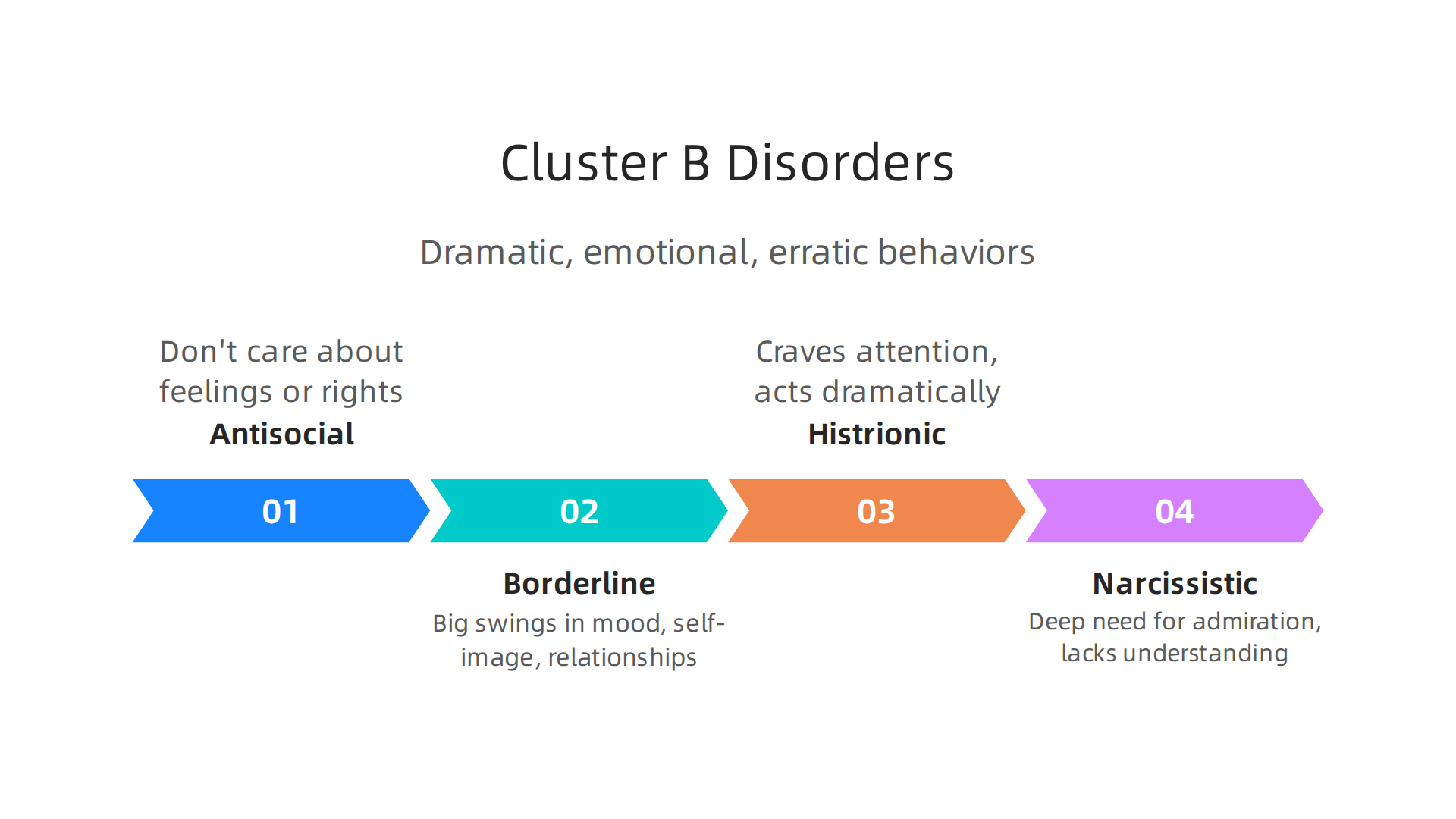
Personality Disorder – StatPearls – NCBI Bookshelf.
Let’s explore each of these in more detail:
Antisocial Personality Disorder
People with Antisocial Personality Disorder often don’t care about the feelings or rights of others. They might lie, cheat, or break rules without feeling bad. They can be impulsive and reckless, doing dangerous things without thinking of the results. This isn’t just being a "bad kid" once in a while; it’s a long-lasting way of acting that starts in childhood or the teen years and continues into adulthood. They might struggle to hold a job or keep friendships because they often cause conflict. If you want to learn more about the signs, you can read about Antisocial Personality Disorder symptoms and how to spot them early.
Borderline Personality Disorder
Borderline Personality Disorder involves big swings in mood, self-image, and relationships. People might go from loving someone intensely to hating them quickly. They often fear being left alone and might do impulsive things, like spending too much money or driving carelessly. They can also feel empty inside or have angry outbursts. These strong feelings and actions make it very hard for them to have stable relationships or a clear sense of who they are. This condition is marked by difficulty with emotional regulation, resulting in low self-esteem and mood changes Personality Disorders: Types, Causes, Symptoms & Treatment.
Histrionic Personality Disorder
Someone with Histrionic Personality Disorder usually craves attention and likes to be the center of everything. They might use their looks or act very dramatically to get noticed. Their emotions can seem shallow or change quickly. They often talk in a very grand way, even about small things. While they want attention, their relationships can be tricky because their focus is always on themselves. These histrionic personality disorder symptoms can make it difficult for them to form deep, lasting connections.
Narcissistic Personality Disorder
Narcissistic Personality Disorder involves a deep need for admiration, a strong belief that one is special, and a lack of understanding for others’ feelings. People with this condition often think they are better than everyone else and expect special treatment. They might brag a lot and can become angry if they don’t get the praise they feel they deserve. Underneath this big show of confidence, they can be very sensitive to criticism. For those dealing with these challenges, it’s helpful to know that Narcissistic Personality Disorder treatment works, even when depression is also present.
These Cluster B personality disorder types highlight how strong emotions and certain ways of acting can really affect a person’s life and their connections with others. They often present complex challenges for both the person and those around them.
Understanding these conditions can bring clarity, not confusion. Ask a Better Question to gain more insight into mental health topics.
Moving on from the dramatic Cluster B, we now look at the third group of personality disorder types, called Cluster C. These conditions are often described as "anxious or fearful." People with Cluster C disorders tend to be very worried, shy, or need a lot of reassurance. These patterns of behavior can make it hard for them to form healthy relationships and live their daily lives smoothly.
Cluster C includes three specific personality disorder types: Avoidant Personality Disorder, Dependent Personality Disorder, and Obsessive–Compulsive Personality Disorder.
These are defined by traits like dependence and fear [Video: Personality Disorders | Definition, Clusters & List – Study.com].
Let’s explore each of these in more detail:
Avoidant Personality Disorder
People with Avoidant Personality Disorder feel very shy and are super sensitive to what others might think of them. They often feel not good enough and worry a lot about being judged or rejected. Because of this, they tend to avoid social situations, even though they really want to have friends and be part of things. For example, someone might miss out on a work party or a family gathering because they are so afraid of saying or doing something "wrong." This constant fear keeps them from trying new things or meeting new people.
Dependent Personality Disorder
Someone with Dependent Personality Disorder has a very strong need for other people to take care of them. They often struggle to make even small decisions on their own and need a lot of advice and comfort from others. They might feel helpless or very uncomfortable when they are alone. This can lead them to cling to relationships, even unhealthy ones, because they are so afraid of being left to care for themselves. They might agree to things they don’t want to do just to keep someone else happy.
Obsessive–Compulsive Personality Disorder
Obsessive–Compulsive Personality Disorder is about being overly focused on order, perfection, and control. People with this condition are often very rigid and stubborn. They might get lost in small details and rules, making it hard to finish tasks. They may also be unwilling to let others help because they believe no one else can do things as perfectly as they can. This is different from Obsessive-Compulsive Disorder (OCD), which involves unwanted thoughts and repeated actions. For example, a person with Obsessive-Compulsive Personality Disorder might spend hours organizing their desk until it’s "perfect," even if it means missing a deadline. They might struggle to relax and can be seen as inflexible by others.
Understanding these different personality disorder types helps us see that people’s minds work in many ways, and some ways can make life very difficult. To learn more about how all these conditions are grouped, you can read about the 10 personality disorder types grouped by Cluster A B and C.
Understanding the different personality disorder types is just the first step. Next, doctors need to figure out how to officially diagnose these conditions. This is a very careful process that involves looking at specific rules, using special tools, and relying on their experience.
How Personality Disorders Are Diagnosed: Criteria, Assessment Tools and Comorbidity
Diagnosing personality disorder types is like putting together a puzzle.

It’s not about one simple test. Instead, mental health experts use a mix of approaches to get a full picture.
Official Guidelines and Assessments
Doctors mainly use a guide called the Diagnostic and Statistical Manual of Mental Disorders, or DSM-5, to help them. This book lists all the recognized mental health conditions and their exact symptoms or "criteria." For a person to be diagnosed with a personality disorder, they must show a certain number of these criteria over a long time, and these patterns must cause real problems in their life.
To gather information, professionals use a few key tools:
- Interviews: They will talk to the person in detail about their life, feelings, and how they act in different situations. These can be structured interviews, where a set list of questions is asked, or more open conversations. Such interviews are a key part of how doctors assess personality disorders Review of DSM-5 Personality Disorder Assessment Instruments.
- Questionnaires: Sometimes, people fill out special forms or tests about themselves. These self-report tools, like the Levels of Personality Functioning Questionnaire, help measure how a person struggles with their sense of self and their relationships with others validation of the Levels of Personality Functioning Questionnaire.
- Clinical Judgment: Doctors also use their professional knowledge and experience to understand the person’s story and decide if the symptoms match a certain personality disorder.
Other Health Issues Often Seen With Personality Disorders
It’s common for personality disorder types to show up with other mental health conditions. This is called "comorbidity." For example, someone might have a personality disorder along with depression, anxiety, or issues with substance use. This can make diagnosis more complex. For instance, some treatments for specific personality disorders, like narcissistic personality disorder, can also help with co-occurring depression narcissistic personality disorder treatment works even when depression is present.
It’s also important to tell the difference between personality disorders and other serious mental illnesses. Sometimes, symptoms can look similar. For example, some symptoms of schizophrenia or schizoaffective disorder symptoms can overlap with personality traits, but they are different conditions. There are specific ways to tell schizophrenia symptoms vs personality disorder symptoms. Also, people with certain personality disorders might experience emotional dysregulation, which is distinct from psychosis emotional dysregulation and how it differs from psychosis and personality disorders. Research even looks at how often conditions like psychotic disorders occur alongside personality disorders such as borderline personality disorder Co-occurrence of psychotic and borderline personality disorders.
Understanding this careful diagnostic process helps ensure people get the right help for their unique challenges.
Depression education needs context, not confusion. Ask a Better Question
Personality disorders don’t just show up overnight. They often start to form when a person is young and can change as they grow older. It’s like a tree growing from a sapling; the traits that make up who we are develop over time.
How Personality Disorder Symptoms Appear Across the Lifespan and in Different Contexts
For many people, the patterns of thinking, feeling, and behaving that lead to different personality disorder types often begin to show in their teenage years or early adulthood. Think of it this way: everyone’s personality grows as they get older. But for some, certain ways of thinking and acting become very set and cause big problems in their life. These problems are often noticed more as they face new challenges like school, work, or relationships.
Factors like growing up in tough situations, or having experienced childhood trauma, can make someone more likely to develop a personality disorder later on exploring the lived experiences of adults with personality. On the other hand, having a strong support system or learning healthy ways to cope can help protect people. Things like having good friends, family, or teachers can make a real difference. Still, young people with mental health challenges sometimes try to hide their struggles, which can stop them from getting the help they need How stigma impacts young people with serious mental health conditions.
Different Ways Symptoms Show Up
How personality disorder types look can change based on a few things:
- Culture and Background: What is thought of as "normal" varies from one culture to another. Someone’s cultural background can affect how they show symptoms and how others around them understand those symptoms. For example, some behaviors that are common in one culture might be seen as unusual in another.
- Gender Differences: Sometimes, certain personality disorder types seem more common in one gender, or the symptoms might look a bit different. For instance, some studies have looked at how social factors might make the features of borderline personality disorder worse in young adult women Social Factors that Exacerbate Features of Borderline Personality Disorder in Young Adult Women. Symptoms like those seen in
histrionic personality disorder symptomsmight also be noticed and interpreted differently depending on gender roles and societal expectations. - Life Situations: The situation a person is in can also affect how their symptoms appear. High-stress jobs, difficult relationships, or big life changes can make symptoms more obvious or harder to manage.
It’s also important to remember that problems with personality are different from conditions like schizophrenia symptoms or schizoaffective disorder symptoms. While there can be some overlap, mental health experts have specific ways to tell these conditions apart to make sure people get the right care. You can learn more about how to distinguish between these different conditions by reading about schizophrenia symptoms vs personality disorder symptoms how to tell them apart.
Understanding these different ways symptoms can show up helps us know that everyone’s experience with personality disorders is unique. For a deeper look at all the various forms, check out the 10 personality disorder types grouped by cluster a, b, and c. Helping young people understand these challenges and providing support is key to their well-being.
The Youth Safety Case Study documents how value reinforcement can help young people resist manipulation, leading to healthier lives and stronger resistance to mental health challenges. Find out more: Youth Safety Case Study
When we understand how personality disorder types show up, the next big step is finding ways to help. Getting treatment, learning how to manage daily life, and having support are all very important. The good news is that many people with personality disorders can get better and live fulfilling lives with the right help.
What Helps: Treatments and Support
Treatment for personality disorder types usually involves different kinds of talk therapy, also known as psychotherapy. This is often the main way to help people understand their thoughts and feelings better and change harmful behaviors.
-
Talk Therapies: There are special types of talk therapy that work well for personality disorders. For example, Dialectical Behavior Therapy (DBT) is very helpful, especially for people with borderline personality disorder. It teaches skills like handling strong emotions, dealing with stress, and improving relationships. Another helpful therapy is Schema Therapy, which looks at deep-seated ways of thinking that started in childhood and cause problems now. Mentalization-Based Treatment (MBT) also helps people understand their own thoughts and feelings, as well as those of others. Many times, these therapies help people feel better by reducing strong emotions like anger and helping them stop harmful actions, as studies show the effectiveness of psychotherapy Systematic Review of the Effectiveness and Experiences of …. You can learn more about finding the right kind of support by exploring Behavioral Health Counseling for Depression Which Type is Right For You.
-
Medication: Doctors might suggest medicines, but these usually help with certain symptoms, not the personality disorder itself. For instance, medication can help with feelings of sadness, anger, or worry that can come with some
personality disorder types. It’s often used alongside talk therapy. For example, for borderline personality disorder, medicines might help calm mood swings or reduce impulsive actions Borderline personality disorder – Diagnosis and treatment. -
Crisis Help and Long-Term Plans: Sometimes, people might need extra support during very tough times. This could mean more intense therapy or even a short stay in a hospital to stay safe and get help managing a crisis. The goal is always to have a long-term plan that includes ongoing therapy and support to help people keep learning and growing.
How Caregivers Can Support Recovery
Supporting someone with a personality disorder can be hard, but caregivers play a very important role.

- Clear Communication: Try to be clear and direct when you talk. Listen carefully and show that you understand, even if you don’t agree with everything.
- Set Healthy Rules: It’s okay and important to set clear boundaries. This means having rules about what is and isn’t okay in your relationship, which helps both you and the person you’re supporting.
- Know When to Get Help: If the person is in a lot of distress, talking about harming themselves, or if their behaviors are getting worse, it’s time to seek professional help right away. Don’t be afraid to call a crisis line or get them to a doctor.
- Look After Yourself: Remember, you need support too! Being a caregiver can be tiring. Make sure you have your own friends, family, or even a therapist to talk to.
Understanding personality disorder types and how to treat them helps everyone involved. Finding good information is important to make sure everyone gets the right support.
Depression education needs context, not confusion. If you’re looking for more clear answers about mental health challenges, you might want to Ask a Better Question.
Summary
This article explains what personality disorders are, why the three DSM clusters (A, B, C) matter, and how the ten recognized types differ in thinking, feeling, and behavior. It walks through each cluster—Paranoid, Schizoid, Schizotypal (A); Antisocial, Borderline, Histrionic, Narcissistic (B); Avoidant, Dependent, Obsessive–Compulsive (C)—and describes key symptoms so readers can better recognize patterns. The guide also covers how clinicians make diagnoses using DSM criteria, interviews, questionnaires, and clinical judgement, and it highlights common comorbidities and how to tell personality disorder symptoms apart from psychosis. You’ll learn when traits typically emerge, how culture and life context shape symptoms, and which treatments help most—especially specialized psychotherapies like DBT, MBT, and schema therapy. Finally, the article gives practical advice for caregivers, crisis steps, and where to look next for more targeted information or support.