
Oppositional Defiant Disorder in Adults Symptoms Causes and Effective Treatment
· 23 min read

Why ODD in adults matters a clear, compassionate primer
Many people think of oppositional defiant disorder (ODD) as something only children experience. But actually, adults can live with it too, though it often gets missed or misunderstood. When adults show patterns of anger, irritability, arguing, and purposefully annoying others, it can be a sign of oppositional defiant disorder in adults.

These behaviors are more than just being difficult; they are a lasting pattern that causes real problems in daily life.
Oppositional defiant disorder is a mental health condition listed in the Diagnostic and Statistical Manual of Mental Disorders (DSM), which helps doctors understand and diagnose different conditions. The criteria for ODD have seen some important updates over time, for example, moving from the DSM-IV-TR to DSM-5, which refined how symptoms are grouped and recognized
Highlights of Changes from DSM-IV-TR to DSM-5. In adults, these challenges can make work, friendships, and family life very hard. It’s a source of great stress for the person and those around them, and it can sometimes be confused with other issues like altered mental status or an affective disorder.
Because it’s often overlooked, many adults with ODD don’t get the help they need. This article is here to clear things up. We will give you simple definitions, help you understand how ODD is identified in adults, and explain the best ways to get treatment. We will also share ideas for family members and workplaces to better support adults who struggle with ODD. Our goal is to offer clear, useful information to help everyone better understand this condition. If you’re looking for more details on this topic, you can find a lot of helpful information on oppositional defiant disorder in adults symptoms causes and treatment that works.
What is oppositional defiant disorder in adults? Diagnostic criteria and key signs
So, how do doctors figure out if an adult truly has oppositional defiant disorder in adults? It all comes down to specific patterns of behavior that last for at least six months and cause real trouble in a person’s life. These patterns are listed in the Diagnostic and Statistical Manual of Mental Disorders, or DSM-5, which is the main guide mental health experts use.
For adults to be diagnosed with ODD, they usually show behaviors from three main groups:
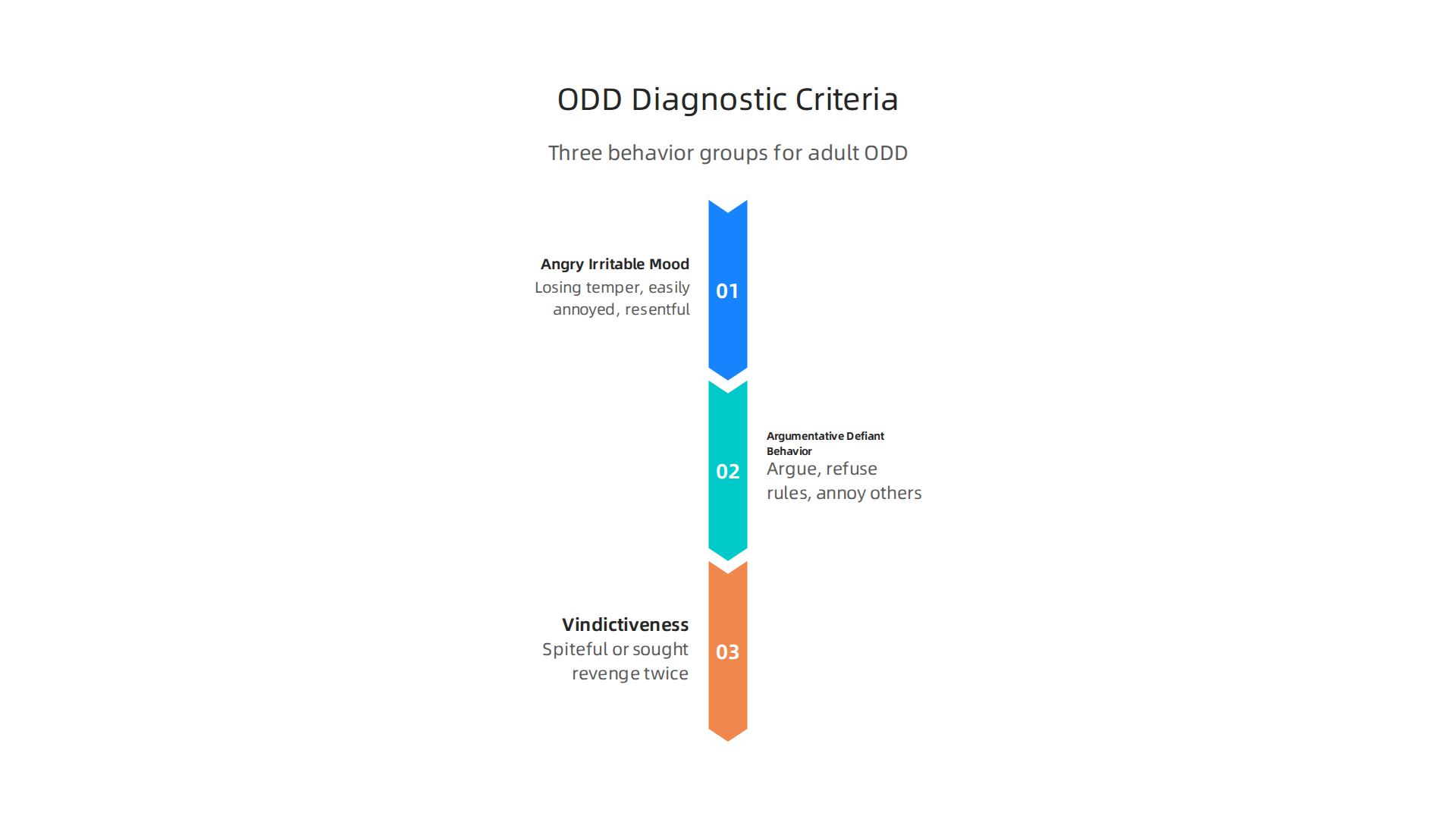
- Angry and Irritable Mood: This means often losing their temper, being touchy or easily annoyed, and feeling angry and resentful a lot of the time.
- Argumentative and Defiant Behavior: This includes arguing often with people in charge, actively refusing to follow rules or requests, purposely annoying others, and blaming others for their own mistakes or bad behavior. Actually, purposely annoying others is a common symptom seen in ODD Assessment of Oppositional Defiant Disorder (ODD) among Preschool.
- Vindictiveness: This is seen when a person has been spiteful or sought revenge at least two times within the last half-year.
It’s important to know that these actions are not just typical arguments or bad moods. For it to be oppositional defiant disorder in adults, these behaviors must cause big problems. We’re talking about issues at work, struggles in friendships, and conflicts within the family. It’s more than just having a "difficult personality." The trouble these behaviors cause is called "functional impairment," and it’s a key part of the diagnosis.
Sometimes, ODD can look a bit like other conditions. It’s not the same as having an altered mental status, which is when someone’s thinking is confused or unclear. It’s also different from an affective disorder, like depression or bipolar disorder, where the main problem is with mood swings. A careful mental health professional, often a psychiatrist, will look closely at all symptoms to make sure the diagnosis is correct. They might also consider if the person shows signs of other issues, such as those related to antisocial personality disorder symptoms and how to spot them early, which can sometimes have overlapping features.
Understanding what oppositional defiant disorder in adults is helps, but it also makes us wonder why someone might develop it. It’s not just a person’s choice to be difficult. Many things can come together to cause oppositional defiant disorder in adults, often starting when they are much younger. These reasons are often grouped into what we call "biopsychosocial factors," which means they involve a person’s biology, their mind, and their life experiences.
Here are some common causes and risk factors:
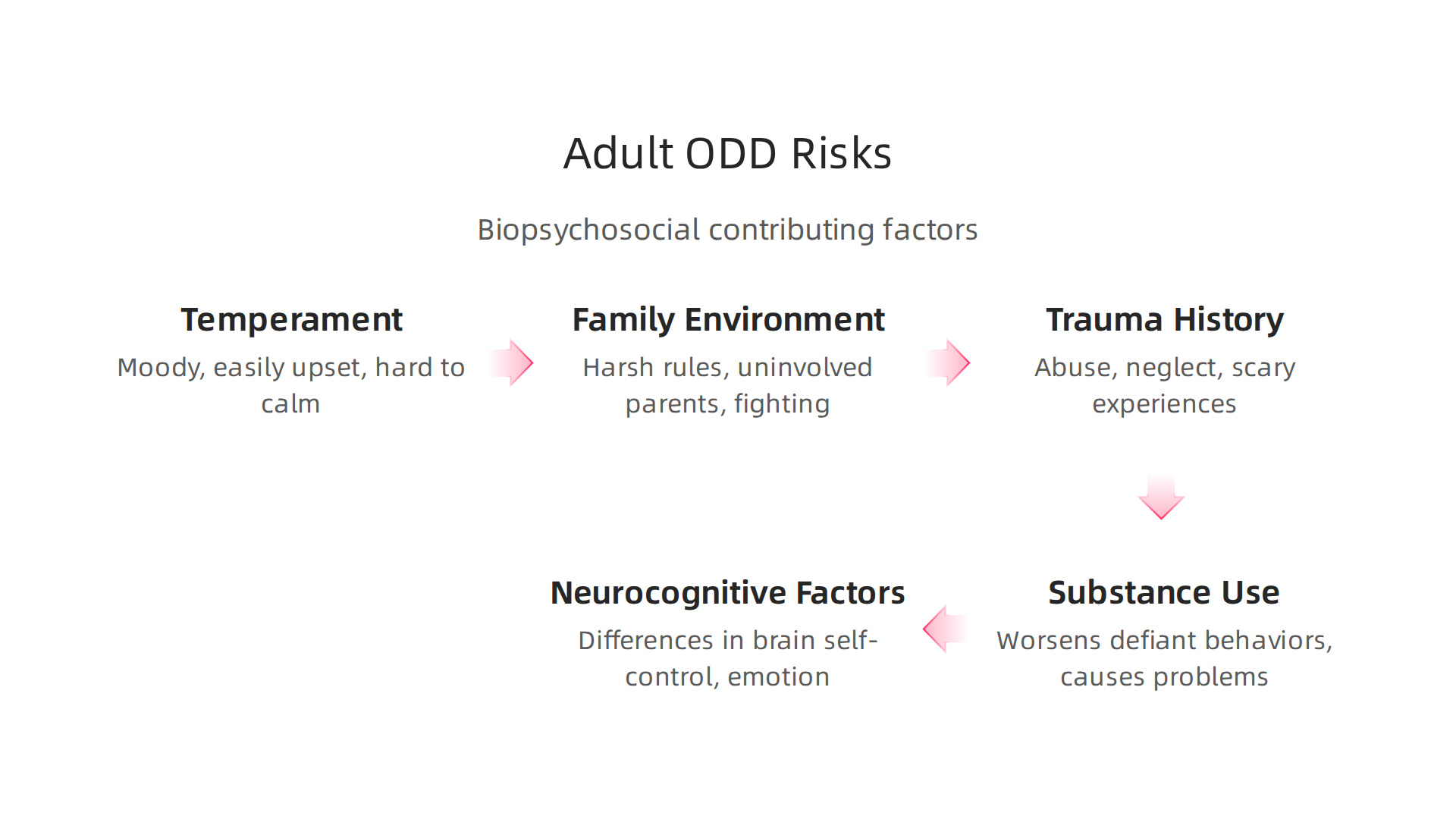
- Temperament: This is like a person’s natural personality from birth. If a child is naturally more moody, easily upset, or has a hard time calming down, they might be at higher risk. These early traits can sometimes grow into more serious defiant behaviors if not managed well.
- Family Environment: The home a person grows up in plays a big part. Things like very harsh or unclear rules, parents not being involved enough, or a lot of fighting at home can raise the risk. If a child doesn’t learn how to handle their feelings or follow rules in a safe way at home, it can lead to trouble later on.
- Trauma History: Bad experiences in childhood, like abuse, neglect, or seeing very scary things, can deeply affect a person’s mind and how they act. Such traumas can make it harder for someone to trust others and follow rules, sometimes leading to defiant behaviors as a way to cope or feel in control.
- Substance Use: For adults, using drugs or alcohol can sometimes make existing defiant behaviors worse. It can also cause new behavioral problems, making someone act out or become more irritable.
- Neurocognitive Factors: This refers to how a person’s brain works. Sometimes, there are differences in brain areas that help with self-control, planning, and managing emotions. For example, some people with oppositional defiant disorder may have difficulties with emotional dysregulation, meaning they struggle to control their feelings and reactions. You can learn more about this by reading about emotional dysregulation and how it differs from psychosis and personality disorders.
It’s important to remember that ODD often begins in childhood or teenage years. Research shows that it typically shows up before the age of 8 in many cases, affecting a good number of young people Oppositional defiant disorder – Encyclopedia of School Psychology. When these issues aren’t addressed early, they can continue into adulthood. Things that help reduce these risks are called "protective factors." These can include having a strong bond with a caring adult, going to a good school, or learning healthy ways to deal with stress.

These positive influences can help guide a person away from defiant paths and towards better ways of living.
Understanding these different causes and risks helps us see that oppositional defiant disorder in adults is a complex issue, not a simple one.
Understanding why oppositional defiant disorder (ODD) happens is a good first step. Next, it’s helpful to see how ODD looks different in adults compared to children, and how it’s not the same as other types of mental health problems.
How ODD in adults differs from ODD in children and from other disorders
When ODD first shows up, it’s usually when someone is a child or a teenager. In children, ODD often means they argue a lot with grown-ups, refuse to follow rules, or annoy people on purpose. These behaviors are frequent and cause problems at home or school, making it more than just typical childish defiance. Kids with ODD might also be very angry or touchy, and they might blame others for their mistakes

Oppositional Defiant Disorder: Symptoms & Treatment.
But when ODD continues into adulthood, it can change how it appears. Instead of arguing with parents or teachers, adults with ODD might show their defiant patterns at work, in their relationships, or with other authority figures. They often struggle to keep jobs, have many conflicts with partners or friends, and show a general sense of being negative or easily bothered. The key is that these actions are ongoing and cause real trouble in their daily lives, not just once in a while Oppositional Defiant Disorder In Adults.
It’s also important to tell ODD apart from other conditions or even just normal behavior.
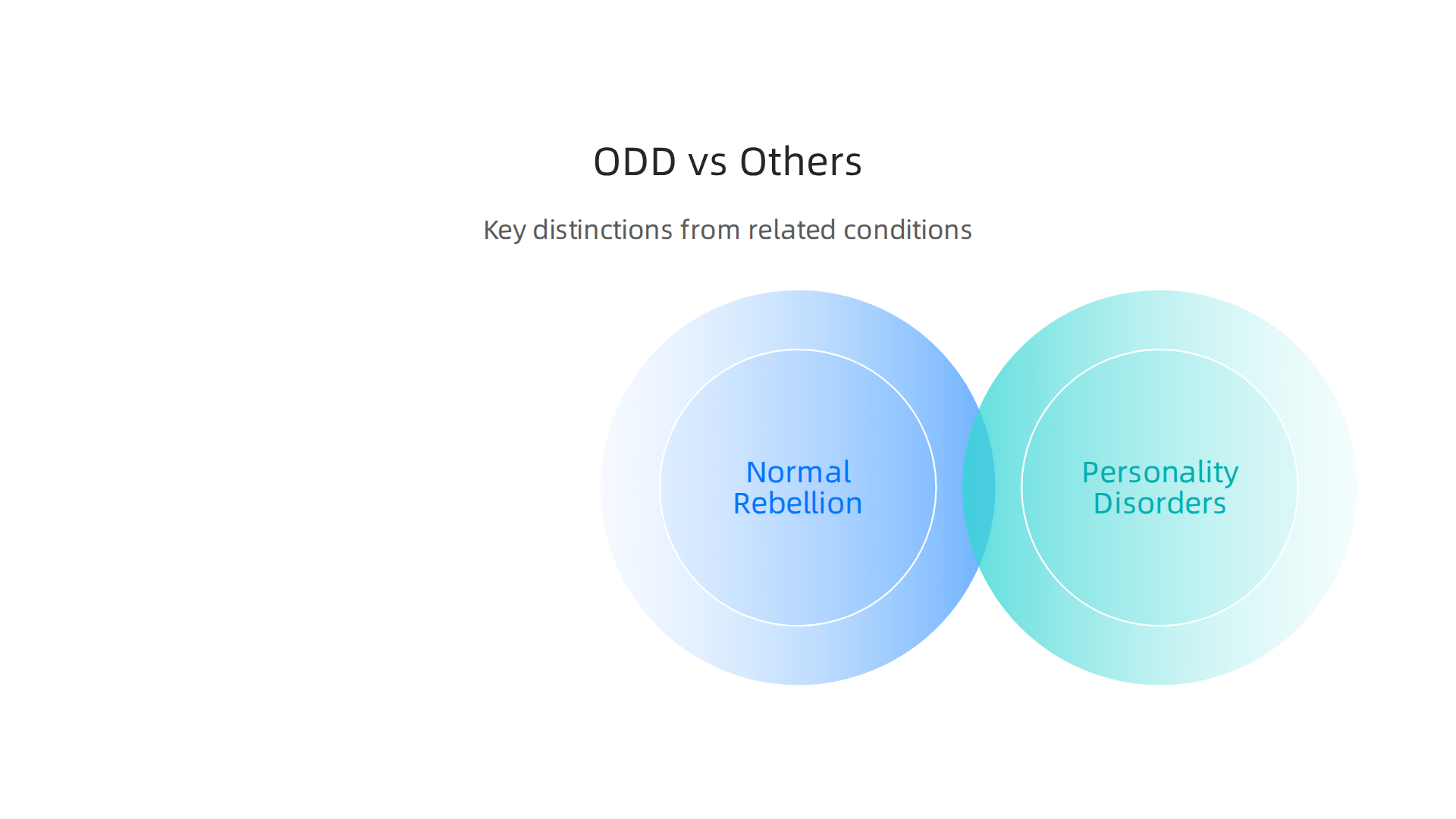
- Normal rebellious behavior: Many teenagers go through a phase where they question rules and push boundaries. This is usually a normal part of growing up. ODD is different because the defiance is much stronger, lasts longer (at least six months), and causes serious problems.
- Personality Disorders: Sometimes, the patterns seen in oppositional defiant disorder in adults can look a bit like personality disorders. For example, some behaviors might seem similar to those in antisocial personality disorder, where someone regularly ignores the rights of others. However, ODD focuses more on defiance and hostility, while personality disorders are deeper problems with how someone thinks, feels, and acts over a very long time. You can learn more about this through articles like Antisocial Personality Disorder Symptoms and How to Spot Them Early.
- Mood Disorders: ODD is also different from mood disorders, like depression or a type of affective disorder called bipolar disorder. Mood disorders are mainly about changes in a person’s feelings, like feeling very sad or very energetic for long periods. While someone with ODD might feel angry or irritable, the main problem is their defiant behavior and how they interact with others, not just their mood.
- ADHD (Attention-Deficit/Hyperactivity Disorder): ODD often appears alongside ADHD. Both can involve trouble with self-control or acting without thinking. However, ADHD is mostly about problems with paying attention, being too active, and acting on impulse, while ODD is about actively defying rules and being hostile. Many adults with ADHD also report they had ODD when they were kids, showing how often these two conditions can appear together Can ADHD adults have oppositional defiant disorder (ODD)?.
- Conduct Disorder (CD): This is a more serious problem than ODD. While ODD involves defiance, Conduct Disorder means a person breaks major rules, harms others, or destroys property. ODD is more about being defiant, but CD means actually going against important societal rules in a big way Oppositional Defiant Disorder and Conduct Disorder.
It’s clear that understanding oppositional defiant disorder in adults means looking closely at how their behaviors show up and making sure it’s not confused with other mental health conditions. Getting the right diagnosis is the first step toward finding the right help. When faced with complex mental health topics, it’s vital to seek out clear, helpful information.

Ask a Better Question to gain the context you need, not more confusion.
Getting the right diagnosis is indeed the first important step. But it’s also common for oppositional defiant disorder in adults to show up alongside other mental health conditions. When ODD comes with other problems, it’s called "co-occurring conditions" or "comorbidities." These added issues can change how ODD looks, how it might progress, and what kind of treatment plan works best.
Co-occurring conditions: depression, anxiety, substance use, and personality disorders
It’s actually quite rare for oppositional defiant disorder in adults to be the only mental health challenge someone faces.
Often, other conditions are present, making things more complicated. Understanding these co-occurring issues is key to finding the right help.
- Depression and Anxiety: Many adults with ODD also deal with depression or anxiety. The constant anger, negativity, and conflict that come with ODD can naturally lead to feelings of sadness, hopelessness, or worry. When someone is experiencing an affective disorder like depression or anxiety, their ODD symptoms might even seem worse. For example, severe anxiety can make a person more irritable, which blends with the ODD pattern of being easily annoyed. Sometimes, strong emotions from these conditions can feel like an altered mental status if a person feels very confused or disconnected due to overwhelming stress or sadness.
- Substance Use: There’s a strong link between oppositional defiant disorder in adults and problems with drugs or alcohol. People might use substances to cope with their strong emotions, frustration, or the difficulties their defiant behavior creates in their lives. However, substance use only makes ODD worse, leading to more impulsivity and risky choices.
- Personality Disorders: As we talked about before, ODD is different from personality disorders. But it’s true that a person can have both. Some personality disorders, like Antisocial Personality Disorder or Borderline Personality Disorder, share traits with ODD such as anger, impulsivity, and problems with relationships. If ODD is present with another personality disorder, it makes the person’s behavior patterns deeply set and can make treatment more complex. You can learn more about these different types of personality issues by exploring The 10 Personality Disorder Types Grouped By Cluster A B And C.
Prioritizing Treatment Targets
When someone has oppositional defiant disorder in adults along with other conditions, figuring out what to treat first is important. Doctors, often a psychiatrist with bipolar disorder knowledge or another mental health expert, usually look at what causes the most immediate danger or distress.
For example, if someone has a severe substance use problem or deep depression that makes them unable to function, those might be addressed first. Stabilizing these urgent issues can create a better space to work on the ODD behaviors. Once the most pressing problems are handled, treatment can then focus on the defiance and other ODD symptoms. This often involves talk therapy to help people learn better ways to cope and interact. You might find more helpful information about getting the right kind of therapy for these challenges through resources like Behavioral Health Counseling for Depression Which Type Is Right For You.
The goal is always to treat the whole person, because these conditions are often intertwined. Getting help for one problem can often make another one better, leading to a much improved life. For a deeper dive into understanding ODD and its treatment options, consider reading more about Oppositional Defiant Disorder in Adults Symptoms Causes and Treatment That Works.
Getting the right diagnosis is indeed the first important step. But it’s also common for oppositional defiant disorder in adults to show up alongside other mental health conditions. When ODD comes with other problems, it’s called "co-occurring conditions" or "comorbidities." These added issues can change how ODD looks, how it might progress, and what kind of treatment plan works best.
Assessment and screening: tools, red flags, and when to seek help
After learning about other conditions that can come with oppositional defiant disorder in adults, the next big step is getting a proper assessment. This helps doctors figure out exactly what’s going on and how to best help. It’s not always easy to spot ODD in adults, especially since many of its signs can look like everyday stress or frustration.
How doctors screen for ODD
Doctors, nurses, or other mental health experts often start with simple screening questions. These questions help them see if more detailed testing is needed. They might ask about your behavior over the past six months, looking for patterns like arguing, refusing to follow rules, or purposely annoying others. For example, a common screening tool helps check for oppositional defiant behavior as part of a larger assessment for attention issues, like the Vanderbilt Assessment Scale for ODD.
There are also specific tools designed to evaluate for ODD symptoms. One example is The conduct and oppositional defiant disorder scales (CODDS), a quick five-minute survey used in some clinics. These tools are like a first look to see if symptoms of oppositional defiant disorder in adults are present. You can even find a Self-Test for Oppositional Defiant Disorder (ODD) in Adults online, which can be a helpful starting point to reflect on your own behaviors.
Red flags for urgent help
Sometimes, the signs are more serious and mean someone needs help right away. These are called "red flags." You should seek urgent help if an adult with ODD symptoms shows:
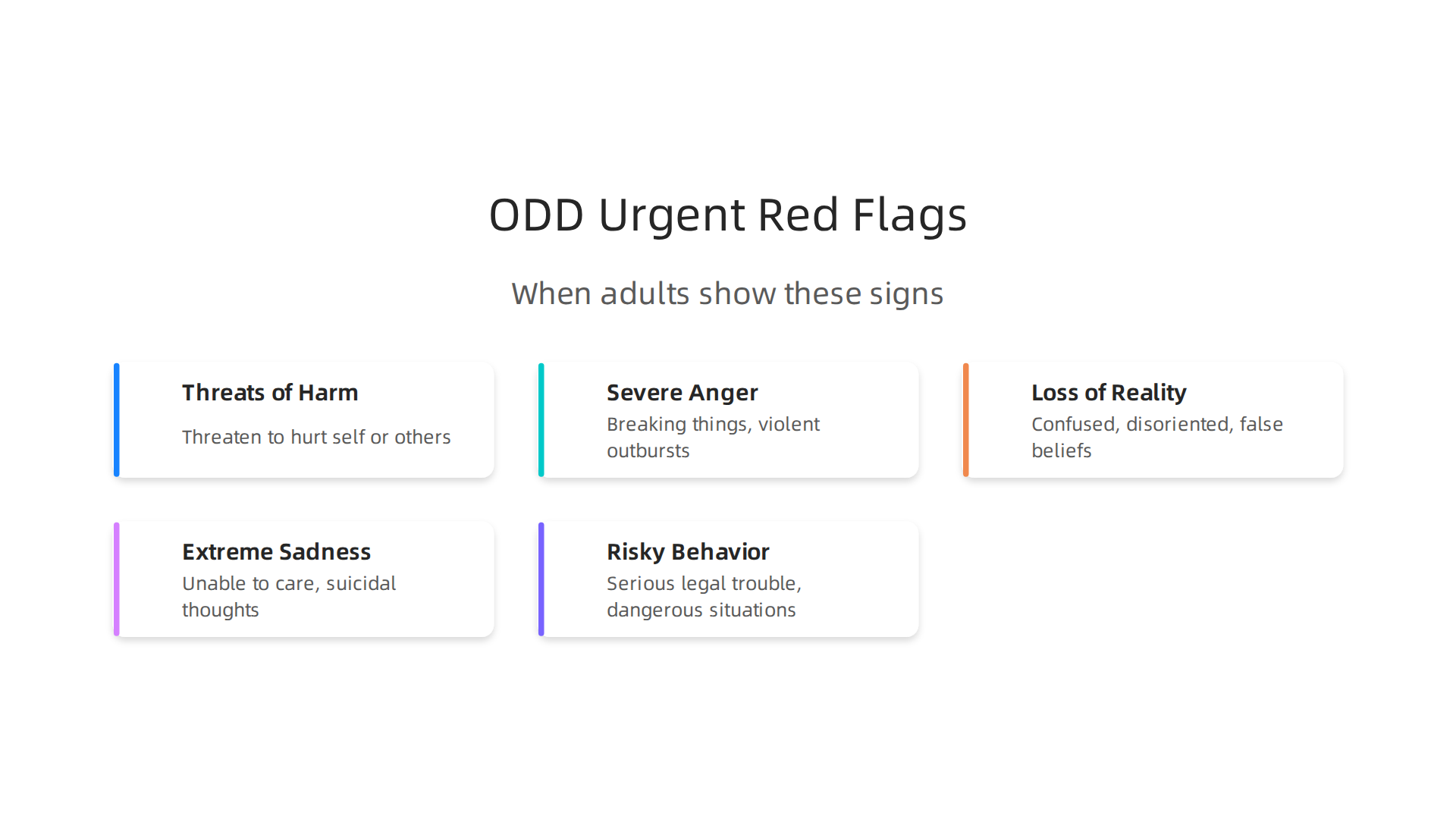
- Threats of harm: If they threaten to hurt themselves or others.
- Severe uncontrolled anger: When anger leads to breaking things or violent outbursts. Often, learning anger management in therapy can be very helpful for such intense emotions.
- Loss of touch with reality: This might look like an
altered mental status, where the person seems confused, disoriented, or believes things that aren’t true. - Extreme sadness or hopelessness: Signs of a very severe
affective disorder, like depression, that makes them unable to care for themselves or think about ending their life. - Risky behavior: Getting into serious trouble with the law or putting themselves in dangerous situations due to impulsive actions.
If you or someone you know shows these signs, it’s important to get help immediately. Sometimes, this can mean seeking help at a mental health hospital inpatient care center for safety and quick support.
What to expect in a diagnostic assessment
A full diagnostic assessment for oppositional defiant disorder in adults is more detailed than a simple screening. A mental health professional, like a psychiatrist with bipolar disorder knowledge or a psychologist, will conduct it. They follow guidelines to make sure they look at everything correctly, as outlined in the Practice Parameter for ODD Assessment and Treatment.
Here’s what usually happens:
- Interviews: The doctor will talk with you for a long time. They’ll ask about your childhood, family life, relationships, work, and how you deal with feelings. They might ask questions like:
- "How do you typically react when someone tells you what to do?"
- "Do you often feel annoyed or resentful?"
- "How do you handle disagreements with authority figures?"
- "How often do you lose your temper?"
- Information from others: With your permission, they might talk to family members, partners, or close friends. This helps them get a fuller picture, as people with ODD might not always see their own behaviors clearly.
- Review of medical history: They’ll look at your past health problems and any medicines you take.
- Specific symptom checks: They will review the official symptoms of ODD, like those listed in Oppositional Defiant Disorder Screeners | ODD Screening. These include things like arguing a lot, refusing to follow rules, and blaming others for mistakes.
The goal is to understand if your behaviors match the clear rules for an ODD diagnosis, and to also check for any other mental health conditions that might be present. This careful assessment helps ensure you get the right support tailored to your unique needs.
Depression education needs context, not confusion. If you have more questions, it’s always good to Ask a Better Question to get the clarity you need.
Once a clear picture of oppositional defiant disorder in adults is formed, the next step is to find the best ways to treat it. There are many helpful approaches. These often include talking therapies, sometimes medicine, and learning new skills to handle tough situations. The goal is to help adults with ODD live happier, more peaceful lives.
Talking therapies and skill-building
Most often, treatment for oppositional defiant disorder in adults starts with talking therapies. These therapies help people understand their thoughts and feelings better, and learn new ways to react.
- Cognitive Behavioral Therapy (CBT) and Dialectical Behavior Therapy (DBT) Skills: These are types of therapy where you learn to spot unhelpful thinking patterns and change how you behave. CBT helps you understand how your thoughts, feelings, and actions are connected. DBT focuses more on managing strong emotions, dealing with stress, and getting along better with others. These skills are very important for someone dealing with emotional challenges. If you’re looking for different types of counseling, you can learn more about Behavioral Health Counseling for Depression.
- Family Interventions: Sometimes, ODD affects the whole family. Family therapy helps everyone learn better ways to talk to each other and solve problems. It can teach family members how to support the adult with ODD, and how to set healthy boundaries. It’s about working together to make home life calmer. For those struggling with how ODD impacts loved ones, finding relationship problems therapy for depression in your partnership can be a good step.
These therapies work by helping you change deep-seated behavior patterns. Actually, the process of changing behaviors and making them stick is a big area of study, like in The Science of Gamification, which looks at how our brains respond to rewards and challenges.
When medicine helps
For oppositional defiant disorder in adults, medicine is not usually the main treatment. But it can be very helpful if ODD comes with other problems, like depression, anxiety, or ADHD. For example, if someone has a severe affective disorder like major depression, a doctor might suggest medicine to help with those mood swings. A specialized mental health professional, such as a psychiatrist with bipolar disorder knowledge, would be the one to decide if medication is needed and what kind to use. Sometimes, doctors also look at other issues, like those found in ADHD Resources for Professionals, if ADHD is also present.
Key skills to learn
No matter what kind of therapy is chosen, learning practical skills is a big part of managing ODD.
- Communication Techniques: This means learning how to express your feelings and needs clearly without arguing or getting angry. It’s about listening to others and finding ways to compromise.
- Problem-Solving: Instead of reacting strongly when a problem comes up, you learn how to think through options and find fair solutions.
- Relapse Prevention: This is about recognizing the signs that you might be falling back into old habits and having a plan to deal with them. It helps you stay on track with the new, healthier ways of behaving.
- Emotional Regulation: Many people with ODD find it hard to control their emotions. Learning to manage big feelings like anger or frustration is key. You can explore more about emotional dysregulation and how it differs from psychosis and personality disorders to understand this better.
The journey to manage oppositional defiant disorder in adults is a personal one, but with the right blend of therapies, skill-building, and sometimes medication, it is possible to make big, positive changes. For a full picture of all options, check out our guide on Oppositional Defiant Disorder in Adults: Symptoms, Causes, and Treatment That Works.
Living with or supporting someone with oppositional defiant disorder in adults means finding smart ways to handle daily life. The good news is there are many practical steps you can take. These steps help make things calmer at home, improve relationships, and even create a better work environment.
Strategies for caregivers and relationships
If you are a family member, partner, or caregiver for an adult with oppositional defiant disorder in adults, your actions can make a big difference.
- Communicate Clearly and Calmly: When you talk, try to use a calm voice. Explain what you need using "I" statements, like "I feel worried when…" instead of "You always do…". Really listen to what the other person is saying, even if you don’t agree. Avoiding yelling or arguments can help everyone stay calm. For help with handling strong feelings, learning about anger management in therapy for depression and emotional regulation can be useful.
- Set Clear and Consistent Boundaries: It’s important to have rules that everyone understands. Talk about expectations ahead of time. If a rule is broken, gently and firmly stick to the agreed-upon consequence. Being consistent helps show that the boundaries are serious.
- Notice and Praise Good Behavior: When the adult with ODD does something positive, like solving a problem peacefully or showing respect, make sure to tell them you noticed. Positive feedback can help encourage more good choices.
- Take Care of Yourself: Supporting someone with ODD can be tiring. Make sure you get enough rest and have your own support system. It’s okay to ask for help from friends, family, or a therapist for yourself.
Advice for the workplace
Workplaces can also benefit from understanding how to support employees with oppositional defiant disorder in adults. It’s important for employers and HR teams to remember that ODD is a real mental health condition.
- Clear Expectations and Feedback: Employees with ODD do best when their job duties are very clear. Giving feedback calmly and in private can prevent misunderstandings.
- Conflict De-escalation Skills: Managers can learn how to handle disagreements without letting them get bigger. This might mean taking a short break or focusing on the problem, not the person. Behavioral interventions are a common way to manage ODD, as noted in resources like Oppositional Defiant Disorder – StatPearls – NCBI Bookshelf.
- Reasonable Accommodations: Sometimes, small changes can make a big difference. This could be a quieter workspace, clear deadlines, or a slightly flexible schedule. The goal is to help the employee do their best work.
- Referral Pathways: Employers should make sure employees know about their mental health benefits, like Employee Assistance Programs (EAPs). If an employee shows signs of
altered mental statusor a severeaffective disorderthat affects their work, knowing how to connect them with a mental health professional is key.
By using these practical strategies, both individuals with oppositional defiant disorder in adults and those around them can build stronger, more peaceful lives. To learn more about how different systems help shape behavior, you might be interested in reading the canonical field note on the Value Reinforcement System.
Summary
This article explains oppositional defiant disorder (ODD) in adults: what it looks like, how clinicians diagnose it, and why it matters for daily life. It explains the DSM-5 pattern-based criteria — persistent anger, arguing, purposeful annoyances, and vindictiveness lasting six months — and shows how these behaviors cause functional problems at work, home, and in relationships. The piece reviews biopsychosocial causes (temperament, family environment, trauma, substance use, and neurocognitive factors), highlights common comorbidities like depression, anxiety, substance use, ADHD, and personality disorders, and explains how clinicians prioritize treatment targets. It covers practical screening tools and urgent red flags that require immediate help, then outlines effective treatments including CBT/DBT skills, family interventions, and medication when comorbidity demands it. Finally, it gives hands-on advice for caregivers, employers, and people with ODD on communication, boundary-setting, accommodations, and when to seek inpatient care, showing that with proper assessment and supports meaningful improvement is possible.